On this page
- What chimney repair covers
- Signs your chimney needs repair
- How a chimney repair visit works
- Parts, materials and fuel types we repair
- Chimney brick repair
- Leaky chimney repair and maintenance
- Chimney smoke damage repair
- Gas chimney and gas fireplace repair
- Replacement chimney chase cover
- Chimney remodel
- Commercial and industrial chimneys
- Emergency chimney repair
- Booking chimney repair in Atlanta
What chimney repair covers
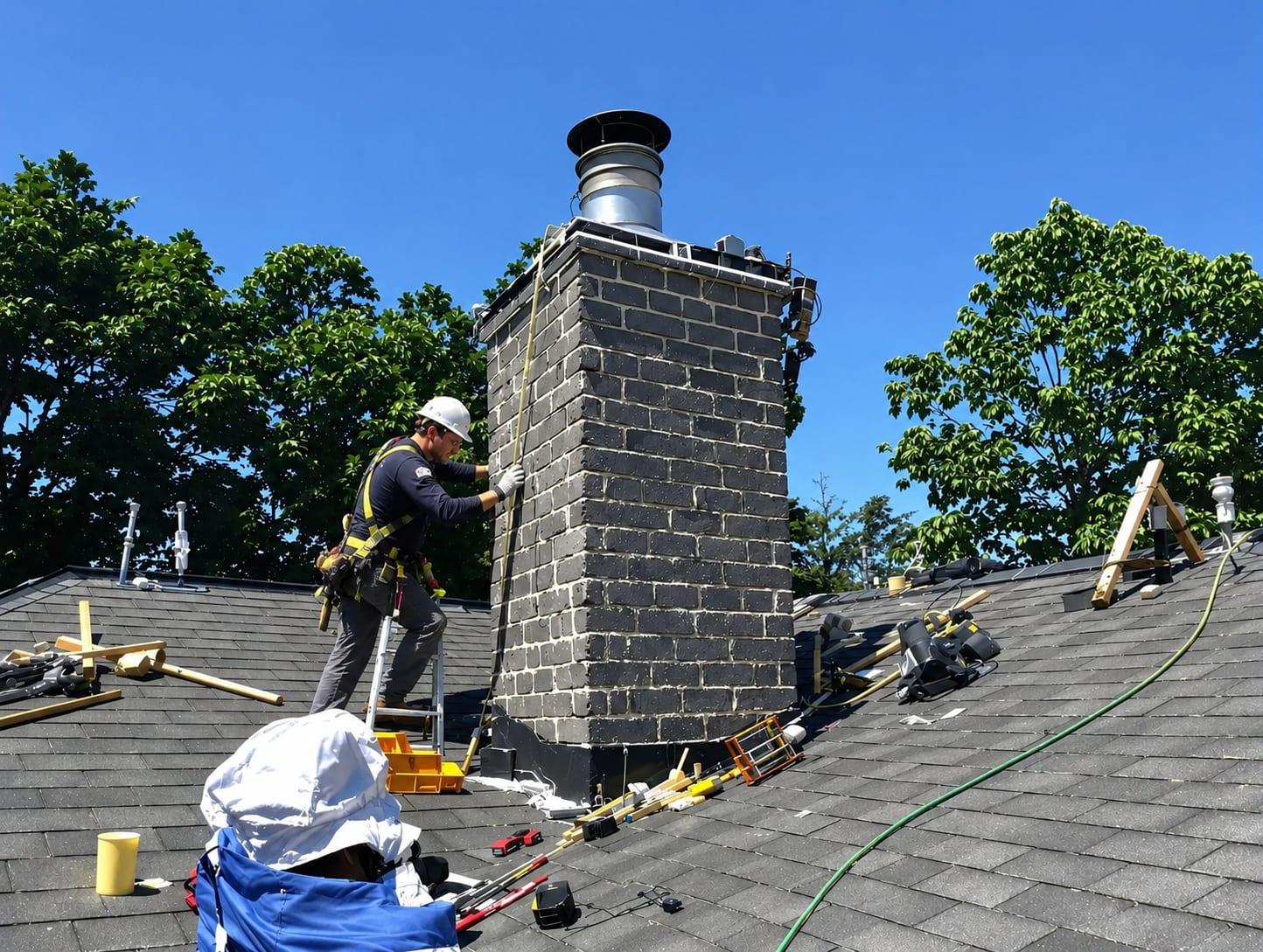
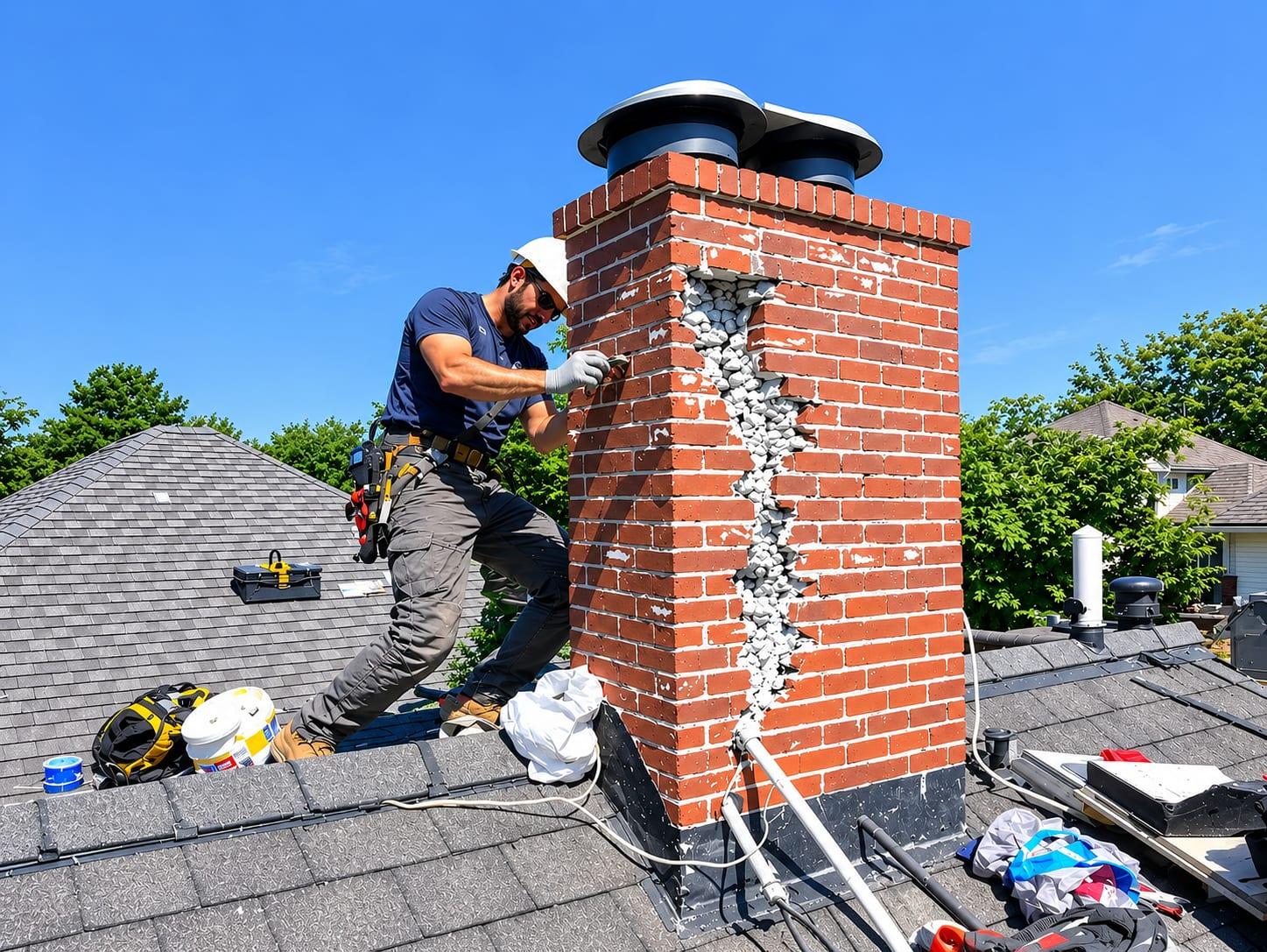
Chimney repair means fixing the parts of a chimney that have cracked, worn out, rusted or started letting water or smoke go where it shouldn't. The work can include replacing failed brick and mortar, sealing a leak, replacing a rusted chase cover on a factory-built chimney, fixing a damper that won't close, or repairing the liner inside the flue. The goal is to stop small damage before it becomes structural damage, water damage inside the house or a fire risk.
Repair isn't always the right booking. If the flue only needs soot and creosote taken out, chimney sweep and cleaning is the right job. If you don't yet know what's wrong, for example after a storm or before buying a home, start with a chimney inspection. If the chimney is badly loose or leaning above the roofline, our chimney rebuild service may be the honest answer. If there's no chimney yet and you want one added, that's chimney installation rather than repair.
Signs your chimney needs repair
Call about a repair if you notice any of these
- Water stains on the ceiling or wall beside the chimney, or water in the firebox after rain
- Cracked, crumbling or missing mortar joints
- Brick faces that flake or pop off (spalling)
- White, powdery staining on the outside brick, a sign that water is moving through the masonry
- Rust on a metal chase cover, or rust streaks running down the chase siding
- Smoke rolling into the room instead of going up the flue
- A damper that sticks, won't close or won't open
- A musty, smoky or sour smell from the fireplace
- Pieces of tile, brick or mortar falling into the firebox
- A chimney cap that's missing, bent or rusted through
- Scratching, chirping or movement inside the flue
You can spot many of these early without climbing on the roof. After a big storm, look at the top of the chimney from the ground with binoculars. Check the ceiling and walls around the chimney a few times a year. Shine a flashlight up past the open damper before the first fire of the season.
How a chimney repair visit works
What to expect, start to finish
Tell us what you're seeing
When you call, describe the leak, smell, damage or noise and when it happens. For example, a leak that only appears during wind-driven rain points to a different cause than one that shows up during every storm.
We look at the whole system
Outside, we check the cap, crown, flashing and brick or chase. Inside, we check the firebox, damper, smoke chamber and flue. Where the flue can't be seen well enough by eye, we use a chimney camera inspection.
We explain what we found
We show you the damage, separate the cause from the symptom and tell you what we recommend before any work starts.
We make the repair
The repair targets the source of the problem, whether that's mortar joints, flashing, a chase cover, a damper, the smoke chamber or the liner.
We go over the result
We walk you through what was done and what to keep an eye on, so a small problem doesn't come back as a big one.
Parts, materials and fuel types we repair
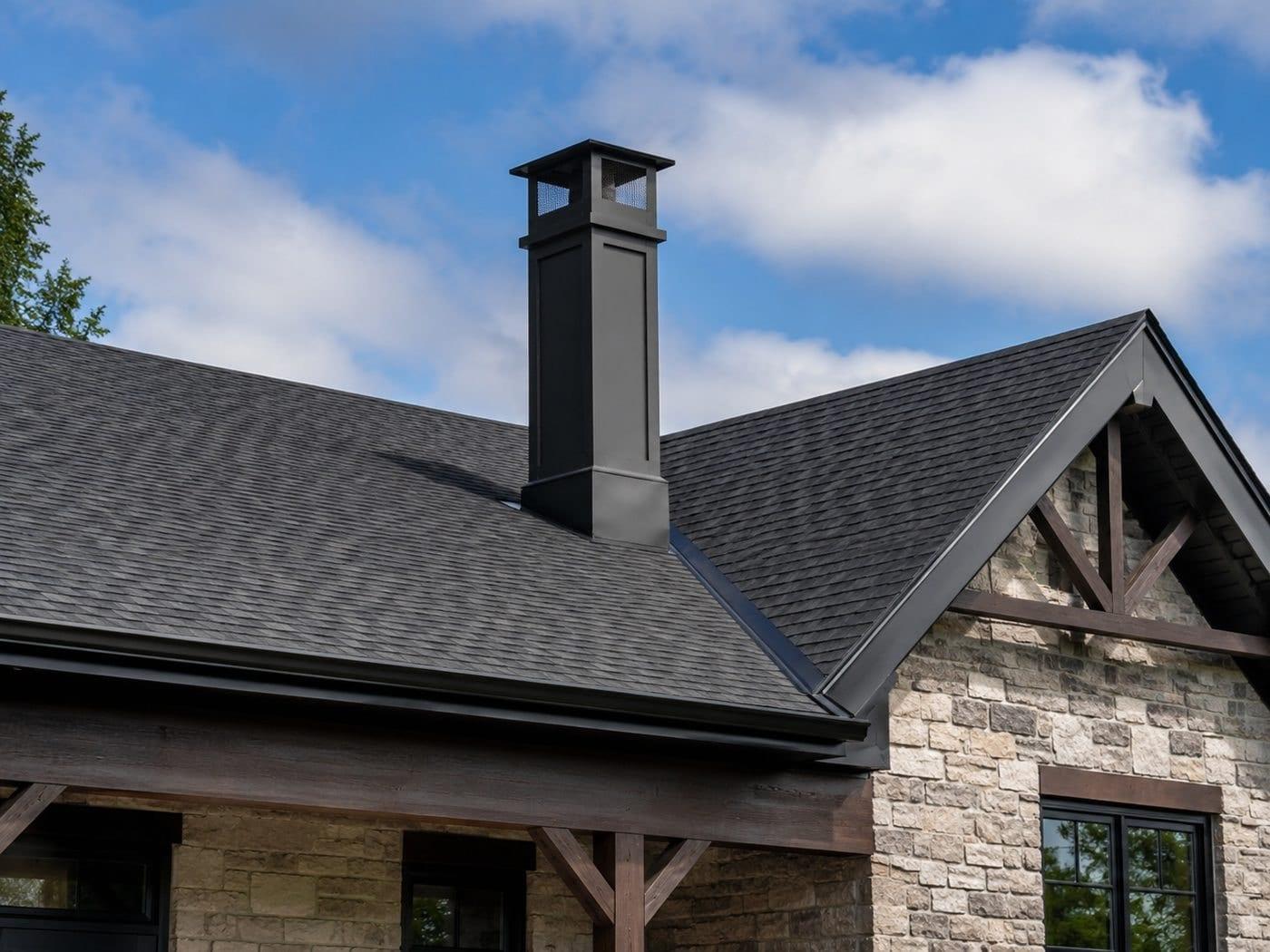
A masonry chimney is built from brick, mortar and stone. It has a concrete crown on top, metal flashing where it meets the roof, and a smoke chamber, damper and flue liner inside. A factory-built (prefab) chimney uses a metal flue inside a framed, sided enclosure called a chase, topped with a metal chase cover. Each design wears out in different places.
| Part | What goes wrong | Repair we do |
|---|---|---|
| Brick and mortar | Cracking, spalling, eroded joints | Tuckpointing, brick replacement, masonry repair |
| Crown | Cracks that let water into the chimney | Crown repair |
| Flashing | Gaps where the chimney meets the roof | Flashing repair and leak repair |
| Cap and animal screen | Missing, rusted or damaged | Cap replacement, animal screen installation |
| Chase cover | Rust, pooling water, leaks into the chase | Chase cover repair or replacement |
| Damper | Sticking, warped, doesn't seal | Damper repair |
| Smoke chamber | Rough or cracked walls, smoke spilling into the room | Smoke chamber repair |
| Flue liner | Cracked clay tiles, worn metal liner | Liner repair or new liner installation |
| Firebox | Cracked firebrick or refractory panels | Firebox repair, refractory panel replacement |
Fuel type matters too. Wood-burning fireplaces and stoves leave creosote and expose the flue to high heat. Gas appliances send out moisture that can condense inside the flue. Pellet stoves need their venting kept clear and sealed. We work on all major brands of prefab fireplaces, inserts, stoves and gas units. If the problem is a damper, chimney damper problems, signs, causes and repair solutions explains what usually goes wrong. If your cap is the weak point, a buyer's guide to chimney caps covers the options.
Chimney brick repair
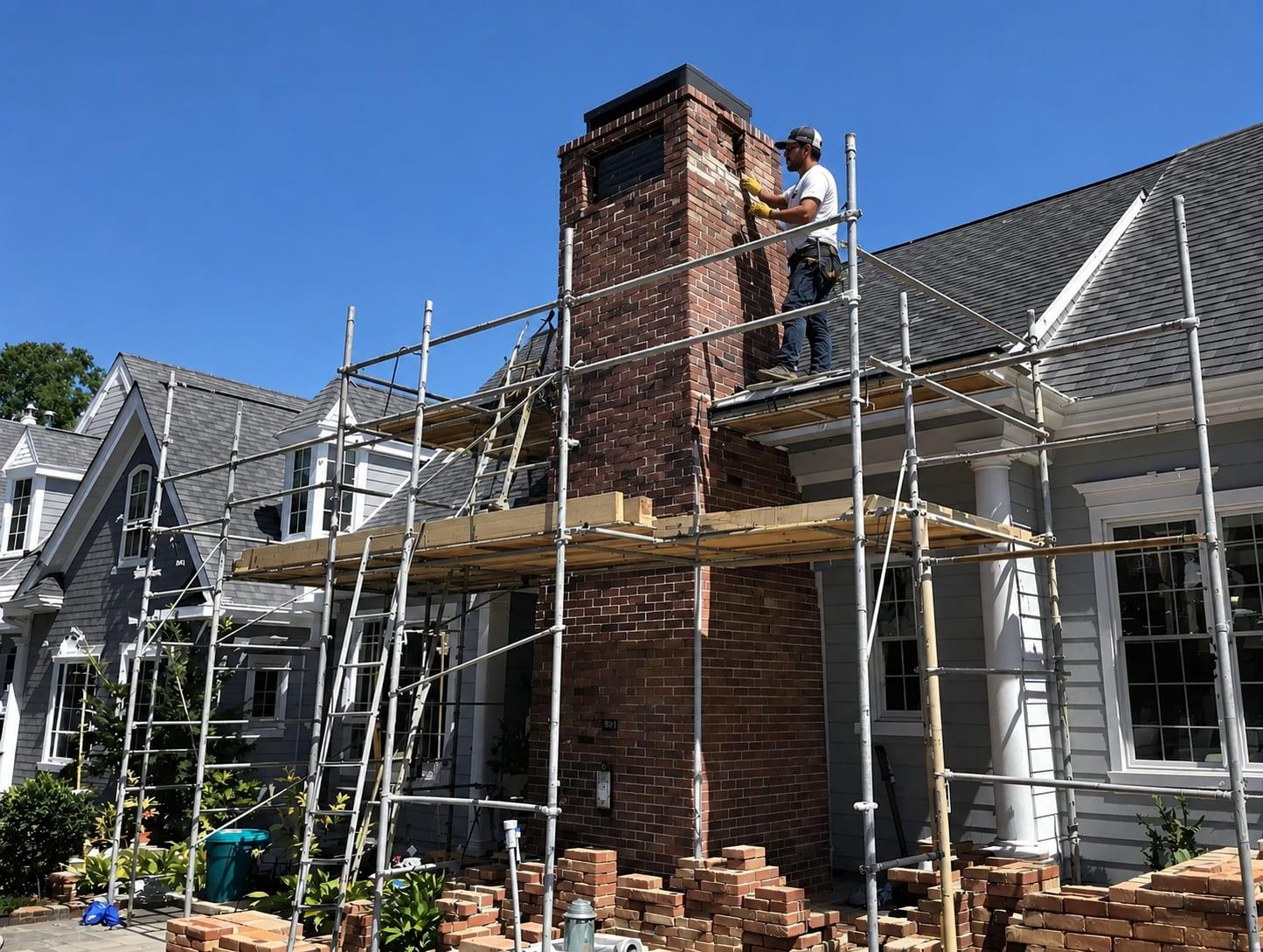
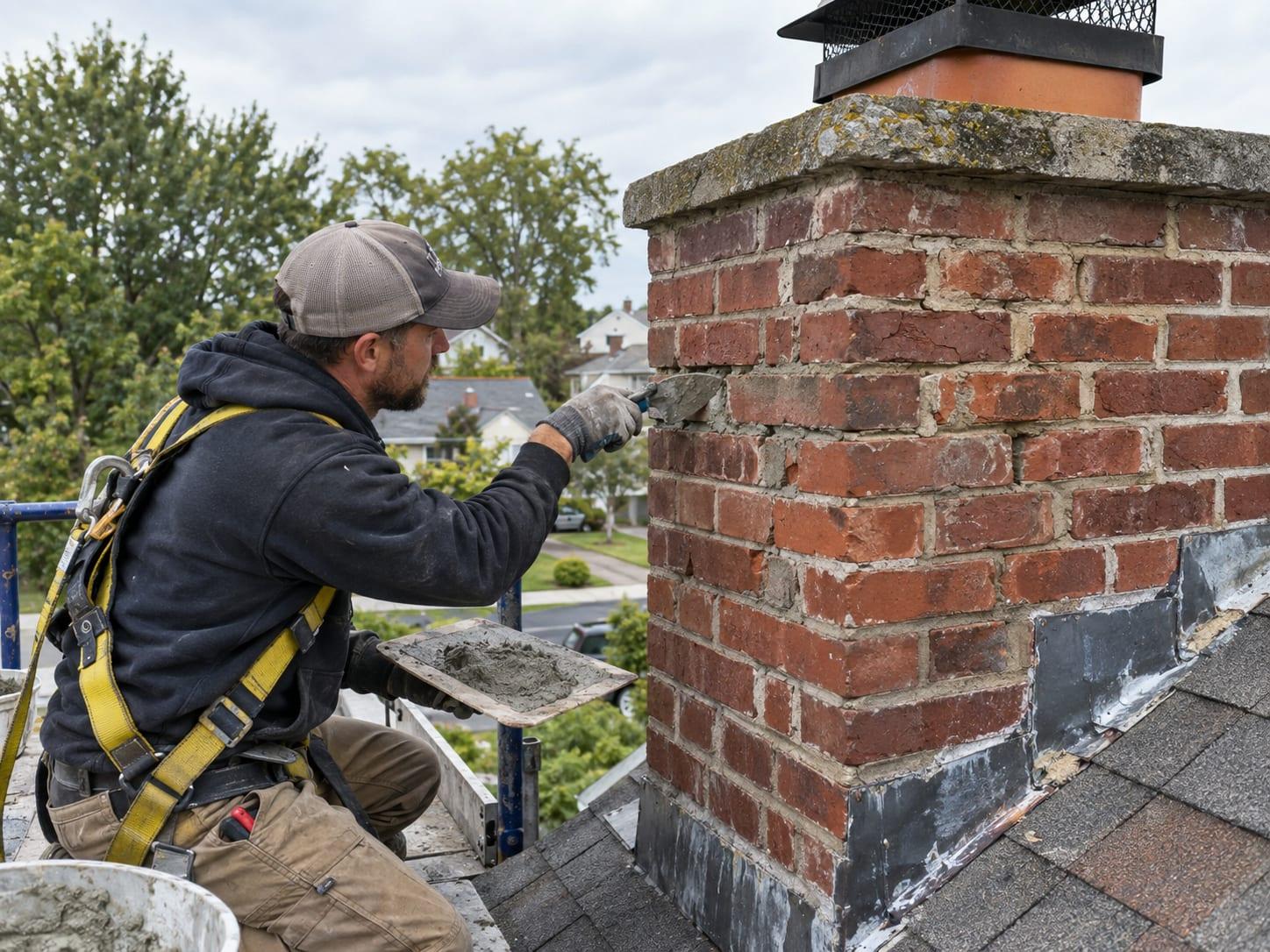
Most brick damage starts with water. When brick and mortar soak up water and it freezes, it expands. Over time that cracks joints and breaks the faces off bricks. We repair chimney bricks by grinding out and refilling failed mortar joints (tuckpointing), replacing spalled or broken bricks, and repairing the crown that sheds water off the top.
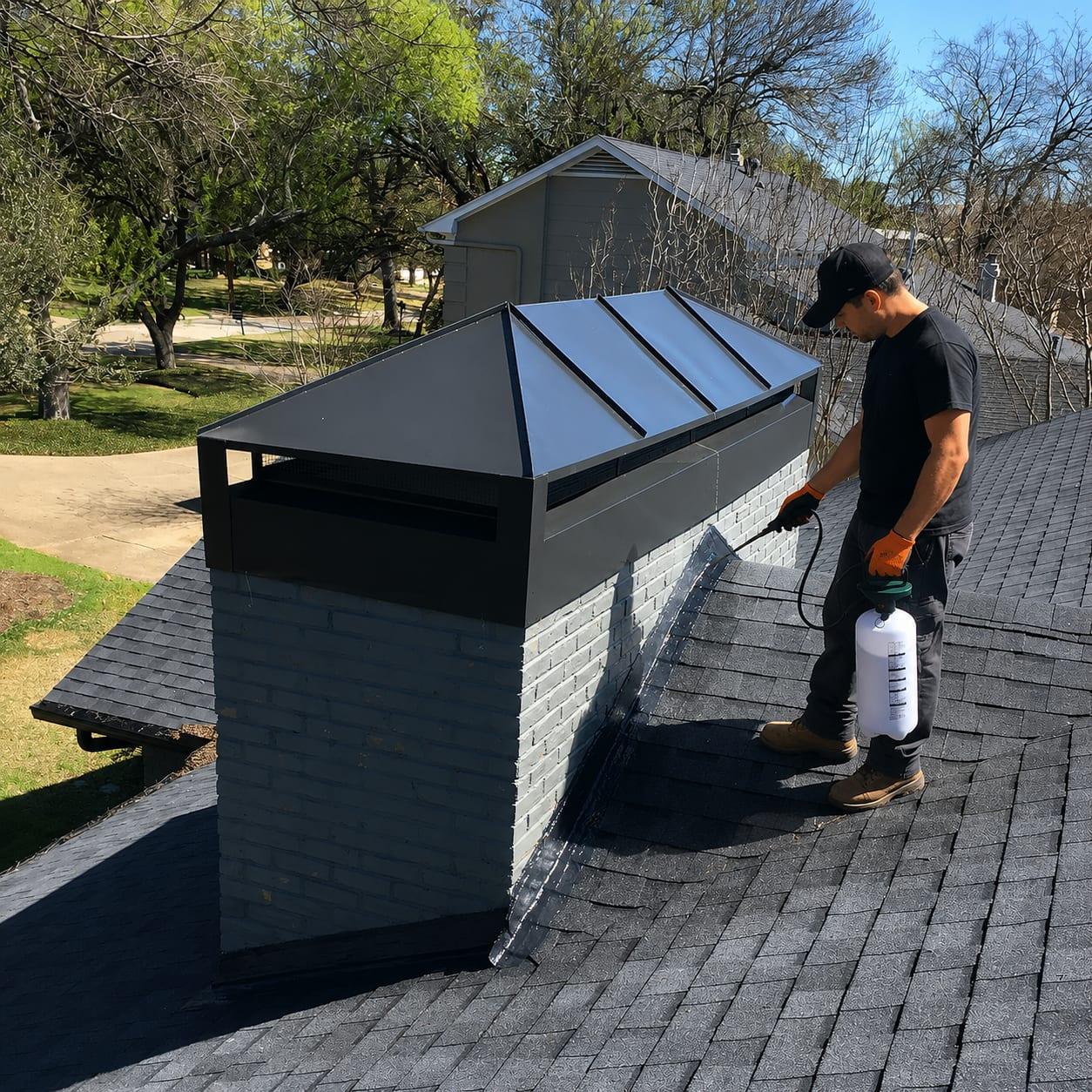
Fixing brick without fixing the water source usually means paying for the same repair again later, so we also check the crown, cap and flashing. Once the masonry is sound, a breathable water repellent helps it stay that way. Here's how chimney waterproofing works and when it makes sense.
Leaky chimney repair and maintenance
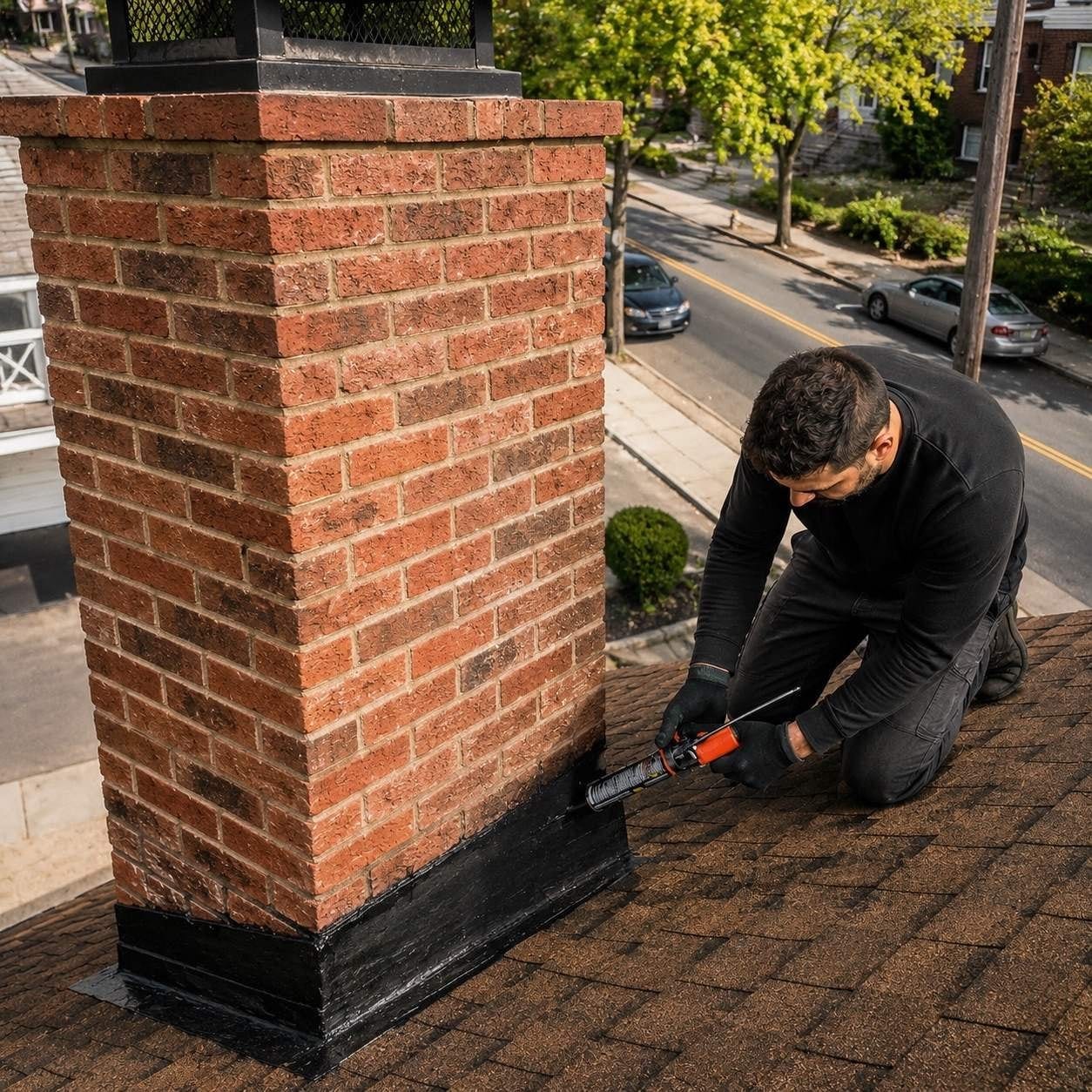
A leaking chimney rarely leaks right where the stain shows. Water often gets in at the top or at the roofline and travels down before it appears on a ceiling or in the firebox. The usual entry points are a missing or damaged cap, a cracked crown, failed flashing, porous brick, a rusted chase cover, or condensation inside a gas flue. Lasting chimney water damage repair starts with finding the real entry point and fixing that, and then repairing whatever the water has already damaged.
- Keep a cap on the chimney so rain can't fall straight down the flue
- Look at the flashing and crown after severe storms
- Watch for new stains near the chimney on ceilings and walls
- Re-treat masonry with a water repellent when water stops beading on the brick
Don't let a leaky chimney wait
Water that gets behind walls and ceilings can rot framing, ruin drywall and insulation, and rust the damper and firebox. A small leak fixed early is a much smaller job than the damage it causes over a few seasons.
Chimney smoke damage repair
Smoke stains above the fireplace opening, soot on the mantel or a lingering smoky smell usually mean smoke is spilling into the room instead of rising up the flue. Common causes include:
- A damper that doesn't open fully
- A rough or cracked smoke chamber
- A flue partly blocked by a nest, debris or heavy creosote
- A cap that's crushed or clogged
- A draft problem between the fireplace and the flue
We fix the cause with smoke chamber repair, damper repair, blockage removal or fireplace draft repair. Then we clean the firebox and fireplace glass so you can tell whether the problem is really gone.
If smoke is filling the room
Get everyone out of the house right away and call 911 from outside. Don't stay behind to deal with the fire or open windows. Headache, dizziness or nausea can be signs of carbon monoxide, so anyone who feels that way needs fresh air and medical help. A working carbon monoxide alarm near the fireplace is worth having.
Gas chimney and gas fireplace repair
We work on gas fireplaces and other gas appliances. Gas burns cleaner than wood, but its exhaust carries a lot of water vapor. When that vapor condenses in an old or unlined masonry flue, it can wear away mortar and clay tiles from the inside. Gas vents can also be blocked by nests or debris, and the vent termination on a prefab gas fireplace can be damaged. Gas chimney repair covers relining or repairing the flue, clearing and repairing vents, and fixing the fireplace itself.
If you smell gas
Leave the house right away, without lighting the fireplace or flipping any switches, and call your gas utility or 911 from outside.
Replacement chimney chase cover
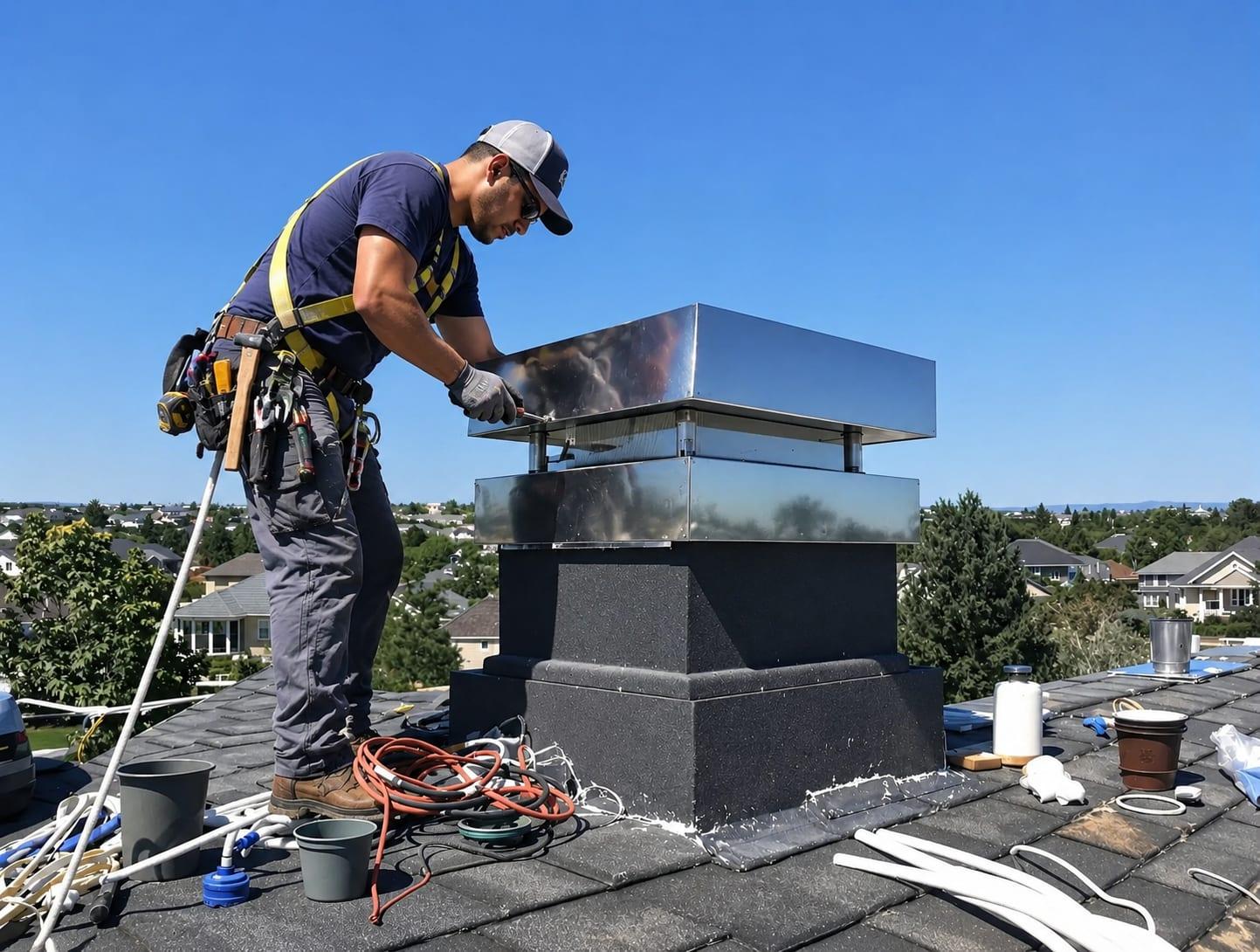
On a factory-built chimney, the metal chase cover is the roof over the whole chase. Galvanized covers eventually rust, sag in the middle and hold standing water. That water runs into the chase and down the flue. Rust streaks on the siding, water in the firebox and soft or rotting chase framing are the usual signs.
If the cover is still solid, chimney chase cover repair such as resealing or patching can buy it more years. If it's rusted through or sagging, our chase cover replacement service puts on a new cover sized to the chase and shaped to shed water, with the seal around the flue redone. We'll go over material options before the cover is made.
Chimney remodel
Sometimes the chimney works but you want it to look different or fit a renovation. We do chimney remodels and fireplace refacing, makeovers and conversions, along with custom fireplace design. If repairs are needed too, doing them in the same project saves opening up the work twice.
Commercial and industrial chimneys
We offer commercial and property-manager work, and we also work on industrial chimneys. If you manage rental units or run a commercial building, tell us how many chimneys or flues are involved and what you've noticed, and we'll plan the repair work around it.
Emergency chimney repair
Emergency calls are accepted, with 24-hour service Sunday–Friday.
- A chimney fire, once the fire department has put it out
- Bricks or the cap knocked loose by a storm
- Water pouring in around the chimney
- An animal trapped in the flue
- Smoke or fumes coming into the house, once everyone is out and 911 has been called
If the chimney is on fire, get everyone out and call 911 first.
Booking chimney repair in Atlanta
Call or request an estimate, and tell us what you're seeing and when it happens. 24-hour service Sunday–Friday. Emergency service available. Outside the city, we also handle chimney repair in Brookhaven and chimney repair.