On this page
What firebox repair is and what it involves
The firebox is the chamber where the fire actually burns: the floor, back wall and side walls inside the fireplace opening. In a masonry fireplace it is usually lined with firebrick set in heat-resistant refractory mortar. In a factory-built (prefab) fireplace it is usually lined with molded refractory panels. Either way, the lining's job is to hold intense heat and keep it from reaching the framing, walls and other building materials behind it.
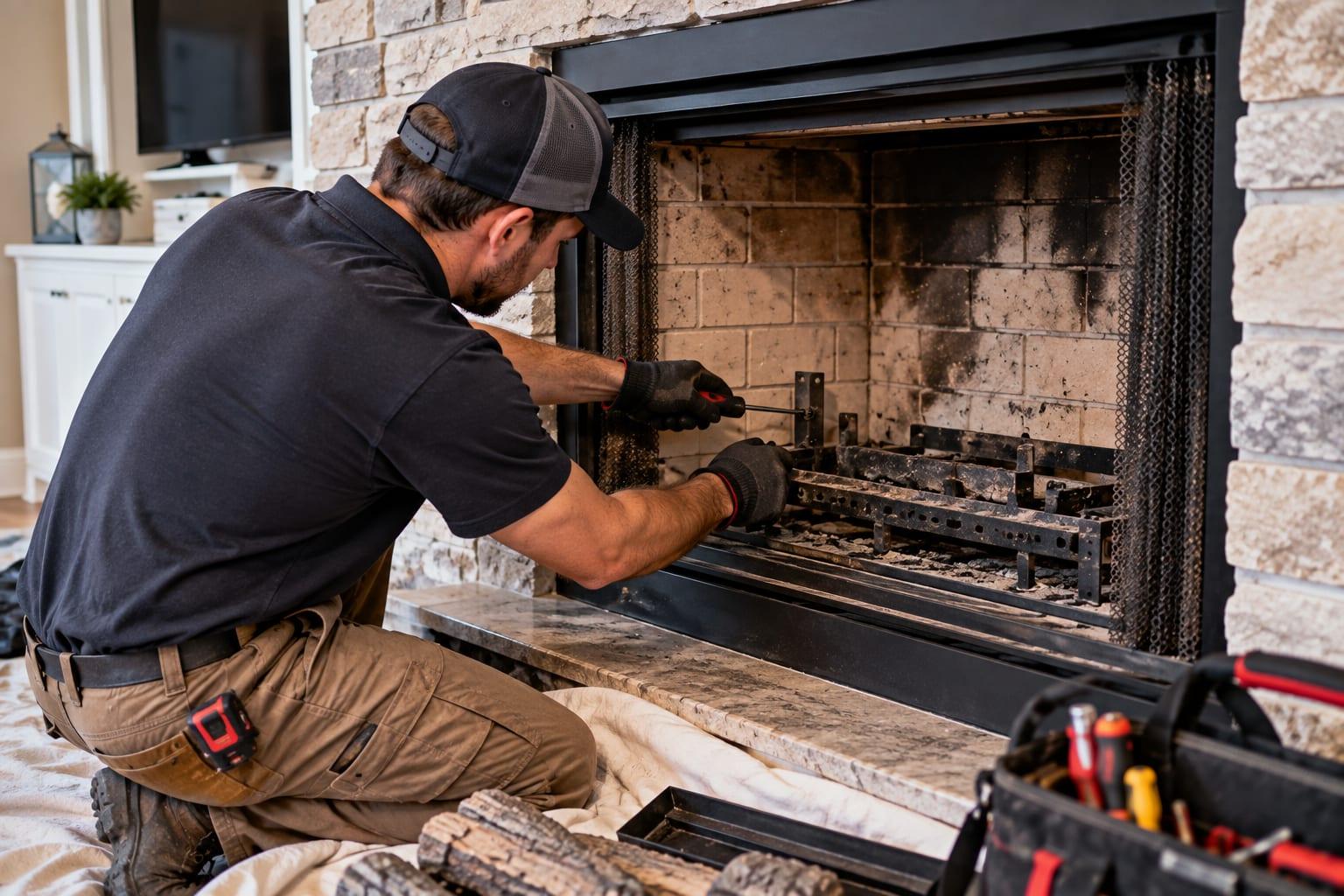
Firebox repair means restoring that lining when it has cracked, worn or come loose. Depending on the damage, that can mean repointing open mortar joints, replacing individual firebricks, rebuilding a section of wall, or replacing worn refractory panels. If the problem turns out to extend beyond the firebox, such as the damper, smoke chamber or fireplace face, we can handle that as part of a wider fireplace repair.
Signs your firebox needs repair
Fireboxes take repeated heating and cooling, and over time the brick and mortar wear. These are the problems that usually call for repair:
Common signs of firebox damage
- Cracks running through firebricks or along the back wall
- Mortar joints that are recessed, crumbling or open
- Bits of mortar or brick showing up in the ash
- Firebricks that are loose, shifted or missing
- Brick faces that are flaking or spalling away
- A back wall that leans or bulges into the firebox
- Cracked, chipped or crumbling refractory panels in a prefab fireplace
Hold off on fires if you see gaps
Open joints and cracks can let heat and embers reach material behind the firebox that was never meant to take it. If you can see gaps or loose brick, it is safest not to burn a fire until the firebox has been looked at.
Firebox brick repair
Firebrick is denser than ordinary brick and is made to handle direct flame. When individual bricks crack through, spall or work loose, we cut them out and set new firebrick in refractory mortar. Ordinary building brick and standard mortar are not substitutes inside a firebox, because they are not made for that kind of heat.
When damage is limited to a few bricks, replacing just those bricks is often enough. When a large area of the back or side walls has cracked or shifted, rebuilding that section usually makes more sense than patching brick by brick. We explain which approach fits your firebox and why before any work begins.
Firebox mortar repair for open joints
Sometimes the bricks are sound but the mortar between them has eroded. In that case, we rake out the loose and failing mortar and repoint the joints with refractory mortar. Catching open joints at this stage can keep a firebox from progressing to loose or failed bricks.
Cracked firebox repair in prefab fireplaces
Factory-built fireplaces use refractory panels instead of brick. Hairline surface cracks are not always a problem, but panels that are broken through, crumbling or missing pieces should be replaced. We also offer refractory panel replacement for these units.
Components and materials involved
| Component | What it does | Typical repair |
|---|---|---|
| Firebrick | Lines the firebox floor and walls and takes direct flame | Replace cracked, spalled or loose bricks |
| Refractory mortar | Bonds firebrick and holds up to high heat | Rake out and repoint open or crumbling joints |
| Refractory panels | Line the firebox in factory-built fireplaces | Replace broken or crumbling panels |
| Firebox floor (hearth inside the opening) | Holds the fire, grate or logs | Replace damaged firebrick in the floor |
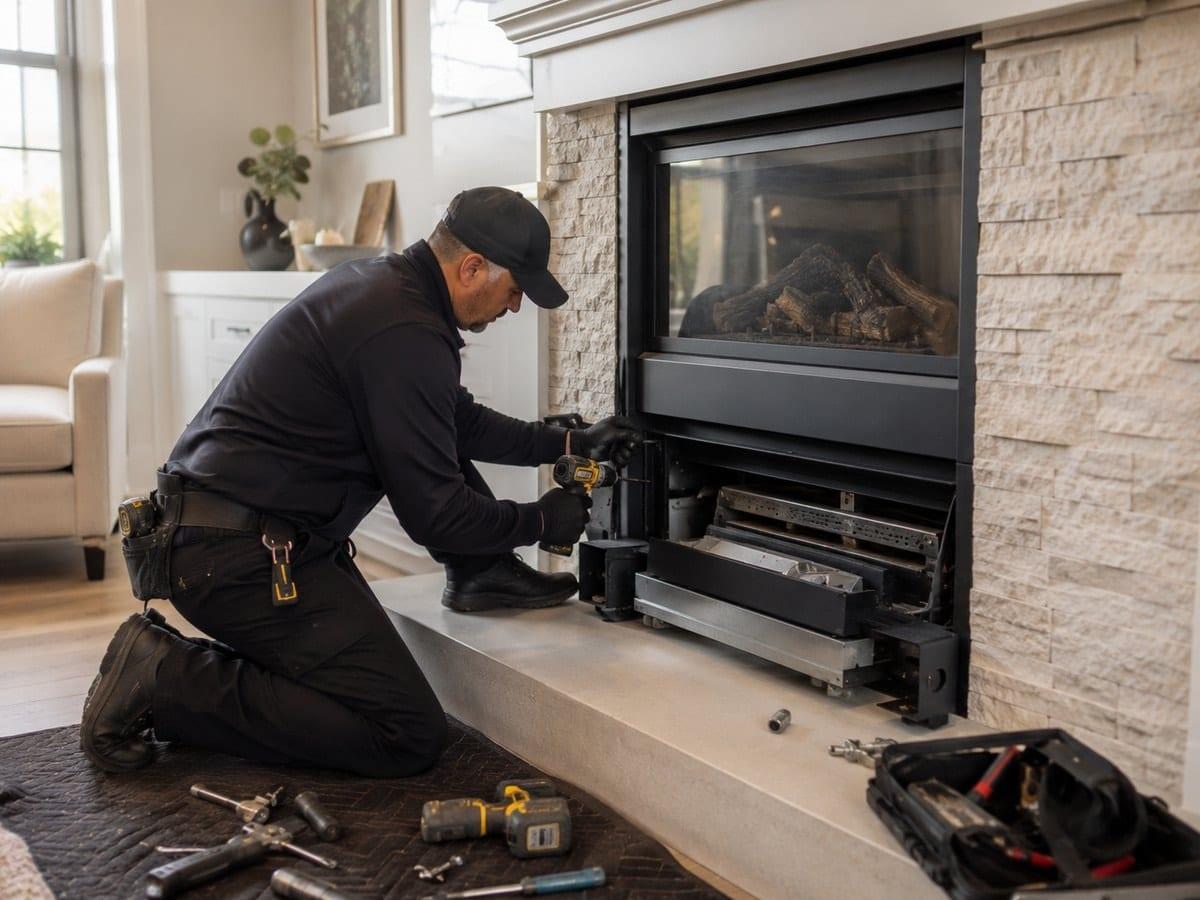
Wood-burning fireboxes generally see the hardest wear, but gas fireplaces have fireboxes too. Gas fireplace and gas appliance work is offered, so we can work on gas units as well as wood-burning ones.
What the visit involves, step by step
How a firebox repair visit works
Look at the firebox
We examine the brick, mortar or panels, along with the area around the firebox, to see how far the damage goes. If you want a broader look first, a fireplace inspection covers the whole fireplace.
Explain what we found
We walk you through the damage and the repair options, whether that's repointing, replacing bricks, rebuilding a section or replacing panels.
Protect the room
The hearth and surrounding area are covered before any mortar or brick comes out.
Remove damaged material
Failing mortar is raked out and cracked or loose firebricks or panels are removed.
Rebuild with refractory materials
New firebrick is set in refractory mortar, joints are repointed, or new panels are fitted.
Clean up and go over next steps
We clean up the work area and tell you how long to wait before the first fire, based on the materials used.
Safety and maintenance
A firebox in good shape is only one part of a safe fireplace. Cracks in the firebox can be a sign of heavy use or overfiring, so it is worth having the rest of the system checked too. A chimney inspection looks at the flue, liner and structure above the fireplace.
- Look inside the firebox with a flashlight from time to time, especially before the first fire of the season.
- Keep fires to a reasonable size rather than packing the firebox full.
- Don't throw water on a fire to put it out; sudden cooling is hard on firebrick.
- Have damage repaired while it is still small, since open joints and cracks tend to grow.
Booking firebox repair
Call or request an estimate to set up a visit. Commercial and property-manager work is offered too, so you can contact us about fireplaces in rental and commercial properties as well as your own home.