When the chimney is pulling away from the house
Masonry chimneys are built to stand straight and stay tight against the house. When one starts to lean, you may notice a gap opening between the brick and the siding, a crack running up the chimney, or a tilt you can see from the yard. A leaning chimney is moving under its own weight, and it rarely stops by itself.
The good news is that the cause can usually be found, and in most cases the chimney can be repaired or rebuilt so it stands plumb again.
Common signs of a leaning chimney
What to look for
- A visible tilt when you look at the chimney from the street or along the side of the house
- A gap between the chimney and the exterior wall, often wider at the top than at the bottom
- Siding, trim or brick ties pulling loose where the chimney meets the house
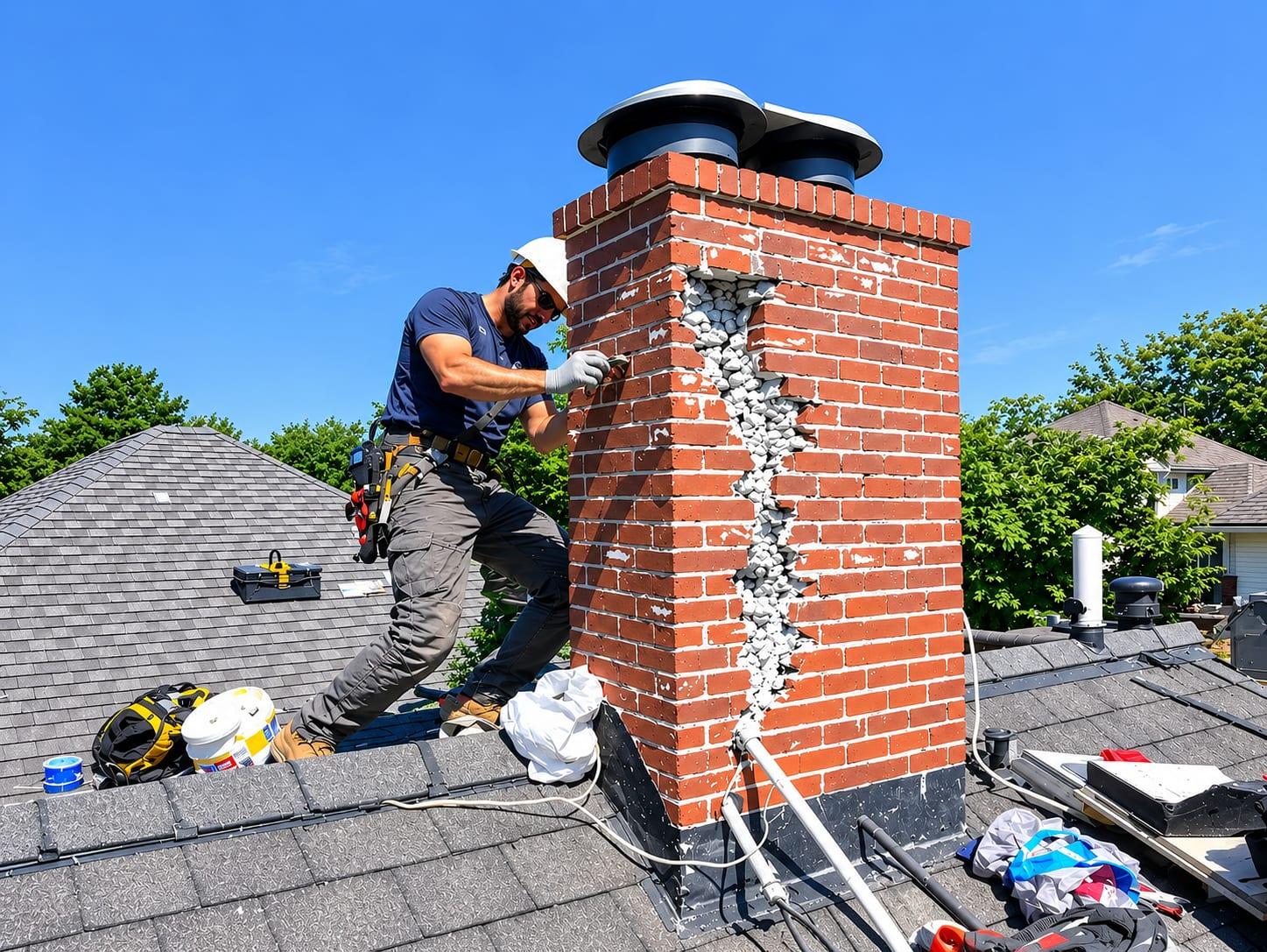
- Cracks in the brick or mortar, especially diagonal or stair-step cracks
- Flashing torn or pulled away at the roofline
- New water stains on a ceiling or wall near the chimney
- Cracks or separation between the fireplace surround, hearth and interior wall
Possible causes
These are the usual reasons a chimney starts to lean. Only an inspection can confirm which one, or which combination, applies to your chimney.
What may be behind the lean
01Footing settlement or failure
- What you may notice
- The whole chimney tilts as one piece, and the gap at the wall widens toward the top.
- How it’s confirmed
- The base, footing area and soil around it are examined, along with how the chimney sits relative to the house.
02Water damage and weakened mortar
- What you may notice
- Crumbling joints, loose or spalling bricks, and leaks near the chimney.
- How it’s confirmed
- Mortar, brick, crown and flashing are checked for erosion and water entry.
03Damaged or shifted flue
- What you may notice
- Smoke entering the room, poor draft, or cracks inside the fireplace.
- How it’s confirmed
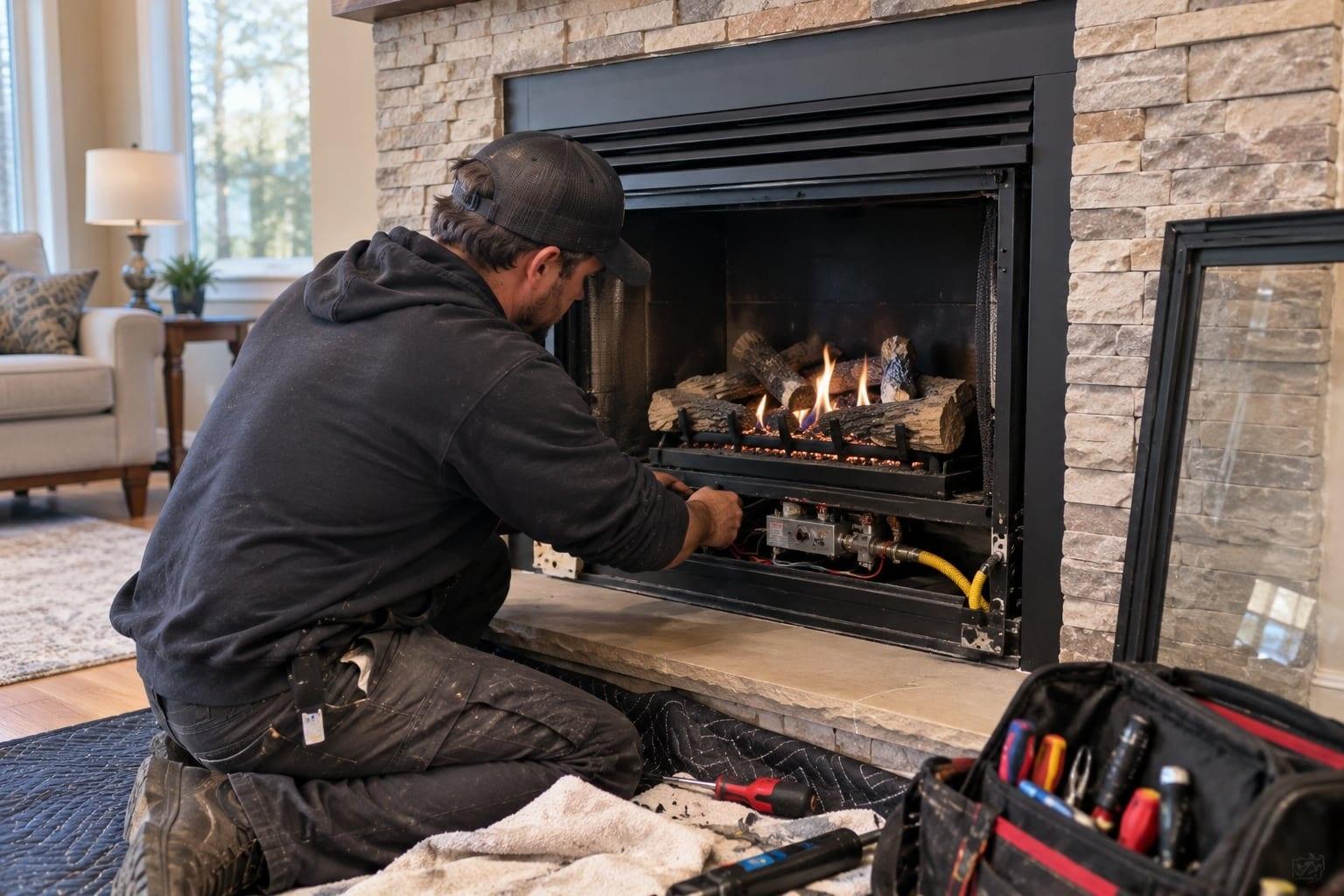
- The flue is examined from the inside, often with a camera, to look for cracks, gaps or offset liner sections.
Other contributors can include a footing that was too small for the chimney when it was built, water pooling against the base, or a chimney that was never properly tied to the house. The type of inspection needed depends on what is visible; our guide to chimney inspection levels explained covers when a deeper look is called for.
How urgent is it?
Stop using the fireplace
If your chimney is leaning or separating from the house, do not use the fireplace or any appliance venting through it until it has been inspected. Movement can crack the flue and let smoke, heat or gases reach the framing or the living space.
Treat a lean as urgent, especially if the gap is growing, bricks are loose, or the chimney moved after a storm. Keep children, pets and parked cars away from the base and from the side it leans toward, and stay off the roof. A slight lean with no other damage still needs prompt attention, because the problem tends to get worse over time.
A shifted flue is also a fire concern when combined with creosote buildup, since cracks give hot deposits a path to the house framing.
What usually fixes a leaning chimney
Leaning chimney repair starts with finding out why it moved. The fix depends on how far it has tilted and what is causing it.
Typical repair path
Inspection
We check the chimney inside and out, including the flue, to find the cause and judge how much of the structure is still sound.
Address the base
If the footing or the ground under it has failed, that has to be dealt with before work above it will last.
Rebuild the affected section
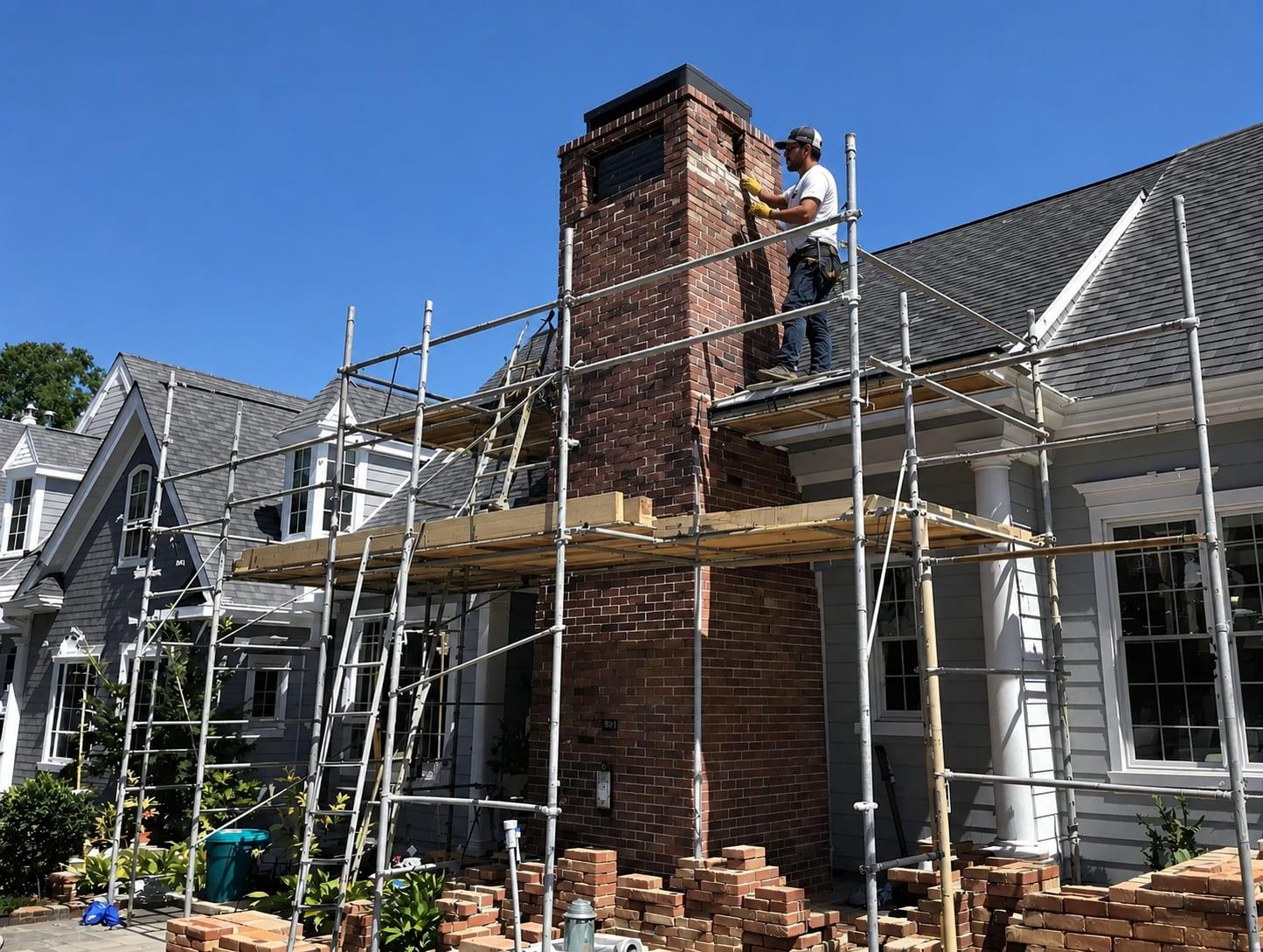
Most leaning chimneys need a partial rebuild above the point of movement, or a full rebuild if the lean starts low.
Seal and protect
New crown, flashing and cap work keep water out so the new masonry lasts.
Our chimney rebuild service takes the leaning portion down and lays it back up plumb and properly secured. When the movement is minor and the structure is still sound, targeted masonry and structural chimney repair such as tuckpointing, crown repair or flashing repair may be enough. A rebuild is also a chance to correct the flue, so liner installation and damper work are often part of the job; types of chimney dampers is useful background if yours will be replaced.
What not to do
- Don't fill the gap with caulk or foam and call it fixed. It hides the movement and doesn't stop it.
- Don't climb onto the roof or lean a ladder against a moving chimney.
- Don't keep burning fires to see whether it gets worse.
- Don't try to pull the chimney back with straps or brackets yourself.