When the outside of your chimney starts falling apart
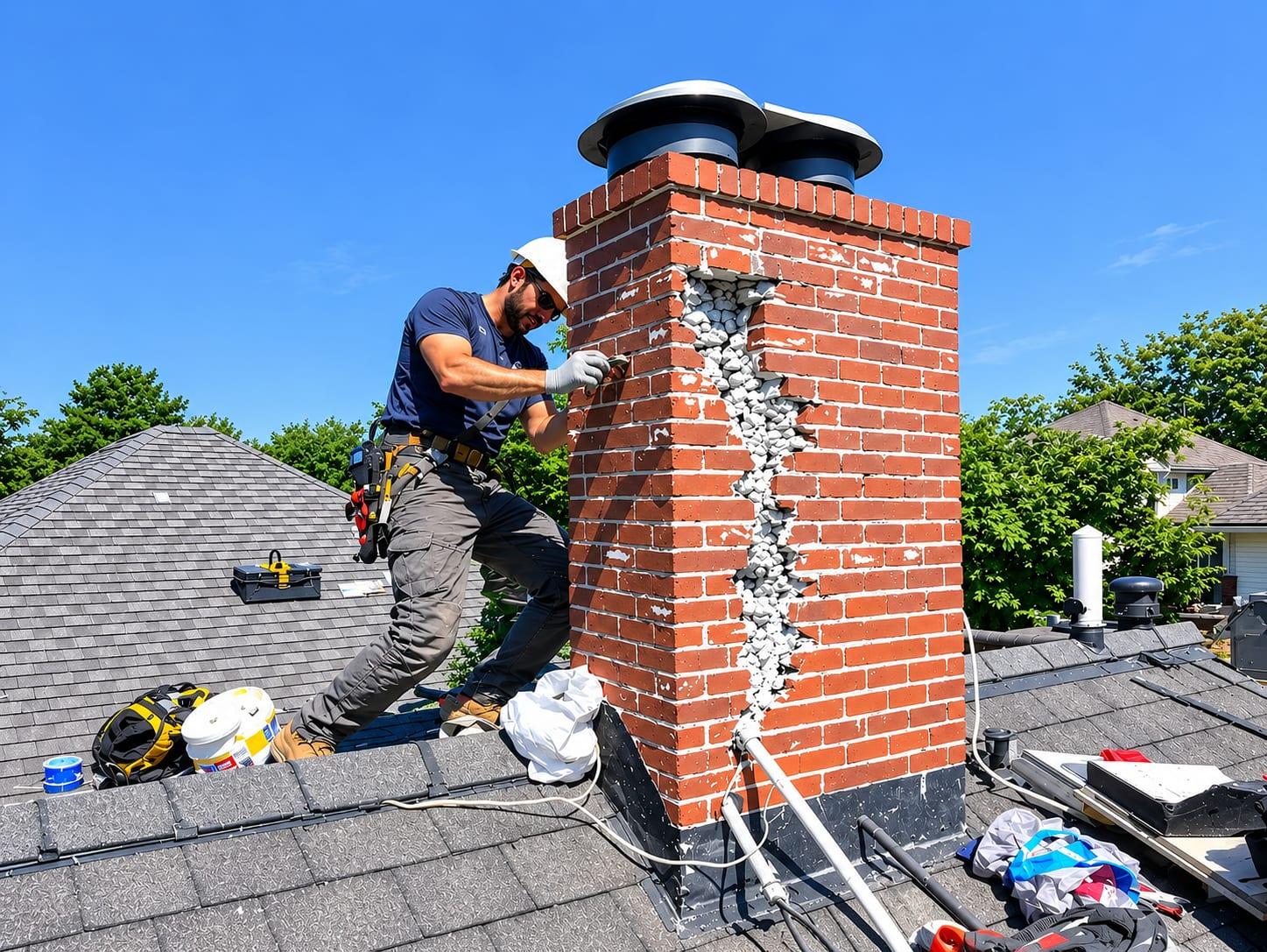
Most homeowners notice crumbling chimney bricks by accident: brick chips on the roof shingles, red grit in the gutters, or a brick face that has popped off and left a rough, sunken surface behind. Masons call this spalling masonry, meaning the outer face of the brick flakes, peels or breaks away. Mortar joints often go at the same time, turning soft and sandy instead of hard.
A few damaged bricks are a repair job. Left alone, the same process can loosen whole courses near the top of the chimney, let water into the house, and weaken the structure that holds your flue.
Common signs of crumbling chimney bricks
- Brick faces that are flaking, peeling or popping off in chips
- Mortar joints that are recessed, sandy, or crumble when touched
- Brick fragments or grit on the roof, in gutters or around the base of the chimney
- White, chalky staining on the brick (efflorescence)
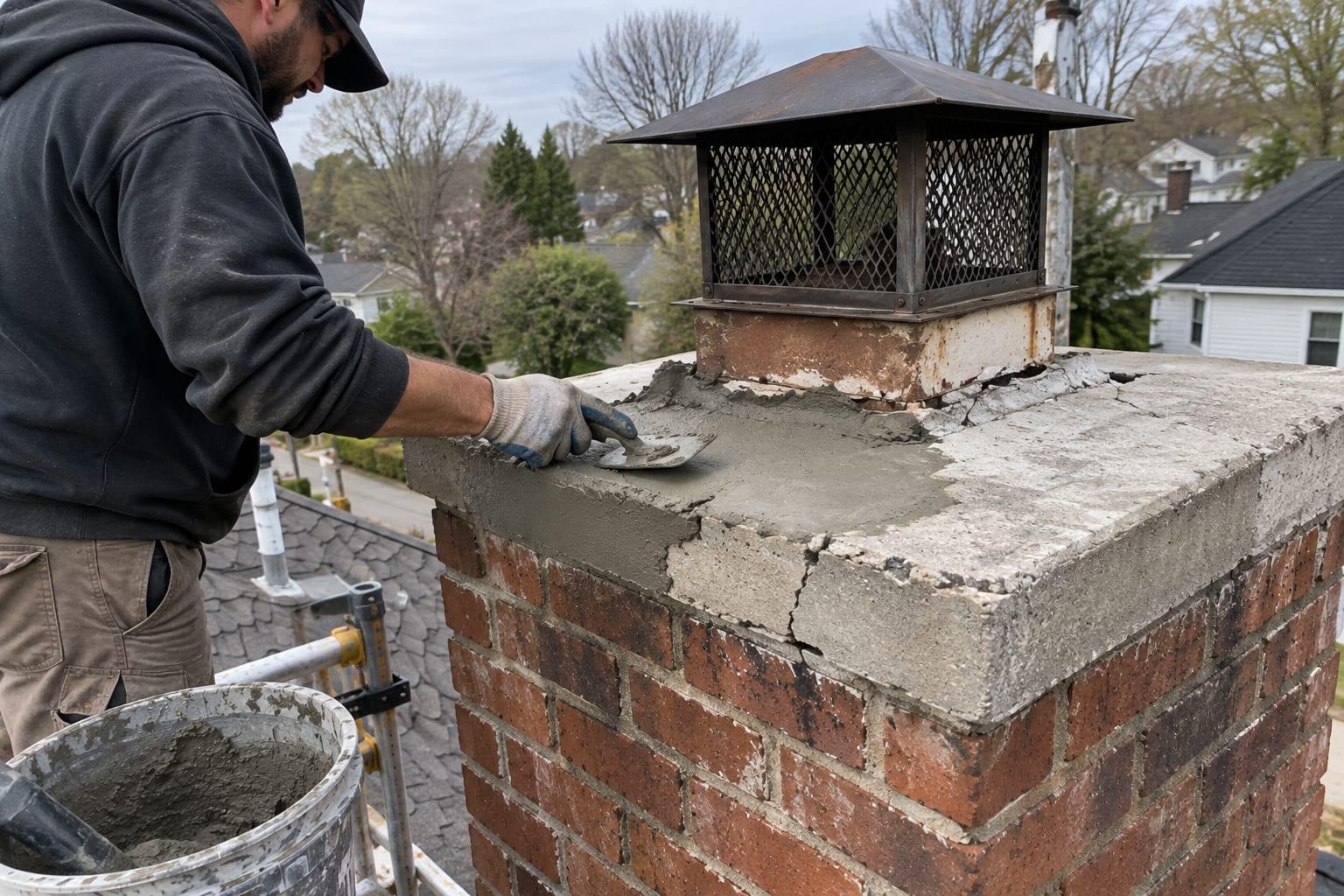
- Cracks in the concrete crown on top of the chimney
- Loose bricks near the top of the stack
- Water stains on the ceiling or wall next to the chimney
- Bits of brick, mortar or tile falling into the firebox
Possible causes of crumbling chimney bricks
Brick and mortar are porous, so almost every cause comes back to moisture getting in and not drying out. These are the usual possibilities. An inspection is what confirms which ones apply to your chimney, and more than one is often at work.
- Freeze-thaw cycles. Water soaked into the brick expands when it freezes and pushes the face of the brick off.
- A cracked or missing crown. The crown sheds rain off the top of the chimney; once it cracks, water runs straight down into the masonry.
- No chimney cap, or a damaged one. Rain falls into the flue and soaks the inside of the chimney.
- Failed flashing. Gaps where the chimney meets the roof let water into the brick and the framing around it.
- Worn-out mortar joints. Open joints let water travel deep into the wall.
- Mismatched repair mortar. Mortar that is harder than the brick around it can force the brick to crack and spall instead of the joint.
- Sealers or paint that trap moisture. A non-breathable coating holds water inside the brick.
- Acidic condensation from inside. Flue gases that condense in an unlined or damaged flue can eat at the mortar and brick from the inside out.
The visible damage is only half the story
Spalling you can see from the yard is the symptom. The repair only lasts if the water source behind it, whether a crown, cap, flashing or flue problem, is found and fixed too.
How urgent is it, and when to stop using the fireplace
Light surface flaking on a few bricks is not an emergency, but it should be looked at soon, before another wet season widens the damage. Loose bricks at the top of the stack are more serious, because they can fall onto the roof or the ground below.
Stop using the fireplace or stove if you see any of these
Pieces of brick, mortar or flue tile falling into the firebox; smoke coming into the room or showing through cracks in the chimney; bricks that move by hand or are missing near the top; or a chimney that looks like it is pulling away from the house. Keep people and pets away from the area under a loose chimney, and don't climb onto the roof to check it yourself.
Crumbling masonry inside the firebox, smoke chamber or flue matters for more than looks. Gaps there can let heat and sparks reach the framing around the chimney, which raises the chimney fire risk. A chimney that has started to tip has a structural problem of its own; it's worth reading about what causes a leaning chimney before deciding the bricks are the whole issue.
What normally fixes crumbling chimney bricks
For most chimneys the answer is chimney masonry repair: replacing the damaged bricks, repointing the failed joints, and stopping the water that caused it. When the damage reaches the crown, cap, flashing or flue, the work becomes a broader chimney repair service.
How the repair usually goes
Inspect the whole chimney
The masonry, crown, cap, flashing and flue are checked to find where the water is getting in. A camera inspection of the flue may be used if the inside is in question.
Remove and replace damaged brick
Spalled or broken bricks are cut out and replaced with brick matched as closely as possible in size and color.
Repoint the joints
Soft mortar is ground out and replaced with mortar suited to the brick, a process called tuckpointing.
Fix the water source
That may mean crown repair, a new cap, flashing repair, or liner work if the damage started inside the flue.
Protect the finished work
Once repairs are done, a breathable water repellent can be applied so the brick sheds water but can still dry out.
If the top of the chimney has lost too many bricks, or the stack has shifted, rebuilding the upper section from the roofline up is sometimes the sound option. That call is made on site, after the inspection.
What not to do
- Don't pressure wash the chimney; high pressure strips the face off already weak brick.
- Don't coat it with paint or a sealer that doesn't let the brick breathe.
- Don't fill gaps with caulk, roofing cement or hardware-store mortar mix; mismatched patches can speed up damage to the bricks around them.
- Don't pull loose bricks out by hand or climb onto the roof to inspect a damaged chimney.
- Don't keep using the fireplace if debris is falling into the firebox.
Related reading and services
If you want to understand the job before booking, read how chimney masonry repair works. Heavy soot and creosote can hide flue damage during an inspection, so our chimney soot removal guide explains what a cleaning involves. When you're ready, get in touch to request an estimate.