On this page
What chimney masonry repair involves
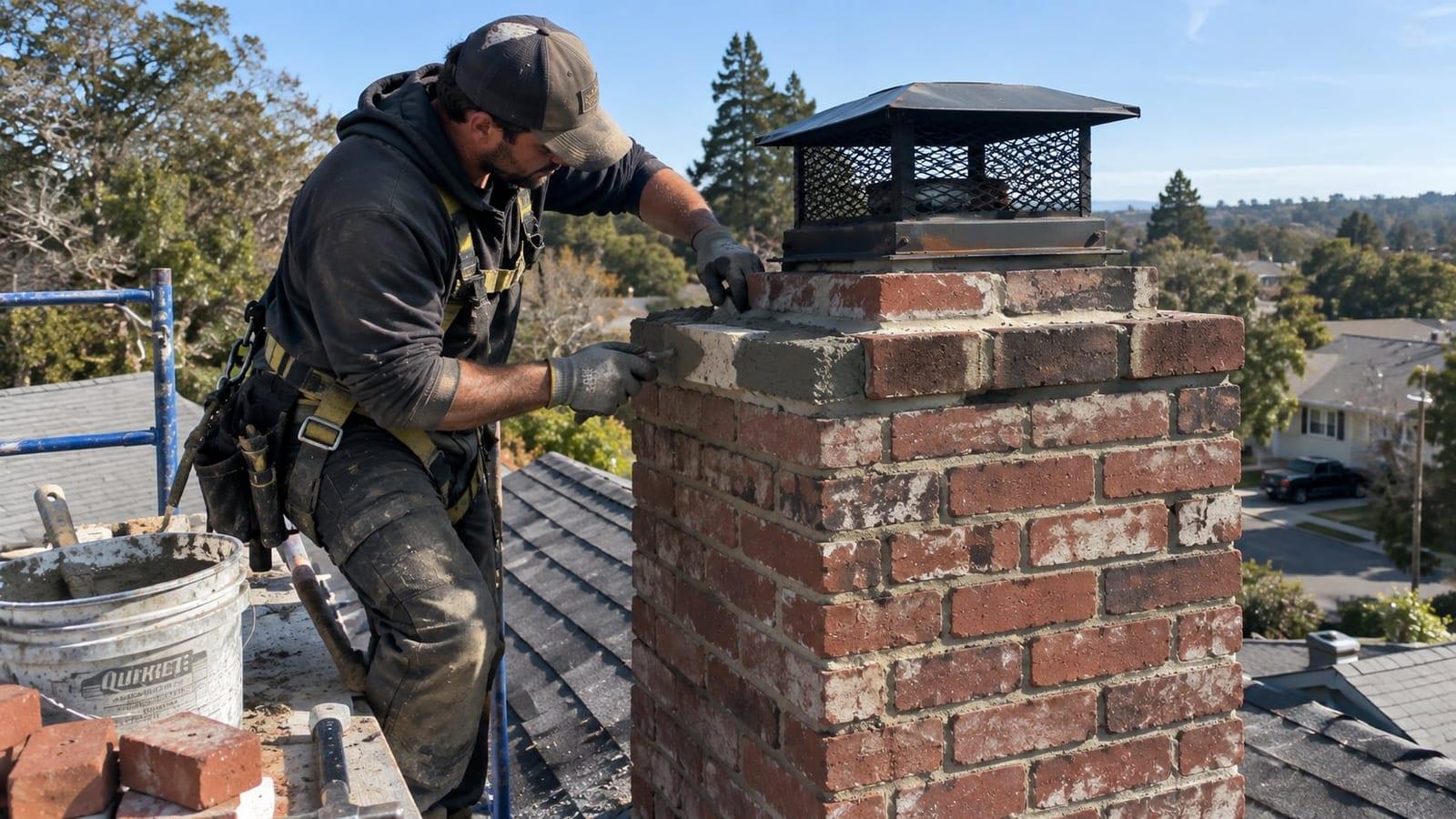
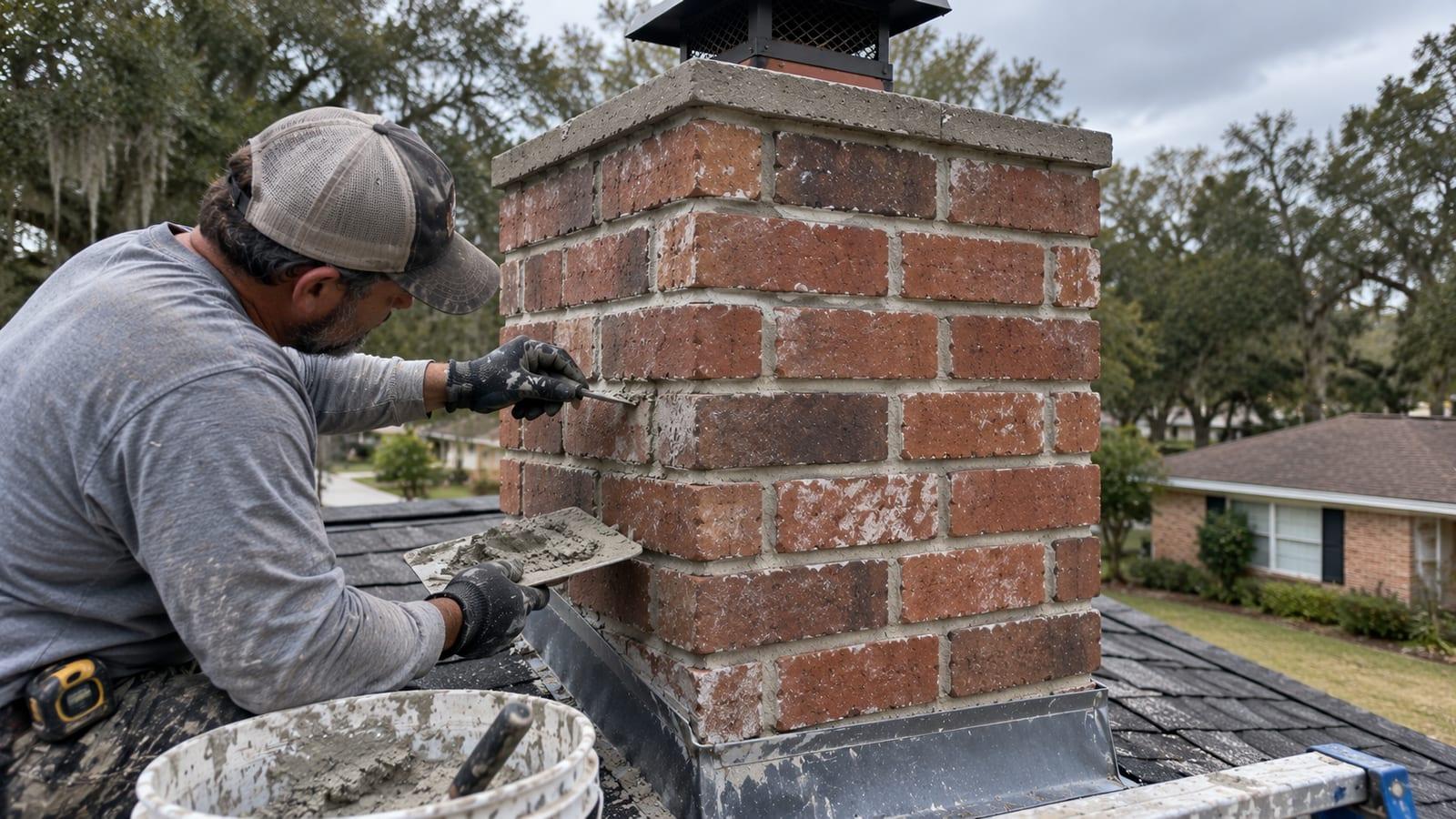
A masonry chimney is a stack of brick or stone held together with mortar. It is topped by a crown and lined inside with a flue, and a firebox sits at the base. Chimney masonry repair restores whichever of those parts has broken down. Sometimes that means grinding out and refilling worn mortar joints. Sometimes it means replacing cracked or flaking bricks, or rebuilding a section that has loosened.
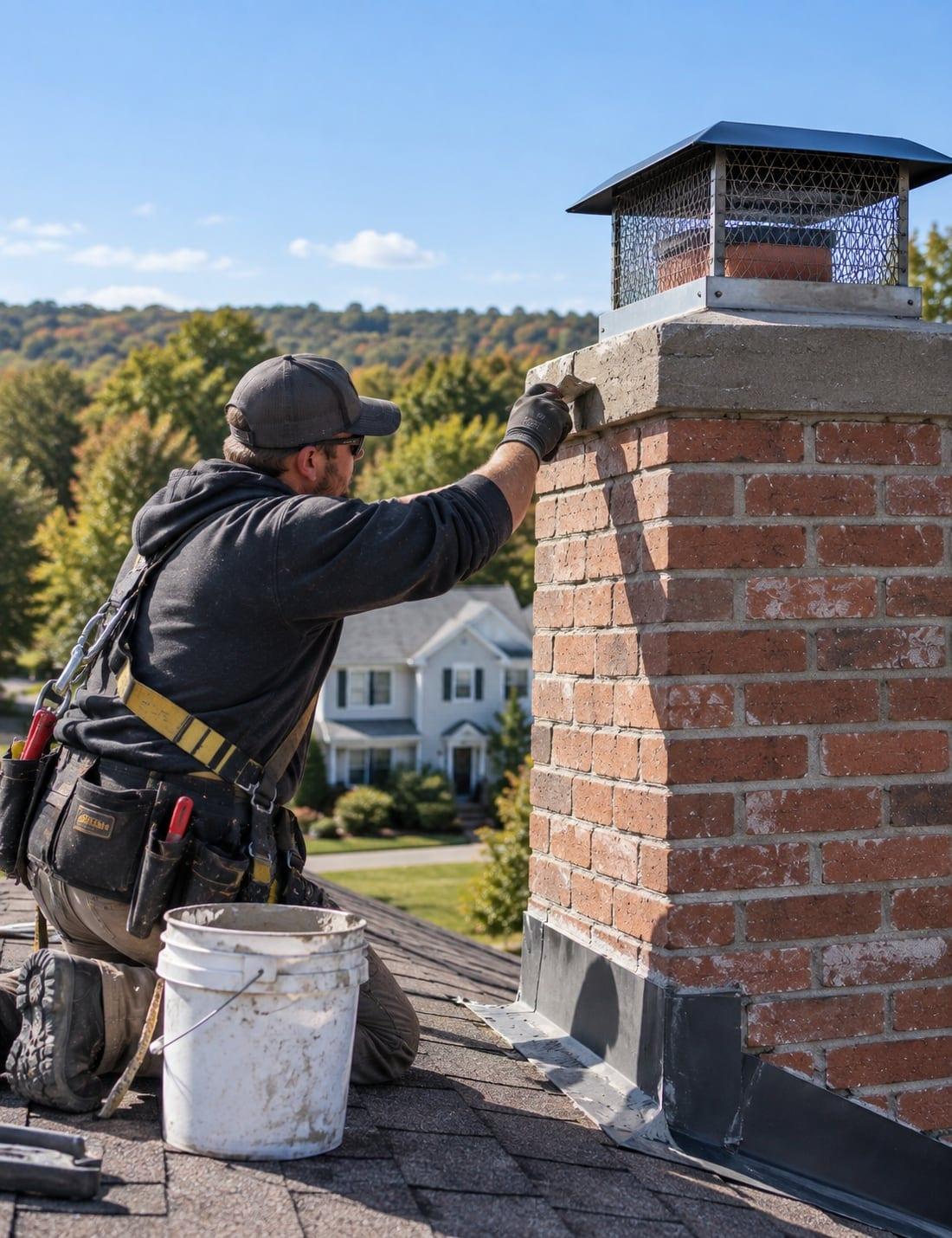
The goal is to keep the structure sound and keep water out. Mortar is meant to be the softer, sacrificial part of the wall, so it usually fails first. Catching it at that stage protects the brick around it.
- Tuckpointing and repointing: removing deteriorated mortar and packing in fresh mortar.
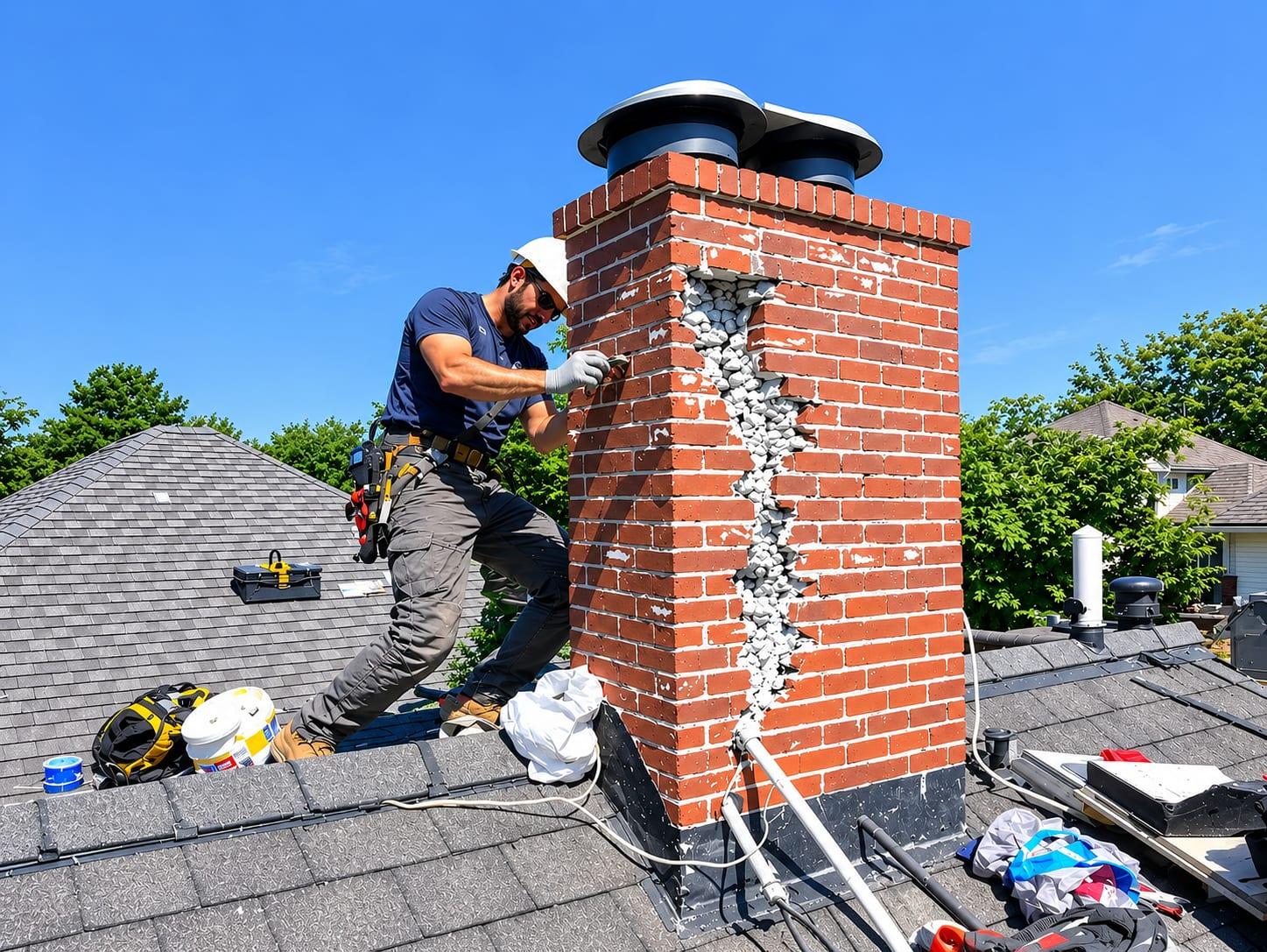
- Brick replacement: cutting out cracked or spalled bricks and setting new ones.
- Crown work: sealing or rebuilding the concrete or mortar cap on top; see repairing a cracked chimney crown.
- Firebox repair: fixing cracked firebrick and failed joints where the fire burns.
- Partial or full rebuilds: taking down and relaying masonry that is too far gone to patch.
Signs your chimney masonry needs repair
Masonry damage is often visible from the yard, the roof line or the hearth. Watch for these signs:
Common warning signs
- Mortar joints that are recessed, sandy or crumbling when touched
- Brick faces that are flaking, popping off or crumbling (spalling)
- Cracks running through the crown or across the chimney
- Bits of brick or mortar on the roof, in the gutters or in the firebox
- A chimney that leans or pulls away from the house
- Cracked or gapped firebrick inside the fireplace
- Water stains on the ceiling or wall next to the chimney
What different symptoms usually point to
01Cracked firebox
- What you may notice
- Hairline or open cracks in the firebrick, missing mortar between firebricks, loose bricks at the back or sides
- How it’s confirmed
- A close look at the firebox walls and floor, checking each joint and brick for movement or gaps
02Crown damage
- What you may notice
- Cracks or crumbling on top of the chimney, water entering around the flue, staining below the top courses
- How it’s confirmed
- A roof-level inspection of the crown surface and the joint where it meets the flue
03Cracked flue
- What you may notice
- Bits of tile in the firebox, smoke or odor where it should not be, gaps visible when looking up the flue
- How it’s confirmed
- An inspection of the flue liner from the top and bottom, often with a camera
Cracked firebox
The firebox takes direct heat every time you burn a fire, and the heat-and-cool cycle eventually cracks firebrick and breaks down the joints. Small cracks can often be repaired with refractory mortar. Loose or broken firebrick has to be replaced, because gaps let heat reach the framing behind the fireplace.
Chimney brick spalling
Spalling happens when water soaks into brick, then freezes or pushes salts to the surface, and the face of the brick pops off. Once the hard outer face is gone, the soft inside absorbs water even faster. Spalled bricks are cut out and replaced. The water source, often a failed crown, missing cap or poor flashing, needs to be fixed too, or the new brick will go the same way.
Cracked flue
Clay flue tiles can crack from heat, settling or a chimney fire. A cracked flue is a liner problem rather than a brick-and-mortar one, but it is often found during masonry work. If the inspection turns up damaged flue tile, flue liner repair options are the next thing to discuss.
Rebuilding damaged masonry
Not every chimney can be saved with patching. When bricks are loose across a whole section, a large share of the faces have spalled, or the top of the chimney has shifted, the sound approach is to take the damaged courses down and relay them with new brick and mortar. Often only the part above the roof line needs a rebuild, because that section takes the most weather.
| Feature | Repair (repoint or replace bricks) | Rebuild (take down and relay) |
|---|---|---|
| Mortar | Worn or recessed joints, bricks still solid | Joints failed through the wall, bricks loose |
| Brick condition | A few cracked or spalled bricks | Widespread spalling or crumbling |
| Structure | Chimney straight and stable | Leaning, shifting or separating |
| Scope | Targeted sections | Full courses, often from the roof line up |
Mortar
- Repair (repoint or replace bricks)
- Worn or recessed joints, bricks still solid
- Rebuild (take down and relay)
- Joints failed through the wall, bricks loose
Brick condition
- Repair (repoint or replace bricks)
- A few cracked or spalled bricks
- Rebuild (take down and relay)
- Widespread spalling or crumbling
Structure
- Repair (repoint or replace bricks)
- Chimney straight and stable
- Rebuild (take down and relay)
- Leaning, shifting or separating
Scope
- Repair (repoint or replace bricks)
- Targeted sections
- Rebuild (take down and relay)
- Full courses, often from the roof line up
What the visit involves, step by step
How a chimney masonry repair job runs
Inspect the whole chimney
We look at the exterior brick and mortar, the crown, the flashing line, the firebox and the flue to find every damaged area, not just the obvious one.
Find the cause
Most masonry damage traces back to water. We identify where it is getting in so the repair addresses the source.
Explain the scope
You get a plain description of what needs repointing, replacing or rebuilding, and what can wait.
Protect the area
Roof surfaces, landscaping and the hearth area are covered before work starts.
Remove damaged material
Failed mortar is ground out to a sound depth, and cracked or spalled bricks are cut out.
Rebuild and repoint
New brick is set and joints are packed with fresh mortar. Firebox repairs use refractory materials made for direct heat.
Finish and clean up
Joints are tooled to shed water, debris is removed, and we go over what we did and anything worth watching.
Keeping masonry from breaking down again
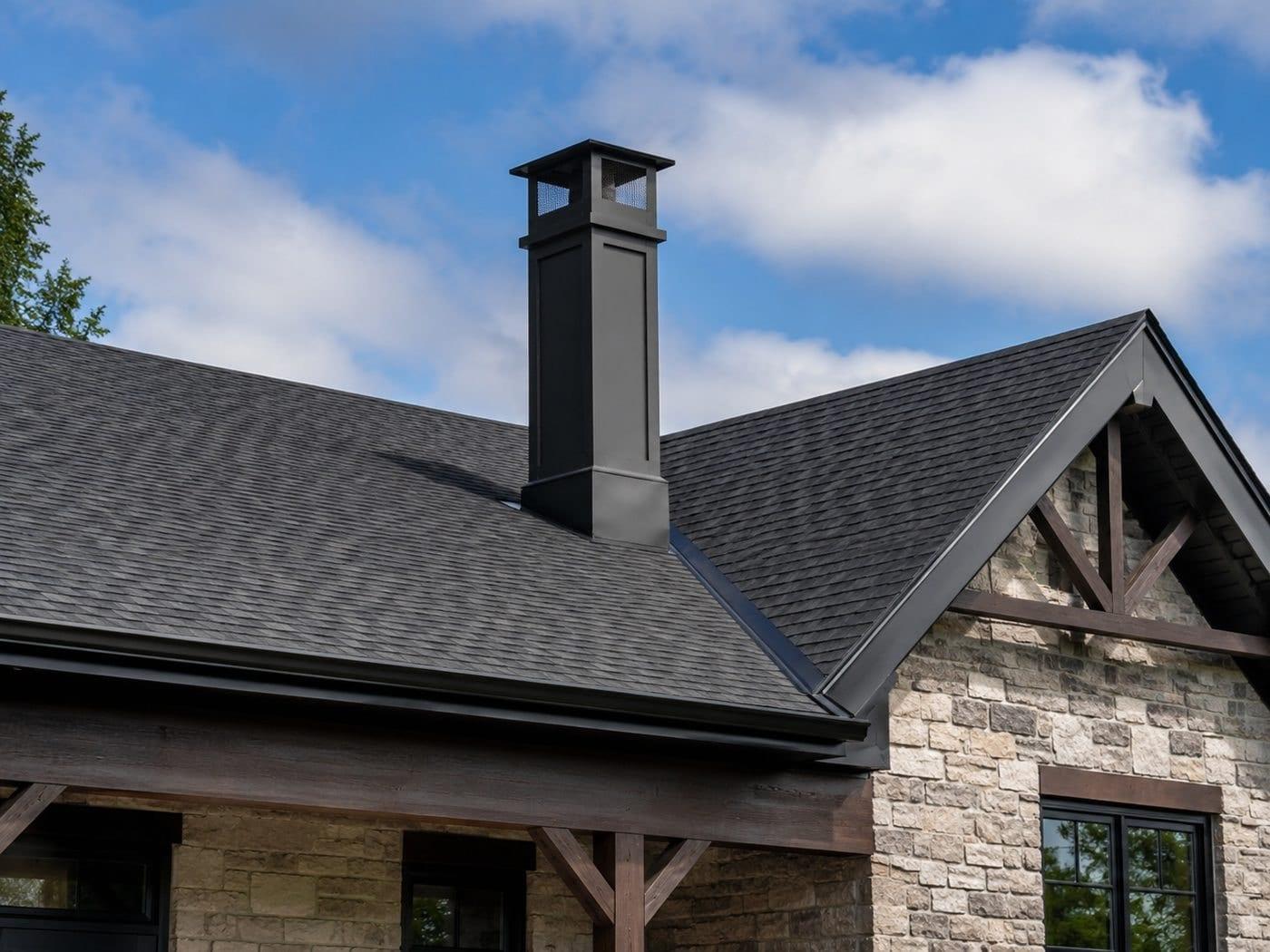
Masonry chimney maintenance comes down to keeping water out. A sound crown, a cap over the flue and tight flashing do most of the work. If you are weighing cap styles, read what to look for in a chimney cap. Damper problems can also let rain and drafts into the firebox, and damper warning signs and fixes covers what to look for there.
Do not ignore falling debris
Pieces of brick or tile landing in the firebox or on the roof mean something has come loose. Hold off on fires until the chimney has been checked.
If your home has a factory-built fireplace with a framed chase instead of a brick chimney, the problems are different. In that case, start with chase cover signs and solutions.
Booking chimney masonry repair
Get in touch to request a visit and describe what you are seeing, such as cracks, flaking brick, debris or leaks. Emergency calls are accepted, and 24-hour service runs Sunday–Friday. Commercial and property-manager work is offered as well.