The short answer: what goes wrong with dampers and how it gets fixed
The damper is the movable plate that opens the flue when a fire is burning and closes it when the fireplace sits unused. When it fails, it usually either won't open fully or won't close tightly. The common causes are rust from water getting into the chimney, creosote and debris jamming the plate, heat warping the metal, and worn handles, hinges, cables or gaskets. The fixes range from cleaning and adjusting the existing damper to replacing parts, replacing the damper itself, or installing a new damper at the top of the flue. If water caused the rust, the leak has to be fixed too, or the new parts will fail the same way.
Know which damper you have
Most fireplaces have one of two damper styles, and they fail in different ways.
| Feature | Throat damper | Top-sealing damper |
|---|---|---|
| Location | Just above the firebox, at the base of the flue | At the top of the chimney, sealing the flue opening |
| How it's operated | Handle, lever or rotating rod inside the fireplace | Cable or chain running down to a bracket in the firebox |
| Typical material | Cast iron or steel plate in a metal frame | Metal lid with a rubber or silicone gasket |
| Common failures | Rust, warping, seized pivots, broken handle or frame | Snapped or stretched cable, worn gasket, broken spring or hinge |
| Seal when closed | Metal-on-metal, so some air leaks even when working well | Gasket seal, usually tighter when in good shape |
Location
- Throat damper
- Just above the firebox, at the base of the flue
- Top-sealing damper
- At the top of the chimney, sealing the flue opening
How it's operated
- Throat damper
- Handle, lever or rotating rod inside the fireplace
- Top-sealing damper
- Cable or chain running down to a bracket in the firebox
Typical material
- Throat damper
- Cast iron or steel plate in a metal frame
- Top-sealing damper
- Metal lid with a rubber or silicone gasket
Common failures
- Throat damper
- Rust, warping, seized pivots, broken handle or frame
- Top-sealing damper
- Snapped or stretched cable, worn gasket, broken spring or hinge
Seal when closed
- Throat damper
- Metal-on-metal, so some air leaks even when working well
- Top-sealing damper
- Gasket seal, usually tighter when in good shape
Signs your chimney damper has a problem
Watch for these symptoms
- The handle won't move, or moves but the plate doesn't
- The damper opens only partway, or won't stay open
- Cold drafts or outside odors come from the fireplace when it's closed
- Smoke rolls into the room even though you opened the damper
- Rust flakes, scale or metal debris collect on the firebox floor
- Water drips or stains appear in the firebox after rain
- Rattling, banging or whistling in wind
- Scratching or chirping above the damper, a sign animals may be nesting
- A top-sealing damper's cable hangs slack or has come loose from its bracket
What causes damper problems
| Cause | What it does to the damper | What usually fixes it |
|---|---|---|
| Water entering the chimney | Rusts the plate, pivots and frame until they seize or crumble | Repair the leak source, then clean, repair or replace the damper |
| Creosote and soot buildup | Glues the plate in place and keeps it from seating | Sweeping the flue and cleaning the damper assembly |
| Repeated high heat | Warps the plate or frame so it no longer closes flat | Replacing the plate or the whole damper |
| Age and wear | Loosens handles, wears out linkages, hinges and gaskets | Replacing the worn part |
| Debris, leaves or nests | Blocks the plate from opening or closing | Removing the blockage and adding a cap or screen |
| Forcing a stuck handle | Bends rods, cracks cast parts, snaps cables | Replacing the broken hardware |
Why water is the usual culprit
A rusted damper is almost always a symptom rather than the root problem. Rain can come in through a missing or damaged cap, a cracked crown, or gaps where the chimney meets the roof. Tracking down a chimney leak before replacing the damper keeps the new hardware from rusting out. If the gap is at the roofline, repairing the flashing around the chimney is often part of the job, and on prefab chimneys a rusted chase top can drip straight onto the damper, which our guide to chase cover signs and solutions covers in detail.
Repair options, from simplest to most involved
How damper problems are typically resolved
Clean and free the existing damper
Removing creosote, soot and rust scale and freeing the pivots is often enough when the damper is sound but stuck.
Repair or replace hardware
Broken handles, bent rods, worn hinges, snapped cables and tired gaskets can usually be replaced without replacing the whole damper.
Replace the damper plate or throat damper
A warped or rusted-through plate, or a cracked frame, generally means replacement. Some throat dampers are built into the masonry and are hard to swap out.
Install a top-sealing damper
When a throat damper can't be repaired practically, a damper at the top of the flue is a common alternative. Because it closes over the flue opening, it also helps keep rain, debris and animals out.
Fix whatever caused the failure
Stopping water entry, adding a cap or sweeping regularly keeps the same problem from coming back.
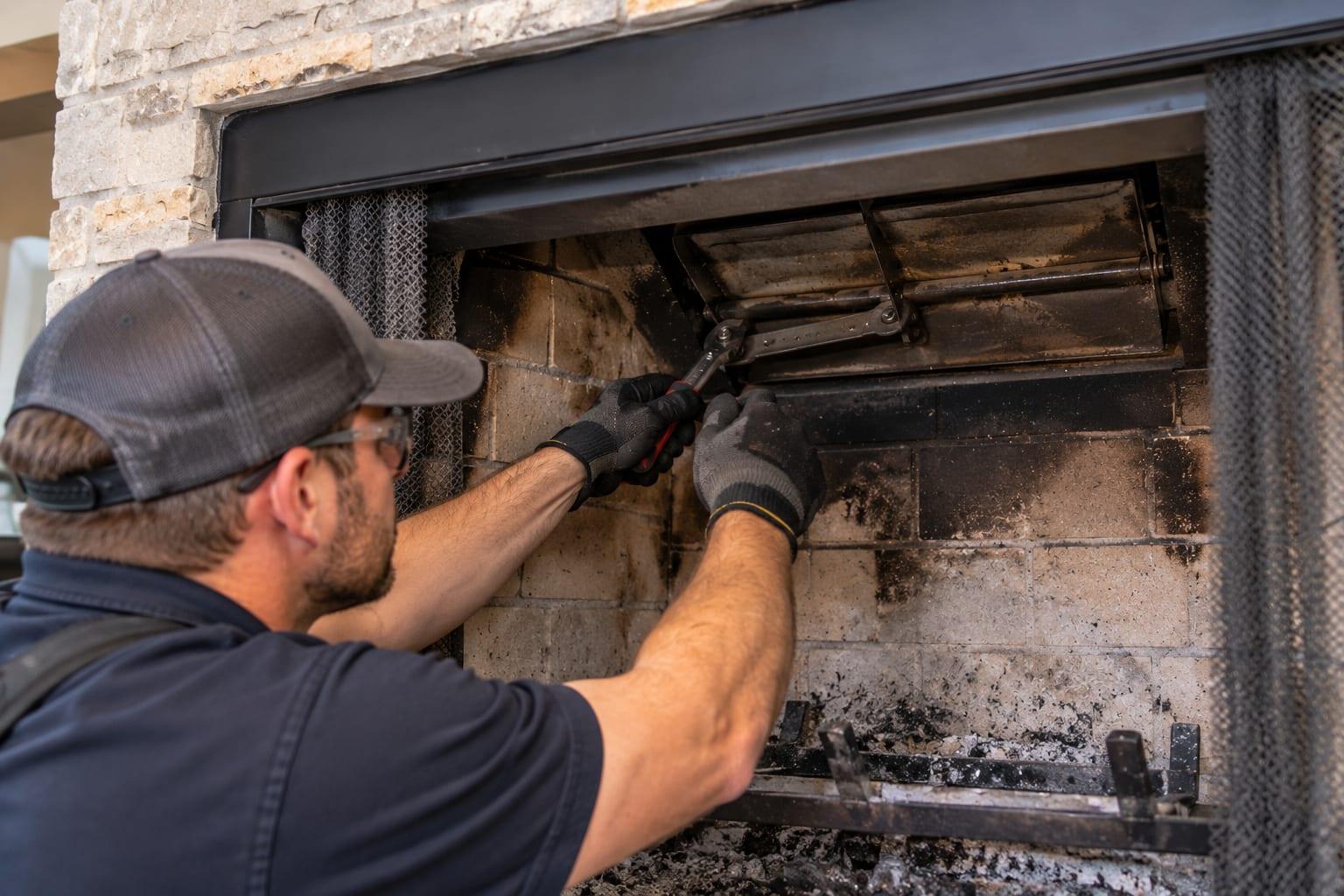
For the hands-on side, here is how our chimney damper repair works. If the inspection turns up crown, mortar or structural damage alongside the damper issue, that falls under broader chimney repair work.
Never burn a fire with the damper closed or stuck partway
A closed or partly closed damper sends smoke and carbon monoxide into the house. If you can't confirm the damper is fully open, don't light the fireplace until it's checked. Gas log sets that vent through a chimney often need a damper stop so the damper can't close all the way; follow the appliance's installation instructions.
What helps you decide between repair and replacement
- Condition of the metal: surface rust can be cleaned; plates that are thin, holed or warped need replacing.
- Damper type: top-sealing dampers usually need parts such as a cable or gasket; old throat dampers more often need replacement or a top-sealing alternative.
- How you use the fireplace: if it sits unused for long stretches, a tighter-sealing damper cuts drafts more effectively.
- Whether water is still getting in: if the leak isn't fixed, any repair is temporary.
- Cap condition: a top-sealing damper also covers the flue, while a throat damper relies on a cap above it; a buyer's guide to chimney caps explains the choices.
If you're dealing with a stuck or leaking damper, get in touch to request an estimate for damper repair, leak repair or a chimney inspection.