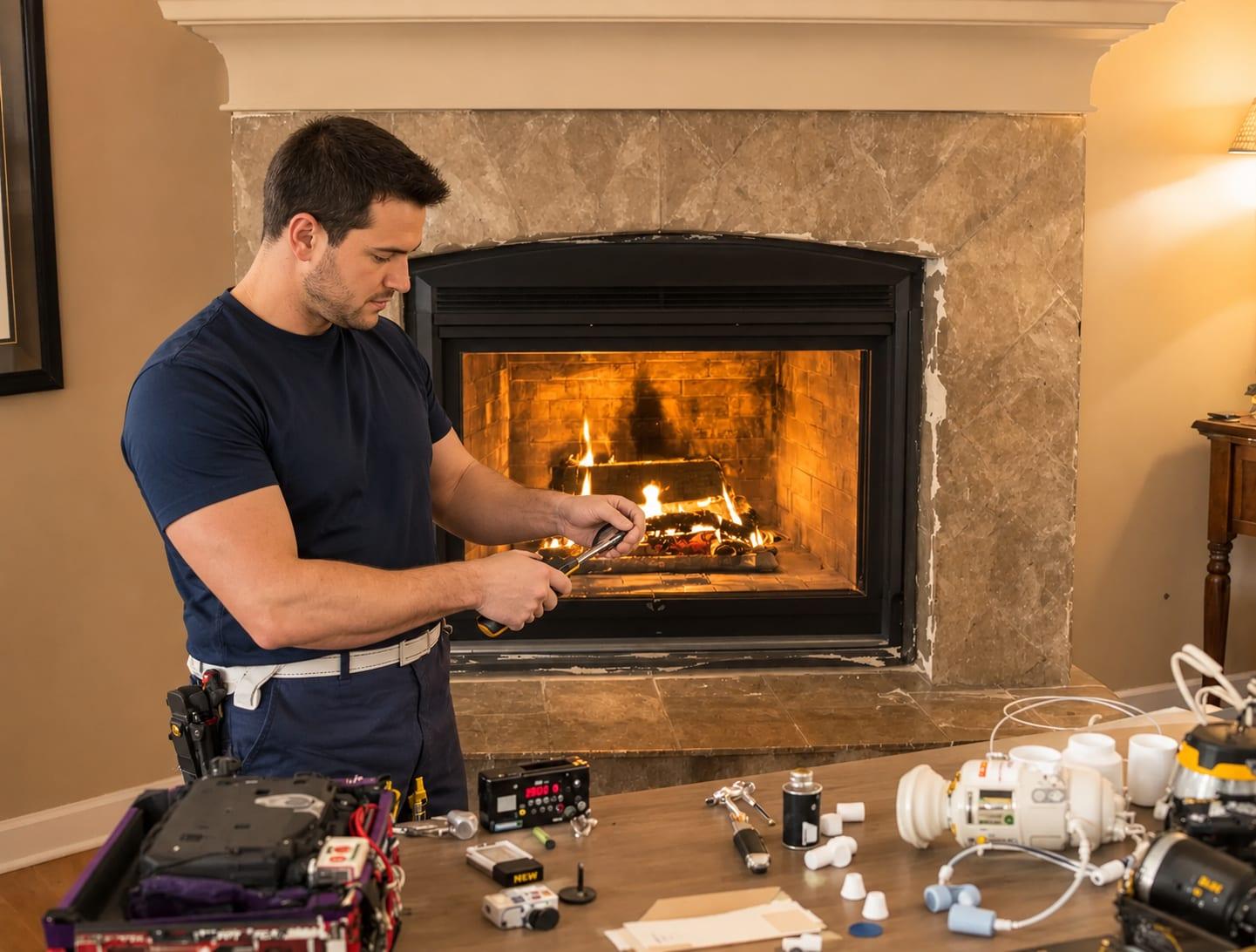
When smoke comes into the room instead of going up the chimney
A working fireplace pulls air in from the room, sends it through the fire and carries the smoke up the flue. When that draft is weak, blocked or reversed, smoke takes the easiest path, and that path is often into the house. It can happen only when the fire is first lit. It can also happen through the whole burn, or only on certain days. Smoke indoors is never something to simply put up with, because the same air that carries smoke can carry carbon monoxide.
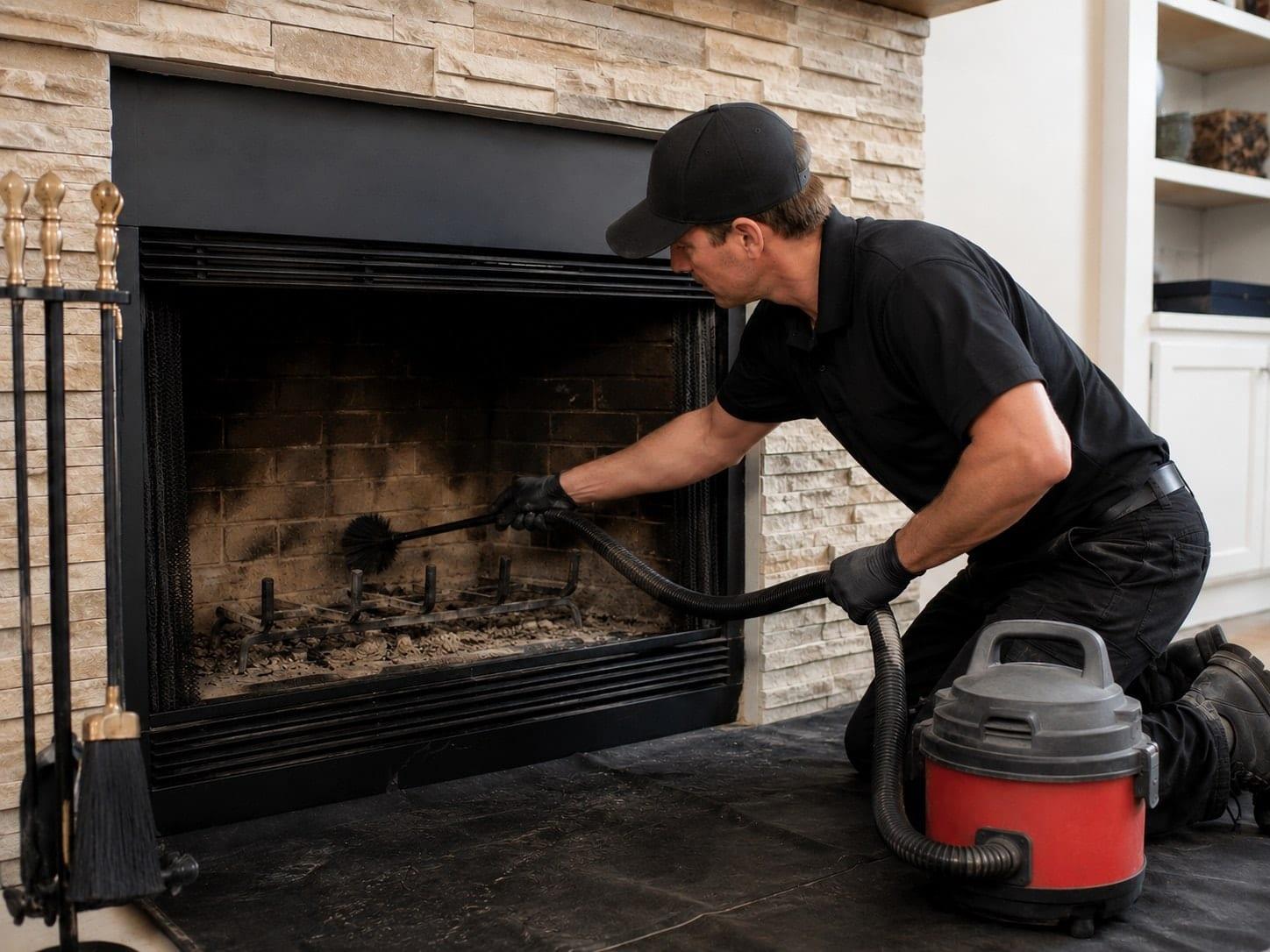
Common signs of chimney smoke coming indoors
- Smoke rolling out over the top edge of the fireplace opening, especially when the fire is starting or dying down
- A haze in the room or a smoky smell on curtains, furniture and clothes after a fire
- Black soot stains on the brick or wall above the fireplace opening
- Smoke alarms going off while the fireplace is in use
- A smoky or sour odor from the fireplace even when it isn't lit
- Fires that are hard to start, burn poorly or smolder instead of flaming
- Soot or a dark film on the glass of a glass-front fireplace or insert
Possible causes of fireplace smoke in the house
Several problems can produce the same symptom, and more than one can be present at once. The list below covers the usual possibilities. Only an inspection of the fireplace, flue and chimney top can confirm which one applies to your home.
| Possible cause | What you might notice | How it's checked |
|---|---|---|
| Damper closed, partly closed or stuck | Smoke pours out right away; the damper handle is hard to move | Damper operation and seal checked from the firebox |
| Blocked flue from creosote, debris or an animal nest | Smoke builds steadily; sometimes odors, noises or debris in the firebox | Visual and camera inspection of the flue |
| Cold flue or cold air sinking down the chimney | Smoke spills mainly at startup, then improves once the fire is going | Draft observed during a test burn and the chimney layout reviewed |
| Negative air pressure inside the house | Smoke gets worse when exhaust fans, a range hood or a dryer are running | Draft compared with fans and appliances on and off |
| Rough, damaged or poorly shaped smoke chamber | Persistent smoking, sometimes with soot stains above the opening | Smoke chamber inspected from below and with a camera |
| Damaged liner or flue tiles | Smoke or odor, sometimes in rooms away from the fireplace | Camera inspection of the full flue |
| Missing, damaged or clogged chimney cap | Downdrafts on windy days, debris or nesting material in the flue | Chimney top inspected |
| Fireplace opening too large for the flue | Ongoing smoking no matter how the fire is built | Firebox opening and flue size measured and compared |
| Wet or unseasoned firewood | Hissing, heavy smoke and fires that won't catch | Fuel and burning habits reviewed |
How urgent is smoke in the house?
Stop using the fireplace until it's checked
Smoke coming into the house means combustion gases are coming in too, and carbon monoxide has no smell or color. If a carbon monoxide alarm sounds, or anyone feels dizzy, sick or has a headache, get everyone outside and call emergency services from there. If anyone has a headache, dizziness or nausea while an appliance runs, turn it off if you can, get everyone outside and call 911.
Even a mild smoking problem is worth fixing before the next fire. A blocked or damaged flue can also be a fire risk, and the problem rarely clears up on its own. If smoking only happens for a minute at startup and stops, it's still worth an inspection. A startup cold flue is a common cause, but the same symptom can come from a partial blockage.
Gas units should not put smoke into a room at all. If a gas fireplace is producing smoke or soot, turn it off and leave it off until it's inspected. If you smell gas, leave the house and call your gas utility from outside.
What fixes fireplace smoke in the house
The fix depends on the cause, so the work starts with finding it. When the problem is weak or reversed airflow, fireplace draft repair addresses the conditions that keep smoke from rising, from damper problems to how the firebox and flue work together. When the trouble sits just above the damper, smoke chamber repair smooths and reshapes that area so smoke moves up the flue instead of rolling back out.
How a smoking fireplace is usually handled
Inspection
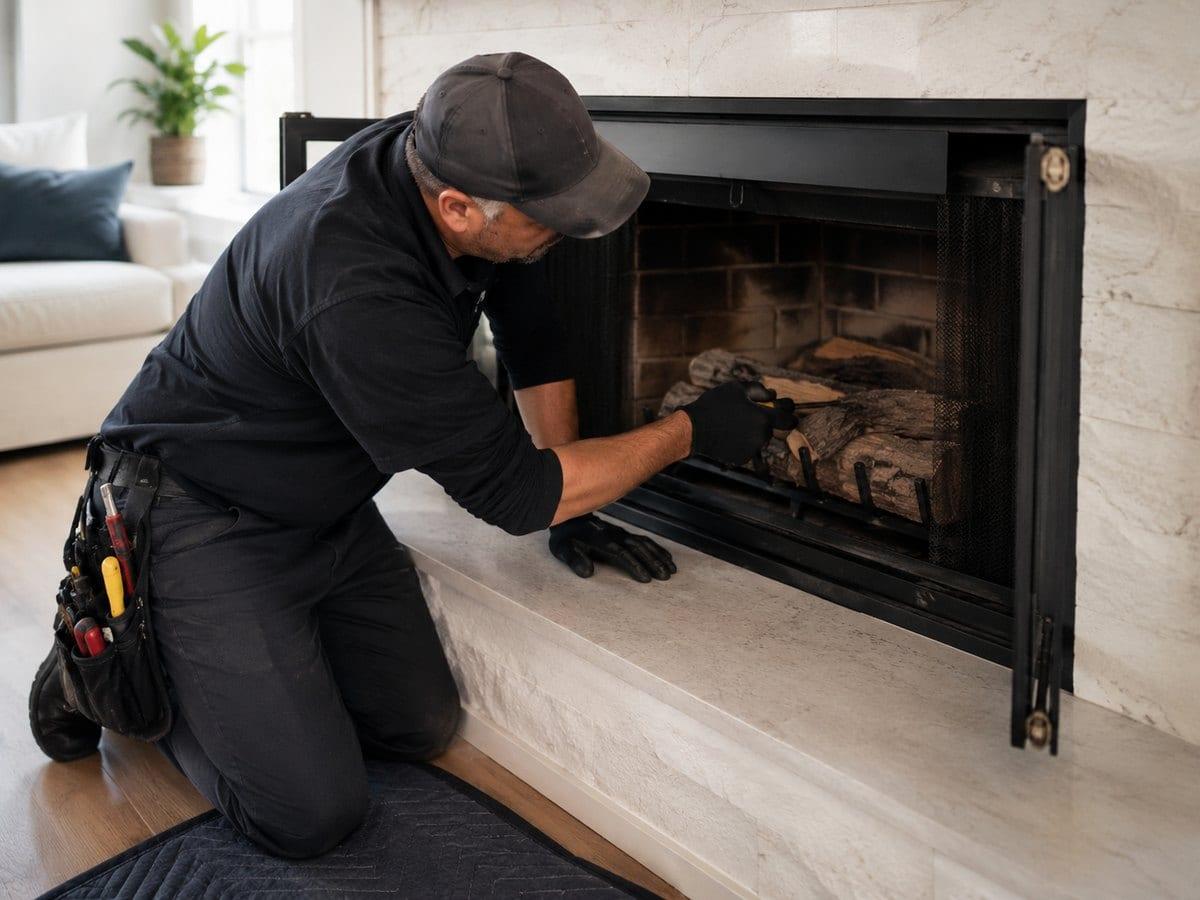
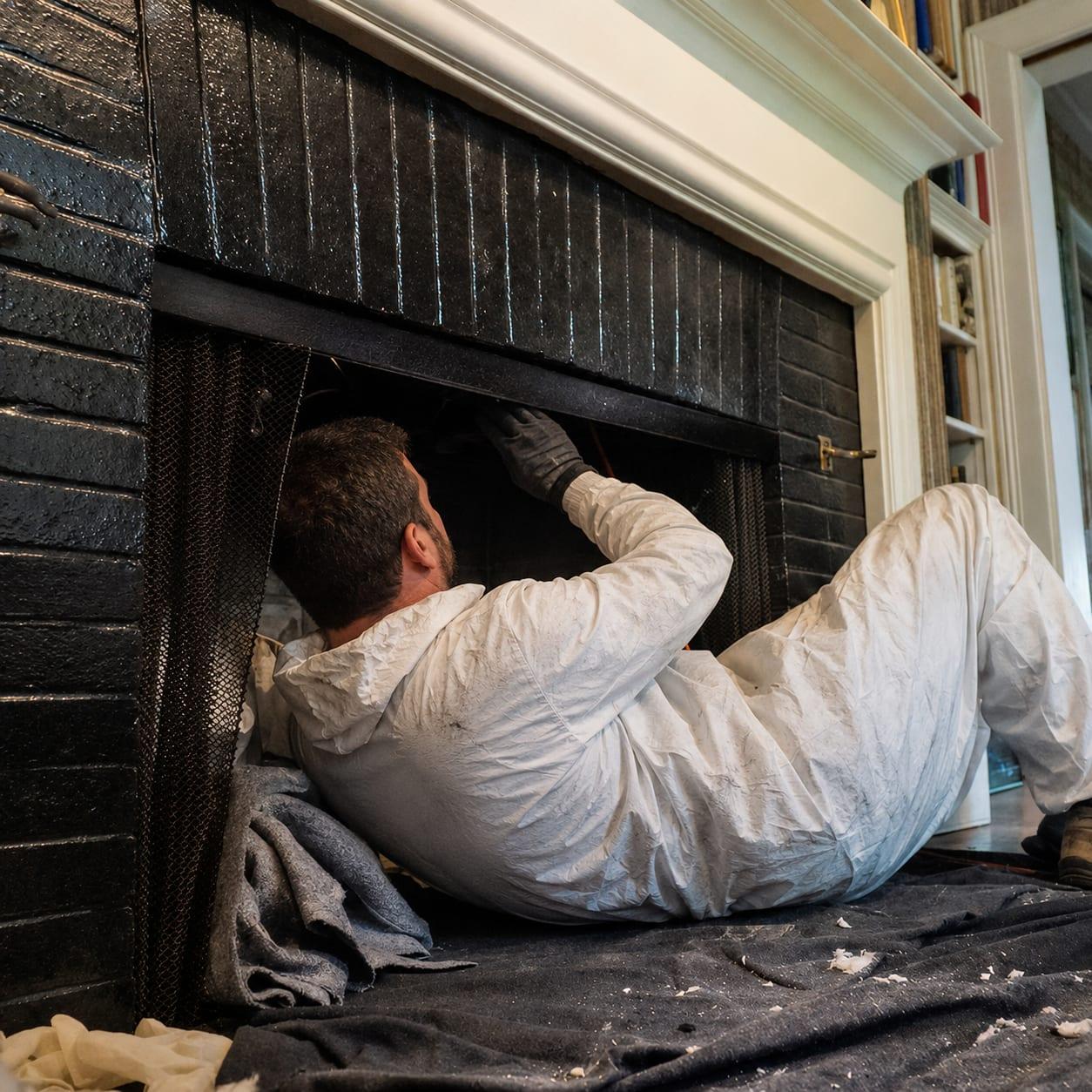
The fireplace, damper, smoke chamber, flue and chimney top are checked, with a chimney camera inspection when the inside of the flue needs a closer look.
Clearing what's in the way
Creosote removal, chimney blockage removal or animal and nest removal clears the flue when buildup or debris is part of the problem.
Repairing the cause
Depending on the findings, the fix may be chimney damper repair, smoke chamber repair, chimney liner repair, a chimney cap installation or other draft repair work.
Testing the draft
The draft is checked again so you know the smoke is going where it should.
If an open fireplace still isn't a good fit for how you heat your home, a closed unit is one option some homeowners consider. Our guide to fireplace insert vs freestanding wood stove walks through the differences.
What not to do while the fireplace is smoking
- Don't close the damper while the fire or embers are still burning; that pushes more smoke into the room. If the fireplace has gas logs, leave the damper as the installer set it — vented gas logs need it open.
- Don't throw water on the fire to stop the smoke; it creates a burst of steam and smoke and can damage a hot firebox.
- Don't use lighter fluid, gasoline or other accelerants to get a stubborn fire going.
- Don't burn trash, cardboard, wrapping paper or treated wood.
- Don't keep lighting fires and hoping the smoking stops on its own.
- Don't climb onto the roof to look down the chimney yourself.
Related problems
Smoking and odor problems often travel together. A sour or smoky smell between fires can come from the same buildup or moisture behind a smoking problem, so learn what causes fireplace smells bad if both are happening. On glass-front fireplaces and inserts, a haze or dark film on the glass can be another clue, and fixing foggy fireplace glass covers those causes.