On this page
What fireplace repair covers
Fireplace repair means restoring the parts that hold the fire and move smoke up the chimney. That includes the firebox, the damper, the smoke chamber above it, the hearth and surround, the doors and glass, and the burner and ignition parts on gas units. Some calls are a single fix, like a damper that won't close. Others are closer to fireplace restoration, where worn masonry, failing parts and a tired surround are all brought back together.
When a different job fits better
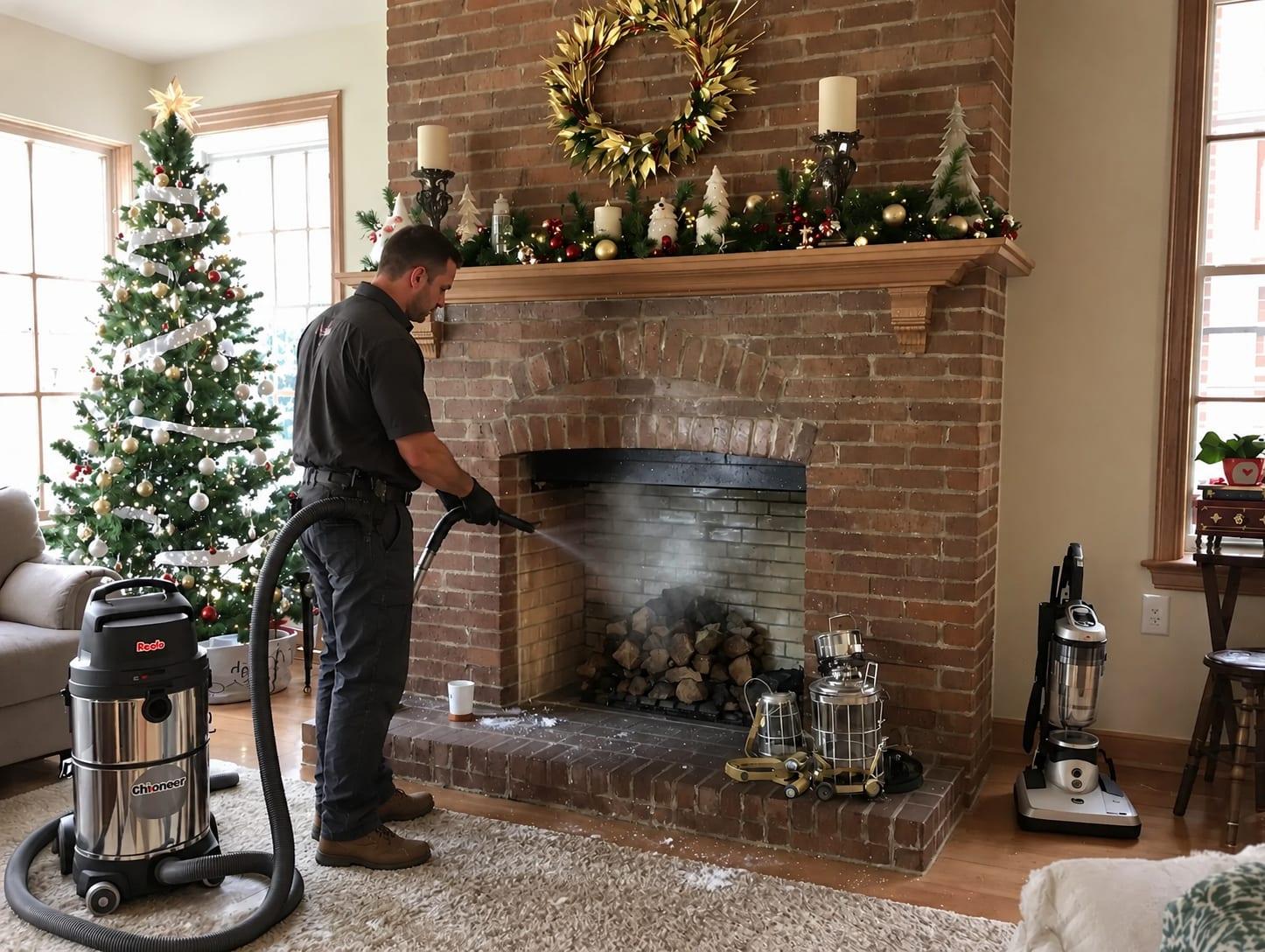
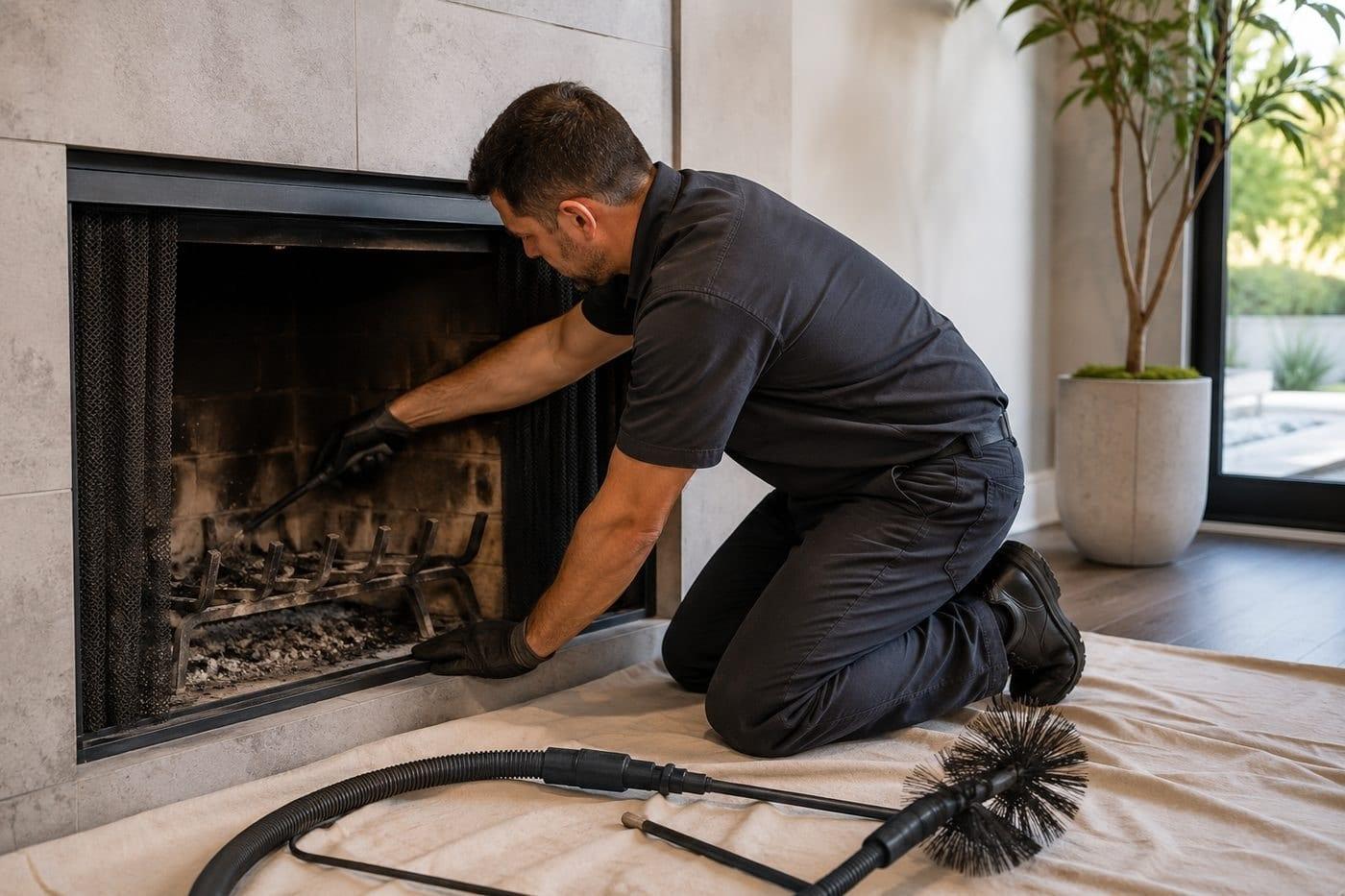
- If nothing is broken but the firebox and flue are coated in soot and creosote, fireplace cleaning is the right first step.
- If you need a written condition report for a home sale or an insurance claim, book a fireplace inspection instead of a repair visit.
- If you want to switch fuels, for example from wood to gas, the job is a fireplace conversion.
- If the unit is worn out, or a factory-built model is no longer worth fixing, look at old fireplace repair and replacement.
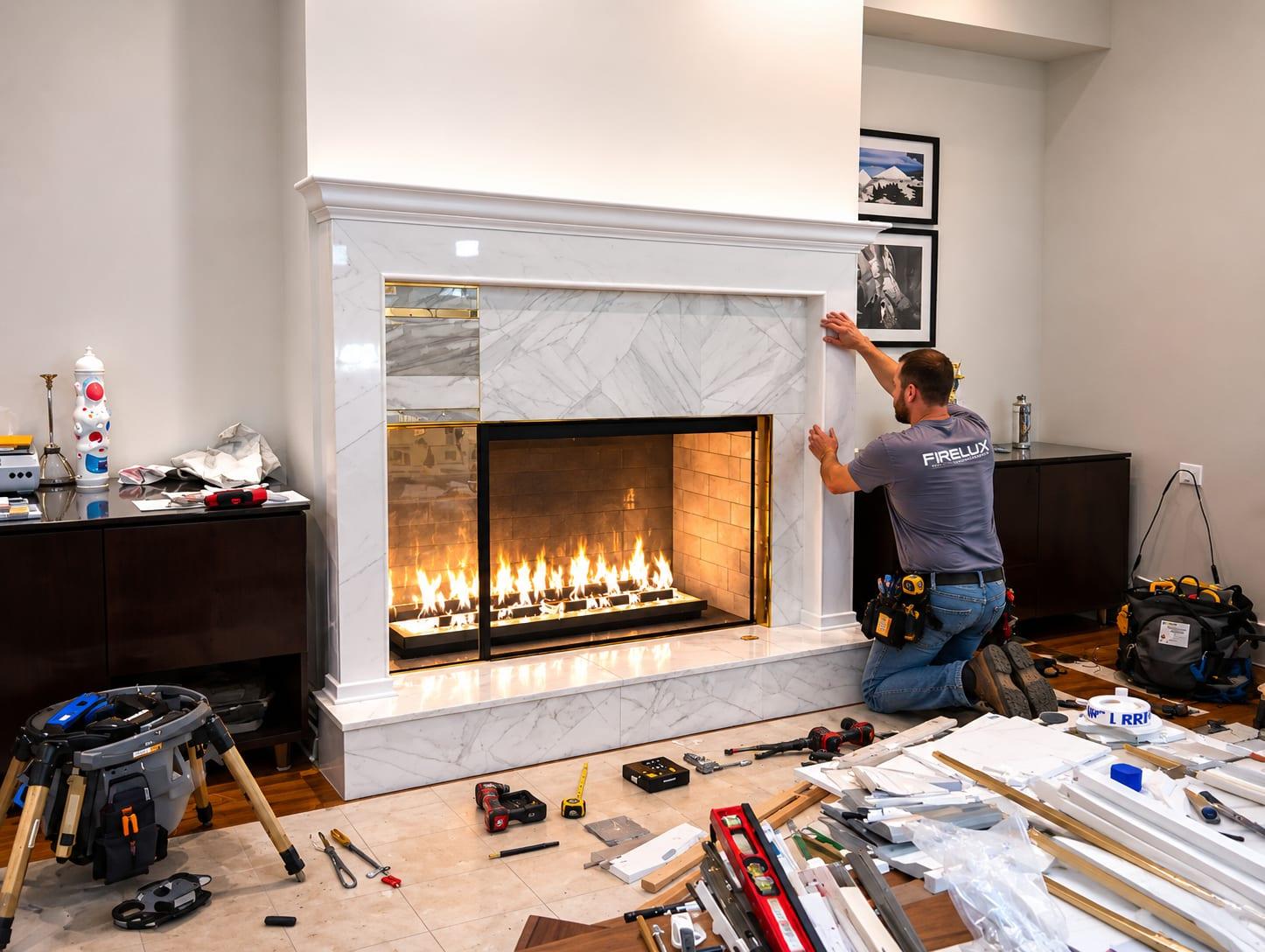
- If there's no fireplace yet, or you want one in a new spot, our fireplace installation service is the job you need.
Signs your fireplace needs repair
Common signs it's time for a repair
- Smoke drifting into the room instead of going up the flue
- Cracked, loose or missing firebrick, or mortar joints that crumble when touched
- Cracked or crumbling refractory panels in a factory-built fireplace
- A damper that sticks, won't open fully or lets a draft into the room when it's closed
- Rust, flaking metal or water stains inside the firebox, which can also point to a problem that needs chimney leak repair
- Cracks in the hearth or surround, or gaps opening between the surround and the wall
- Glass doors that won't latch, rattle in the frame or have cracked glass
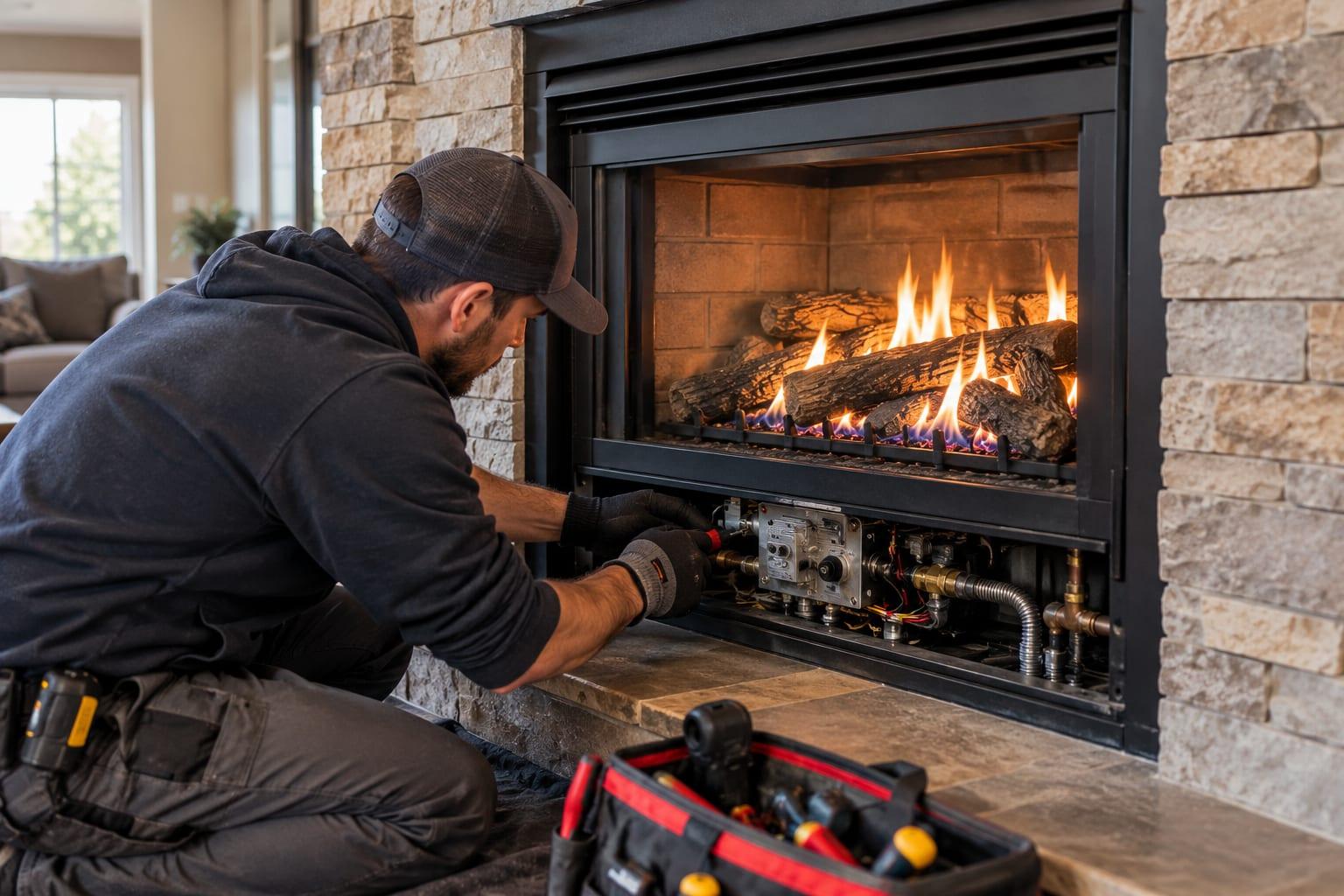
- A gas fireplace pilot that won't stay lit, a burner that won't ignite, or soot building up on the glass
Fixing a smoky fireplace
A smoky fireplace is one of the most common repair calls, and the cause isn't always inside the fireplace. Smoke spills into the room when the damper doesn't open fully, debris or a nest is partly blocking the flue, the smoke chamber is rough or damaged, the fireplace opening is too large for the flue, or the house is pulling air down the chimney. Wet wood makes every one of these worse. A smoky fireplace repair starts with finding which of these is happening. The fix might then be damper repair, blockage removal, smoke chamber repair or draft repair, rather than a guess.
How a fireplace repair visit works
From first call to a working fireplace
Describe the problem
Tell us what you've noticed, when it happens and what kind of fireplace you have. For factory-built, gas or electric units, the brand and model from the rating plate help with sourcing parts.
Look over the fireplace
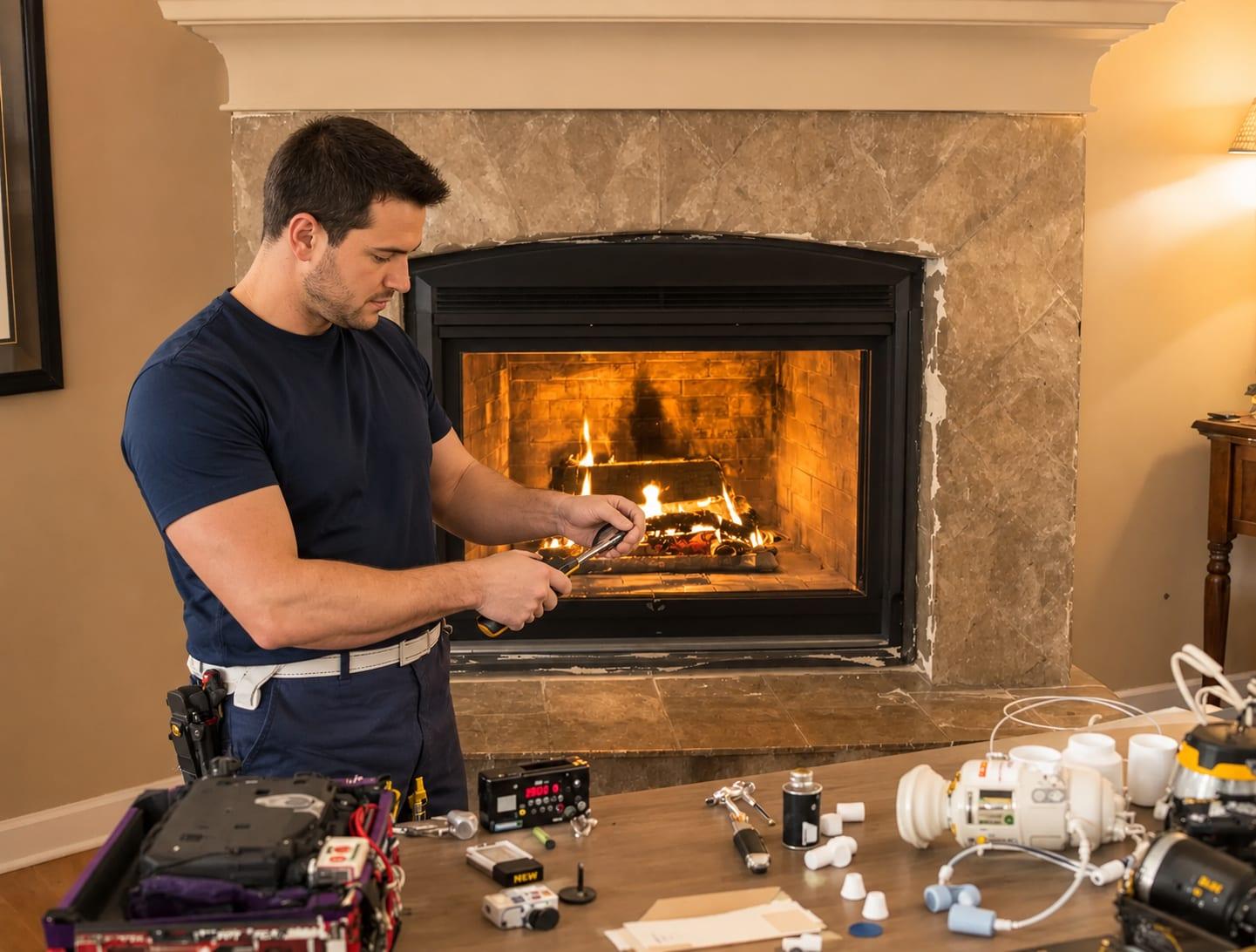
We check the firebox, damper, smoke chamber, hearth, surround and doors. On gas units we also check the pilot, igniter and burner. When the cause may sit higher in the flue, a camera shows what can't be seen from below.
Go over the findings
Before any work starts, you get a plain explanation of what's wrong, what needs fixing now and what can wait.
Make the repair
Floors and furniture near the fireplace are covered first. Smaller repairs can often be done on the first visit. Model-specific parts, such as replacement panels, may need to be ordered. Fresh mortar needs time to cure before a full fire, and you'll be told how long to wait.
Test and hand it back
The damper is opened and closed, doors are checked, and gas units are lit so the flame can be checked. You're told anything to keep an eye on.
Parts, materials and fuel types
What gets repaired depends on the kind of fireplace you have. We work on all major brands of factory-built, gas and electric units, and the approach changes by type.
| Fireplace type | Parts that commonly need repair |
|---|---|
| Masonry wood-burning | Firebrick, refractory mortar, damper, smoke chamber, hearth, surround |
| Factory-built (prefab) wood-burning | Refractory panels, damper, metal firebox, doors and glass |
| Gas fireplace or gas logs | Pilot assembly, igniter, burner, logs, glass |
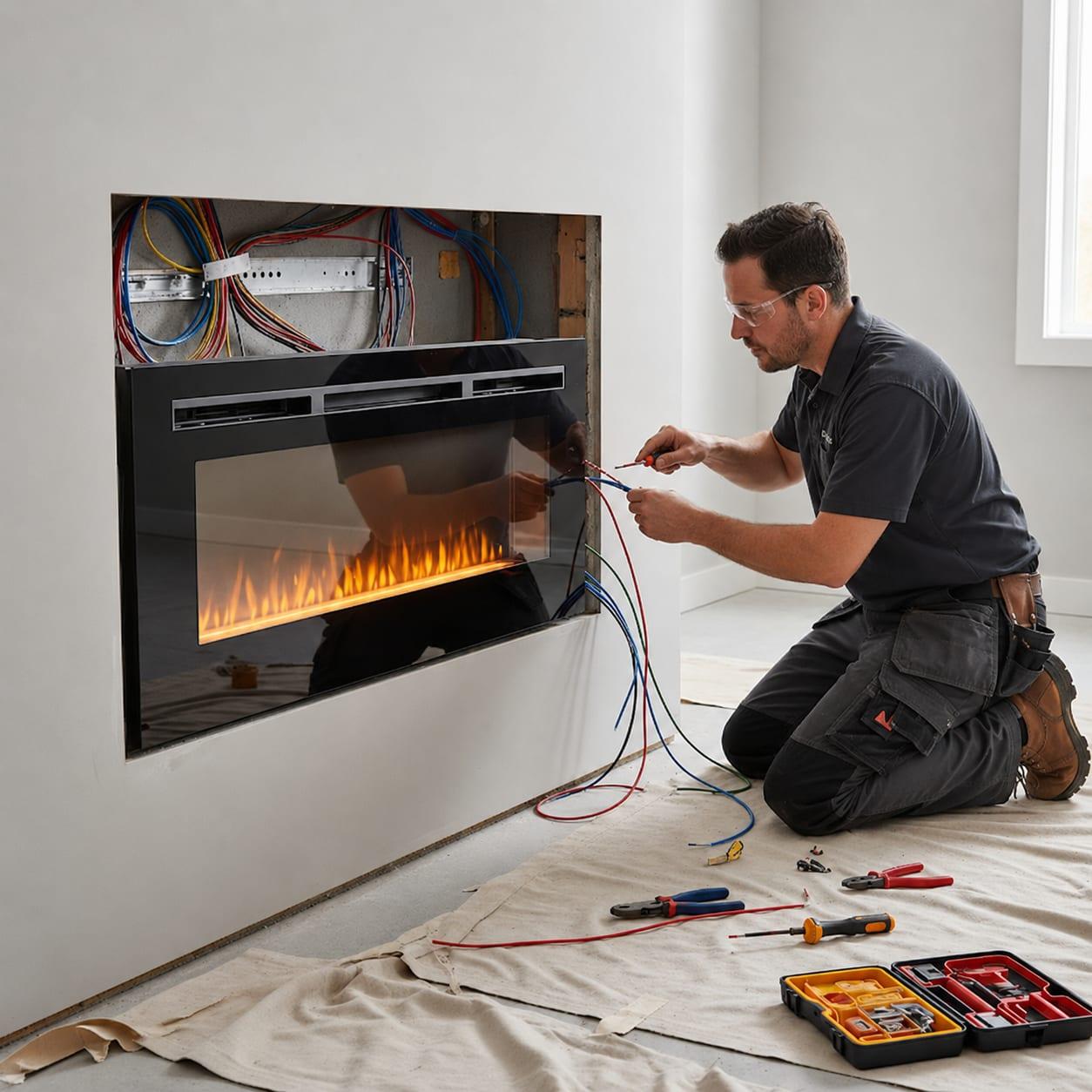
| Electric fireplace | Heater, flame effect, controls |
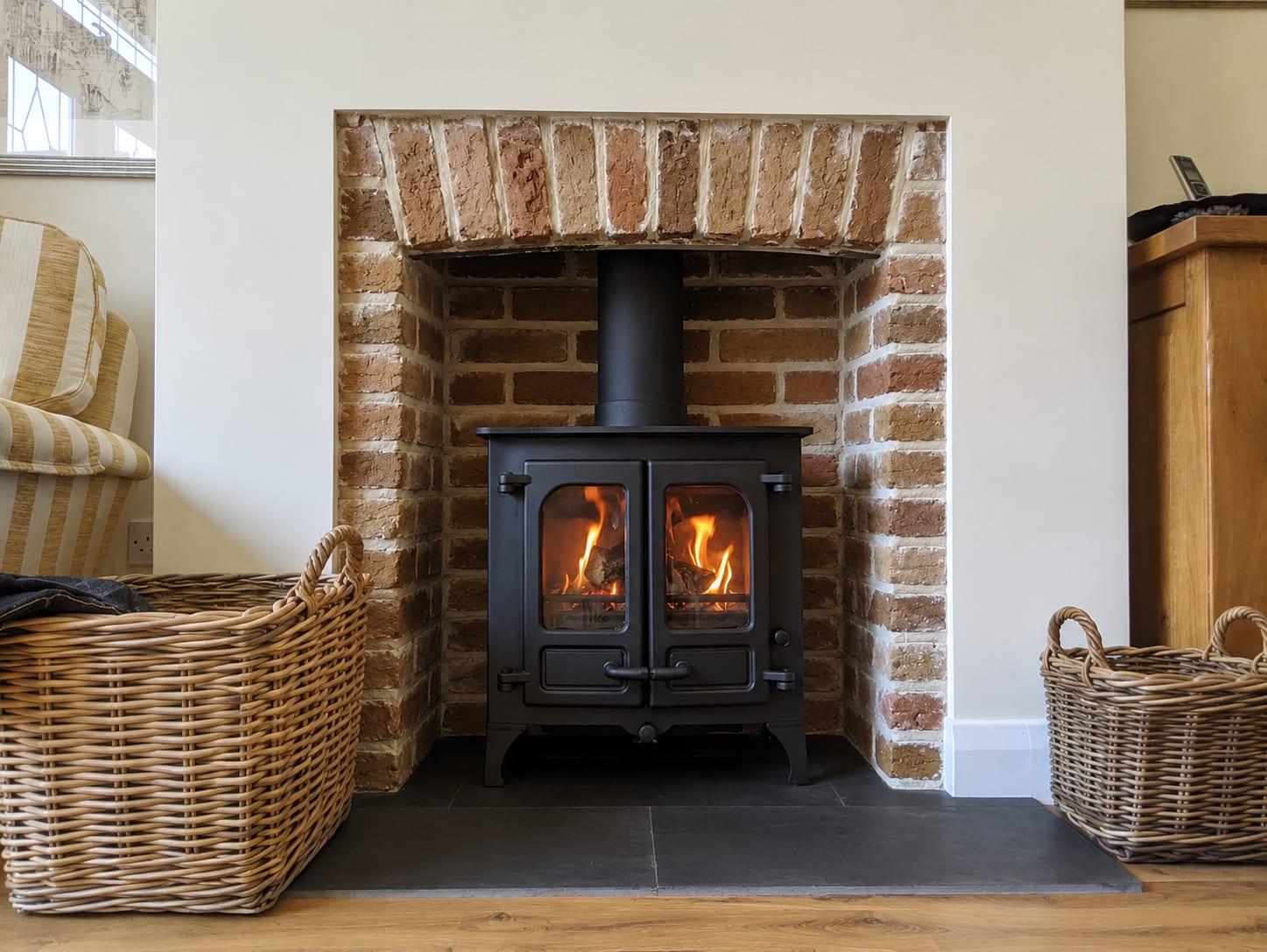
| Fireplace insert or wood stove | Door gaskets, glass, firebrick lining |
Wood-burning fireplaces take the hardest use. Most of the damage comes from heat and moisture breaking down brick, mortar and metal, and how wood-burning fireplace repair works covers those jobs in more detail. Gas fireplace and gas appliance work is offered, from a pilot that won't stay lit to burners and logs. Electric fireplace repair covers units that won't heat or whose flame effect has failed. Cracked glass and doors that won't close are handled as fireplace glass replacement and door repair.
Fireplace masonry repair
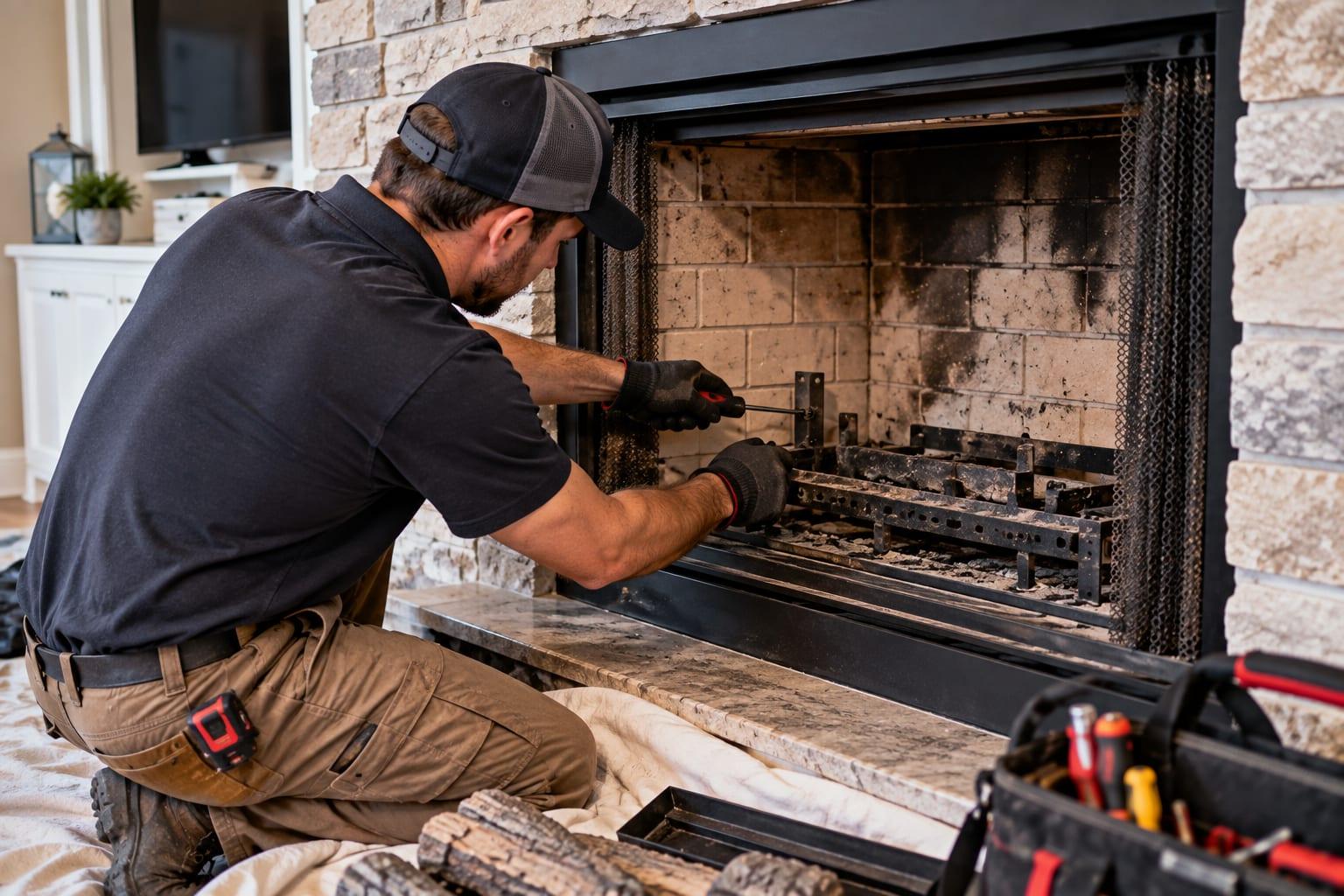
Fireplace masonry repair is work on the brick, stone and mortar of a masonry fireplace. The firebox is lined with firebrick set in refractory mortar, which is made to stand up to direct flame. Ordinary mortar used there breaks down quickly. Typical jobs include repointing eroded joints, replacing cracked or spalled firebrick, rebuilding a damaged firebox wall, smoothing a rough smoke chamber, and repairing cracks in the hearth or brick surround. When the damage is confined to the firebox itself, firebox repair is the specific job. A masonry fireplace with cracks running through the hearth and face may need more than that.
Fireplace damper repair
The damper is the metal plate that closes off the flue when the fireplace isn't in use. Heat warps dampers, rust seizes them, and their handles and chains break. A damper that won't close lets heated or cooled air escape all year. One that won't open fully sends smoke into the room. Repair can mean freeing and adjusting the plate or replacing the handle and hardware. When the old damper is too far gone to fix, a replacement damper is fitted.
Fireplace makeover and restoration
A fireplace makeover changes how the fireplace looks. It can mean refacing the surround, updating the hearth or refreshing the area around the mantel. It often makes sense to do it alongside repairs, since the surround sometimes has to come apart anyway to reach damaged masonry. Restoration works the other way: it keeps the original character of an older fireplace while repairing what has worn out. If your makeover also involves changing fuel, our guide to electric vs gas fireplace options lays out the trade-offs before you decide.
Safety while you wait for a repair
Before the next fire
Hold off on fires if you see cracked firebrick or panels, a damper that won't open, or smoke coming into the room, because heat and gases can reach places they shouldn't. If you smell gas near a gas fireplace, don't light anything or flip switches. Leave the house and call your gas utility or 911 from outside. Test the smoke and carbon monoxide alarms near the fireplace before you use it again.
Booking fireplace repair in Atlanta
To schedule a repair, call or request an estimate and describe what you're seeing. A photo of the firebox or the unit's model plate helps. 24-hour service runs Sunday–Friday, and emergency calls are accepted. Commercial and property-manager work is offered as well.
Homeowners outside the city can find details for fireplace repair in Marietta, fireplace repair in Dunwoody and fireplace repair for homes in Sandy Springs.
Related work covered on this page
- Custom Fireplace Design
- Ethanol Fireplace Repair and Installation
- Fireplace Makeover
- Fireplace Refacing
- Floating Fireplace Installation and repair
- Old Fireplace Redesign
- Open Flame Fireplace Repair and Installation