On this page
What fireplace glass cleaning involves
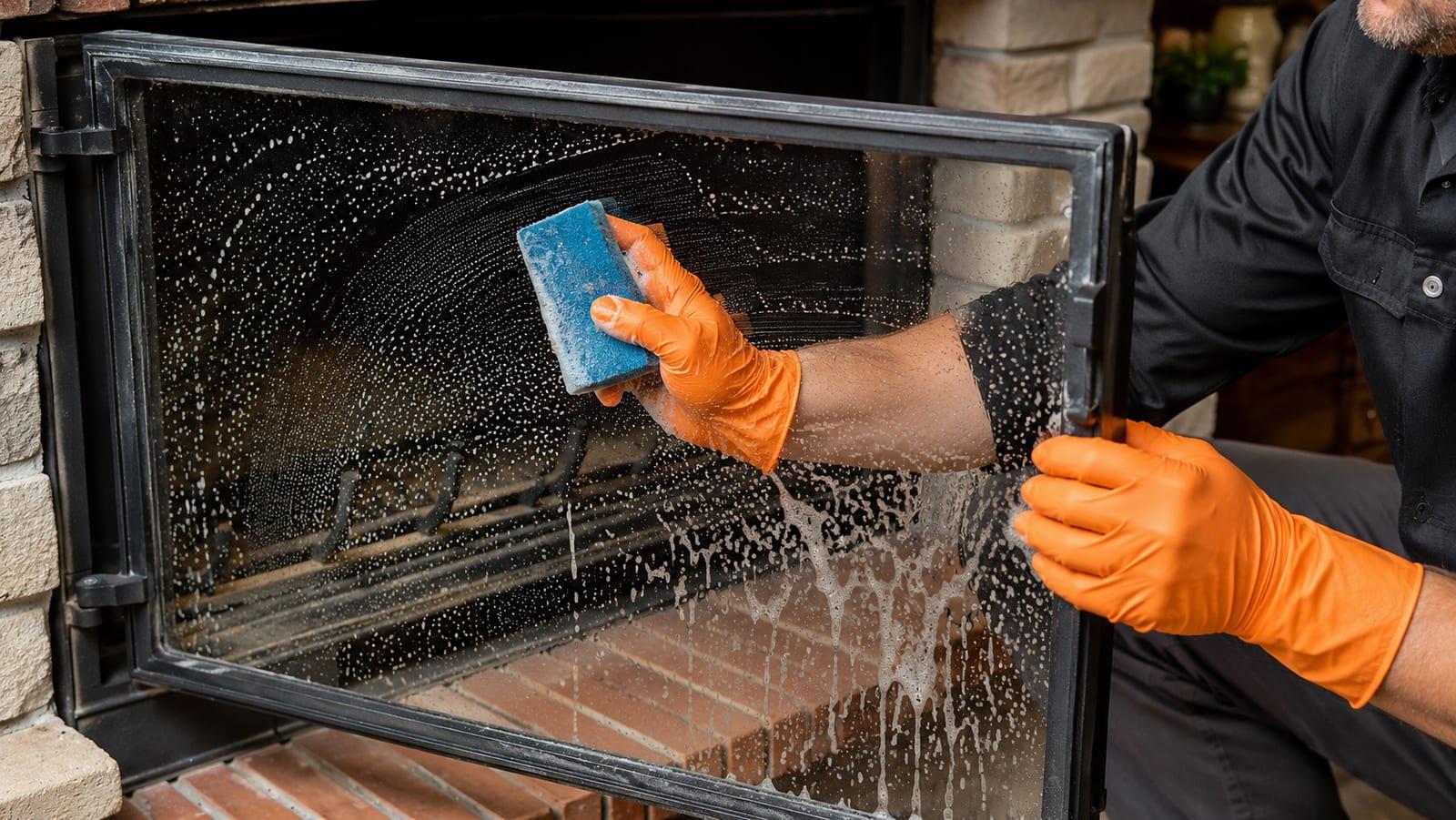
Fireplace glass cleaning removes the deposits that build up on the inside of fireplace doors, insert windows, wood stove glass and the sealed glass fronts of gas fireplaces. The job is more than wiping a window. Most of this glass is tempered glass or heat-resistant ceramic glass, and the wrong cleaner or a scouring pad can leave permanent scratches or a cloudy surface. We pick the cleaning method by the glass type and by what is actually stuck to it.
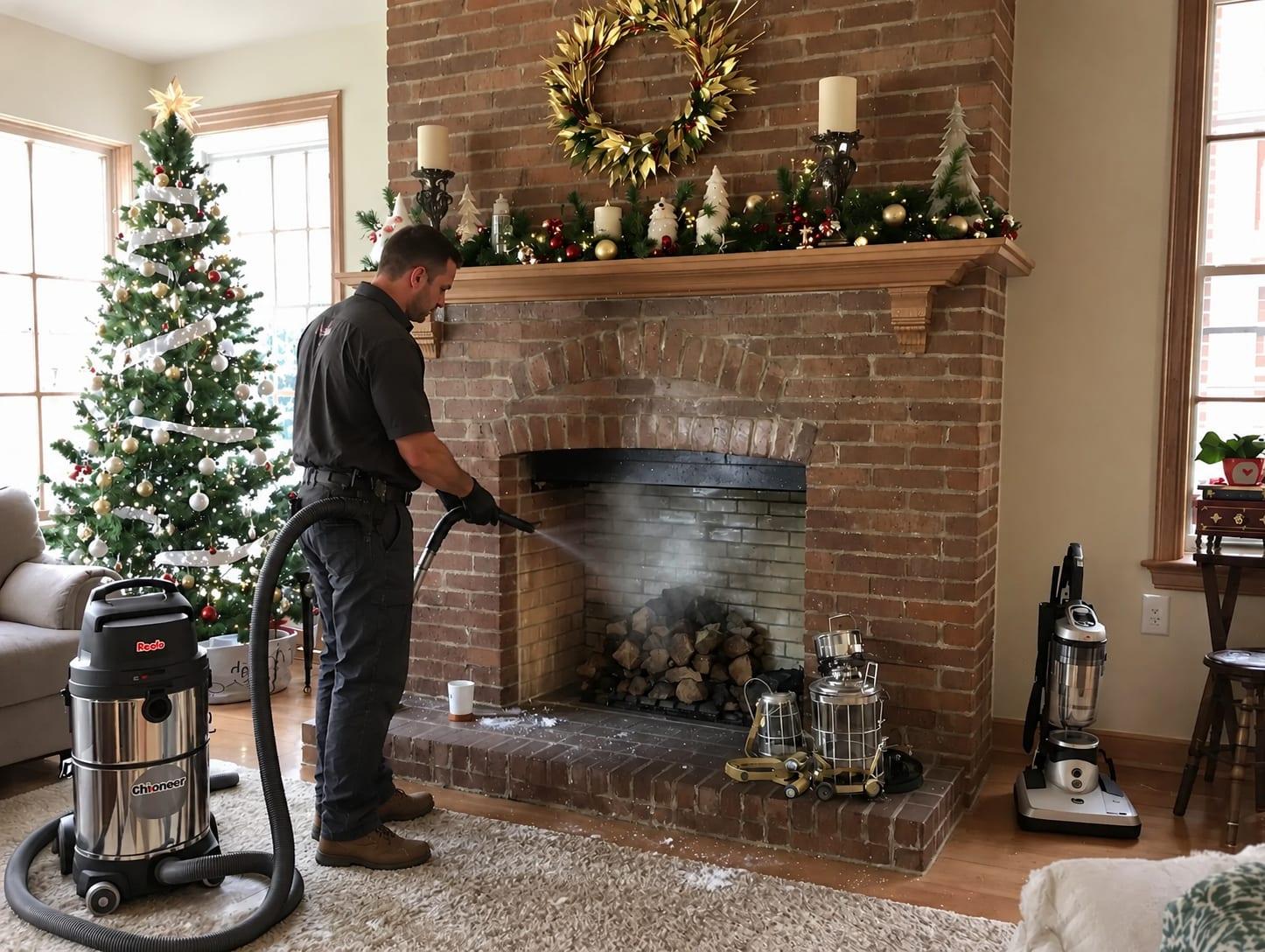
If the whole firebox needs attention and not just the glass, our fireplace cleaning service handles ash, soot and debris throughout the fireplace.
Signs your fireplace glass needs cleaning
Some buildup is normal with every fire. These are the signs that it has gone past a quick wipe:
- Black soot or a brown, sticky film on wood-burning doors, insert or stove glass
- A white or gray haze on the glass of a gas fireplace
- You can no longer see the flames clearly, even with the fire burning well
- Glass that looks cloudy after you have tried a household cleaner
- Buildup that comes back after only a few fires
Haze that will not wipe away has more than one possible cause, and some of them are not dirt at all. Our page on what causes foggy fireplace glass explains the difference between surface deposits and glass that has been etched.
Fast buildup can point to a bigger issue
Glass that blackens quickly on a wood fireplace often goes along with smoldering fires, damp wood or poor airflow. On a gas unit, heavy deposits can come from burner or venting problems. Cleaning the glass treats the symptom; if the vents are restricted, fireplace vent cleaning addresses airflow.
What the visit involves, step by step
How we clean fireplace glass
Confirm the unit is cold
We clean only when the fireplace, insert or stove is completely cool. Cleaning warm glass can streak, and cold cleaner on hot glass risks stress cracks.
Identify the glass and the deposits
We check whether the panel is tempered or ceramic glass and whether the buildup is soot, creosote film or the mineral haze typical of gas appliances.
Remove or open the glass
Doors are opened, and sealed gas fireplace fronts are released from their latches or frame so both sides can be cleaned properly.
Clean with non-abrasive methods
We use cleaners suited to the glass type and soft tools that lift deposits without scratching the surface.
Check the glass and its seal
While the glass is out, we look for chips, cracks, etching and worn gaskets, and tell you what we find.
Reinstall and secure
The glass goes back in seated correctly. On a gas fireplace, a properly reseated front is part of how the unit is meant to operate.
Glass types, fuel types and what builds up
The deposits on fireplace glass depend mostly on what the fireplace burns.
| Feature | Wood-burning | Gas |
|---|---|---|
| Typical buildup | Black soot and brown or tan creosote film | White or gray mineral and combustion film |
| Where it shows | Inside of doors, insert windows and stove glass | Inside of the sealed glass front |
| Risk if left | Film hardens and gets harder to remove | Film can etch the glass and leave permanent cloudiness |
| Cleaning approach | Non-abrasive cleaner that cuts soot and creosote | Cleaner made for gas fireplace glass deposits |
Typical buildup
- Wood-burning
- Black soot and brown or tan creosote film
- Gas
- White or gray mineral and combustion film
Where it shows
- Wood-burning
- Inside of doors, insert windows and stove glass
- Gas
- Inside of the sealed glass front
Risk if left
- Wood-burning
- Film hardens and gets harder to remove
- Gas
- Film can etch the glass and leave permanent cloudiness
Cleaning approach
- Wood-burning
- Non-abrasive cleaner that cuts soot and creosote
- Gas
- Cleaner made for gas fireplace glass deposits
Gas fireplace and gas appliance work is offered, so sealed gas fronts are part of what we clean, along with wood-burning fireplace doors, inserts and wood stoves. We work on all major brands. If you are still deciding between heating options, our guide to electric vs gas fireplace and the comparison of a fireplace insert vs freestanding wood stove cover how each one behaves day to day, including glass upkeep.
Safety and maintenance
Keeping fireplace glass clear and safe
- Never clean the glass while the unit is hot or warm
- Skip scouring pads, steel wool and gritty powders on any fireplace glass
- Do not run a gas fireplace with its glass front removed or loose
- Stop using a fireplace with cracked or chipped glass until the glass is replaced
- Burn dry, seasoned wood in wood-burning units to cut down on creosote film
- Wipe light soot off cooled glass between professional cleanings
Cleaning cannot fix glass that is cracked, deeply etched or set in a damaged door. When the glass is past cleaning, fireplace glass replacement & door repair is the next step.
Booking fireplace glass cleaning
Call or request an estimate to set up a visit. Commercial and property-manager work is offered, so we can also clean fireplace glass in rental units and commercial spaces.