On this page
What fireplace vent cleaning covers
Every fireplace that burns fuel has a vent: the path combustion gases take from the firebox to the outdoors. On a wood-burning masonry fireplace, that path is the flue. On a factory-built unit, it is a metal pipe, often hidden inside a framed chase. Gas fireplaces commonly use a direct-vent pipe, which pulls in combustion air through one passage and sends exhaust out through another. Pellet stoves and inserts have their own exhaust pipe.
Fireplace vent cleaning is the work of clearing that whole exhaust path. That means removing soot, creosote, fly ash, and anything that has collected in the pipe or at the outside termination, such as leaves, nests, or insect webs. The goal is a clean, open vent that draws properly and doesn't let exhaust linger or spill back into the room.
It is a different job from cleaning the visible part of the fireplace. If the firebox, grate, and surround need attention too, our fireplace cleaning service covers that side, and the two are often done on the same visit.
Signs your fireplace vent needs cleaning
Some of these signs come from a dirty or blocked vent, and some can have other causes. Any of them is a good reason to have the vent looked at before the next fire.
- Smoke drifts into the room instead of going up and out, especially when the fire is first lit.
- Black soot builds up quickly on the glass doors or around the fireplace opening.
- A gas fireplace burns with tall, yellow, or sooty flames where it used to burn steadily.
- A smoky, sour, or burnt smell comes from the fireplace, even when it isn't in use.
- You see staining or soot on the outside wall or roof around the vent cap.
- You hear scratching or chirping in the vent, or see nesting material at the termination.
- The fireplace hasn't been used or serviced in a long time and you want to start it up again.
- A gas unit shuts itself off or the pilot won't stay lit. A restricted vent is one possible cause.
Heavy, fast soot on the glass usually means the vent and the burn both need a look. We can clean the glass as part of the visit through our fireplace glass cleaning service, but clean glass that turns black again within days usually points back to the venting or the burner setup.
Vent types we clean
| Fireplace type | Vent | What typically collects |
|---|---|---|
| Wood-burning masonry | Clay tile or lined flue | Creosote, soot, debris, nests |
| Factory-built (prefab) wood | Insulated metal flue in a chase | Creosote, soot, debris at the cap |
| Gas, direct-vent | Two-passage pipe through a wall or roof | Soot from poor combustion, webs, nests, leaves |
| Gas, natural-vent | Single-wall or B-vent pipe | Soot, debris, blockage at the cap |
| Pellet stove or insert | Pellet exhaust pipe | Fly ash and fine soot |
| Wood insert | Liner from the insert to the top | Creosote and soot |
Inserts need extra steps because the liner connects directly to the unit. Our fireplace insert cleaning covers the insert body and its liner together. Electric fireplaces don't burn fuel and have no exhaust vent to clean. Our guide to electric vs gas fireplace explains how the two differ.
What the visit involves, step by step
How a fireplace vent cleaning goes
Look first
We check the fireplace, the visible vent connections, and the outside cap or termination. This shows us what type of vent we're dealing with and whether anything is obviously blocked or damaged.
Protect the room
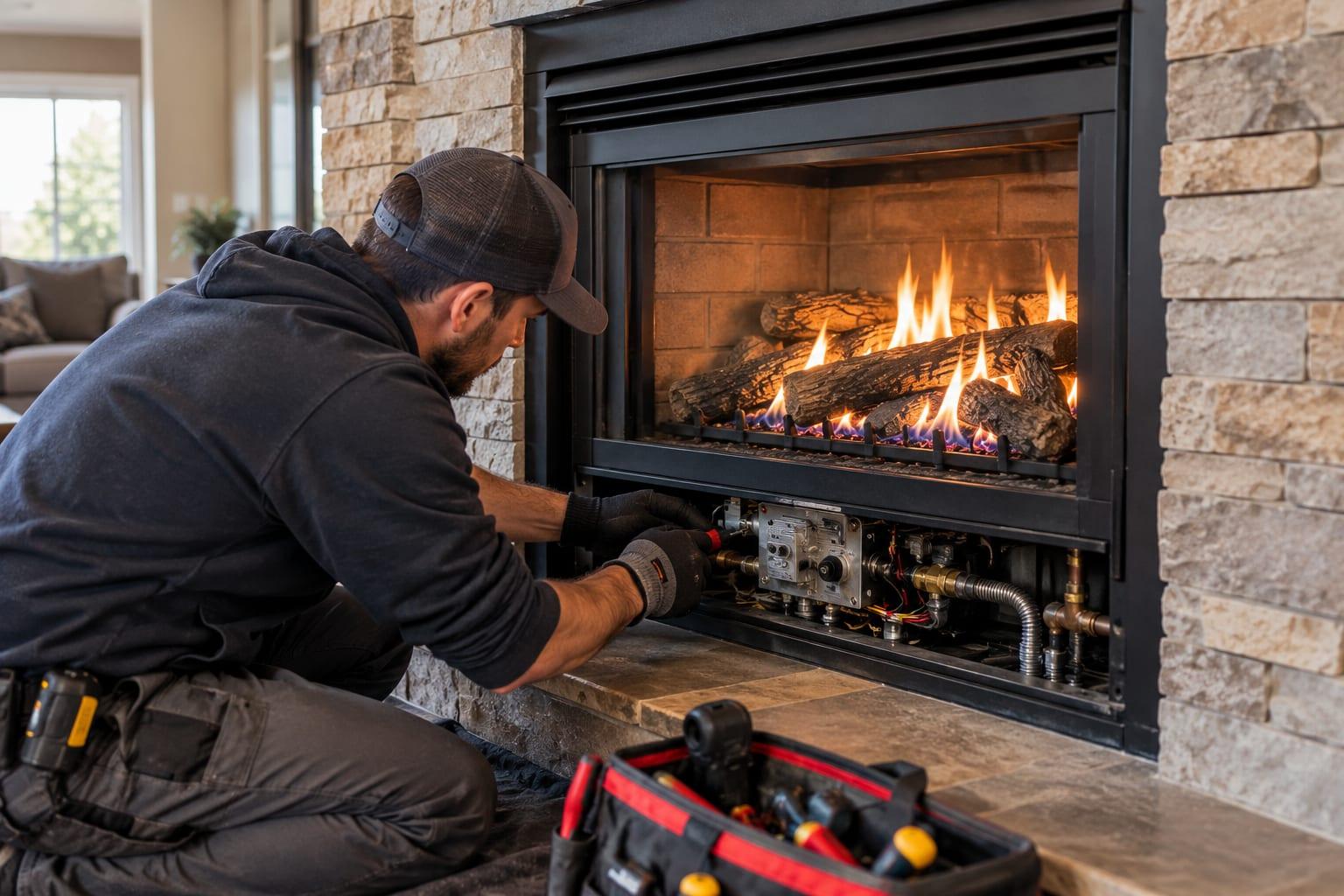
Drop cloths go down around the hearth. On a gas unit, we turn off the gas to the appliance and let it cool before taking anything apart.
Open up the unit
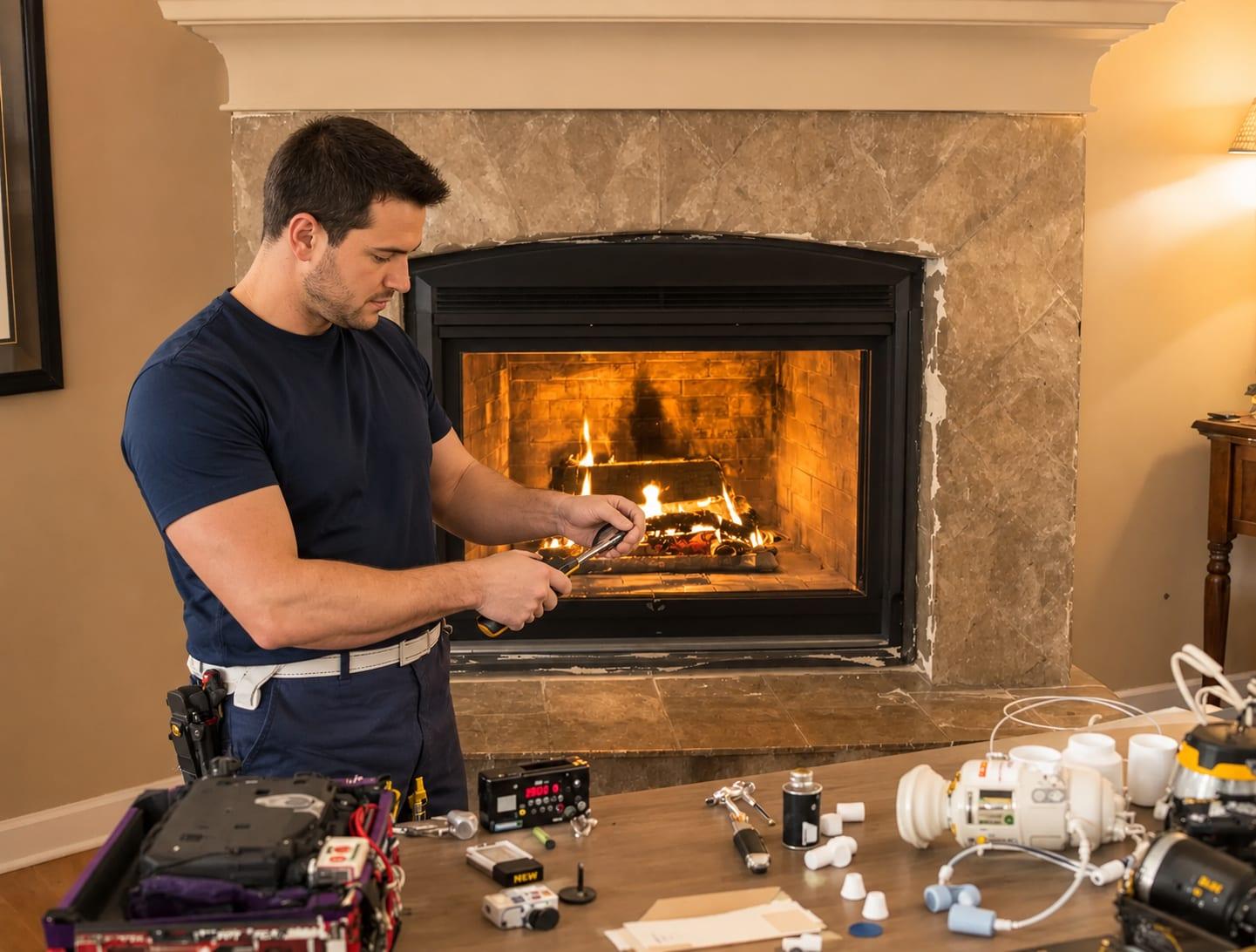
Depending on the fireplace, we remove the glass front, gas logs, baffles, or access panels so we can reach the vent from the inside.
Clean the vent
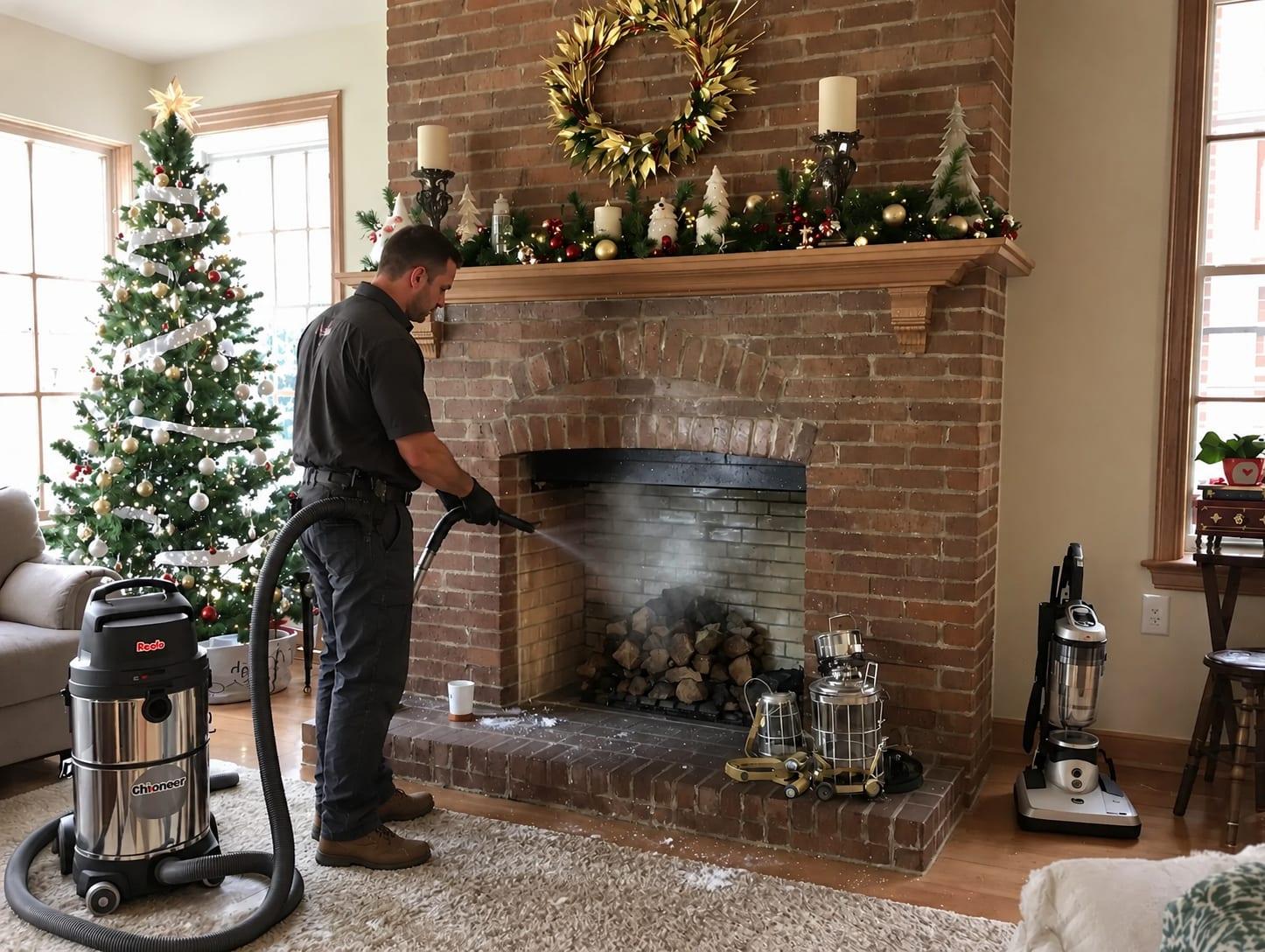
We brush the pipe or flue with tools sized for that vent and vacuum the loosened soot, creosote, and ash so it doesn't spread into the house.
Clear the termination
We remove debris, webs, or nesting material from the outside cap so exhaust can leave freely.
Check and reassemble
We look over joints, seals, and the cap for gaps or damage, put the unit back together, and test it for proper draft and flame.
Walk you through it
We tell you what we found, what was cleaned, and anything that needs repair. If part of the vent can't be seen directly, we can recommend a camera inspection.
Safety and upkeep
A fireplace vent does more than carry smoke. It carries carbon monoxide and other combustion gases out of the house. When soot, creosote, or a nest narrows that path, those gases have fewer places to go. In wood-burning systems, creosote is also fuel, and a thick layer can catch fire inside the flue.
If something feels wrong
If you smell gas, don't light anything or flip switches; leave the house and call your gas utility or 911 from outside. If a carbon monoxide alarm sounds, or people in the house have headaches, dizziness, or nausea while the fireplace is running, turn it off if you can do so safely, get everyone into fresh air and call 911.
Simple habits between cleanings
- Keep working carbon monoxide alarms on each level of the home and near sleeping areas.
- Burn dry, seasoned wood in wood-burning fireplaces; wet wood leaves more creosote.
- Watch the flame on a gas fireplace and call if it changes color or shape.
- Glance at the outside vent cap now and then for leaves, nests, or damage.
- Have the vent checked before the first fire of the season, and after any long stretch of disuse.
Booking a fireplace vent cleaning
Call or request an estimate and tell us what kind of fireplace you have and what you've noticed.
We handle gas fireplace and gas appliance work as well as wood and pellet units, and we work on all major brands. Commercial and property-manager work is offered, so landlords and building managers can schedule vent cleaning for more than one unit. Outside the city, we also offer fireplace vent cleaning, fireplace vent cleaning, and fireplace vent cleaning.