When the damper won't open or close
The damper is the metal door that seals the flue when the fireplace isn't in use and opens to let smoke out when it is. When it's stuck, you have one of three problems. Stuck closed, the fireplace can't vent. Stuck open, warm or cool air leaks out of the house all the time. Stuck partway is the trickiest, because a fire might seem to draw at first and then start pushing smoke back into the room.
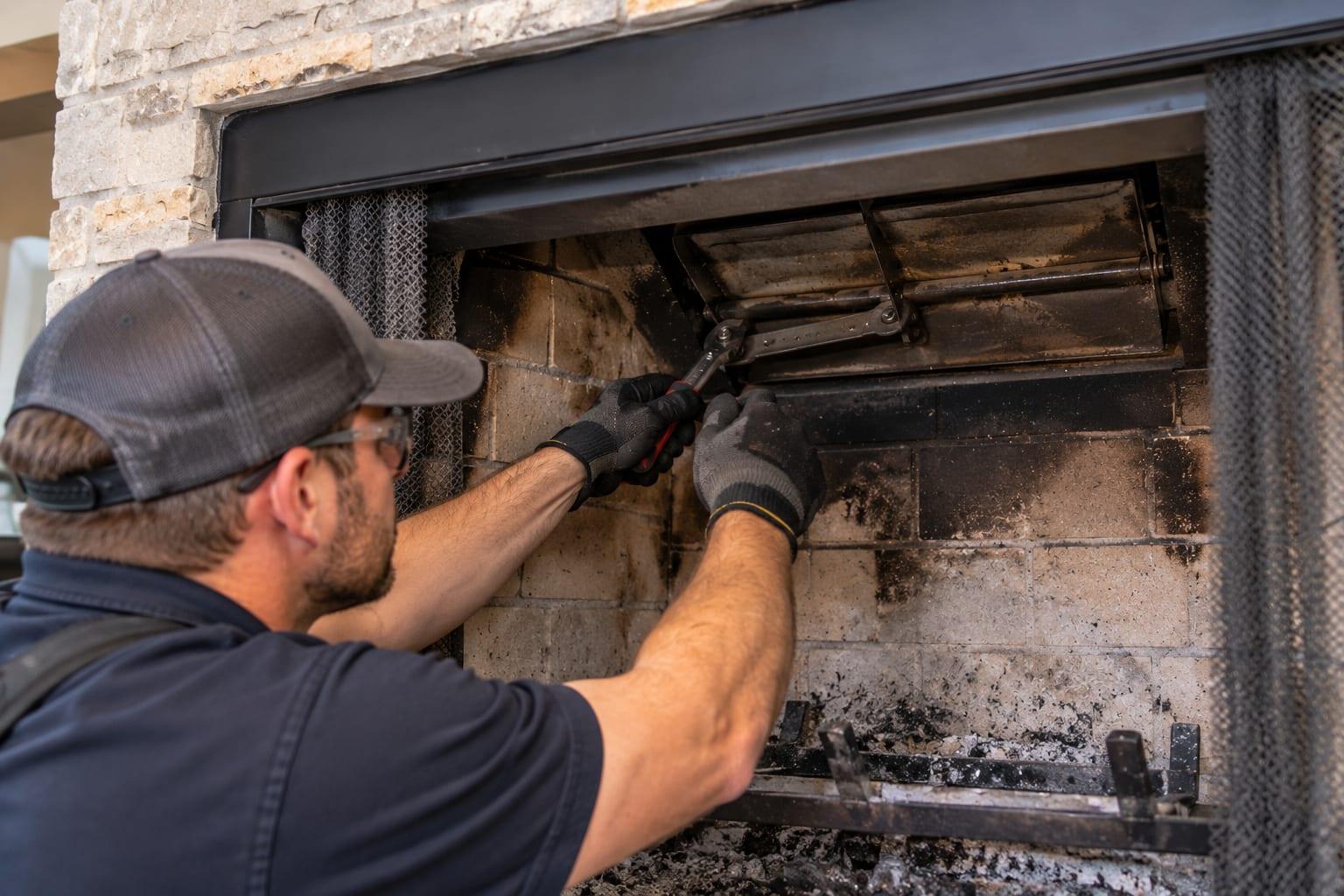
Most homes have one of two designs. A throat damper sits just above the firebox and works with a handle, lever or rotating knob. A top-sealing damper sits at the top of the chimney and works with a cable that hangs down into the firebox. They stick for different reasons, and our guide to types of chimney dampers explains how each one is built.
Common signs of a stuck chimney damper
What homeowners usually notice
- The handle, lever or knob won't move, or it moves but the plate doesn't
- The damper opens only an inch or two before it catches
- You hear scraping or grinding, or feel it drag, as it moves
- The handle spins freely or has come loose from the damper
- A top-damper cable is slack, frayed or won't stay latched
- Drafts, a cold or hot hearth, or outside smells when the fireplace isn't in use, which suggests a damper stuck open
- Smoke rolling into the room soon after lighting a fire, which suggests a damper that is closed or partly closed
- Rust flakes, soot or debris falling into the firebox when you work the handle
Possible causes
Each of these is something an inspection can confirm or rule out. Several of them can also cause each other. Rust from water can warp a plate, for example, and a warped plate wears out the hinge.
Rust and corrosion
Throat dampers are often cast iron or steel. Rain that gets down the flue, usually because a chimney cap is missing or damaged, can rust the hinge pins and the edges of the plate until they seize. The damper can also rust its way into a frozen position after months without use.
Creosote, soot and debris
Creosote is sticky when it first forms and hardens over time. It can glue the plate to its frame or clog the pivot. Leaves, nesting material or a fallen brick or mortar piece resting on the plate can also hold it shut.
A warped or damaged damper plate
Repeated hot fires can bend a metal plate just enough that it binds against the frame. A cracked plate or a broken hinge can twist it out of line.
Broken handle, rod, chain or cable
Sometimes the damper itself is fine and the linkage has failed. A worn pin, a bent control rod or a snapped top-damper cable means the handle no longer moves the plate. On top-sealing dampers, the rubber gasket can also stick to the flue.
A shifted damper frame or smoke chamber damage
If the masonry around the damper has cracked or moved, the frame can shift out of square and pinch the plate. That is less common, but it matters, because the fix is in the masonry and not only the damper.
How urgent is a stuck damper?
| Feature | Can you use the fireplace? | How soon to deal with it |
|---|---|---|
| Stuck fully closed | No wood fires and no gas logs. Smoke and carbon monoxide have nowhere to go. | Before your next fire. |
| Stuck partly open | No. A partly open damper can let smoke and gases spill into the room, especially as the fire builds. | Before your next fire. |
| Stuck fully open | Usually, though a full inspection first is the safer call if you don't know why it stuck. | Soon. It lets in conditioned-air loss, rain, debris and animals. |
Stuck fully closed
- Can you use the fireplace?
- No wood fires and no gas logs. Smoke and carbon monoxide have nowhere to go.
- How soon to deal with it
- Before your next fire.
Stuck partly open
- Can you use the fireplace?
- No. A partly open damper can let smoke and gases spill into the room, especially as the fire builds.
- How soon to deal with it
- Before your next fire.
Stuck fully open
- Can you use the fireplace?
- Usually, though a full inspection first is the safer call if you don't know why it stuck.
- How soon to deal with it
- Soon. It lets in conditioned-air loss, rain, debris and animals.
Smoke in the room or a carbon monoxide alarm
Stop adding fuel, turn off any gas logs at the control valve if you can do so safely, open windows, and get everyone out if a carbon monoxide alarm is sounding. Call your gas utility or emergency services for a gas smell or an alarm, then get the damper looked at before using the fireplace again.
A damper that stuck because of heavy creosote is also a warning about what's inside the flue. Buildup thick enough to jam a damper is fuel for a chimney fire, so read about what raises chimney fire risk before you burn again.
What normally fixes it
The repair depends on what the inspection finds. With chimney damper repair, the work typically includes:
How a stuck damper is usually handled
Inspect the damper and flue
The technician checks the plate, hinge, frame and linkage, and looks up the flue for creosote, debris or water damage. A camera inspection helps when the problem sits higher in the chimney or behind the damper.
Clean and free the moving parts
Creosote, soot and rust are removed from the hinge and frame so the plate can swing freely. If heavy creosote is the cause, the flue is cleaned too.
Repair or replace the linkage
Bent rods, worn pins, loose handles and broken top-damper cables are adjusted or replaced.
Replace the damper when it can't be saved
A badly rusted, cracked or warped damper is replaced instead of being forced back into service.
Fix what caused it
That may mean a chimney cap to keep rain out, nest removal, or repair to the smoke chamber or firebox masonry around the damper frame.
When the damper frame has shifted because of cracked masonry around it, the job moves into fireplace repair, such as firebox or smoke chamber work, so the new or freed damper isn't pinched again.
What not to do
- Don't light a fire to see whether it will draw anyway, or to try to burn the damper loose.
- Don't hammer on the handle or plate. Cast iron can crack, and a broken plate can drop into the firebox or wedge in the throat.
- Don't spray penetrating oil or other flammable lubricants into the firebox or onto the damper.
- Don't climb onto the roof to pull on a top-damper cable or pry the lid.
- Don't run gas logs with the damper closed or partly closed, even briefly.
For a wider look at dampers that leak, rattle or won't seal, read chimney damper problems: signs, causes and repair solutions.