The main types of chimney dampers
A damper is the movable plate that opens the flue when a fire is burning and closes it when the fireplace sits unused. The types of chimney dampers differ mainly in where the plate sits and how tightly it seals. There are four you are likely to meet in a home.
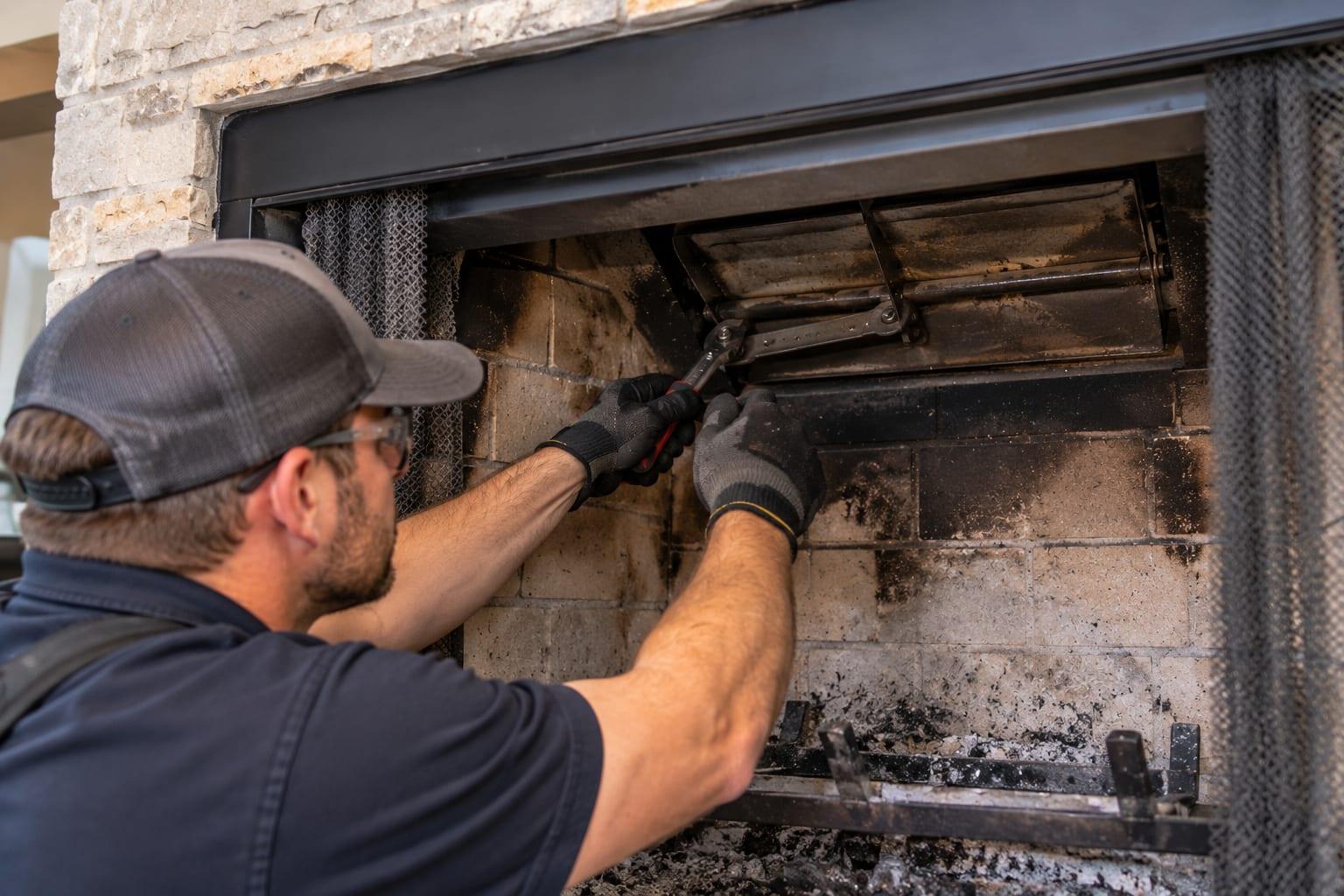
- Throat damper: a cast iron or steel plate mounted in the throat, the narrow opening just above the firebox. It is opened with a lever, a rotating handle or a poker. This is the traditional design in masonry fireplaces.
- Top-sealing damper: a hinged lid at the top of the flue, held closed by a spring and opened or closed with a steel cable that runs down to a handle inside the firebox. Most have a rubber or silicone gasket and often double as a chimney cap.
- Built-in damper on a factory-built fireplace: a damper supplied by the fireplace manufacturer as part of the unit, sized to that specific firebox and metal chimney. It is usually operated with a pull handle or lever.
- Damper stop or clamp for gas logs: a small bracket that holds an existing damper partly or fully open so it cannot be closed while vented gas logs are in use. It does not seal anything. It keeps exhaust from being trapped in the house.
How the designs compare
| Feature | Throat damper | Top-sealing damper |
|---|---|---|
| Location | Just above the firebox | At the top of the flue |
| How it is operated | Lever, rotary handle or poker | Cable and handle inside the firebox |
| Seal when closed | Metal on metal, rarely airtight | Gasket seal, usually much tighter |
| Keeps rain and animals out of the flue | No, the flue above stays open | Yes, when closed |
| Common failures | Rust, warped plate, seized hinge, broken handle | Stretched or snapped cable, worn gasket, weak spring |
| Effect on cleaning | Can be removed or tilted out of the way | Must be opened for sweeping |
Location
- Throat damper
- Just above the firebox
- Top-sealing damper
- At the top of the flue
How it is operated
- Throat damper
- Lever, rotary handle or poker
- Top-sealing damper
- Cable and handle inside the firebox
Seal when closed
- Throat damper
- Metal on metal, rarely airtight
- Top-sealing damper
- Gasket seal, usually much tighter
Keeps rain and animals out of the flue
- Throat damper
- No, the flue above stays open
- Top-sealing damper
- Yes, when closed
Common failures
- Throat damper
- Rust, warped plate, seized hinge, broken handle
- Top-sealing damper
- Stretched or snapped cable, worn gasket, weak spring
Effect on cleaning
- Throat damper
- Can be removed or tilted out of the way
- Top-sealing damper
- Must be opened for sweeping
Why throat dampers wear out
A throat damper sits close to the fire, so it goes through repeated heating and cooling. Over the years the plate can warp, the hinge pins can rust, and soot and creosote buildup can glue the plate in place. A damper that will not close fully lets warm air escape in winter and conditioned air escape in summer. A damper that will not open fully is a smoke problem waiting to happen.
Why top-sealing dampers fail differently
Top-sealing dampers live outdoors, so the parts that wear are the cable, the spring and the gasket. A cable that has stretched may leave the lid slightly ajar. A cracked gasket lets air leak even when the handle reads closed. These dampers also depend on a sound flue top to seat against, so damage to the crown or flue tile affects how well they close.
Dampers on factory-built fireplaces and gas units
Factory-built fireplaces are tested as complete systems, so a replacement damper normally has to be the part that fits that unit. With vented gas logs, the damper usually has to stay open while the logs are in use, which is why a clamp or stop is installed. Gas inserts and direct-vent gas fireplaces generally do not use a traditional damper at all.
Check the damper before every fire
Open the damper before lighting anything and confirm by looking up or feeling for a draft. A closed or partly closed damper sends smoke and carbon monoxide into the room.
What helps you decide between repair and a different damper
Questions to answer first
- Which type do you have? Look up from inside the firebox with a flashlight: a plate just above you is a throat damper, a cable running up the flue points to a top-sealing damper.
- Does it open and close fully, or does it stick partway?
- Is the problem the moving part (handle, cable, spring) or the plate and frame itself?
- Do you notice drafts, rain in the firebox or animal noise when the damper is closed?
- Is the fireplace masonry, factory-built or set up for gas logs?
- When was the flue last cleaned and checked?
A sticking throat damper is often cleaned and freed, or has its handle or hinge repaired, during chimney damper repair. A damper caked with soot usually needs a chimney sweep service first so the parts can actually be seen. If you are not sure what is wrong, or the damper problem showed up alongside cracks, leaks or a shifting chimney, a chimney inspection looks at the whole system rather than just the plate.
If your damper is stuck, leaking air or will not stay open, get in touch to have it looked at and repaired, along with any cleaning or inspection it needs.