If a chimney fire may be burning right now
Get everyone out of the house and call 911. Don't climb onto the roof, and don't throw water into a hot firebox.
What a chimney fire risk actually means
Every wood fire sends smoke, unburned wood particles and moisture up the flue. As that smoke cools, it leaves a deposit called creosote on the inner walls. A thin, dry layer is normal. A thick, sticky or glazed layer is fuel, and a hot fire or a stray spark can ignite it inside the chimney. A chimney fire can burn hot enough to crack flue tiles, damage the masonry and reach the wood framing around the chimney.
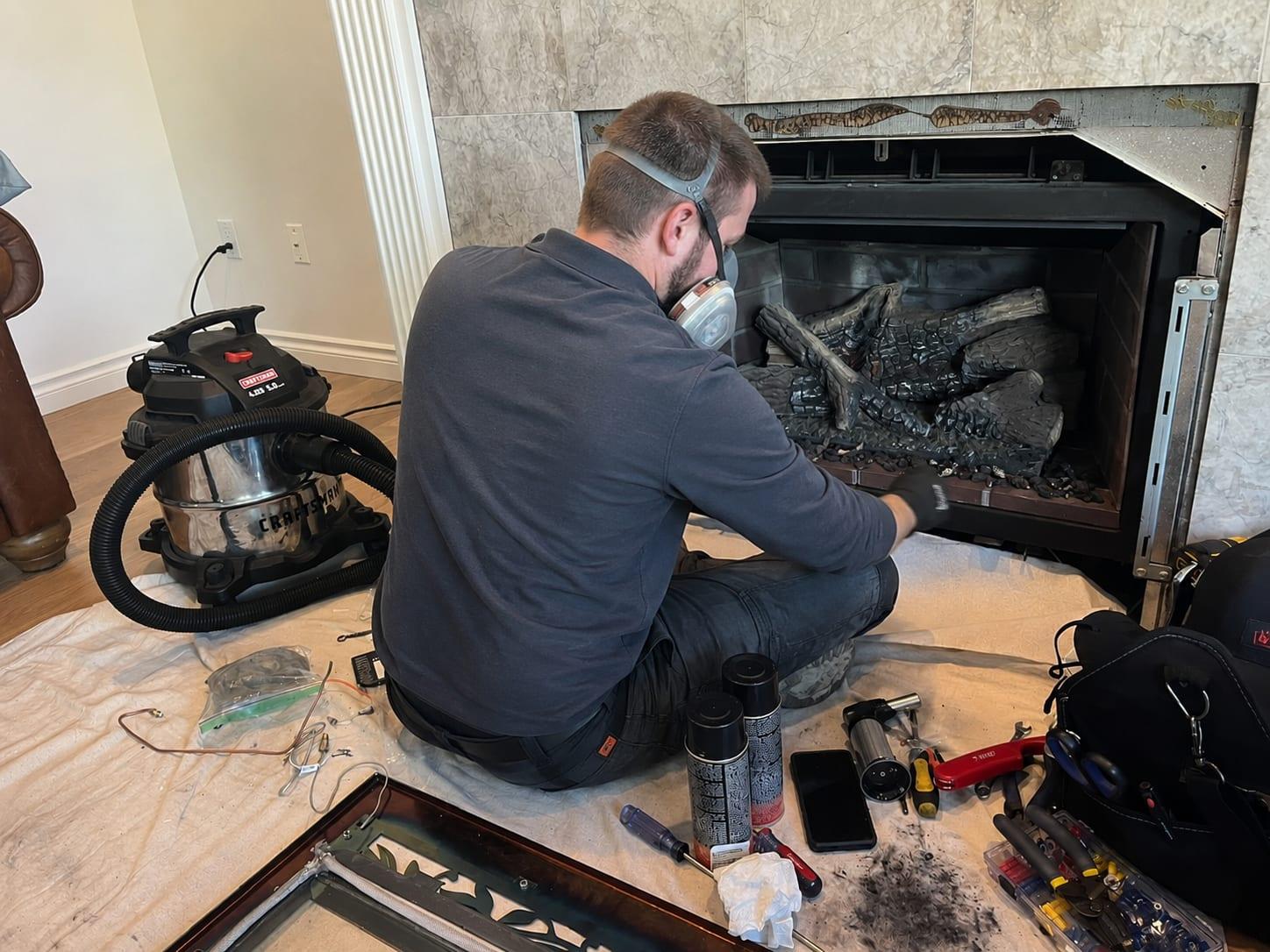
The risk doesn't come from creosote alone. Anything that slows the draft or exposes the house to heat also raises it: a blocked flue, a cracked liner or gaps in the masonry. Many chimney fires are small and go unnoticed, but they still leave damage behind.
Common signs of chimney fire risk
Signs worth taking seriously
- Smoke rolls into the room instead of drawing up the chimney
- A strong tar-like or smoky smell from the fireplace, especially in warm or humid weather
- Black, flaky or crusty deposits falling onto the hearth or smoke shelf
- Shiny, glazed buildup on the damper or the inside of the flue
- Fires that are hard to start or keep going because the draft is weak
- Puffy, honeycomb-like creosote, cracked flue tiles or a warped damper, which can all point to an earlier chimney fire
- Twigs, leaves or nesting material dropping into the firebox
- Cracked or missing bricks and mortar on the outside of the chimney
Signs of a chimney fire in progress
- Loud cracking and popping from the chimney
- A deep rumbling or roaring sound, often compared to a passing train
- Dense smoke pouring from the fireplace or the top of the chimney
- Sparks, burning debris or flames coming out of the chimney top. If you hear roaring or see flames or sparks from the top of the chimney, get everyone out and call 911.
- An intense hot smell and walls around the chimney that feel unusually warm
Possible causes
Several problems can set up a chimney fire, and more than one is often involved. Only an inspection confirms which ones apply to your chimney. A chimney inspection looks at the flue, liner, damper, smoke chamber and exterior together.
- Creosote buildup: burning wet or unseasoned wood, smoldering low fires and long gaps between cleanings all speed up deposits.
- Blockages: nests, leaves and debris restrict airflow, so smoke lingers and leaves more residue.
- Damaged or missing liner: cracked flue tiles or gaps let heat reach the brick and nearby framing, and they trap creosote. Learn how chimney liner repair works when a liner is the problem.
- Damper or draft problems: a damper that won't open fully chokes the fire. Our explainer on types of chimney dampers covers how each style works.
- Deteriorating masonry: crumbling chimney bricks and open mortar joints can expose surrounding materials to heat and sparks.
- Structural movement: a leaning chimney can pull the flue out of alignment and open cracks inside.
How urgent it is, and when to stop using the fireplace
Treat any sign of an active or past chimney fire as urgent. Stop using the fireplace or stove until it has been inspected. A fire that has already burned in the flue may have cracked the liner, and the next fire could then reach the house.
If you see heavy creosote, smoke backing into the room or debris falling into the firebox, stop burning and schedule an inspection and cleaning before the next fire. If you only notice a faint smell or a light layer of soot, you have less urgency, but the chimney should still be checked before regular use.
| Feature | What you notice | What to do |
|---|---|---|
| Roaring, popping, sparks or flames from the top | Possible chimney fire in progress | Get everyone out and call 911 |
| Honeycomb creosote, cracked tiles or a warped damper | Possible earlier chimney fire | Stop using it until it is inspected |
| Thick or glazed creosote, smoke entering the room | High fuel load or poor draft | Stop burning and book cleaning and inspection |
| Mild odor or light soot | Early buildup | Have it checked before regular use |
Roaring, popping, sparks or flames from the top
- What you notice
- Possible chimney fire in progress
- What to do
- Get everyone out and call 911
Honeycomb creosote, cracked tiles or a warped damper
- What you notice
- Possible earlier chimney fire
- What to do
- Stop using it until it is inspected
Thick or glazed creosote, smoke entering the room
- What you notice
- High fuel load or poor draft
- What to do
- Stop burning and book cleaning and inspection
Mild odor or light soot
- What you notice
- Early buildup
- What to do
- Have it checked before regular use
What normally fixes it
The fix depends on what the inspection finds. After a suspected chimney fire, a camera inspection or a Level 2 inspection lets us see the full length of the flue, including damage you can't see from the firebox.
How the repair usually goes
Inspect
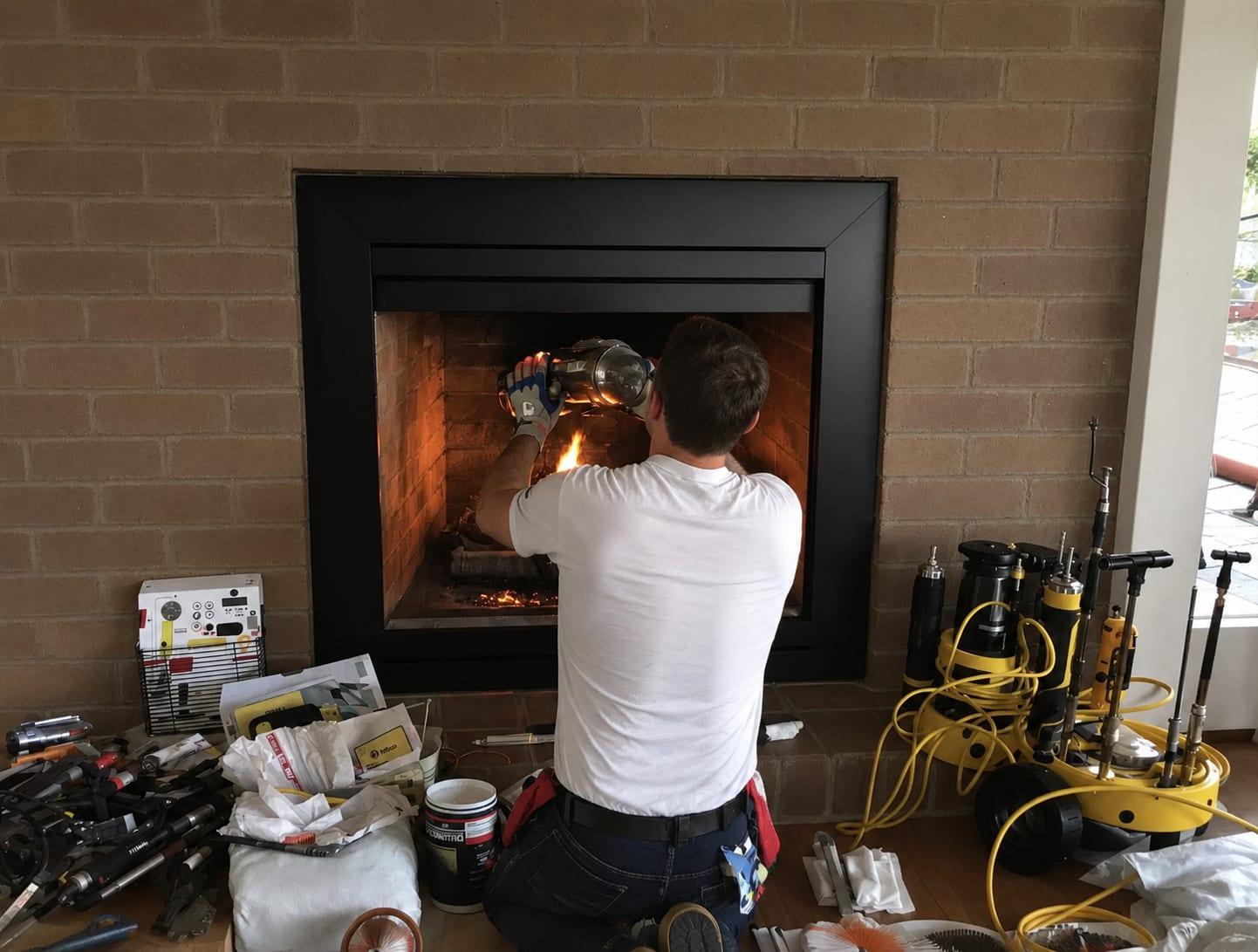
We check the flue, liner, damper, smoke chamber, crown and exterior masonry, and use a camera where needed to see inside the full flue.
Clean
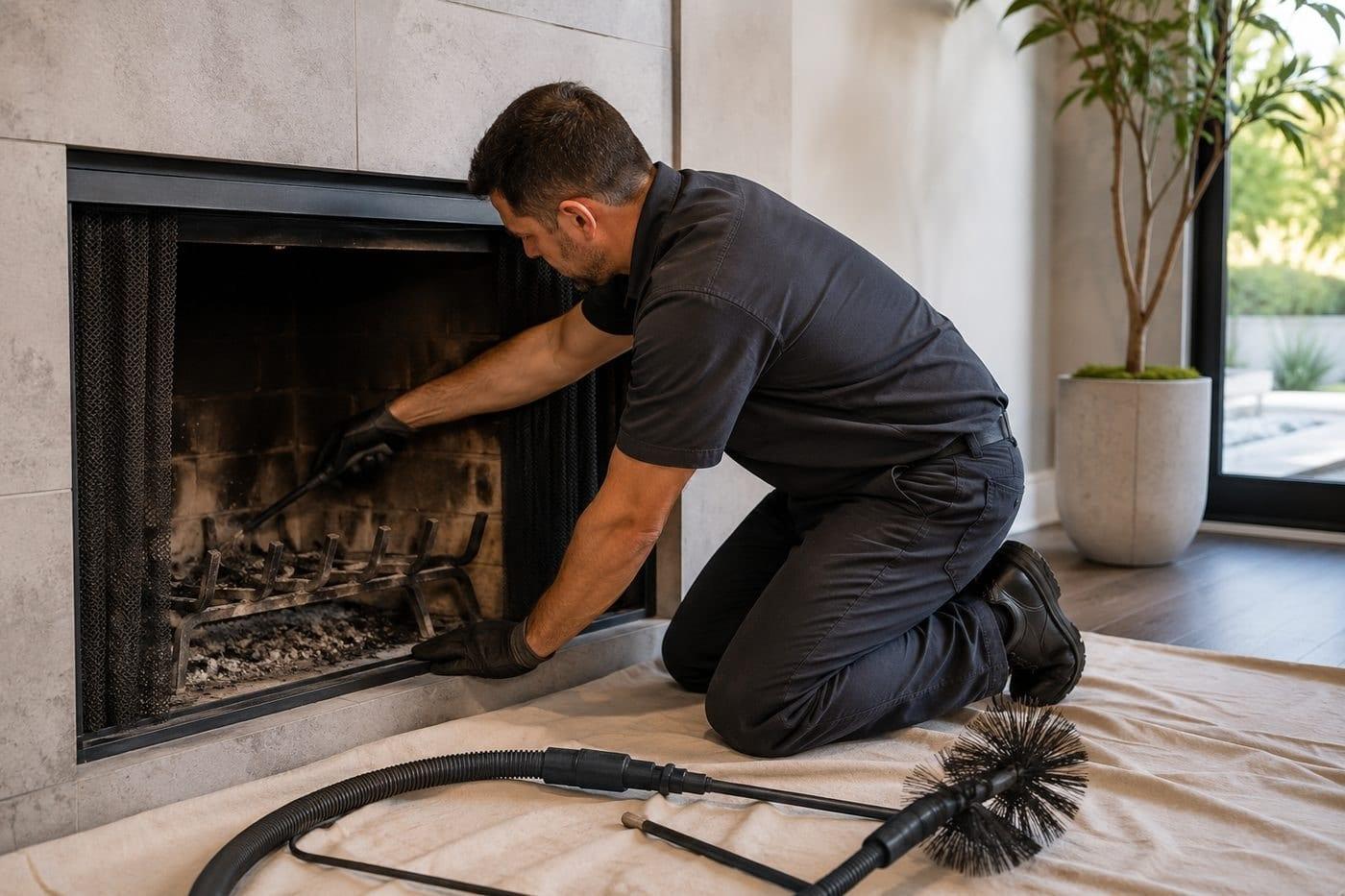
Chimney sweeping and creosote removal clear the fuel. Glazed creosote may need more than standard sweeping. For background on soot and residue, read our guide to chimney soot removal.
Clear blockages
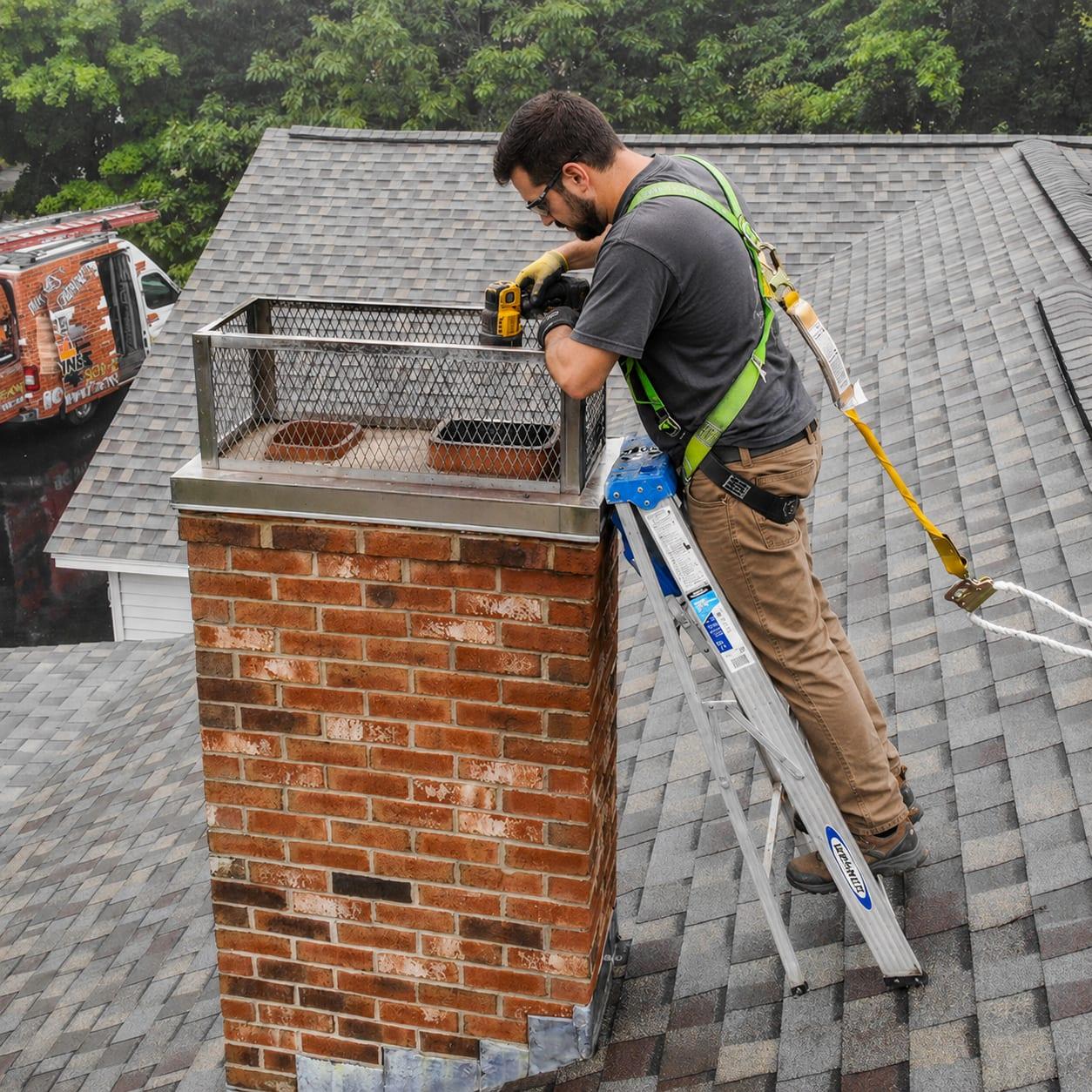
Nests, debris and animals are removed, and a chimney cap or animal screen can keep them out afterward.
Repair damage
Depending on the findings, this can mean chimney liner repair or a new liner, damper repair, smoke chamber repair, crown repair, tuckpointing or other masonry work.
Confirm it's safe
Once repairs are done, we confirm the system is ready before you light another fire.
What not to do
- Don't relight the fireplace after a suspected chimney fire, even if everything looks fine from below.
- Don't use chemical creosote logs as a substitute for cleaning and inspection.
- Don't burn trash, cardboard, wrapping paper or treated lumber, which can burn very hot and leave heavy residue.
- Don't climb onto the roof to inspect or fight a chimney fire.
- Don't ignore smoke backing into the room; a weak draft usually means something is restricting the flue.
If you've noticed any of these signs, get in touch to request an inspection, and keep the fireplace cold until then. We also inspect and service gas fireplaces and other gas appliances, and we take commercial and property-manager work.