Chimney services in Roswell: what you can book
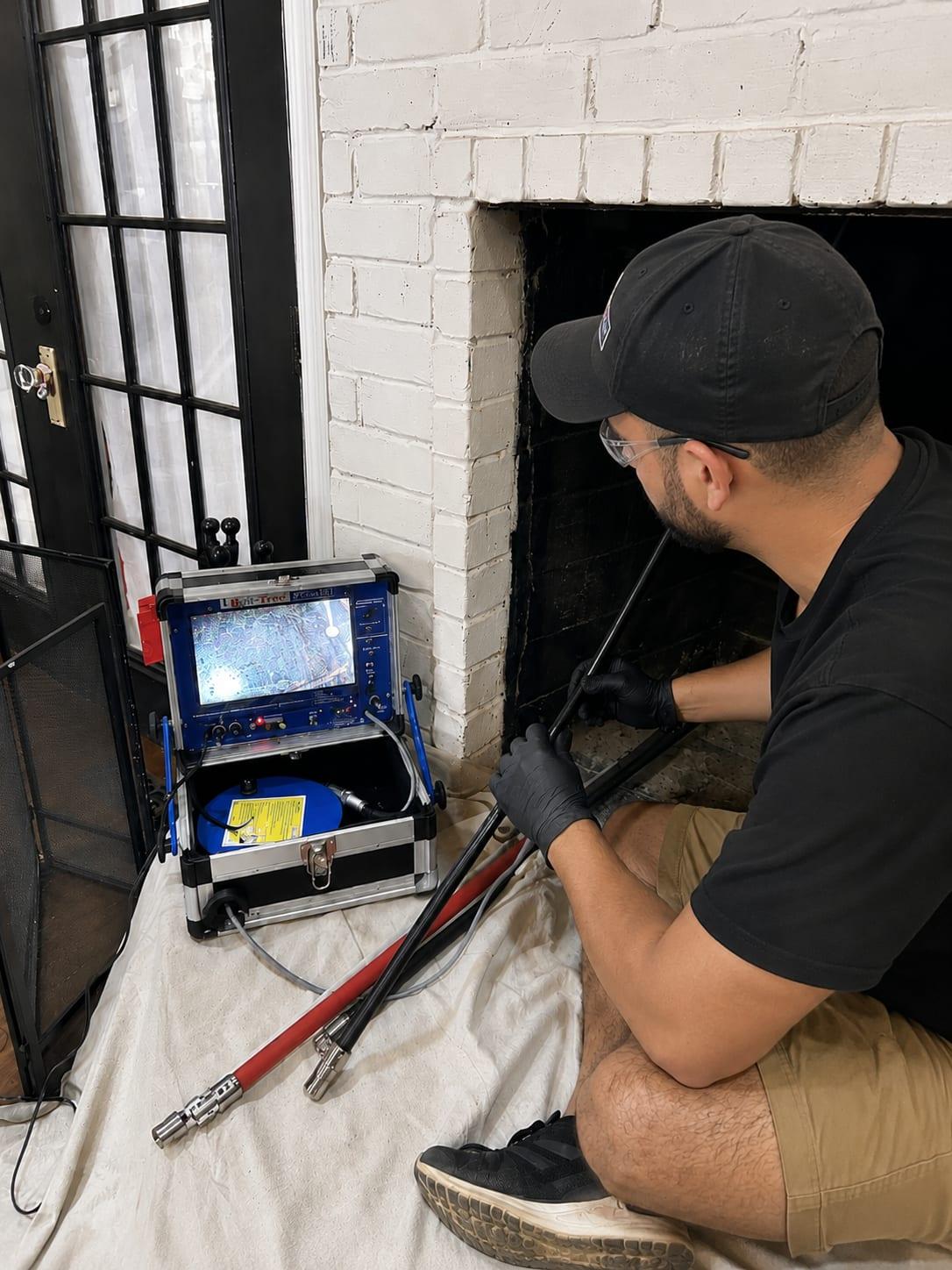
Most visits start with one of three needs: a chimney that hasn't been cleaned in a while, a question about whether the system is safe to use, or something visibly wrong, like a leak, cracked brick or a fireplace that smokes into the room. For the first, start with chimney sweeping for Roswell homes. For the second, a chimney inspection gives you a clear picture of the flue, liner, crown and firebox before you light a fire. For damage, go to chimney repair for homes in Roswell.
The work doesn't stop at the chimney. Fireplaces, inserts, wood stoves and gas units are serviced too, and dryer vents can be cleaned, tested, repaired or rerouted.
What the Census says about Roswell homes
About 2% of the housing units in Roswell were built before 1960, according to the U.S. Census Bureau, American Community Survey 2019–2023 5-year estimates, table B25034 (Year Structure Built). Put the other way, roughly 98 out of every 100 homes in town were built in 1960 or later.
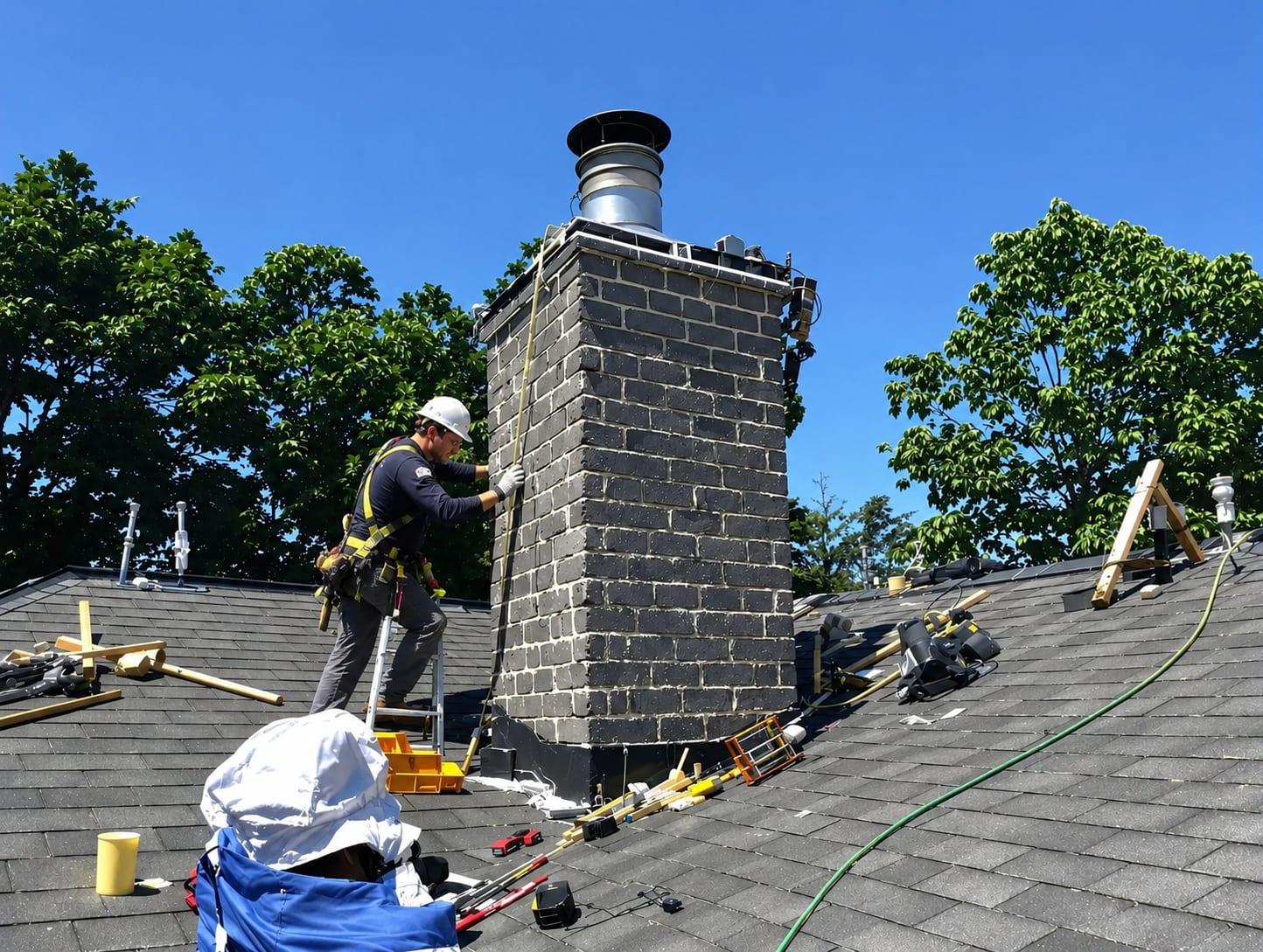
That matters because the age of a house shapes what's behind the fireplace opening. Homes built in more recent decades may have a traditional masonry chimney, or a factory-built fireplace with a metal flue running up through a framed, sided chase that's topped by a metal chase cover. The two systems wear out in different ways: masonry tends to show cracked crowns, loose mortar and spalling brick, while factory-built systems more often show rusted chase covers, water getting into the chase and worn refractory panels inside the firebox.
For the small share of homes built before 1960, the chimney itself may be the oldest working part of the house. Chimneys of that age can have clay liners that have cracked over the years, or no liner at all, and mortar that has weathered for decades. Year built is only a starting point, though. An inspection tells you what condition your chimney is actually in.
Not sure which type you have?
Look at the outside of the chimney. Brick or stone all the way up usually means masonry. Siding that matches the house, with a metal cap on top, usually means a factory-built fireplace inside a chase. Either way, the technician confirms it at the visit.
Brick, mortar and crown problems on Roswell chimneys
Masonry damage usually starts small and gets worse every time water freezes or soaks in. Signs worth a closer look:
Signs your masonry chimney needs attention
- Cracks in the concrete crown at the top of the chimney
- Mortar joints that are recessed, crumbling or sandy to the touch
- Brick faces that are flaking or popping off
- Water stains on the ceiling or wall next to the chimney
- Bits of mortar or tile in the firebox or on the smoke shelf
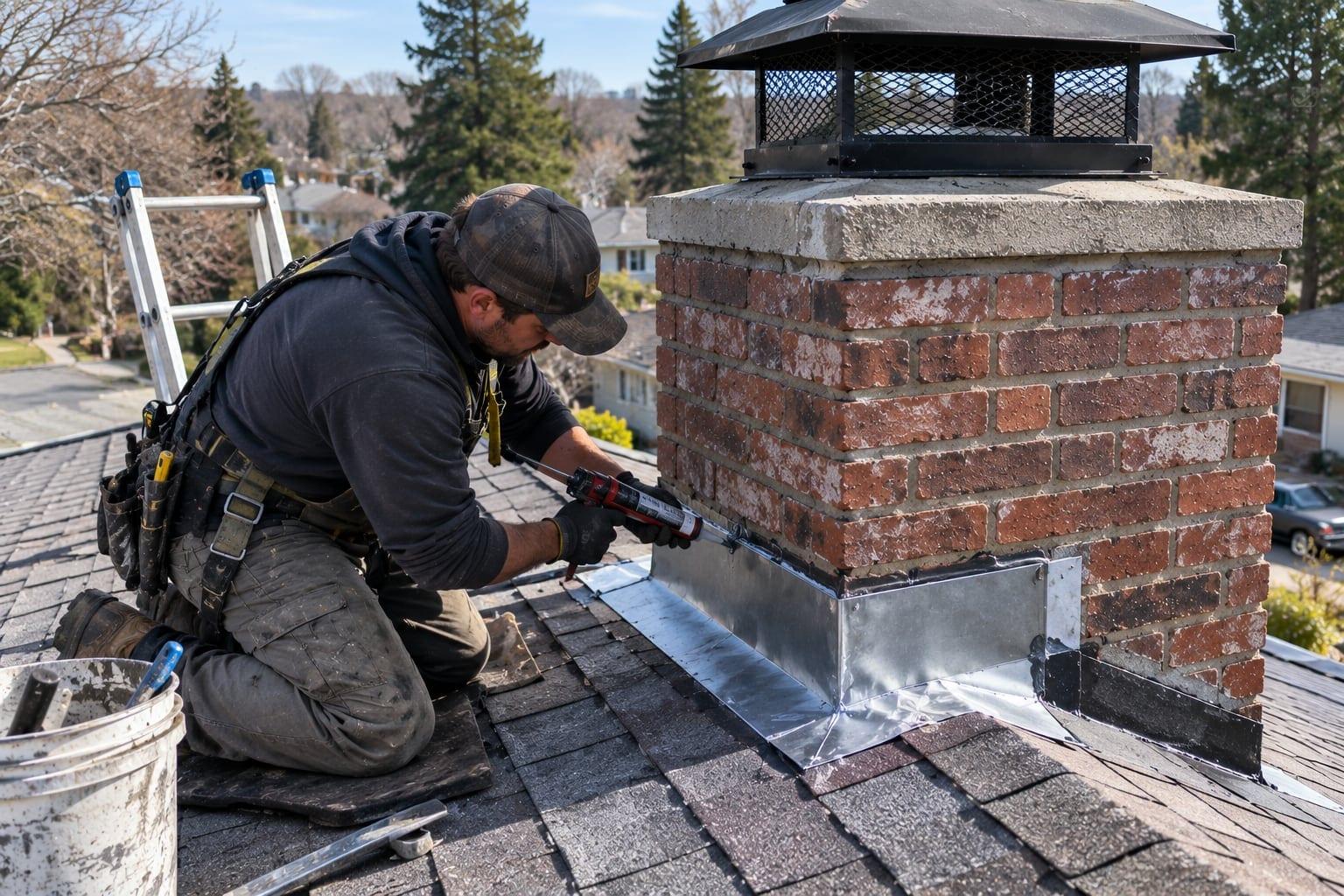
Depending on what's found, the fix can be repointing worn mortar joints, rebuilding or sealing a cracked crown, resealing flashing where the chimney meets the roof, waterproofing the brick, or rebuilding part of the chimney when damage runs deep. Catching it while it's mortar work is almost always simpler than waiting until bricks loosen.
When the fireplace itself needs work
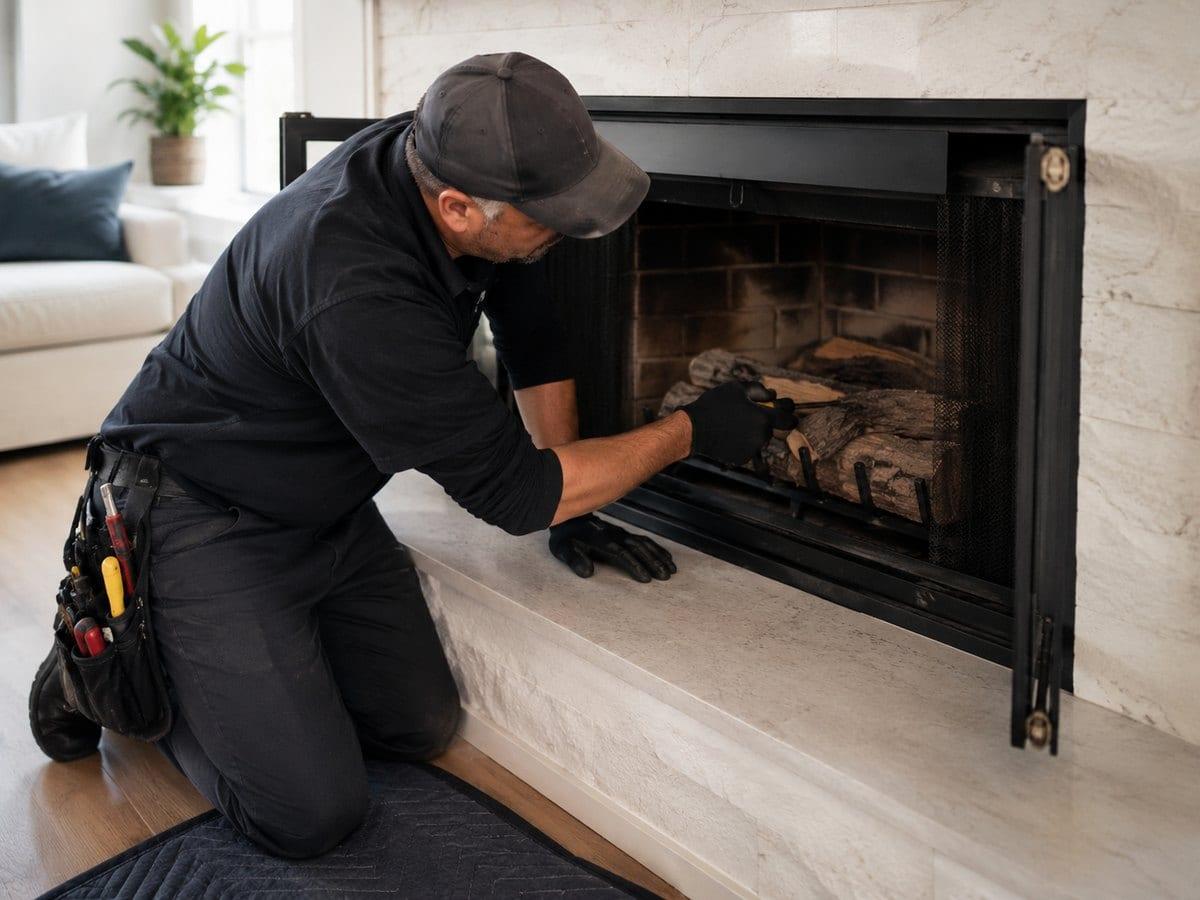
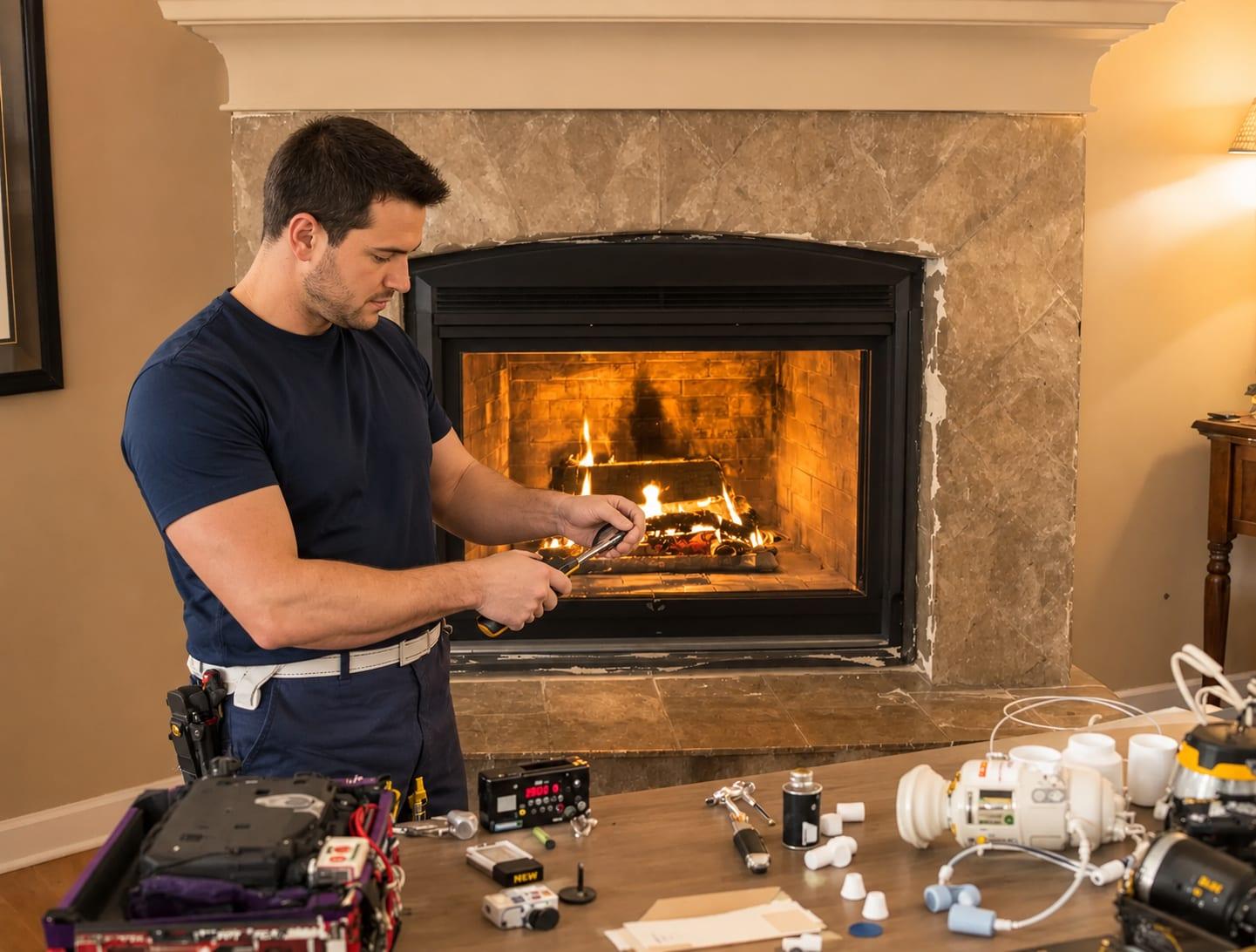
Not every problem is up on the roof. Inside the house, the common trouble spots are cracked firebrick or refractory panels, a damper that sticks or won't seal, smoke rolling into the room instead of up the flue, and broken glass or doors that no longer close. Wood-burning, factory-built, electric and gas fireplaces are all repaired; you can read how fireplace repair works before booking.
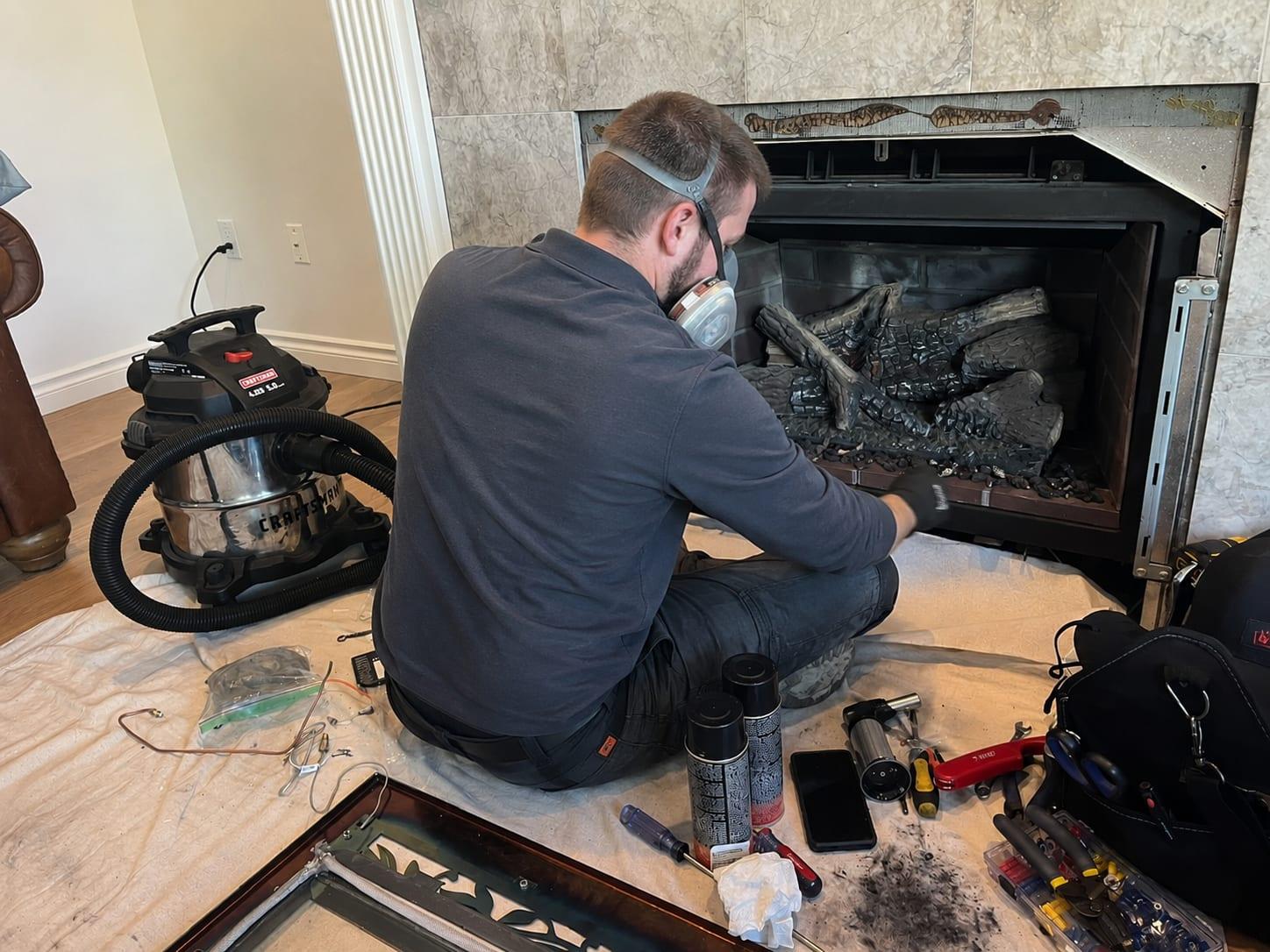
If the firebox is simply dirty or has heavy buildup, fireplace cleaning may be all it needs. Gas fireplaces and gas appliances are serviced as well, including repairs, routine maintenance, gas logs and new installations; details are under gas fireplace service. If you're replacing a unit that's past repair or adding one, see fireplace installation in Roswell.
Sources (1)
Facts and figures on this page come from these references.
- 1U.S. Census Bureau, American Community Survey 2019–2023 5-year estimates, table B25034 (Year Structure Built)