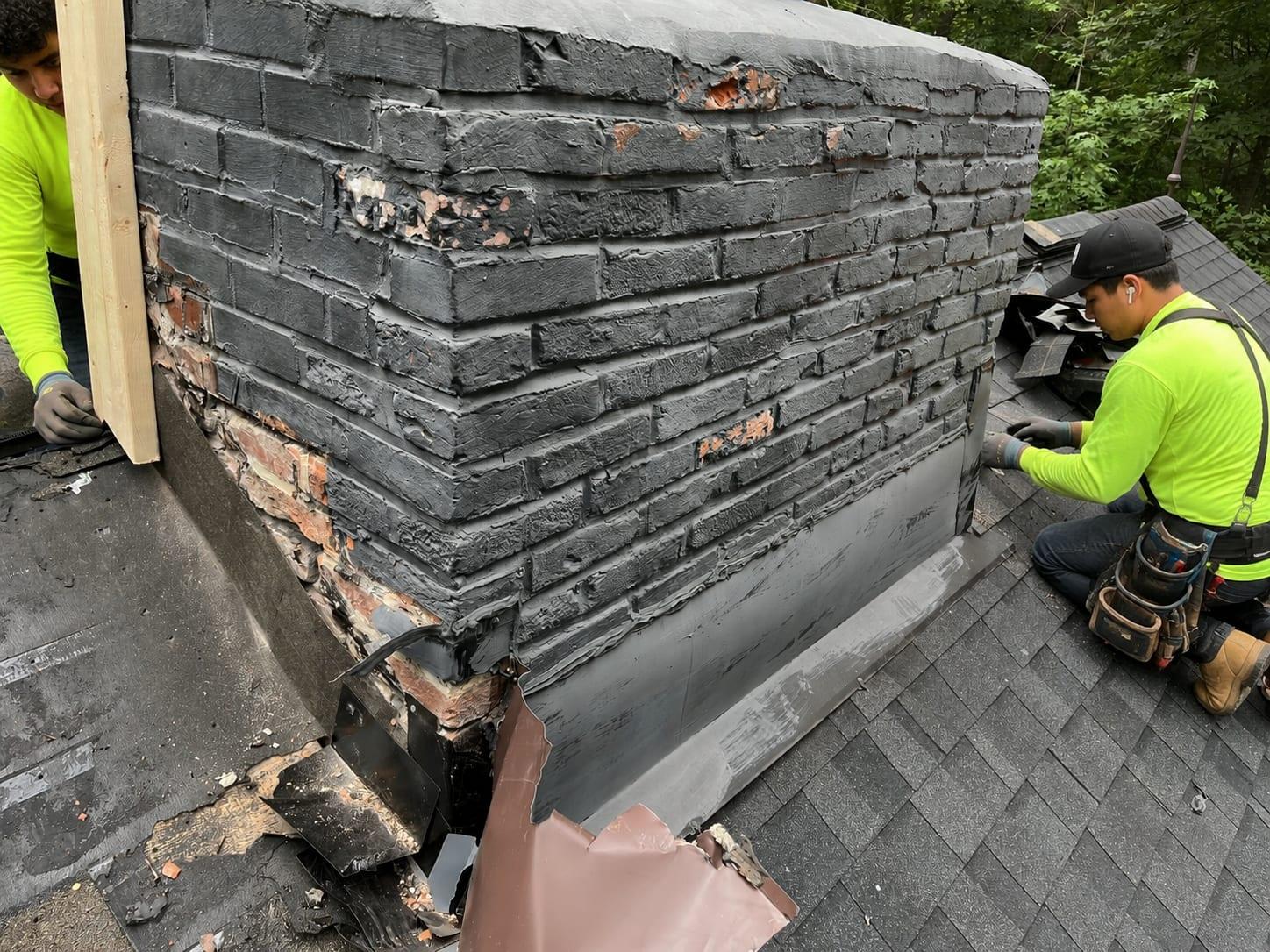
Water is getting in around the chimney
A chimney sits through the roof and stays exposed to rain on every side, so it has more places for water to enter than most of the house. You may notice a brown ring on the ceiling next to the chimney, wet wallpaper, puddles on the hearth, or a musty smell from the fireplace a day or two after a storm. Any of these means water is reaching somewhere it shouldn't.
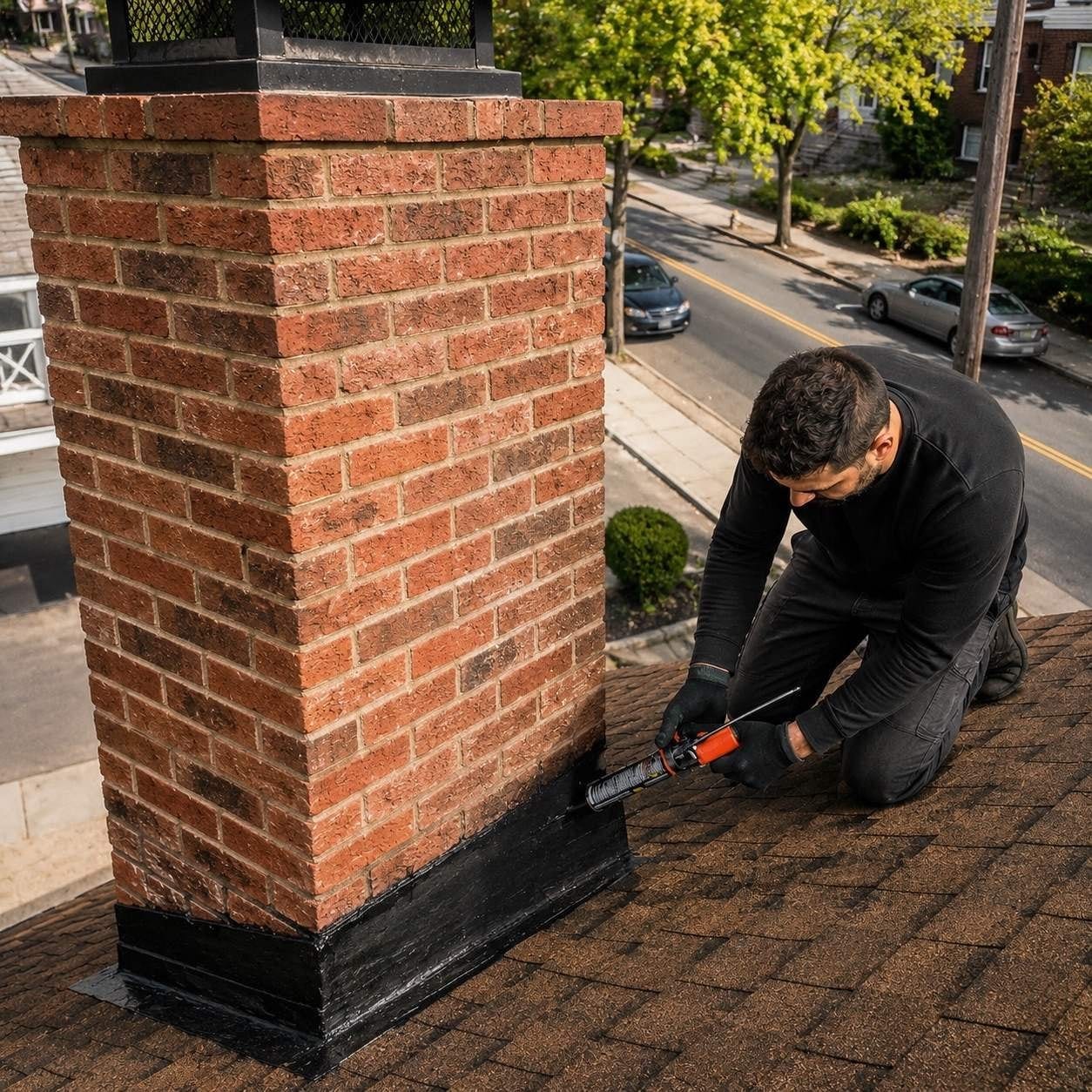
Leaks rarely fix themselves. Water that keeps soaking masonry, framing or the flue tends to cause more damage over time, which is why finding the entry point early usually keeps the repair smaller.
Common signs of a leaking chimney
Signs to watch for
- Water stains or peeling paint on the ceiling or wall next to the chimney
- Dripping or standing water in the firebox or on the damper after rain
- Damp, dark patches on interior or exterior brick
- Rust on the damper, firebox doors or a metal chase top
- Cracked or crumbling mortar joints, or flaking brick faces
- A musty or damp odor from the fireplace, often worse in humid weather
- Warped or stained wood trim around the fireplace
If you want a closer look at the symptom itself, our page on what causes chimney leak walks through the signs in more detail.
Possible causes an inspection can confirm
Several parts of a chimney can let water in, and more than one can be failing at once. These are the usual suspects; a hands-on inspection is what confirms which one applies to your chimney.
Where chimney leaks often start
01Missing or damaged chimney cap
- What you may notice
- Water or debris in the firebox after rain, rust on the damper
- How it’s confirmed
- Visual check of the top of the flue for a cap, screen condition and fit
02Failed flashing where chimney meets roof
- What you may notice
- Ceiling or wall stains right next to the chimney, wet attic framing around it
- How it’s confirmed
- Inspection of the metal flashing and sealant at the roof line for gaps, lifting or corrosion
03Cracked chimney crown
- What you may notice
- Water entering from the top even with a cap in place, damp brick near the top
- How it’s confirmed
- Close look at the concrete or mortar crown for cracks, gaps and poor slope
04Porous brick or deteriorated mortar
- What you may notice
- Damp patches, efflorescence, flaking brick, crumbling joints
- How it’s confirmed
- Visual review of the masonry and mortar joints on all sides
05Rusted or failing chase cover (prefab chimneys)
- What you may notice
- Rust streaks down the siding, water in a factory-built fireplace
- How it’s confirmed
- Inspection of the metal chase top for rust, pooling and holes
Water that collects on the damper can also rust it shut or open; our guide to chimney damper problems signs causes and repair Solutions covers what that damage looks like.
How urgent is a chimney leak?
A small stain that appears only in heavy rain is not an emergency, but it should be looked at soon rather than left for another season. Water that drips into the living space, soaks a ceiling, or runs near electrical fixtures needs attention right away. If water reaches wiring or a ceiling is sagging, keep clear of that area and switch off its power at the breaker if it's safe to do so.
When to hold off on using the fireplace
If water is getting into the firebox or flue, or you see crumbling flue tiles, heavy rust or loose masonry, stop using the fireplace until it has been inspected. Moisture can weaken the liner and masonry, and a damaged flue may not contain heat and smoke the way it should.
What normally fixes a chimney leak
Chimney leak repair means sealing the specific point where water gets in, then protecting the masonry so it stops absorbing more. Depending on what the inspection finds, the work may include:
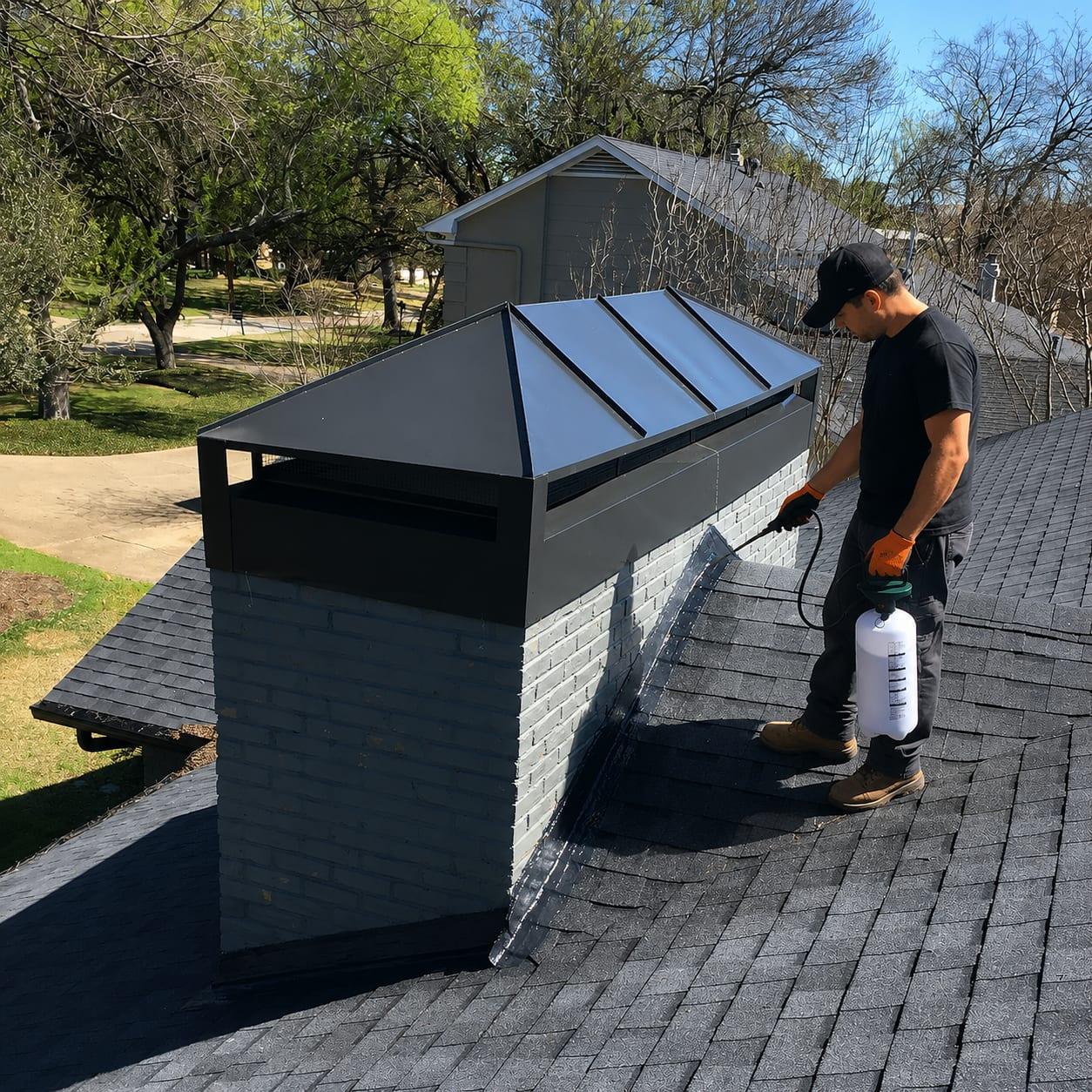
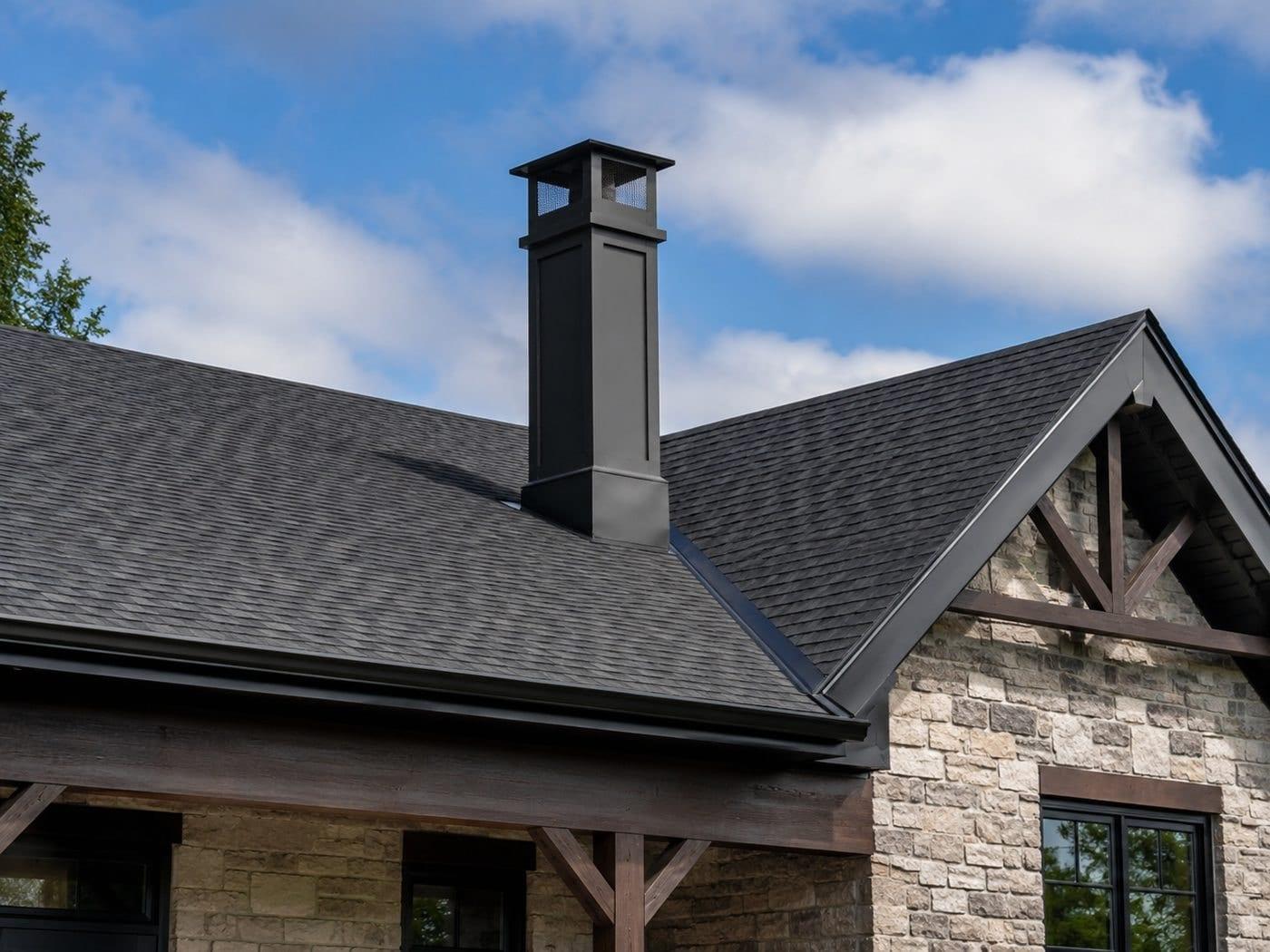
- Chimney cap installation or replacement to keep rain out of the flue opening
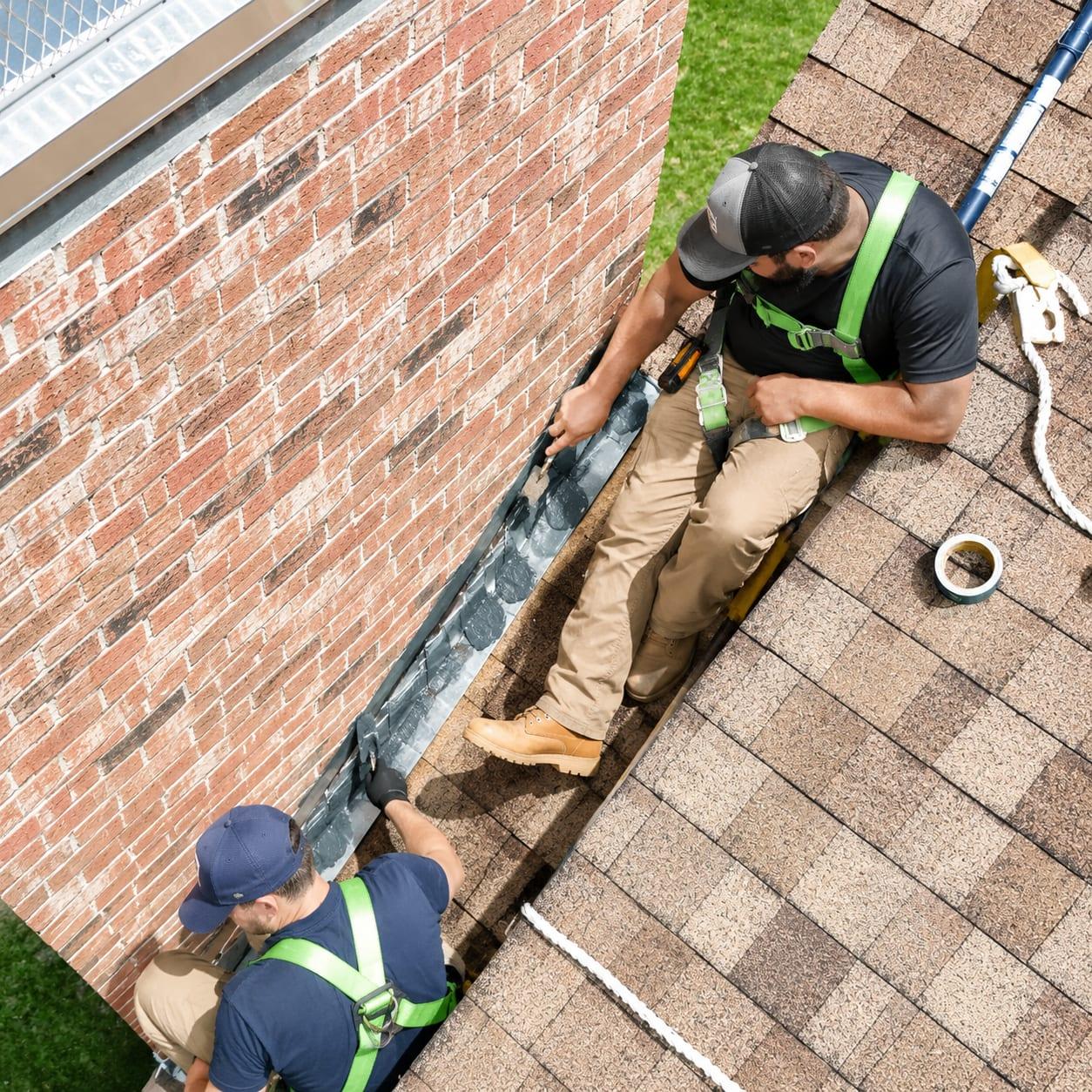
- Chimney flashing repair at the roof line
- Chimney crown repair to close cracks and shed water away from the flue
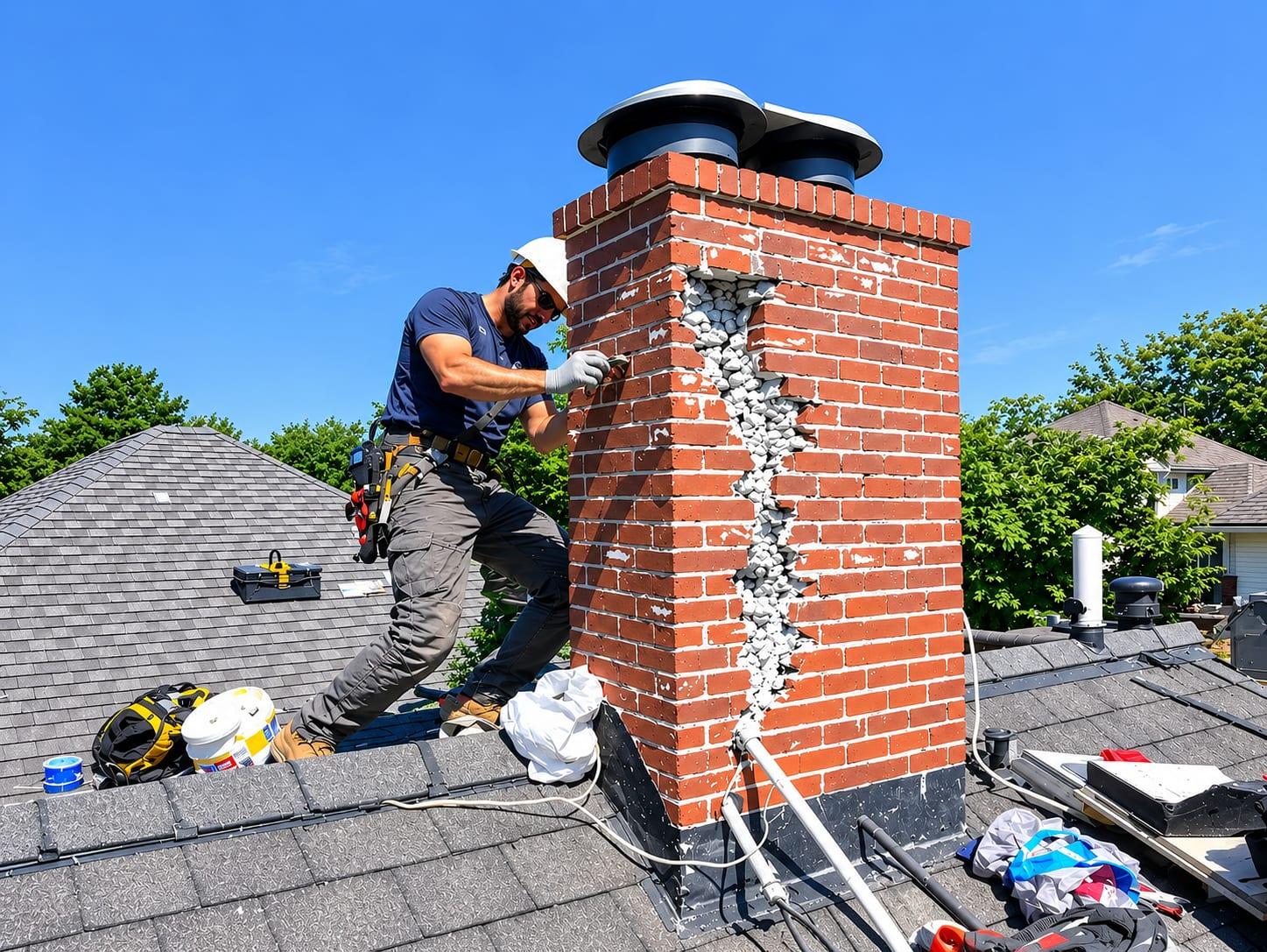
- Tuckpointing or masonry repair to replace failed mortar and damaged brick
- Chase cover replacement on factory-built chimneys
- A breathable water repellent applied to the brick once repairs are done
Waterproofing is often the final step that keeps a repaired chimney dry, which is why our chimney waterproofing service is usually part of the plan. If the flue opening is the problem, how chimney cap installation works explains that fix.
What not to do
- Don't climb onto the roof to inspect the chimney yourself, especially when it's wet.
- Don't coat brick with ordinary paint or a non-breathable sealer; trapped moisture can make spalling worse.
- Don't smear roofing tar over flashing or the crown as a long-term fix; it tends to crack and hide the real problem.
- Don't keep burning fires while water is entering the flue or firebox.