When the metal on top of your chimney starts to rust
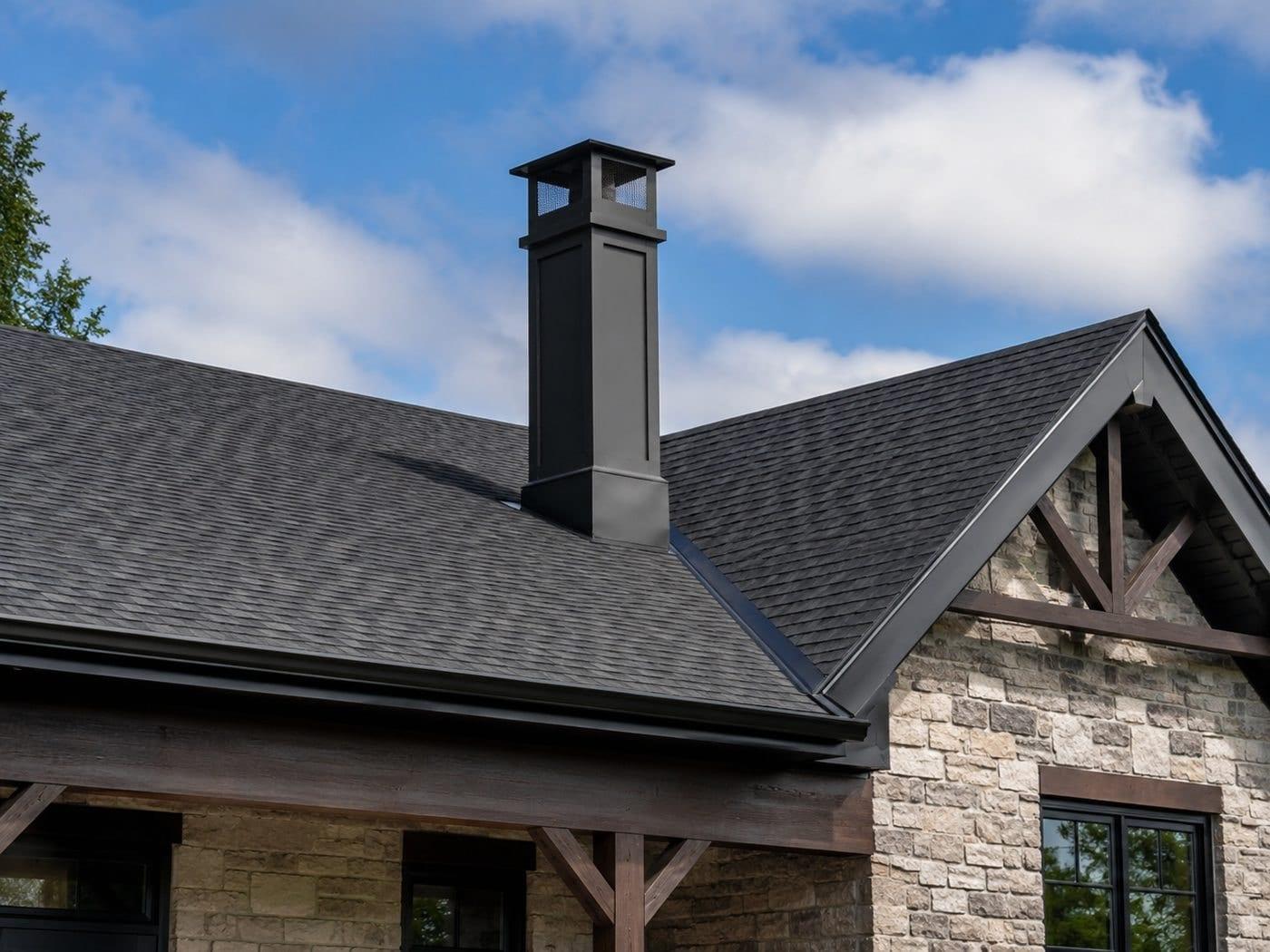
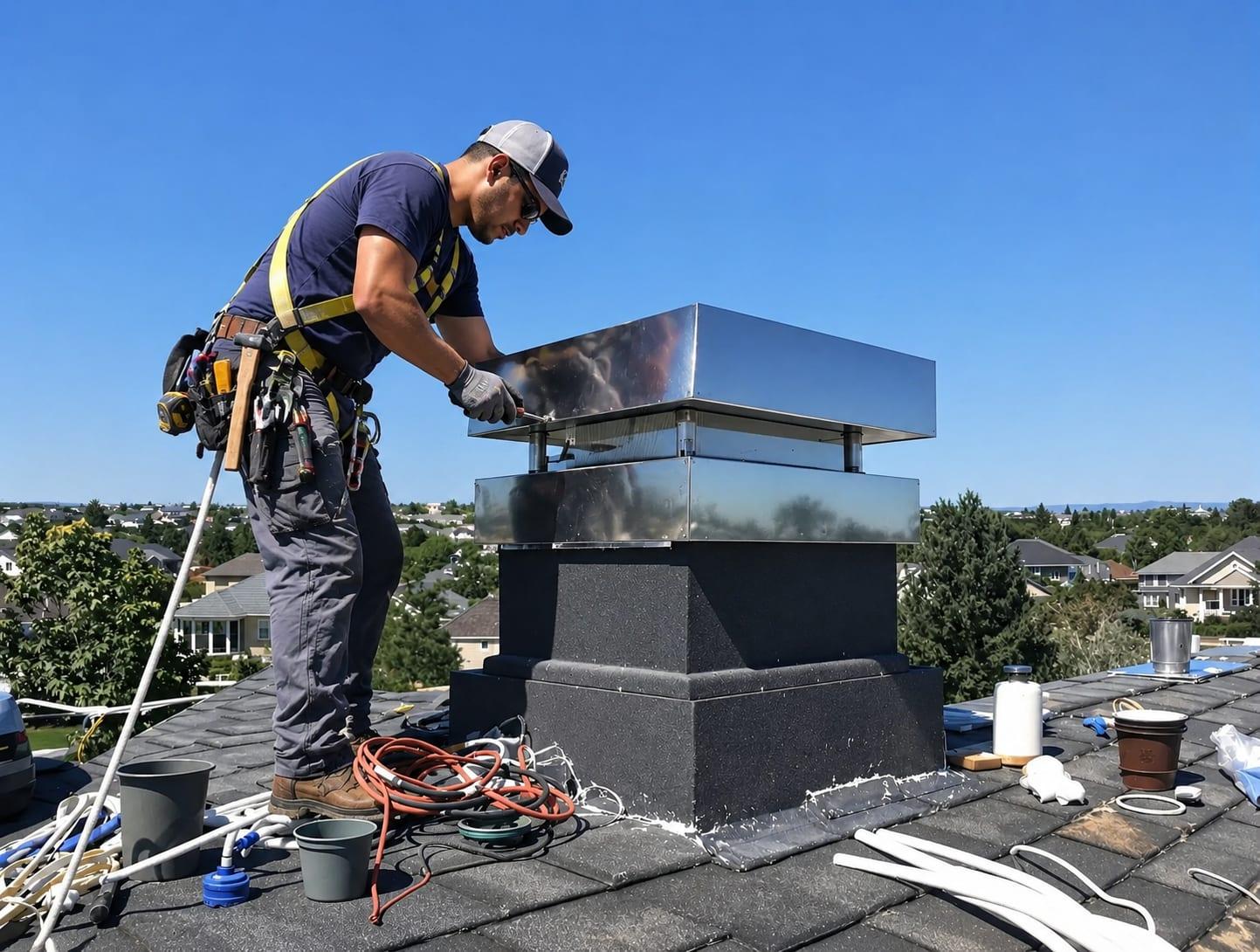
A chimney cap is the metal hood and mesh that sits over the flue opening. It keeps out rain, leaves and animals. On many factory-built (prefab) chimneys, the cap is mounted on a chase cover, a metal panel that seals the top of the framed, sided enclosure around the flue. Unless they're made of stainless steel or copper, both parts are usually galvanized or painted steel. When that protective coating wears through, the steel underneath starts to rust.
Rust usually starts as light orange staining. Left alone, it can turn into flaking metal, pinholes and eventually open holes. At that point the cap or chase cover is no longer keeping water out. It may be letting water in.
Common signs of a rusted chimney cap
What homeowners usually notice first
- Orange or brown streaks running down the chimney siding, brick or roof below the chimney
- Rust flakes or small bits of metal in the firebox, on the stove or on the damper
- A cap that looks bent, tilted, loose or sagging when you view it from the ground
- Mesh screening with gaps or holes, or mesh that has rusted away in sections
- Water dripping into the fireplace, or damp stains on the walls or ceiling near the chimney
- A musty or smoky smell from the fireplace after rain
- Birds, squirrels or other animals getting into the chimney
What can cause a cap or chase cover to rust
Several things can cause rust, and the visible spot doesn't always show where the trouble started. An inspection confirms the actual cause. These are the usual possibilities:
- Water pooling on a flat chase cover. Many chase covers are flat sheets with no slope or raised ridges, so rainwater sits on them and slowly works through the coating.
- Galvanized coating wearing away with age. Coated steel holds up for a while, but sun, rain and temperature swings break the coating down over time.
- Scratches, cuts or fastener holes. Any spot where the coating was damaged during installation or later roof work can become a starting point for rust.
- Leaves and debris holding moisture. Wet debris trapped against the metal keeps it damp long after a storm passes.
- Condensation and flue byproducts. Moisture and combustion gases rising through the flue can corrode the underside of the cap and the mesh.
- Different metals touching. When steel is in contact with another metal, such as copper, corrosion can speed up where the two meet.
On a brick chimney, the cap is usually fastened to the concrete crown on top. Rust stains there sometimes show up alongside chimney crown cracks, since both problems involve water sitting on the top of the chimney. A technician looks at the cap, the cover or crown, the flue opening and the areas below before deciding what needs to be replaced.
How urgent is it, and when should you stop using the fireplace?
Light surface rust on solid metal isn't an emergency. Rust that has made holes, loosened the cap or let water inside should be looked at soon. Some signs mean you should stop using the fireplace, insert or stove until it has been checked.
Stop using the fireplace until it's checked if you notice:
Rust flakes or pieces of metal falling into the firebox or stove; a cap that is loose, tilted or missing; smoke coming back into the room; water dripping into the firebox; or signs that animals are nesting in the flue. A damaged cap can let in debris that blocks the flue, and a missing screen no longer keeps embers or animals where they belong.
If water is already showing up inside, the rusted metal may be only one of several entry points. Chimney leak repair covers the other common sources, such as flashing and masonry. Emergency calls are accepted, and 24-hour service runs Sunday–Friday.
What fixes a rusted chimney cap
Once steel has rusted through or thinned, it usually needs to be replaced. Patching it rarely lasts. The right fix depends on which part has failed and what the inspection finds underneath:
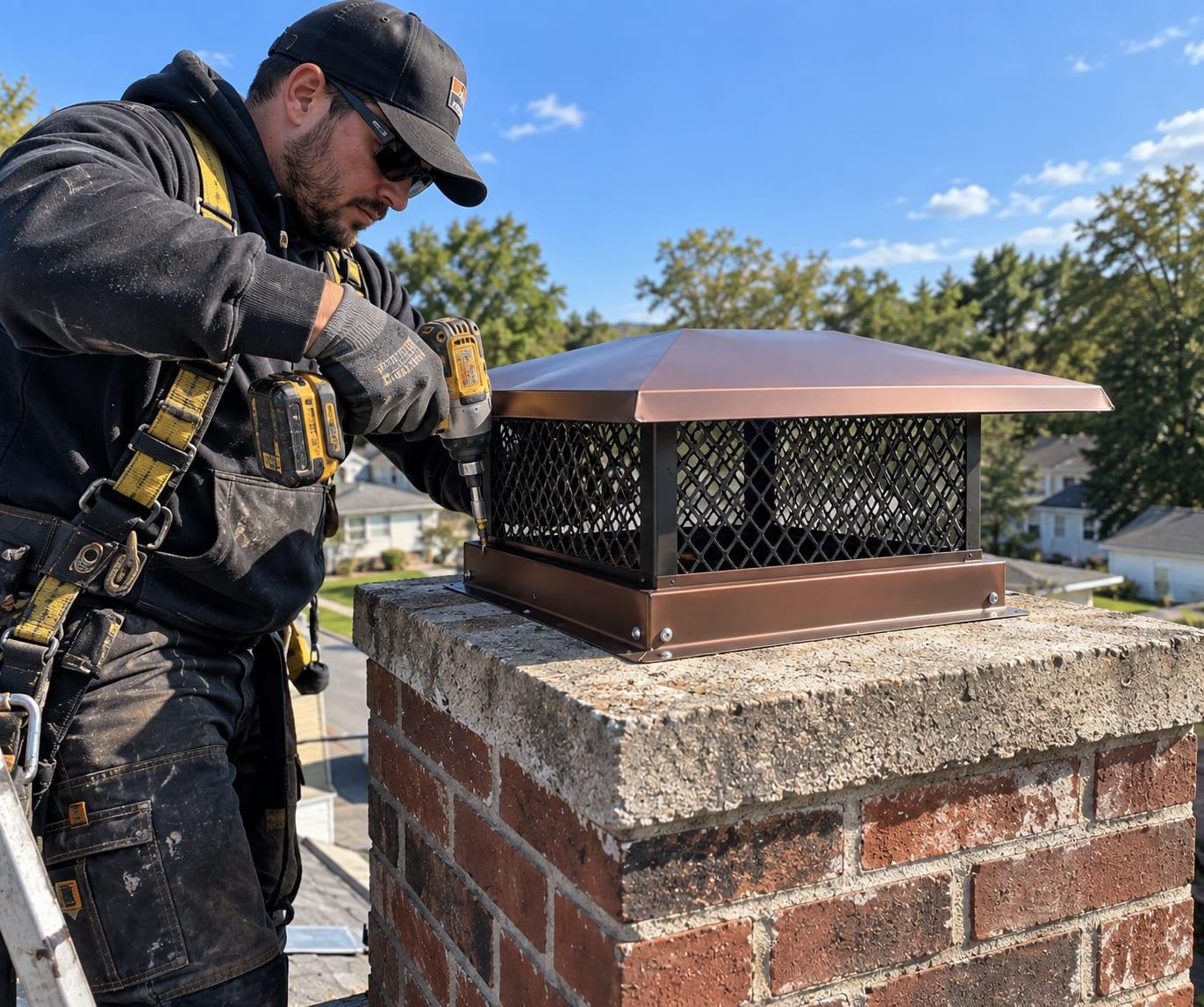
- A rusted cap on an otherwise sound chimney top. The old cap is removed and a new one is fitted to the flue through chimney cap installation, with the mesh sized to keep out animals and debris.
- A rusted chase cover on a prefab chimney. Chase cover replacement swaps the corroded panel for a new cover made to fit the chase and shaped to shed water instead of holding it. The cap is then fitted back on top.
- Damage that has spread below. If water has reached the chase framing, siding, crown, damper or flue, those parts are repaired as well, because a new cap or cover alone won't fix damage that has already happened.
If you're choosing between a standard cap and one with spark screening, the guide on chimney cap vs spark arrestor explains the difference. For prefab chimneys, our guide to chase cover signs, planning and solutions covers what to expect before a cover is replaced.
What not to do
- Don't climb onto the roof to inspect or pry at the cap. A pair of binoculars from the yard will show you most of what you need to see.
- Don't seal the cap with caulk, tar or tape, and don't cover the flue opening. Blocking the top of the chimney can trap smoke and gases inside the house.
- Don't take off a damaged cap and leave the flue open. That lets in rain, leaves and animals.
- Don't paint over heavy rust and treat the problem as solved. Paint can hide thin spots and holes without making the metal any stronger.
- Don't keep lighting fires while rust or metal pieces are falling into the firebox.