On this page
What a chimney sweep involves
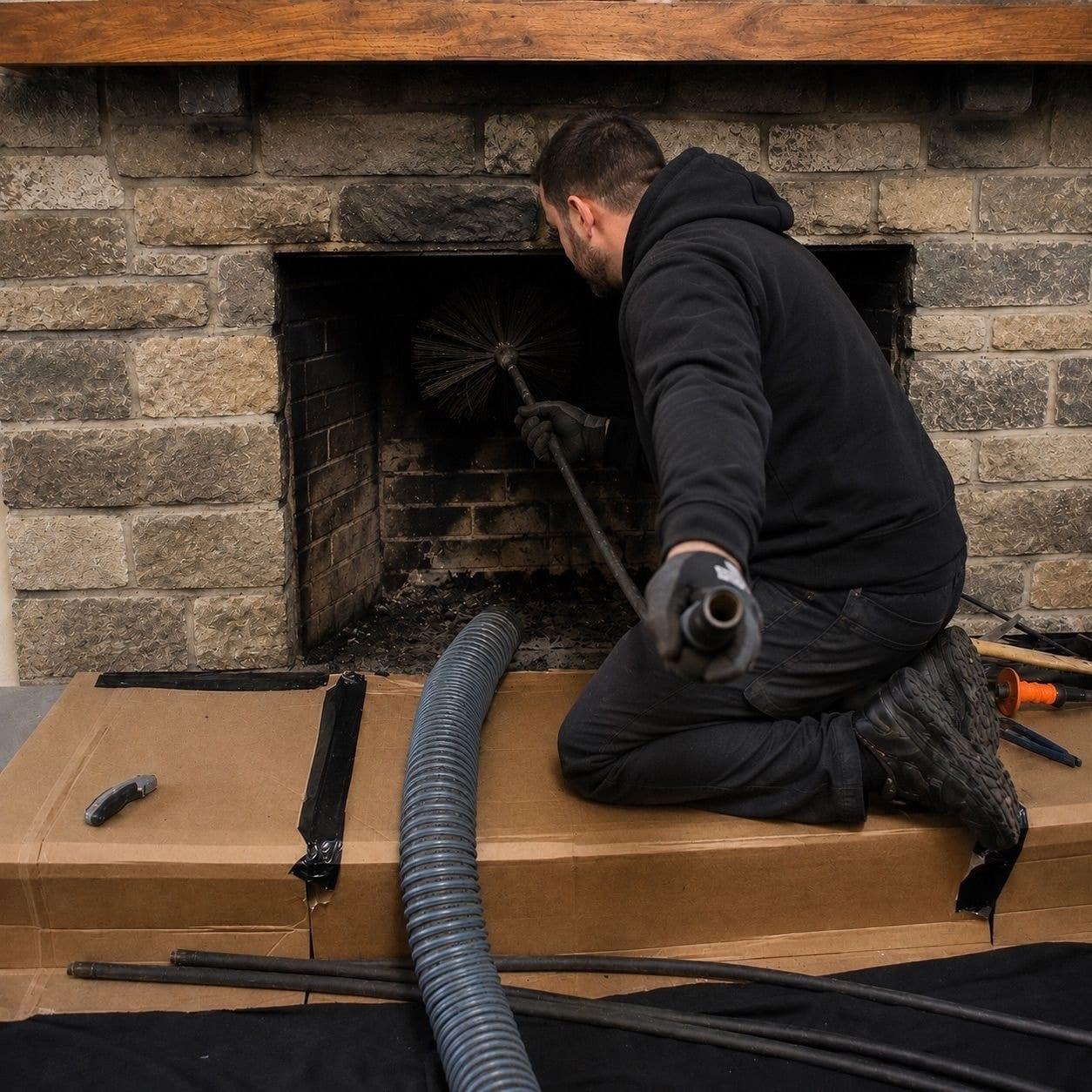
Chimney sweeping is the mechanical cleaning of the inside of the chimney system: the flue, the smoke chamber above the damper, the damper itself and the firebox. Brushes sized to the flue scrub the deposits loose, and a vacuum at the fireplace opening keeps the dust out of your living room. The goal is a clear path for smoke and gases, with less fuel left on the walls for a chimney fire.
Chimney cleaning and chimney sweeping: the same job
The two names describe the same work. Chimney cleaning is the broader phrase homeowners tend to use. It covers sweeping the flue plus cleaning the smoke chamber, smoke shelf, damper and firebox, which are the parts that a brush pushed up the flue alone would miss. A proper cleaning covers all of them.
Chimney flue cleaning
The flue is the passage that carries smoke out of the house. In a masonry chimney it is usually clay tile. In a factory-built or relined chimney it is usually a round metal liner. Flue cleaning means running brushes the full height of the flue, not just the lower few feet you can reach from the firebox. The brush has to match the flue's shape and material. A stiff wire brush suits clay tile but can scratch a stainless steel liner, so a metal liner gets a poly brush instead.
Signs your chimney needs sweeping
- A campfire or tar-like smell from the fireplace, often stronger on humid days or when the air conditioning is running.
- Smoke drifting into the room instead of going up, or a fire that's hard to start and keep going.
- Black flakes or crumbly bits falling onto the firebox floor or the damper.
- A damper that sticks or won't close fully. Buildup on the damper is a common cause, and types of chimney dampers explains how throat and top-sealing dampers differ.
- You've burned fires regularly since the last cleaning, or you can't remember when the chimney was last swept.
- Scratching, chirping or nesting material in the firebox. A nest blocks the flue just as soot does, and we remove animals and nests as well.
For more warning signs and what each one usually means, read signs your chimney is telling you.
Sweeping isn't always the right first step. During a chimney fire, get everyone out and call 911 first. If you've had a chimney fire, are buying a home, or can see cracked tiles, loose bricks or water stains, book a chimney inspection so the problem is found before anything else is done.
What happens during a sweep visit
Protecting the room
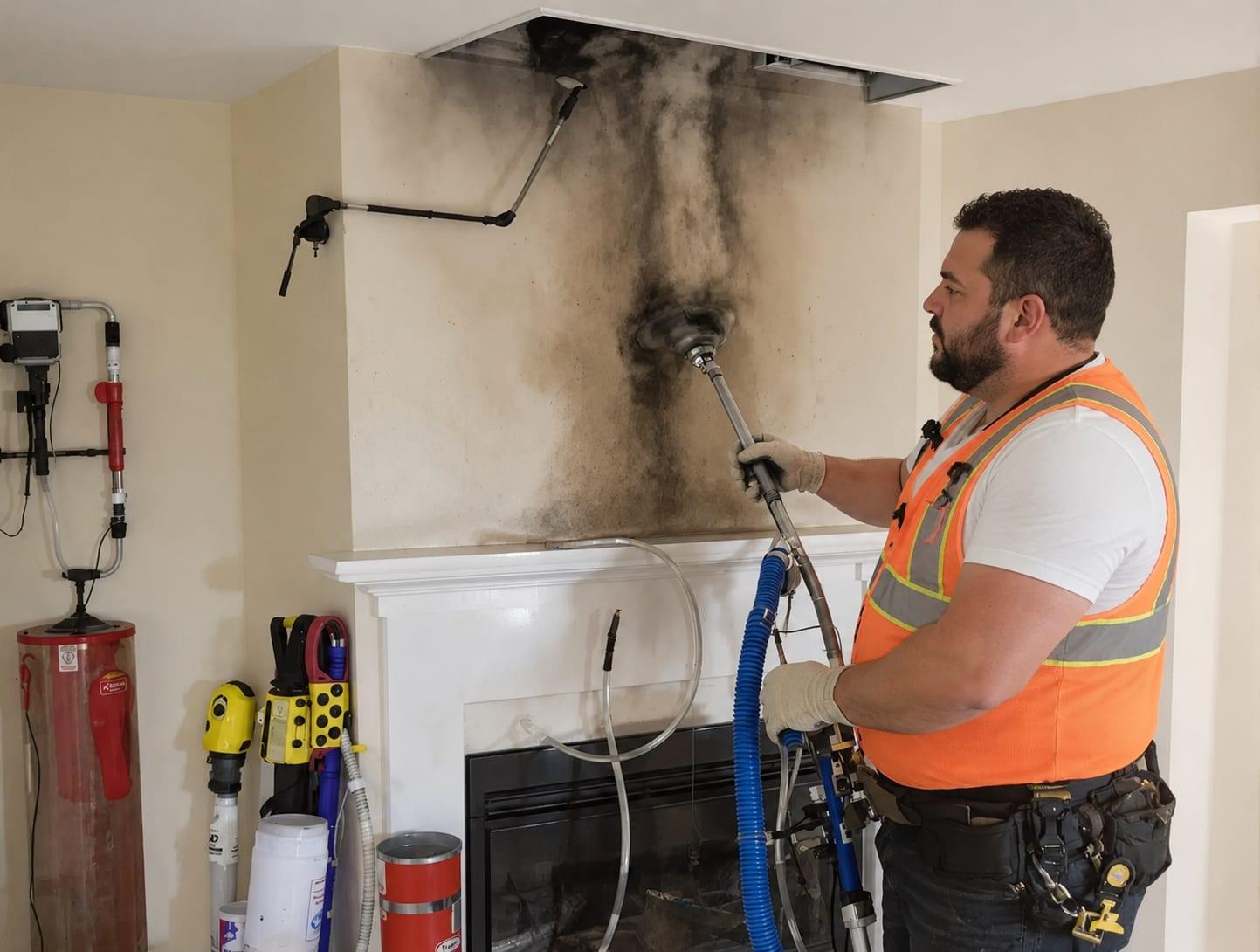
We lay drop cloths from the hearth outward and set up a vacuum at the fireplace opening so dust is pulled away from the room.
A look before cleaning
We check the firebox, the damper and the visible part of the flue. This shows how heavy the deposits are and whether anything is blocking the flue.
Brushing the flue
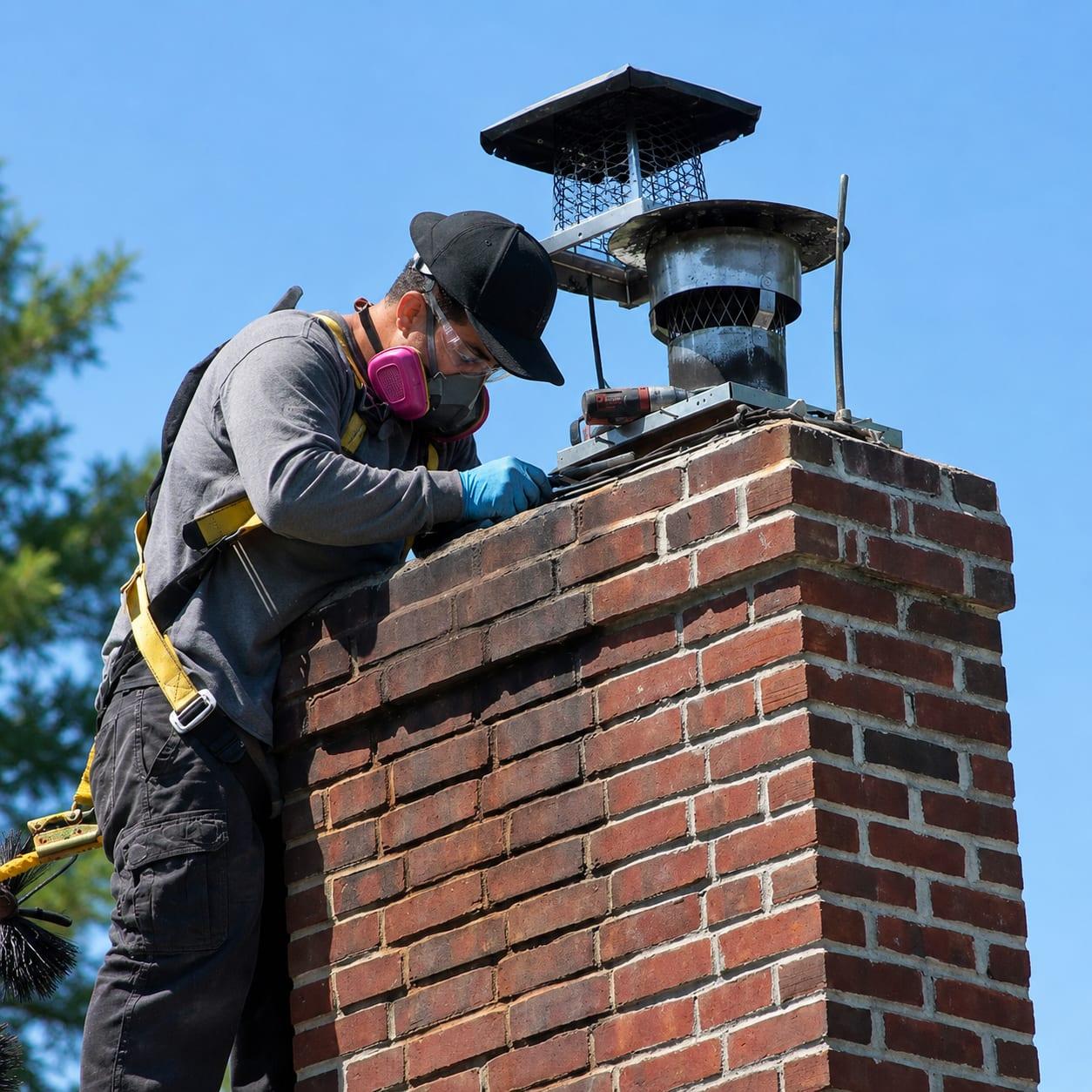
Brushes sized to the flue are run the full height. Depending on access and the chimney's design, we work from the roof or from the firebox.
Smoke chamber, damper and firebox
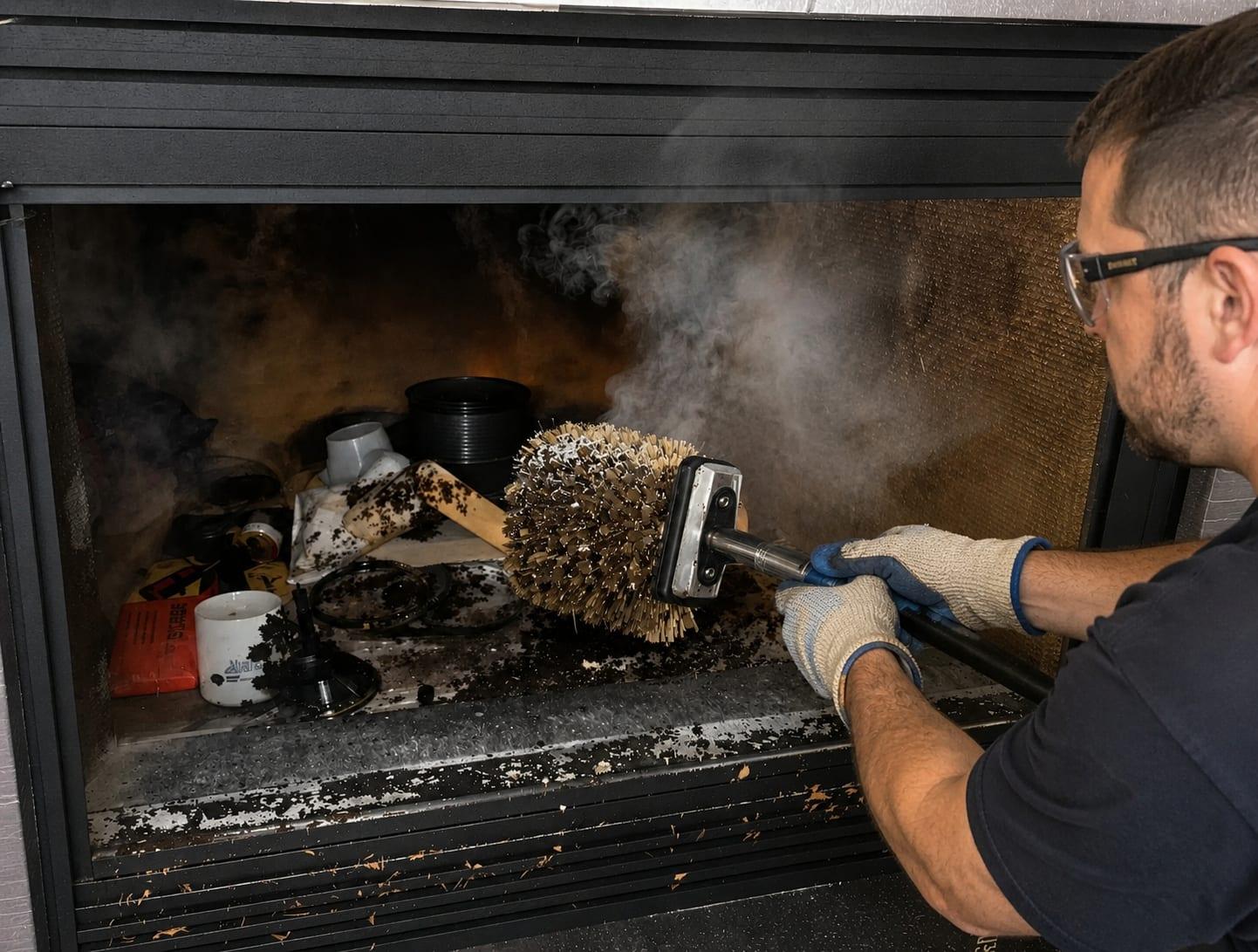
We brush and scrape the smoke shelf and smoke chamber, clean the damper so it seats properly, and remove ash and debris from the firebox.
Cleanup and findings
We vacuum up the debris and clean the work area. Then we tell you what we found: how much buildup there was, what kind it was, and anything that needs attention.
Before the visit, skip fires the day before so the firebox and ashes are cold when we arrive. Clear the hearth and leave a few feet of open space in front of the fireplace.
Creosote buildup and soot removal
Creosote buildup
Creosote forms when wood smoke cools inside the flue and condenses on the walls. It is flammable. It builds up faster when you burn wet or unseasoned wood, let fires smolder, or have a flue that runs cold. Creosote is usually described in three stages:
- Flaky or powdery deposits brush off in a standard sweep.
- Crunchy, tar-like deposits are stickier and take more aggressive tools to break loose.
- Shiny, hardened glaze won't come off with brushing. It needs chemical treatment or rotary removal tools, which we handle as a separate creosote removal service.
Chimney soot removal
Soot is the fine black carbon left behind by burning. Unlike creosote it is dry and powdery, and a sweep removes it easily. A heavy layer still narrows the flue, though, and often means fires aren't burning completely. Soot that has spread to the fireplace face, glass doors or nearby walls is a separate cleanup. We clean fireplace glass, and the chimney soot removal guide covers the rest.
Keeping buildup down after creosote cleaning
- Burn dry, seasoned wood. Wet wood smolders and coats the flue.
- Open the damper fully before you light a fire, and keep it open until the fire is completely out.
- Build hotter, shorter fires instead of letting one smolder overnight.
- Never burn trash, cardboard, painted wood or treated lumber.
If buildup returns quickly even with good burning habits, the cause is often a draft or flue-sizing problem. We handle fireplace draft repair as well.
When the chimney still smells
A smell that hangs around after a cleaning usually has another cause. Rain may be getting into the flue and mixing with leftover deposits, an animal may have nested or died inside, or the house may be pulling air down the chimney. We handle chimney odor removal and animal and nest removal. We also install chimney caps and animal screens to keep rain and wildlife out.
Chimney types, components and fuels we clean
Masonry chimney cleaning
Brick and block chimneys usually have clay tile flue liners joined with mortar. Cleaning them well means brushing without chipping the tiles and giving extra attention to the smoke chamber, where rough masonry traps deposits. While we work, we note cracked tiles, open mortar joints and crown damage, and if repairs are needed we do chimney masonry and crown repair too.
Factory-built chimneys
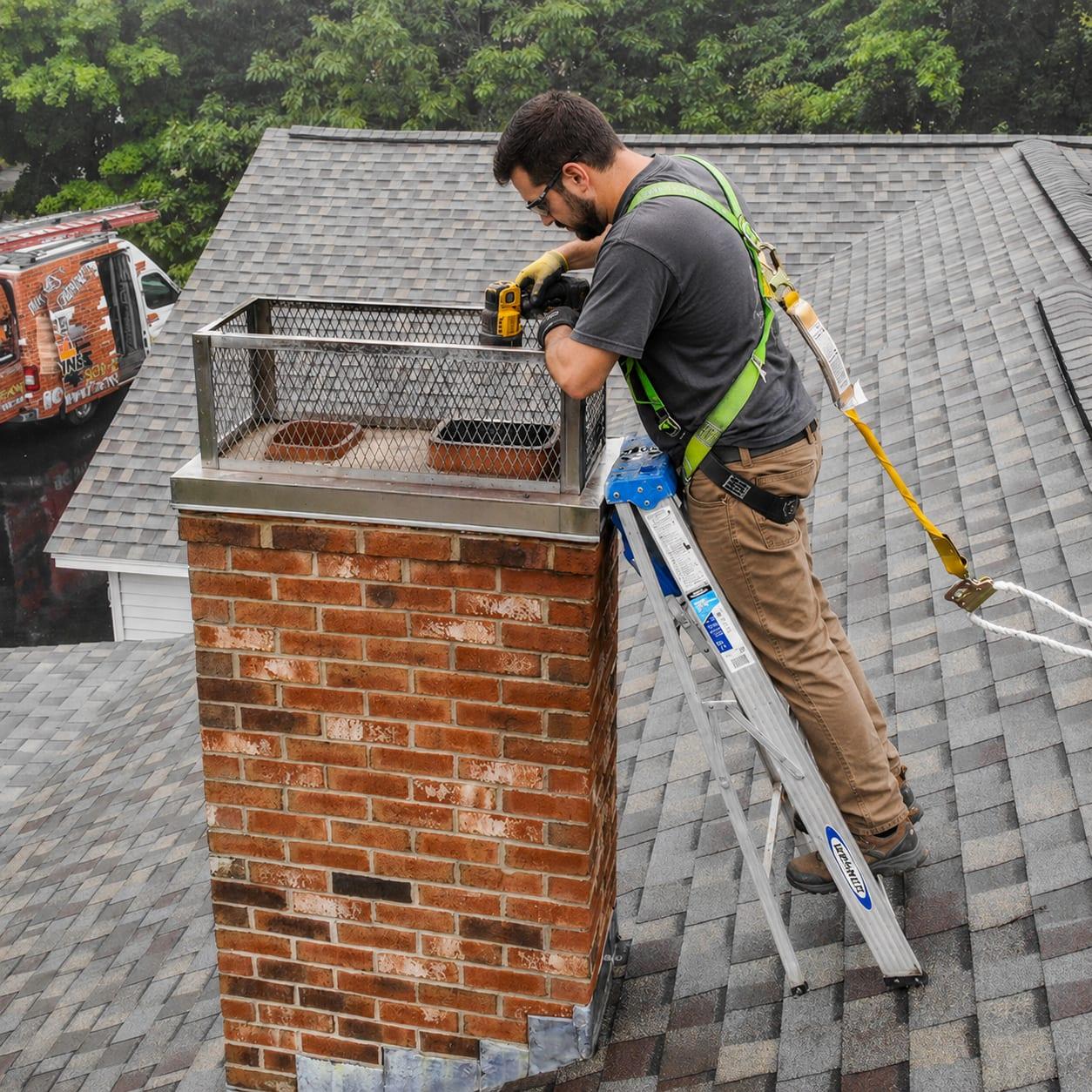
Prefab fireplaces use a metal flue inside a framed chase. They need brushes made for metal pipe, and the chase cover at the top is worth checking for rust while we're on the roof.
Pellet stoves, wood stoves and fireplace inserts
Pellet stoves burn cleaner than open wood fires, but they produce fine fly ash. That ash collects in the vent pipe, the elbows and the stove's exhaust passages, and as it builds up it restricts airflow and affects how the stove runs. We clean pellet stoves and their vents, wood stoves, and fireplace inserts. Insert cleaning includes the liner that runs from the insert up the chimney.
| Fuel | What builds up | What cleaning focuses on |
|---|---|---|
| Wood | Soot and creosote | Full-height flue brushing, smoke chamber, damper and firebox |
| Gas | Little soot, but debris, nests and corrosion in the vent | Clearing the flue or vent and checking for blockages, alongside gas fireplace maintenance |
| Pellet | Fine fly ash | Vent pipe, elbows and the stove's exhaust passages |
Chimney installations for pellet stoves and inserts
If you're adding a pellet stove or a fireplace insert rather than maintaining one, the venting matters as much as the appliance. A pellet stove needs a vent run sized and sealed for its exhaust, and an insert set into an existing fireplace usually gets a liner run up the old flue so it vents properly and can be swept later. We handle pellet stove chimney installation, fireplace insert installation and chimney liner installation, as well as fireplace installation for new fireplaces.
Safety and maintenance
A clean flue matters for two reasons. Creosote is fuel, and a chimney fire inside the flue can crack the liner or spread to the house. A blocked flue can also push smoke and carbon monoxide back indoors. A common recommendation is to have the chimney inspected once a year and swept when deposits build up. For wood-burning fireplaces, about 1/8 inch of buildup is a widely used point to clean.
- Keep smoke and carbon monoxide alarms working on every floor, including near bedrooms.
- Use a screen or glass doors whenever a fire is burning. Check your fireplace's manual first: some glass doors must stay fully open while a fire burns.
- Put ashes in a metal container with a tight lid, and store it outside away from the house.
Signs of a chimney fire
Warning signs include a loud roaring or popping from the chimney, dense smoke, or flames or sparks from the top. If you hear roaring or see flames or sparks from the top of the chimney, get everyone out and call 911. Get everyone out of the house and call the fire department. Don't use the fireplace again until the chimney has been checked.
Do you do more than just chimney sweeping?
Yes. Sweeping and flue cleaning are one part of the work we do on chimneys, fireplaces and vents. Other services include:
- Chimney and fireplace inspections, including camera inspections and inspections for real estate sales.
- Chimney caps, animal screens, spark arrestors and chase covers.
- Gas fireplace service, repair and installation. Gas fireplace and gas appliance work is offered.
- Dryer vent cleaning, lint and blockage removal, and airflow testing.
- Commercial & property management chimney services for rental properties and businesses.
We work on all major brands of fireplaces, inserts and stoves.
Booking a chimney sweep
To book a chimney sweep in Atlanta, call or request an estimate. Same-day visits are available where the schedule allows. Emergency calls are accepted, and 24-hour service runs Sunday–Friday. When you get in touch, let us know what you burn, when the chimney was last swept, and any signs you've noticed, such as smells, smoke in the room or debris in the firebox.
We also sweep chimneys beyond the city itself, including chimney sweep for homes in Sandy Springs.
Related work covered on this page
- Chimney Flue Cleaning