The short answer on removing chimney soot
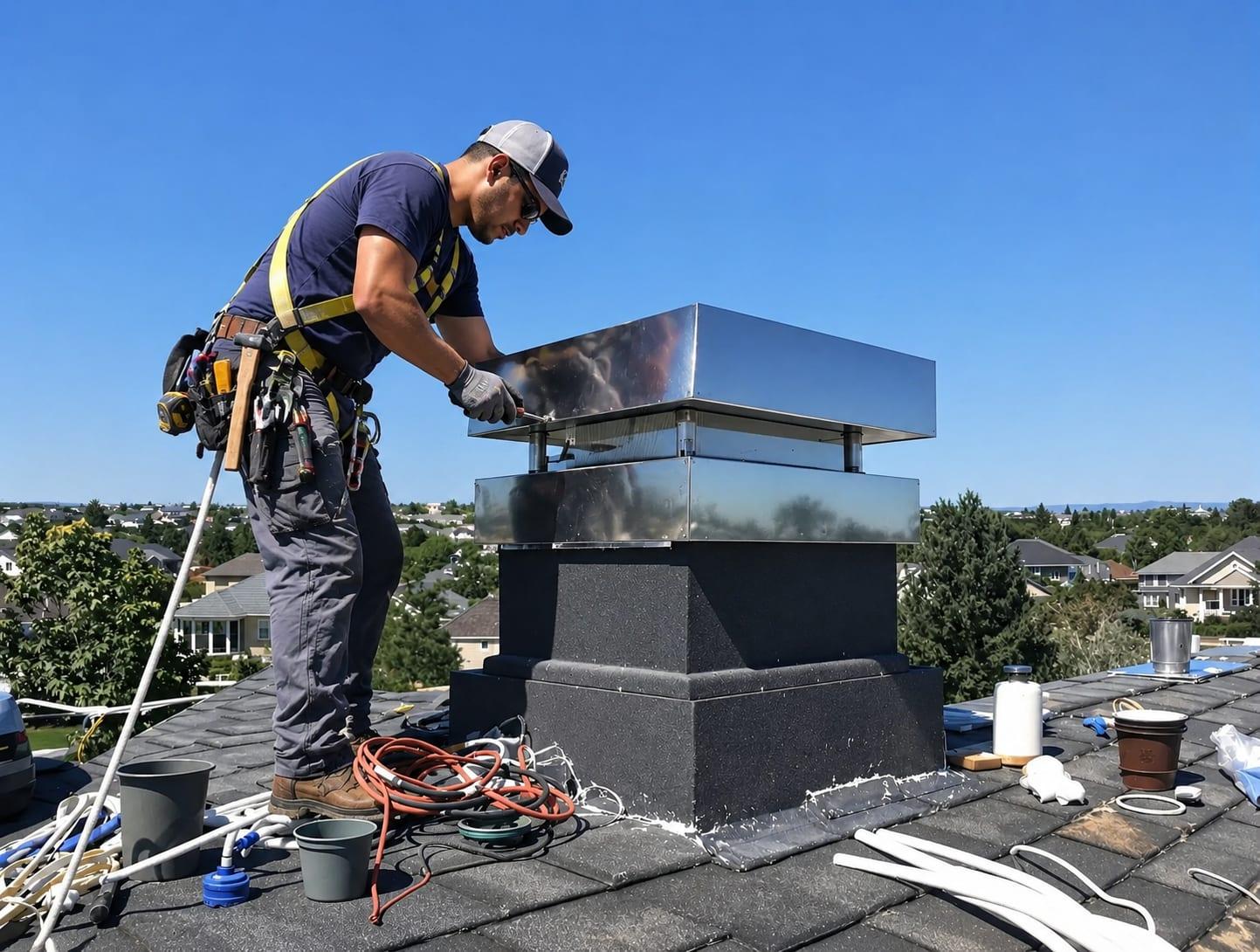
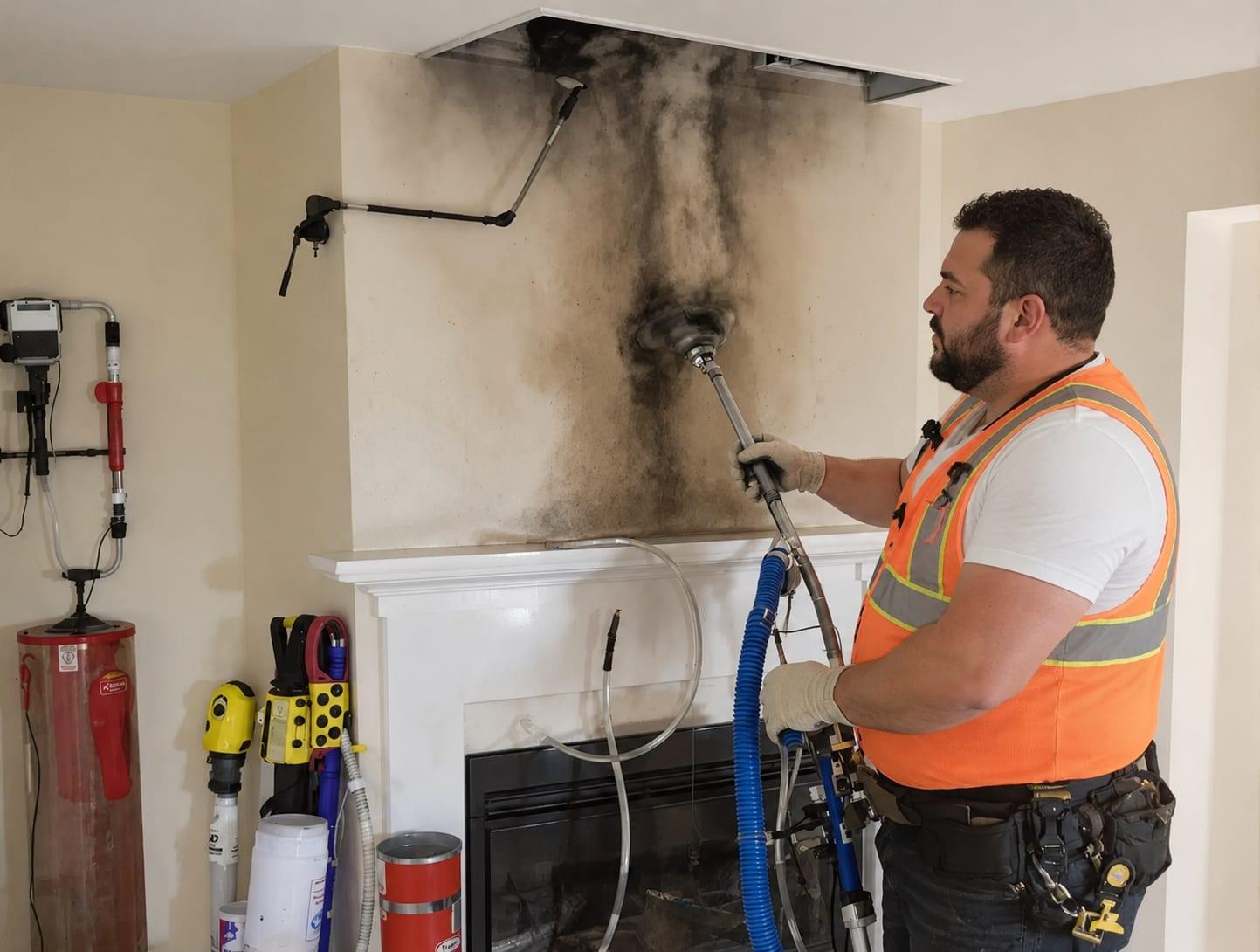
Loose soot on the flue walls is removed by brushing and vacuuming, not by washing or burning it off. A sweep runs a brush that matches the flue's shape and size from top to bottom, or bottom to top, and collects the fallen debris with a vacuum while the fireplace opening is sealed. That keeps the dust in the chimney and out of your living room.
What a homeowner can handle is surface soot: the black film on glass doors, on the firebox walls, and on the brick or stone around the opening. The flue is a different matter. You can't see most of it from the hearth, and soot is often mixed with creosote, which takes different tools and sometimes different methods.
Soot and creosote are not the same thing
Soot is mostly dry, powdery carbon left by fuel that didn't burn completely. Creosote forms when smoke cools and condenses on the flue walls, and it ranges from flaky to sticky to a hard, shiny glaze. Both are combustible, but creosote is the bigger concern because it builds into layers that can catch fire. If a sweep finds hardened or glazed deposits, ordinary brushing may not be enough, and how creosote removal works depends on which stage is present.
| Deposit | What it looks and feels like | Typical removal approach |
|---|---|---|
| Soot | Dry, black, powdery; smudges easily | Brushing and vacuuming |
| Flaky creosote | Crumbly, black or brown flakes | Brushing with stiffer brushes, then vacuuming |
| Tarry creosote | Sticky, thick, harder to dislodge | Rotary tools or chemical treatment before sweeping |
| Glazed creosote | Hard, shiny coating, like dried tar | Specialized chemical or mechanical removal; often needs repeat work |
Why soot builds up in a chimney
Some soot is normal with any wood fire. Heavy or fast buildup usually points to a fire that isn't getting enough air or heat, or a flue that isn't drafting well.
- Wet or green wood burns cool and smoky, leaving more soot and creosote behind.
- Small, smoldering fires and dampers left partly closed starve the fire of air.
- A cold or oversized flue lets smoke cool before it exits, so more of it sticks.
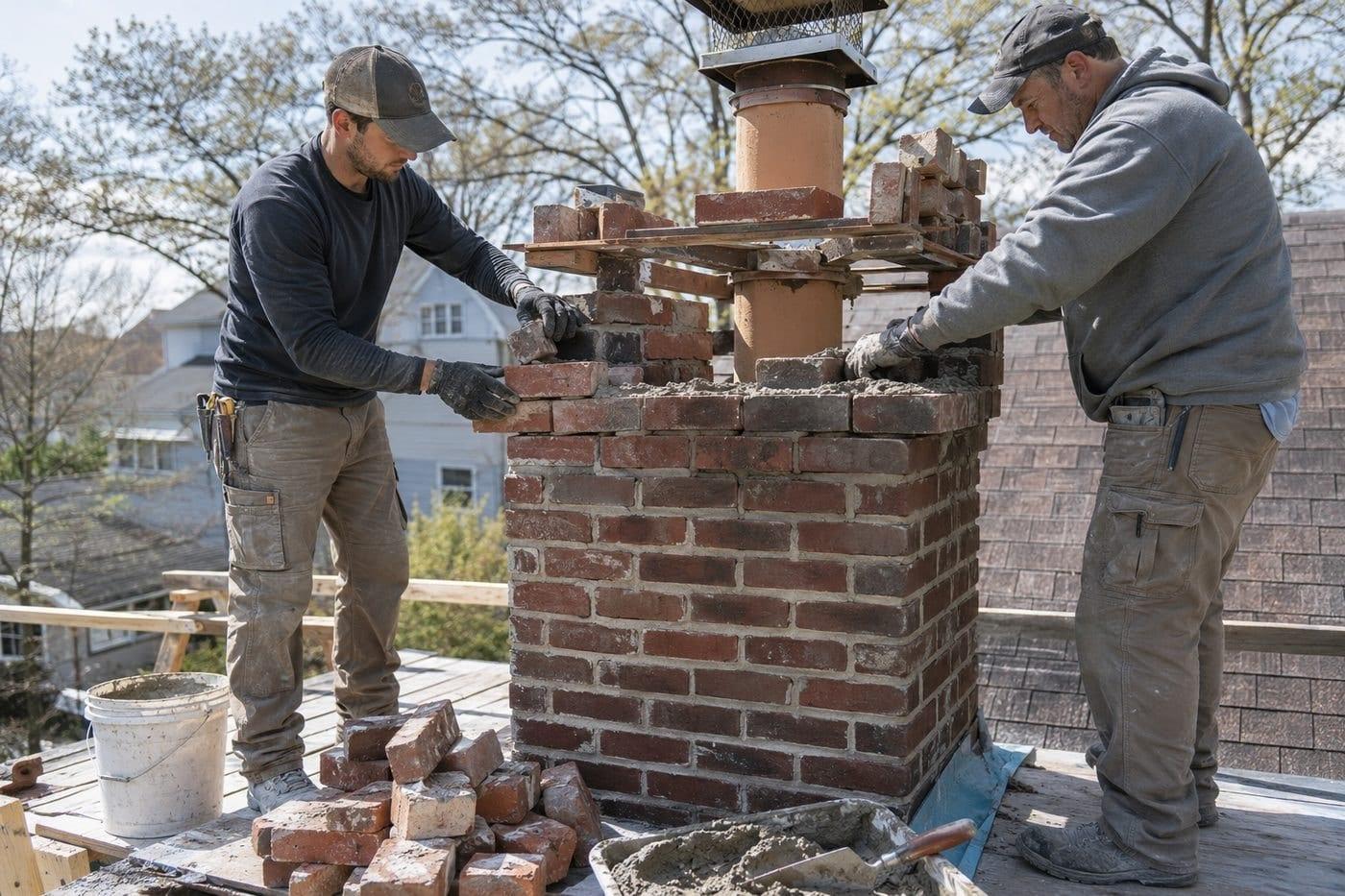
- Obstructions such as nests, leaves or debris slow the draft; chimney blockage removal clears what is restricting the flue.
- Animals that have moved in leave nesting material that traps soot and blocks airflow, which is where chimney animal & nest removal comes in.
- In a gas fireplace, soot is not normal and usually means misplaced logs, a dirty or misadjusted burner, or a venting problem.
Signs the flue needs attention
- Black dust or flakes falling into the firebox
- Smoke rolling into the room instead of going up
- A strong, smoky or tar-like smell, especially in humid weather
- Dark streaks on the brick or stone above the opening
- Fires that are hard to start or keep going
- Soot on the glass or logs of a gas fireplace
Options for removing soot
| Feature | Homeowner cleaning | Professional sweep |
|---|---|---|
| Best for | Glass doors, firebox walls, hearth and brick face | The full flue, smoke chamber and damper area |
| Tools | Dry soot sponge, soft brush, shop vacuum with a fine filter, drop cloths | Flue-sized brushes and rods, rotary tools, containment vacuum, camera where needed |
| What you learn | Whether surface soot is heavy or light | The condition of the liner, damper, smoke chamber and cap |
| Main risk | Smearing soot into masonry or spreading dust indoors | Very little, as long as the right tools are used for the deposit type |
Best for
- Homeowner cleaning
- Glass doors, firebox walls, hearth and brick face
- Professional sweep
- The full flue, smoke chamber and damper area
Tools
- Homeowner cleaning
- Dry soot sponge, soft brush, shop vacuum with a fine filter, drop cloths
- Professional sweep
- Flue-sized brushes and rods, rotary tools, containment vacuum, camera where needed
What you learn
- Homeowner cleaning
- Whether surface soot is heavy or light
- Professional sweep
- The condition of the liner, damper, smoke chamber and cap
Main risk
- Homeowner cleaning
- Smearing soot into masonry or spreading dust indoors
- Professional sweep
- Very little, as long as the right tools are used for the deposit type
Cleaning surface soot from the firebox and fireplace face
Wait for a cold fireplace
Let the ashes sit until they are completely cold, which can take longer than it seems. Shovel them into a metal container with a lid and keep it outside, away from the house.
Protect the room
Lay drop cloths over the hearth and nearby floor, and wear a dust mask and gloves.
Start dry
Wipe soot from brick, stone and the firebox with a dry soot sponge before using any liquid. Water applied first tends to push soot deeper into porous masonry.
Vacuum gently
Use a shop vacuum with a fine filter. A regular household vacuum can blow fine soot back into the air.
Wash only what needs it
For remaining stains on the brick face, use a mild cleaner and a soft brush, working from the bottom up to avoid streaks. Clean glass doors with a cleaner made for fireplace glass, and only when the glass is cool.
What happens during a professional sweep
The fireplace opening is sealed and the vacuum is set up so dust is pulled away from the room. The flue is brushed in sections, and the smoke chamber and damper area are cleaned by hand, since that is where buildup tends to collect. The sweep then looks at what came out and what was left behind: heavy creosote, nest material or masonry fragments all say something about the chimney's condition. A camera may be used to see sections of the flue that can't be viewed directly.
Don't burn soot out
Lighting a hot fire to burn off deposits is how many chimney fires start. A roaring or popping sound, dense smoke and a hot smell from the chimney are signs of a chimney fire; get everyone out and call 911. Read more about what causes chimney fire risk and how buildup contributes to it.
What helps you decide
If the soot is only on the glass and the face of the fireplace and the fire drafts well, cleaning it yourself is reasonable. If soot is falling from above, smoke is entering the room, the smell is strong, or you can't remember the last time the chimney was swept, the flue needs a proper sweep and a look at its condition. National fire-safety guidance (NFPA 211) recommends inspecting chimneys once a year and cleaning them when the inspection finds it is needed.
Two parts of the chimney affect how much soot ends up indoors. A damper that doesn't close fully lets soot and odors drift down; the guide to types of chimney dampers explains the options. A good cap keeps out rain, leaves and animals that cause poor draft, and a buyers guide to chimney caps covers how to choose one.
When the flue needs more than a surface wipe, our team handles chimney sweeping, creosote and blockage removal, and nest removal, and you can get in touch to request a visit.