What a chimney cap does and whether you need one
Most chimneys benefit from a cap. An open flue lets rainwater fall straight onto the damper and smoke shelf, gives birds and raccoons an easy place to nest, and lets wind push downdrafts into the firebox. On a wood-burning fireplace or stove, the screen also catches embers before they land on the roof. A cap is one of the simplest parts of a chimney system, but buying the wrong size or type can leave gaps, restrict draft, or rust out within a few seasons.
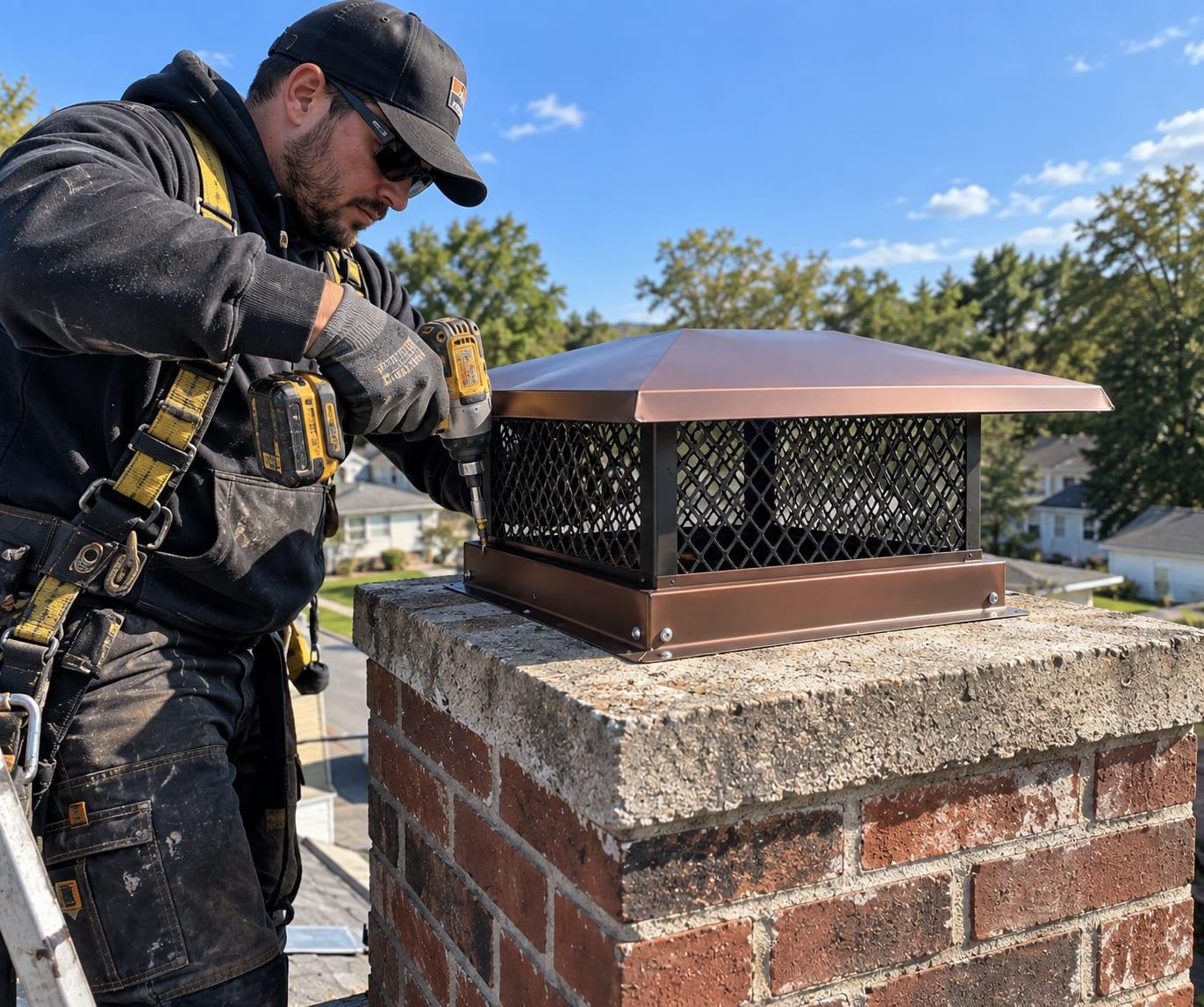
A properly fitted cap helps with
- Water entry: the hood sheds rain and snow away from the flue opening.
- Animals and nests: the mesh skirt keeps birds, squirrels and raccoons out of the flue.
- Debris: leaves and twigs stay out of the flue, where they could otherwise build up and block it.
- Sparks: a screened cap works as a spark arrestor for wood-burning appliances.
- Downdrafts: a hood can reduce wind blowing straight down the flue.
A cap is not a crown
The cap sits on the flue. The crown is the masonry or concrete slab that covers the top of the chimney around it. A cap won't stop water that gets in through a cracked chimney crown, and the crown should be sound before a cap is mounted to it.
Choosing the type of cap
Single-flue or multi-flue
A single-flue cap fits over one clay or metal flue liner that sticks up above the crown. If several flue tiles share one crown, for a furnace, a fireplace and a water heater for example, you can cap each flue separately or use one larger multi-flue cap that covers the whole group and fastens to the crown. Multi-flue caps also shield the crown from direct rain.
How the cap attaches
| Feature | How it attaches | Best fit |
|---|---|---|
| Band or clamp-on | A strap or set screws grip the outside of the flue tile | Round or square clay tiles that stick up a few inches above the crown |
| Inside-mount | Legs or a collar slip inside the flue | Flues where the tile is flush with the crown or too irregular to clamp |
| Crown-mount (multi-flue) | The base fastens to the top of the crown | Several flues close together, or crowns that need extra protection |
| Manufacturer-specified | Matches the termination of a factory-built system | Prefab fireplaces and many gas or pellet vents |
Band or clamp-on
- How it attaches
- A strap or set screws grip the outside of the flue tile
- Best fit
- Round or square clay tiles that stick up a few inches above the crown
Inside-mount
- How it attaches
- Legs or a collar slip inside the flue
- Best fit
- Flues where the tile is flush with the crown or too irregular to clamp
Crown-mount (multi-flue)
- How it attaches
- The base fastens to the top of the crown
- Best fit
- Several flues close together, or crowns that need extra protection
Manufacturer-specified
- How it attaches
- Matches the termination of a factory-built system
- Best fit
- Prefab fireplaces and many gas or pellet vents
Factory-built and gas vents
Prefabricated metal chimneys and many gas appliance vents are designed to use a specific termination cap. Swapping in a generic masonry-style cap can affect how the appliance vents, so match the replacement to the manufacturer's listing.
Materials
| Material | Corrosion resistance | Things to know |
|---|---|---|
| Galvanized steel | Lowest; the coating wears over time | Can rust, especially near acidic flue gases or wet climates |
| Stainless steel | High | A durable, common choice for both wood and gas flues |
| Copper | High | Develops a patina; often chosen to match copper flashing or gutters |
| Black or powder-coated steel | Depends on the steel underneath | The finish is cosmetic; check whether the base metal is stainless |
The screen
The mesh needs openings small enough to stop animals and embers, but not so fine that soot and creosote clog it and choke the draft. Wood-burning flues usually get a spark-arrestor screen. If a flue serves an appliance whose manufacturer advises against screens, follow that instruction.
What to check before you buy
Measuring and planning
Count the flues
Look at the top of the chimney, or a photo of it, and note how many flue tiles or pipes come through the crown.
Measure each flue
Record the outside width and length of each tile, or the inside dimensions if you plan an inside-mount cap, and how far the tile rises above the crown.
Note what each flue serves
Wood fireplace, wood stove, gas logs, furnace or water heater. This affects the screen choice and whether a listed cap is required.
Check the crown and tile condition
Cracked crowns, loose mortar or broken flue tiles should be fixed first, or the new cap has nothing solid to hold onto.
Leave head room
The hood should sit high enough above the flue that it doesn't restrict exhaust, especially on a fireplace with a large opening.
When a cap alone won't fix the problem
Homeowners often shop for a cap after noticing water stains, a musty smell, or sounds of animals in the flue. A cap stops the next round, but it doesn't undo damage already done. Water that has been getting in may also come through worn flashing or porous brick, so tracking down a chimney leak is a separate job. Nests and debris should be cleared before a cap goes on, and broader masonry problems belong under repairs to the chimney itself. If moisture has been sitting in the flue for a while, it's worth reading about liner hazards and how to avoid them.
Signs it's time to look at your cap
01Rust streaks or holes
- What you may notice
- Orange stains on the crown or a hood with visible pinholes
- How it’s confirmed
- Inspect the cap and mesh from the roof or with binoculars
02Water at the fireplace
- What you may notice
- Damp firebox, rusty damper, or a musty odor after rain
- How it’s confirmed
- Check the cap first, then the crown, flashing and masonry
03Cracks around the cap base
- What you may notice
- Hairline or open cracks in the crown surface
- How it’s confirmed
- Close inspection of the crown before any new cap is mounted
If you'd rather have the measuring and fitting handled for you, our chimney cap installation service covers sizing, mounting and replacement, along with animal screens and spark arrestors, and you can request an estimate whenever you're ready.