On this page
- What a chimney inspection is and what it involves
- When homeowners need a chimney inspection
- What the visit involves, step by step
- The parts a chimney inspection covers
- Camera, annual and insurance inspections
- Inspection, cleaning or repair: what comes next
- Safety and maintenance between inspections
- Booking a chimney inspection
What a chimney inspection is and what it involves
A chimney inspection is a structured look at the whole venting system: the fireplace or stove, the damper, the smoke chamber, the flue liner, and the outside of the chimney from the roof line to the cap. The inspector is answering one question: can this system vent smoke, heat and combustion gases safely? The inspection does not clean or repair anything. It tells you whether either is needed and how urgent it is.
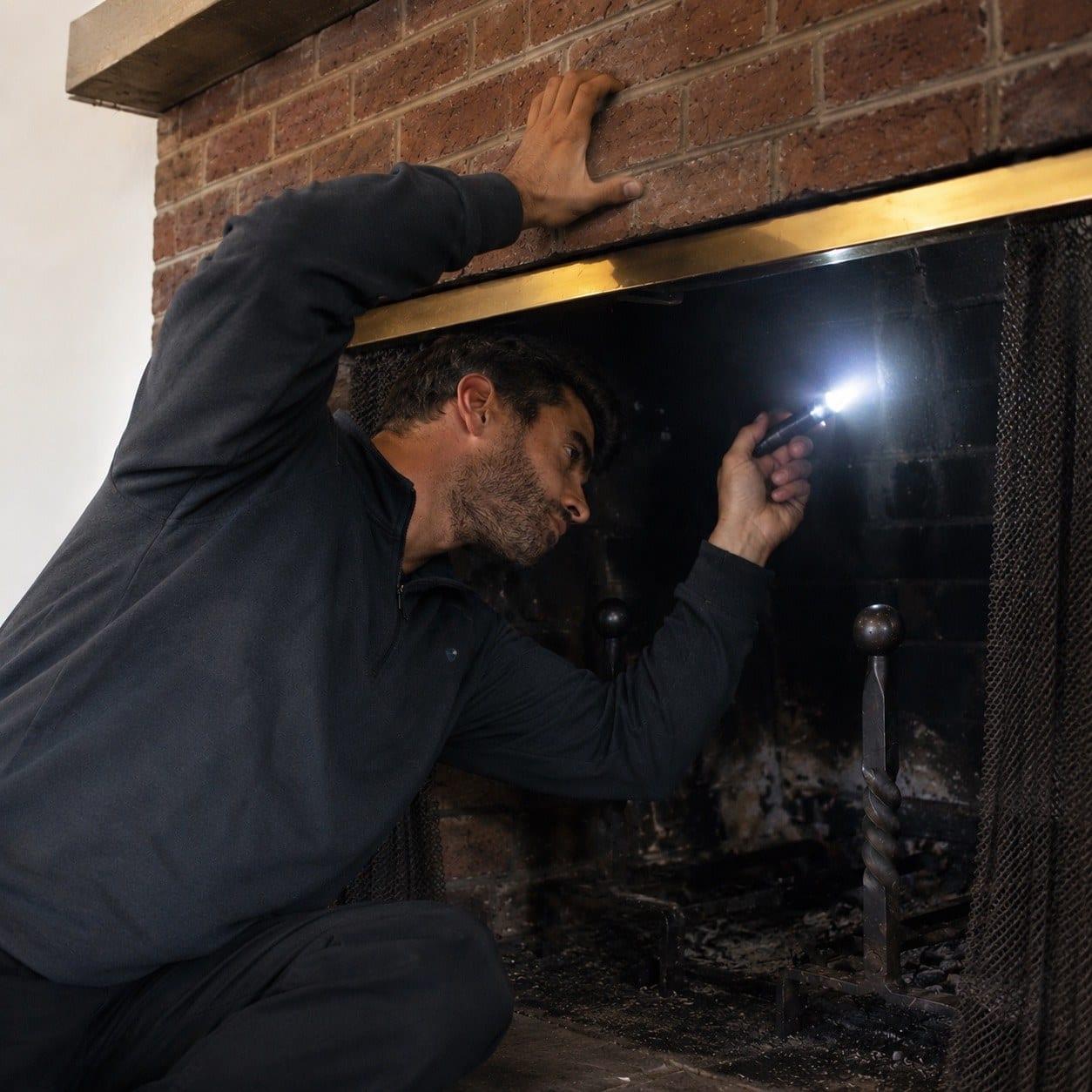
The chimney industry uses three levels of inspection. Each level goes deeper than the one before, and the right one depends on your chimney's history and what is going on with it.
Level 1 chimney inspection: the standard check
A Level 1 inspection is the baseline for a chimney that has been in regular use and hasn't changed. The inspector examines the readily accessible parts: the firebox, damper, smoke chamber, the visible sections of the flue, the exterior, and the connection of any stove or insert. Nothing is removed or opened up. It is the right choice for a routine yearly check when nothing seems wrong.
A Level 1 isn't always enough. Chimney Inspection Level 2 adds a camera scan of the full flue and checks of accessible attic and crawlspace areas. It is the usual choice when a home is sold, when you change fuel type or add an insert, or after a chimney fire or storm. How chimney Inspection Level 3 works is different again: it involves removing parts of the chimney or surrounding structure, and it is used only when serious hidden damage is suspected.
When homeowners need a chimney inspection
Some homeowners book an inspection on a yearly schedule. Others book one because something changed. Any of these is a good reason to have the chimney looked at before you use it again:
- It has been more than a year since the last inspection, or you don't know when the last one was.
- Smoke drifts into the room, or fires are hard to start and keep drawing.
- A smoky, sour or musty smell comes from the fireplace, often worse in humid weather or after rain.
- There are water stains on a ceiling or wall near the chimney, rust on the damper, or a damp firebox.
- Bricks are cracked or missing, mortar is crumbling, or the chimney looks out of line.
- Flaky black or shiny, tar-like deposits are visible above the firebox. Heavy creosote is the main driver of chimney fire risk.
- You hear scratching or chirping, or nesting material falls into the firebox.
- A storm, high wind or fallen limb has hit the roof. Loose caps, cracked crowns and lifted flashing are common forms of chimney storm damage.
- You are buying or selling a home, or your insurer has asked for documentation.
Some symptoms are less obvious than these, such as pieces of tile in the firebox or a draft that only fails on certain days. Our guide to the warning signs your chimney is telling you covers them in more detail.
What the visit involves, step by step
A typical chimney inspection visit
A few questions first
We ask what you burn, how often you use the fireplace or stove, what problems you've noticed, and whether anything has changed, such as a new insert, a fuel switch or recent storm damage.
Protecting the room
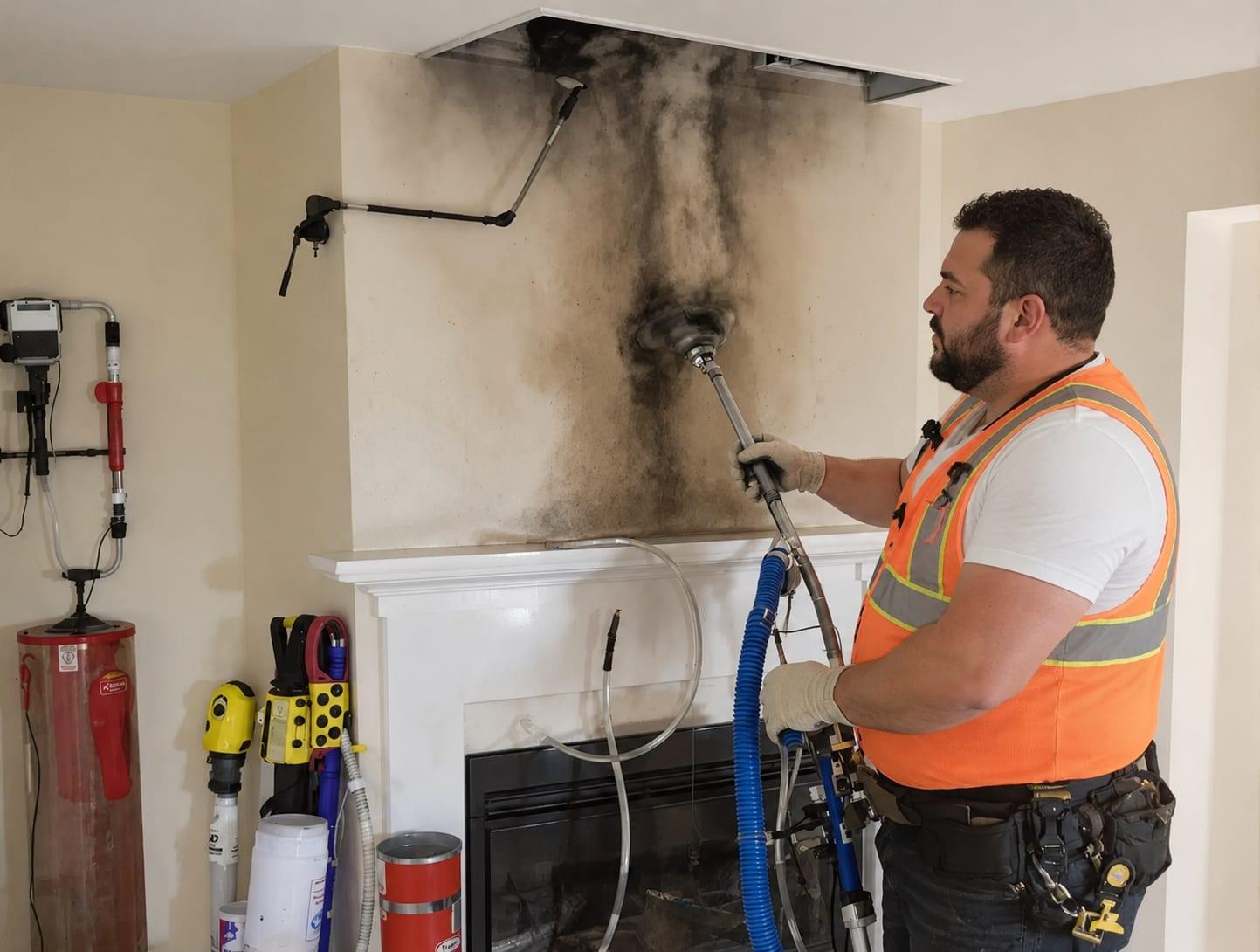
The hearth and the floor in front of the fireplace are covered before any work begins.
Firebox, damper and smoke chamber
The inspector checks the firebrick and mortar joints, or the refractory panels on a factory-built unit. The damper is opened and closed, and the smoke chamber above it is checked for cracks and buildup.
Flue and liner
The flue is examined with a light, or with a camera when the full length needs to be seen. The inspector looks for cracks, gaps at the joints, creosote buildup and blockages.
Exterior and roof line
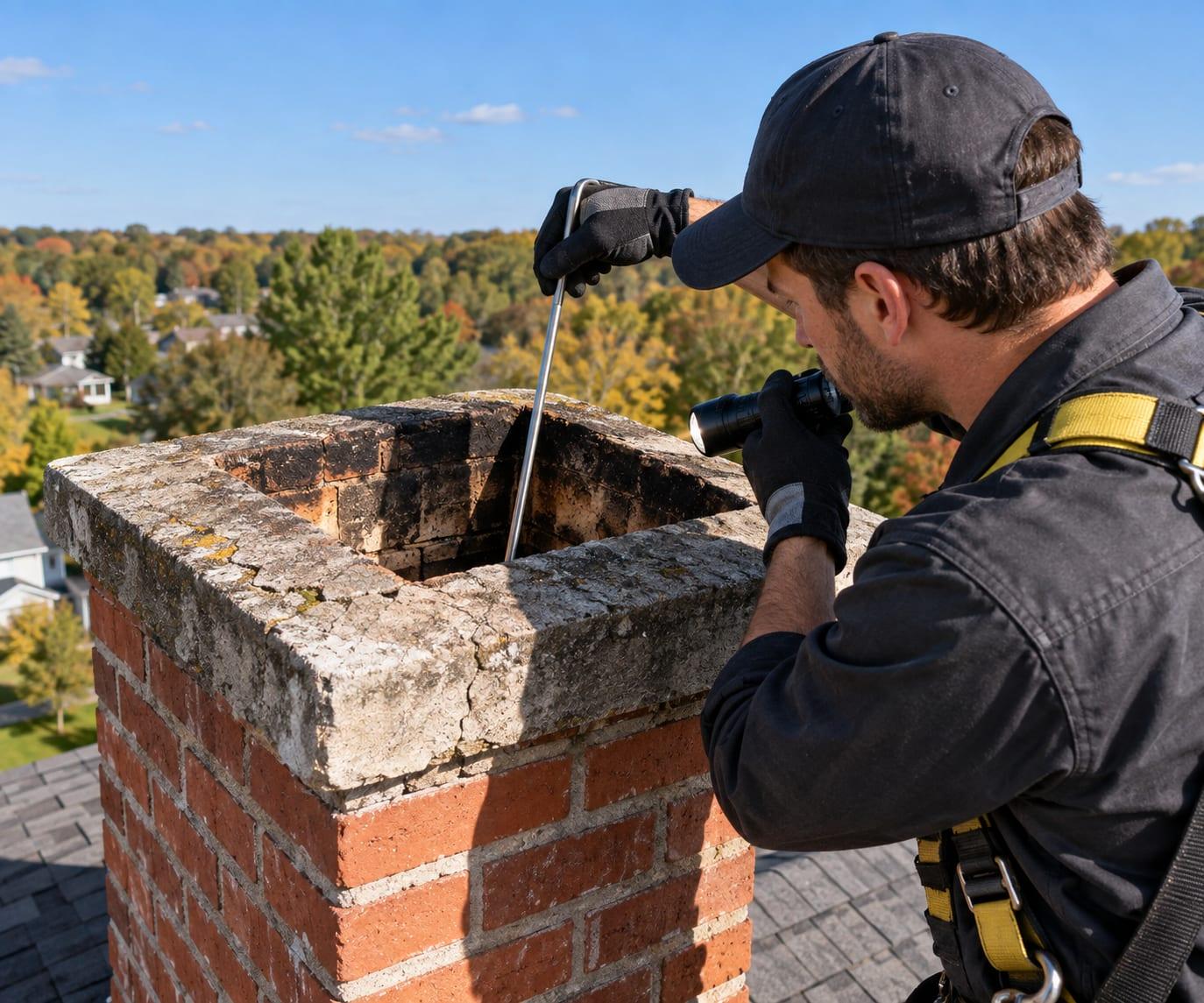
Where it can be reached safely, the inspector checks the crown or chase cover, the cap, the masonry and the flashing where the chimney meets the roof.
Going over the findings
We walk you through what we found: what is safe to use, what needs cleaning, and what needs repair. When a camera is used, you can see the footage yourself.
The parts a chimney inspection covers
Chimney cap
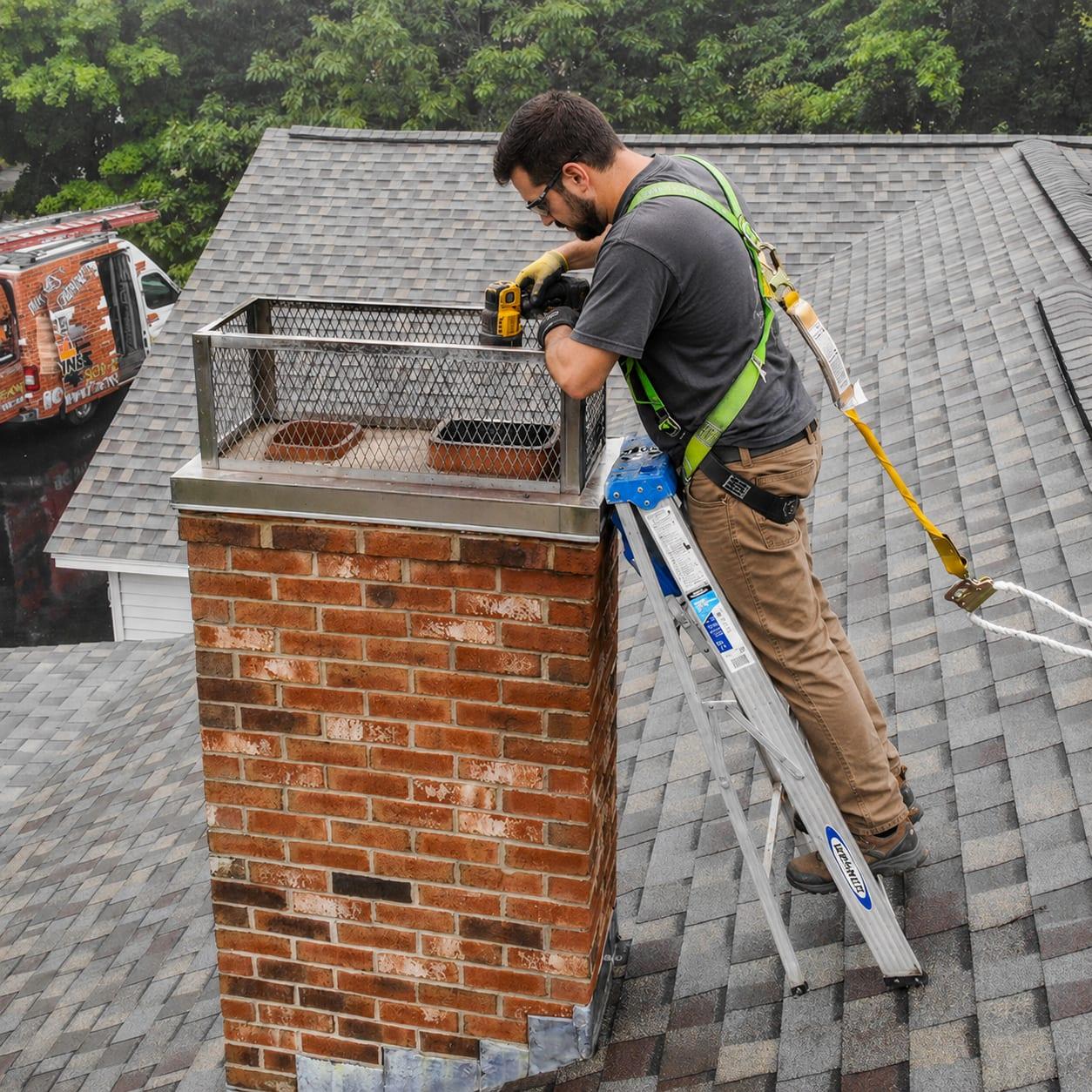
The cap sits on top of the flue. It keeps out rain, leaves and animals, and when it has a spark arrestor screen, it stops embers from leaving the chimney. The inspector checks that a cap is present, fits the flue and is fastened down. The mesh should be intact and not clogged with soot. If the cap is missing, rusted through or the wrong size, we handle chimney cap installation and replacement.
Chimney cover: crowns and chase covers
The top of the chimney needs its own cover, separate from the cap. A masonry chimney has a crown, a sloped concrete or mortar slab around the flue. Cracks in the crown let water into the brickwork below. A factory-built (prefab) chimney inside a framed chase has a metal chase cover instead. Rust, dents, standing water or a failed seal at the collar can let water run down inside the chase. Both are checked on every inspection.
Chimney damper
The damper is either a throat damper just above the firebox or a top-sealing damper at the top of the flue. The inspector checks that it opens fully, closes and seals, and isn't warped, rusted or stuck. A damper that won't open fills the room with smoke. One that won't close lets heated or cooled air escape all year. Our overview of the types of chimney dampers explains how the designs differ.
Chimney liner
The liner channels heat and combustion gases up and out, and it keeps them away from the surrounding masonry and framing. Liners may be clay tile, stainless steel or cast-in-place. The inspector looks for cracked or shifted tiles, open mortar joints, corrosion, and metal liners that are damaged or the wrong size for the appliance. Many liner problems can't be seen from the firebox, which is why camera inspections exist.
Masonry inspection
On brick and stone chimneys, the inspector checks the bricks, the mortar joints and the flashing at the roof line. Spalling (brick faces flaking off), open joints and white staining called efflorescence are all signs that water is getting in. When there are ceiling or wall stains near the chimney, a chimney leak inspection traces where the water is entering.
Wood, gas and pellet appliances
What the inspector focuses on depends on the fuel. Wood fires leave creosote, so the condition of the flue and smoke chamber matters most. Gas fireplaces leave far fewer deposits, but the venting, the logs or burner area and the connections still need checking. Gas fireplace and gas appliance work is offered. Pellet stoves vent through a smaller pipe that collects fine ash, so a pellet stove inspection focuses on the vent joints, the seals and any buildup that restricts airflow.
Camera, annual and insurance inspections
Chimney camera inspection
A camera is run through the flue to show the full length of the liner, including the sections a flashlight can't reach. It is the right tool for a leak, odor or draft problem with no visible cause. It is also used after a chimney fire and before any decision about relining. You see the same footage the inspector sees.
Annual fireplace inspection
An annual fireplace inspection is the routine check for a chimney that gets regular use. It catches creosote buildup, a loose cap, a sticking damper or early mortar damage while they are still small problems. Many homeowners schedule it before the burning season starts, so any cleaning or repair is finished before the first cold night.
Insurance chimney inspection
Insurers sometimes ask for documentation of a chimney's condition, for example when writing a policy, after a chimney fire or after a claim. An insurance chimney inspection records what we find, with photos, so you have something concrete to send to your insurer. Your insurer decides what is covered. When the request follows high winds or a fallen limb, Storm Damage Chimney Inspection is the version focused on that kind of damage.
Inspection, cleaning or repair: what comes next
An inspection and a cleaning are often done on the same visit, but they are separate jobs. If the inspection finds heavy soot or creosote, a chimney sweep is the next step. Our chimney soot removal guide explains what that buildup is and why it matters. If the inspection finds cracked mortar, a damaged crown, leaking flashing or a failed liner, chimney repair is the right job. A chimney rebuild only makes sense when the structure is too far gone to repair, and chimney installation applies when there is no usable chimney to work with.
Safety and maintenance between inspections
Stop using the fireplace until it has been inspected if:
You heard a loud roaring or popping in the flue, or saw dense smoke or flames from the top of the chimney. If you hear roaring or see flames or sparks from the top of the chimney, get everyone out and call 911. Also stop if you see cracks in the firebox, smoke keeps spilling into the room, or pieces of liner tile land on the hearth.
- Burn only dry, seasoned firewood. Wet wood produces more smoke and more creosote.
- Keep the cap and screen in place so rain, debris and animals stay out.
- Keep working smoke and carbon monoxide alarms on every level of the home.
- Have the chimney inspected yearly, and have it swept whenever the inspection finds buildup.
- Don't burn trash, cardboard or wrapping paper. They can send embers up the flue and leave heavy deposits.
Booking a chimney inspection
To book, call or request an estimate. It helps to tell us what fuel you burn, when the chimney was last serviced, any symptoms you've noticed, and whether the inspection is for a home sale or an insurer. Same-day visits are available where the schedule allows. 24-hour service runs Sunday–Friday, and emergency calls are accepted.
We work on all major brands of fireplaces, inserts and stoves. Commercial and property-manager work is offered. For landlords, Rental Property Chimney Inspection covers the checks needed between tenants.
Related work covered on this page
- Chimney Camera Inspection
- Insurance Chimney Inspection