On this page
What a fireplace inspection covers
A fireplace inspection looks at the parts of the system you can see and touch from the room. That includes the firebox, the hearth, the damper, the smoke chamber opening, the glass doors or screen, and any insert or gas logs. The goal is to find damage, blockages and conditions that could let heat, sparks or combustion gases go where they shouldn't.
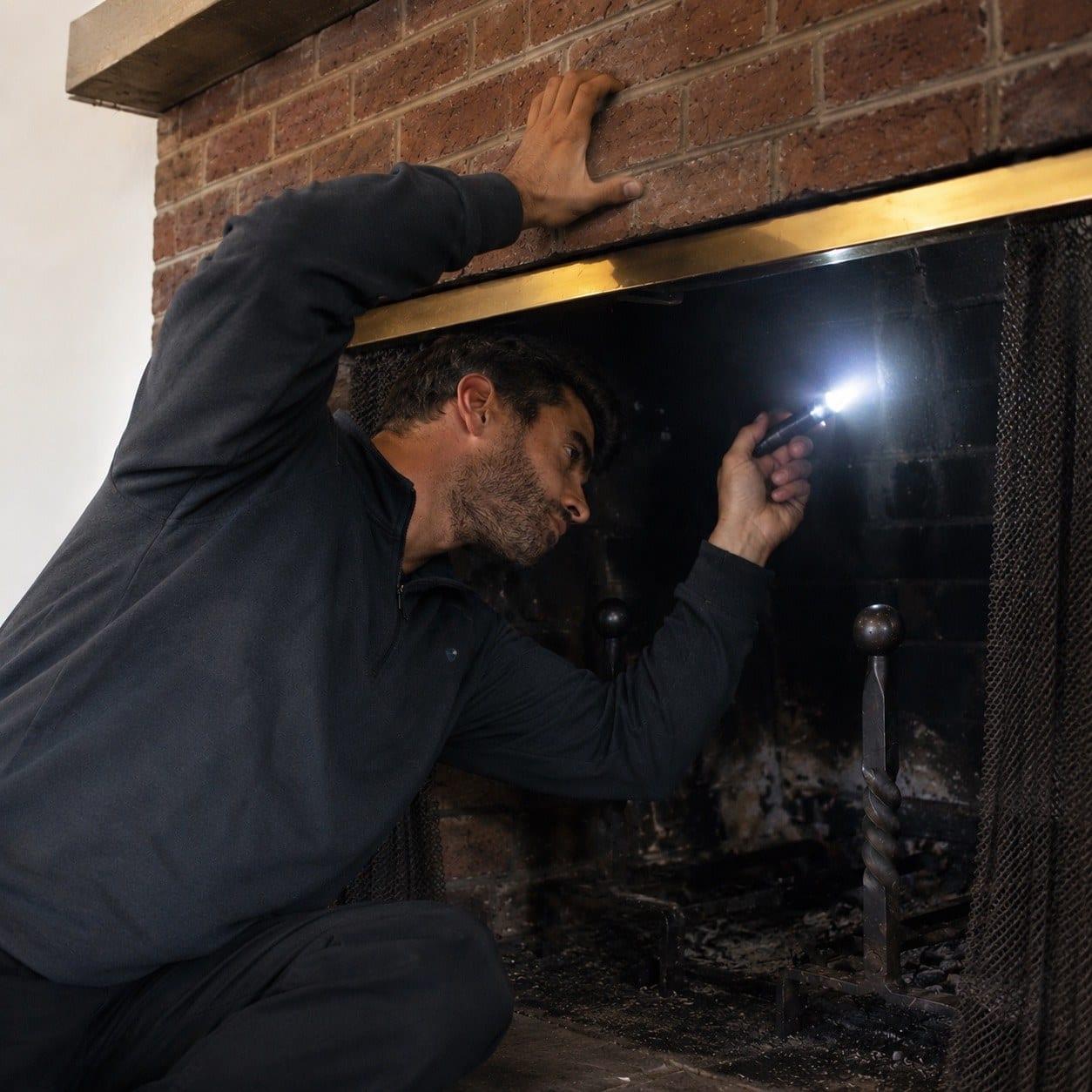
The fireplace is only half of the system. If you also want the flue, liner, crown and cap checked from top to bottom, our chimney inspection service covers the full chimney.
Signs your fireplace needs an inspection
Some homeowners book an inspection as part of a yearly routine. Others book because something has changed. These are the signs that call for one:
Book an inspection if you notice
- Cracks, gaps or crumbling mortar in the firebox walls or floor
- Refractory panels in a prefab fireplace that are cracked, warped or flaking
- A hearth that is cracked, loose or separating from the floor or wall
- Smoke rolling into the room instead of drawing up the chimney
- A damper that sticks, won't close fully or won't open
- Soot stains on the fireplace face or the wall above the opening
- Fogged, cracked or loose glass doors
- A gas fireplace with a pilot that won't stay lit, an uneven flame or a gas smell
- You've just bought the home, or the fireplace hasn't been used in years
- A chimney fire, a storm or other event that may have caused damage
If you smell gas
Don't light the fireplace or switch anything on or off. Leave the house and call your gas utility from outside. Once the gas is shut off and the utility says it's safe, call us to inspect the fireplace.
Fireplace hearth inspection
The hearth is the noncombustible floor area in front of the firebox, and it protects your floor from embers and heat. During a fireplace hearth inspection we check for cracks, loose or hollow-sounding tiles or stones, and gaps between the hearth and the firebox. We also check whether the hearth extends far enough in front of and beside the opening for the fireplace you have.
A cracked hearth can let heat reach the wood framing beneath it, even when the surface looks fine from a standing height. That's why we look at the joints and edges closely, not just the overall finish.
What happens during the visit
How a fireplace inspection works
We ask about the fireplace
We start with what you've noticed, how often you use the fireplace and what fuel it burns.
We protect the room
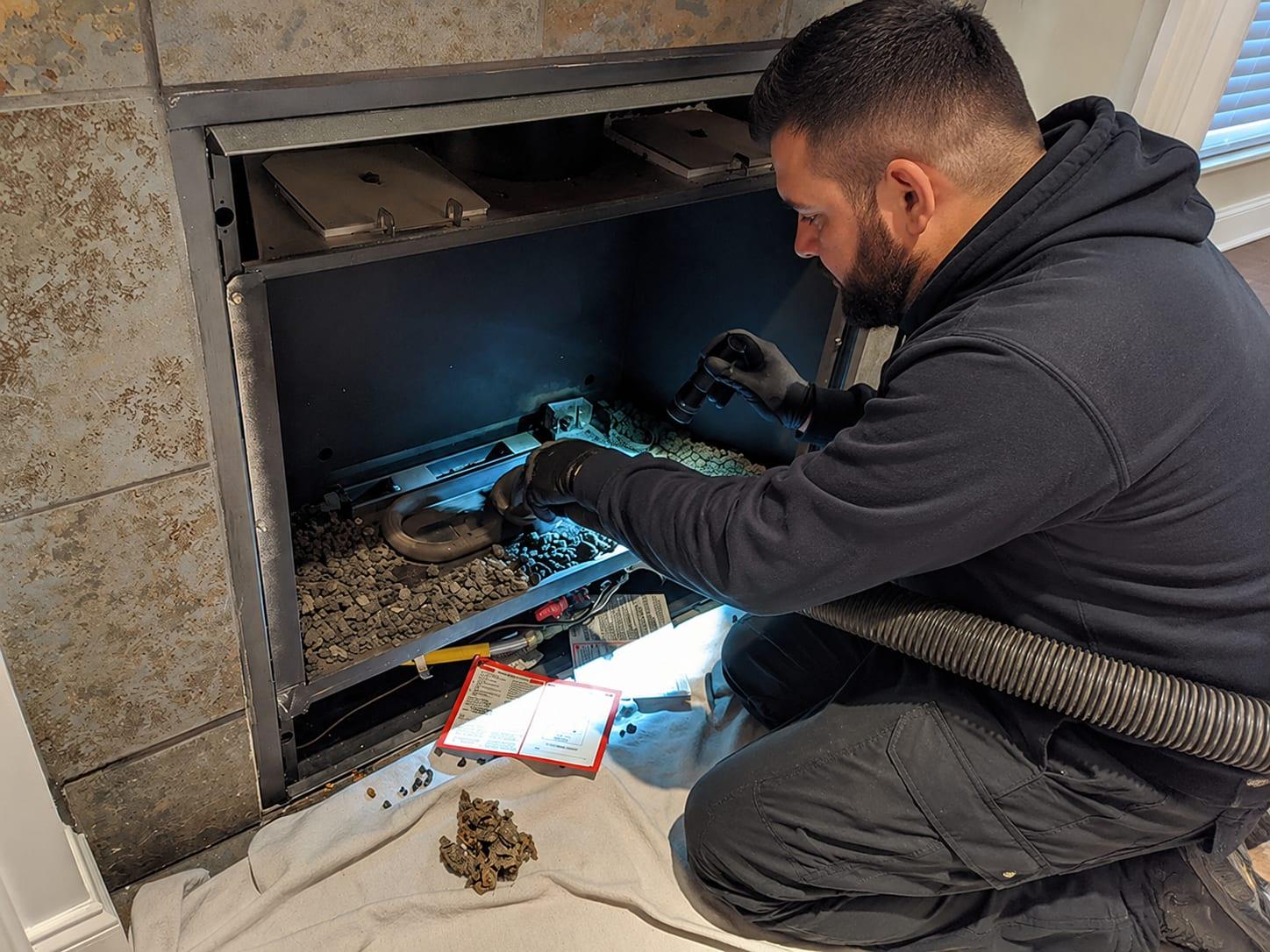
Drop cloths go down around the hearth before we open or touch anything.
We check the firebox and smoke chamber
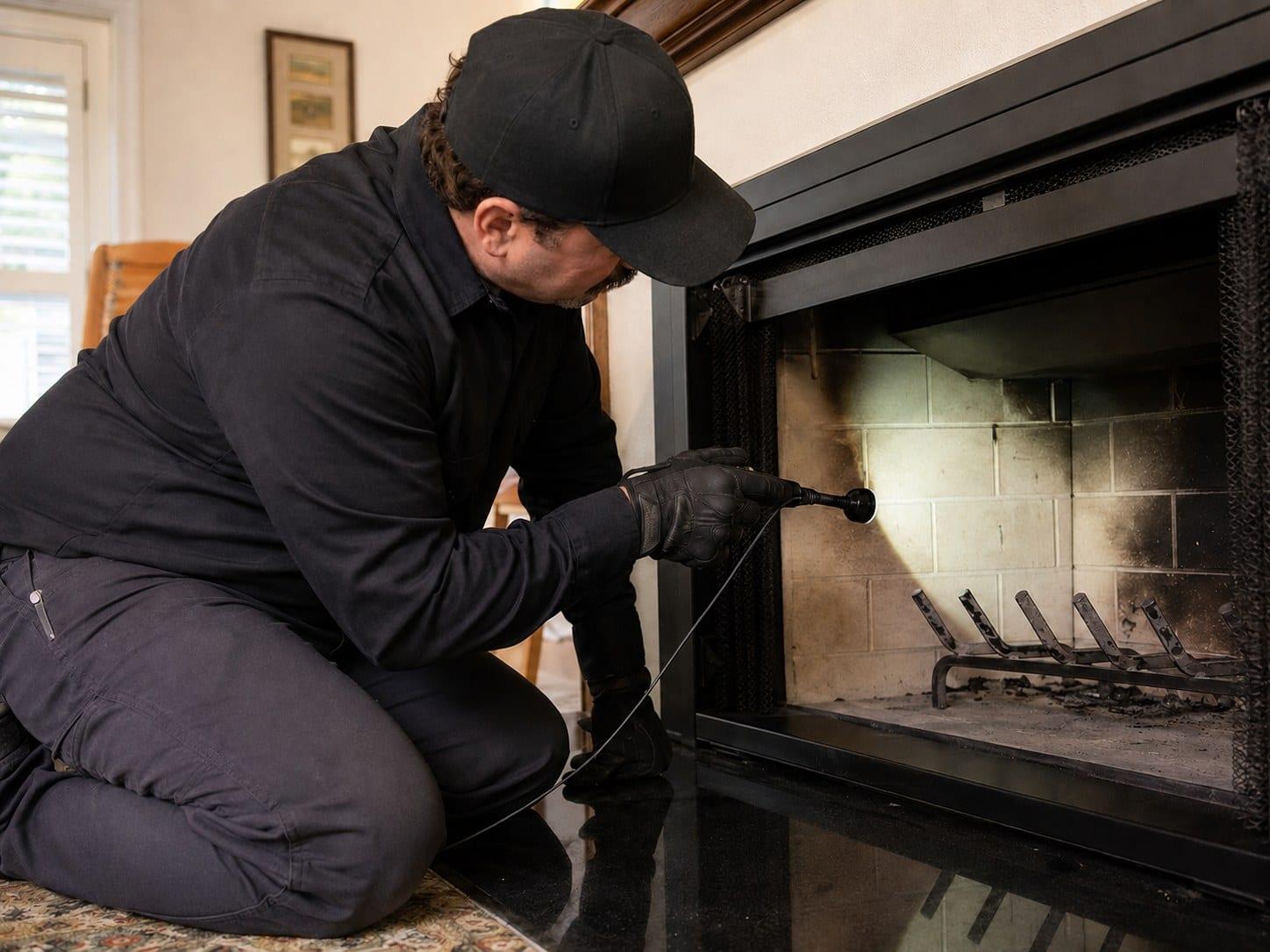
We look for cracked brick, open mortar joints, damaged refractory panels and heavy buildup.
We test the damper and doors
We open and close the damper to confirm it seals. If the fireplace has gas logs, leave the damper as the installer set it — vented gas logs need it open. We check door glass, frames, hinges and gaskets.
We inspect the hearth and surround
We check the hearth for cracks, loose sections and gaps, and the surround for heat damage or clearance problems.
We check gas components if present
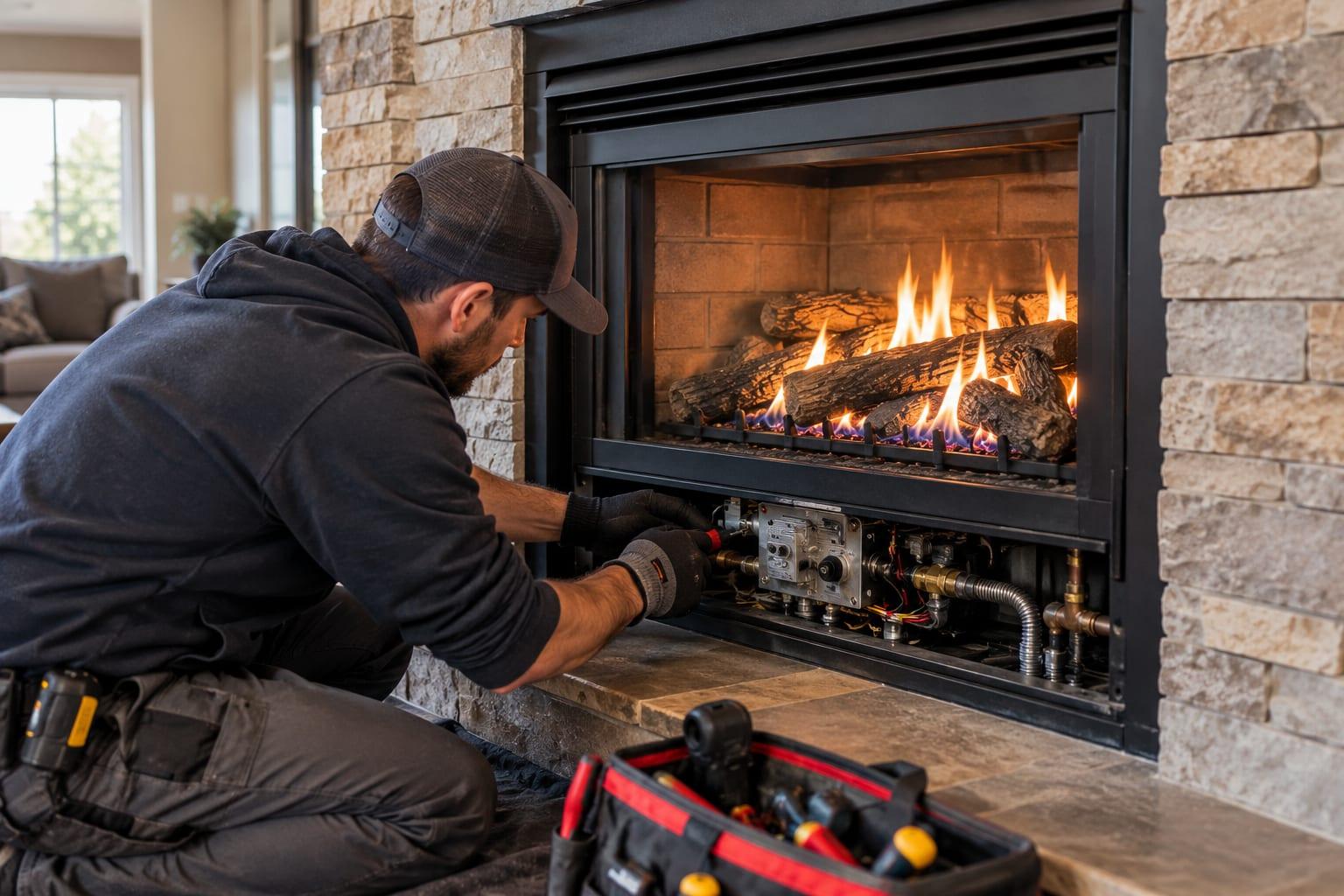
On gas fireplaces we look at the logs, burner, pilot and connections for wear and proper operation.
We walk you through the results
You get a plain explanation of what's in good shape, what needs attention and what can wait.
Wood, gas and insert fireplaces
What we focus on depends on the fuel. Wood-burning fireplaces get a close look at the firebox masonry, the damper and creosote in the smoke chamber. Gas fireplaces get a check of the burner, the pilot assembly, the log placement and the glass. Gas fireplace and gas appliance work is offered, so we handle both types. Inserts get a look at how they sit in the opening and how their doors and seals hold up. If you're weighing a switch between fuels, our guide to gas vs wood fireplace lays out the trade-offs.
Safety and routine upkeep
Most fireplace problems develop slowly. A hairline crack in the firebox widens with each heating season. A damper rusts a little more each year. A yearly inspection, ideally before you start using the fireplace for the season, catches these while they're still small.
- Keep a working smoke detector and carbon monoxide detector on every level of the home.
- Burn only dry, seasoned firewood in a wood-burning fireplace, never trash or treated lumber.
- Keep rugs, furniture and decorations off the hearth and away from the opening.
- Close glass doors or use a screen whenever a fire is burning. Check your fireplace's manual first: some glass doors must stay fully open while a fire burns.
- Turn off a gas fireplace and let it cool fully before cleaning the glass.
When inspection leads to other work
If the inspection turns up cracked panels, a failed damper or a damaged hearth, our fireplace repair service is the next step. If you're adding a fireplace or insert, see how fireplace installation works, since the chimney should be inspected before anything new is installed in it.
Booking your inspection
Call or request an estimate and tell us what kind of fireplace you have and anything you've noticed. Commercial and property-manager work is offered too, so you can book inspections across several units or buildings.
Related work covered on this page
- Annual Fireplace Inspection