On this page
What fireplace cleaning covers
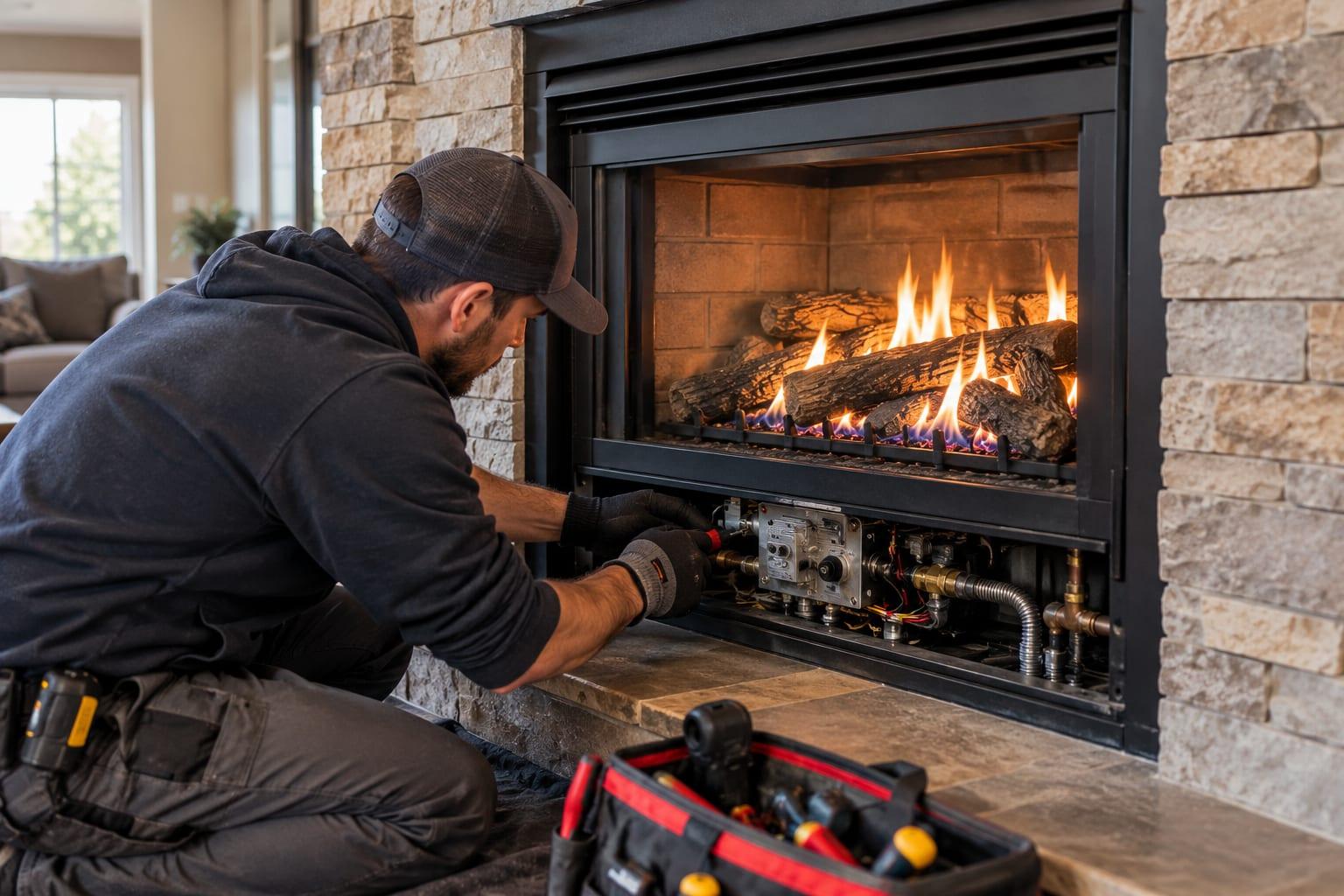
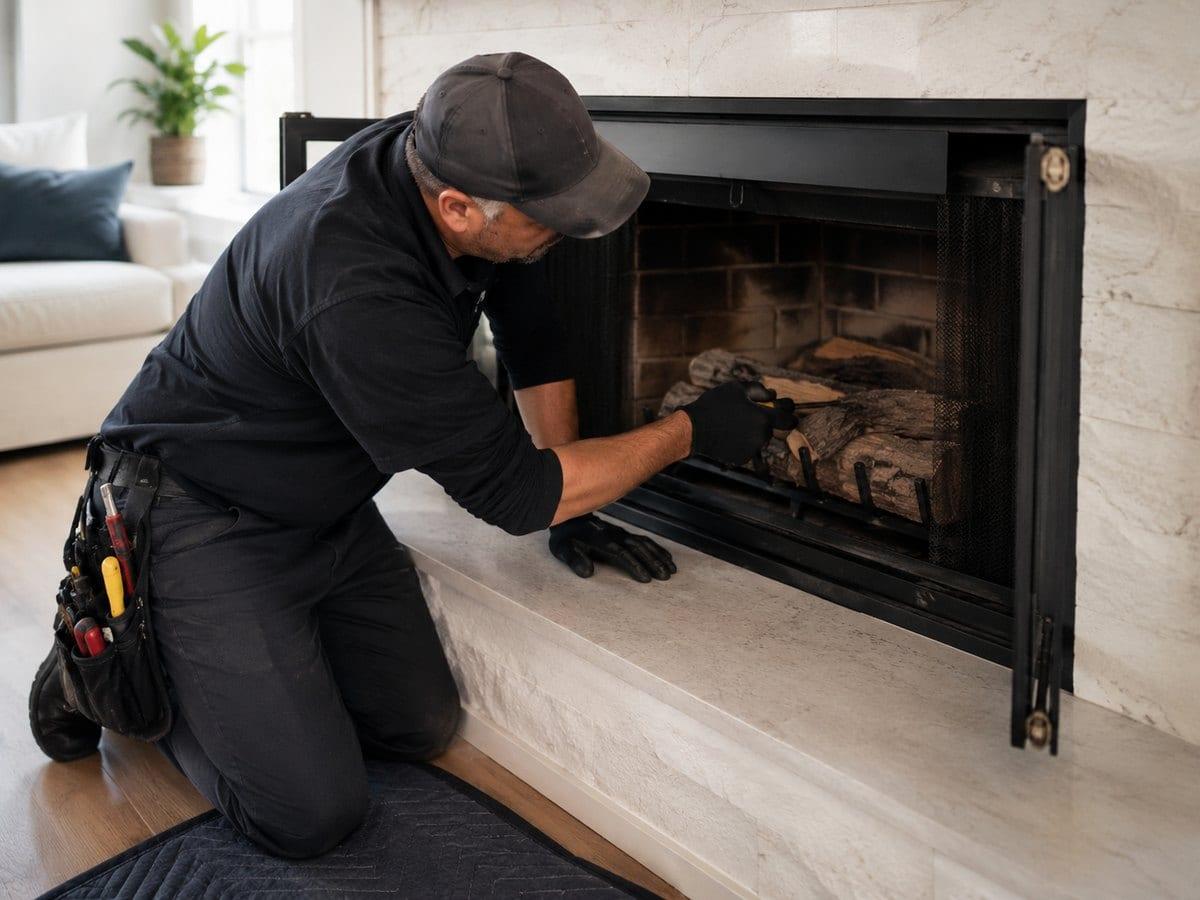
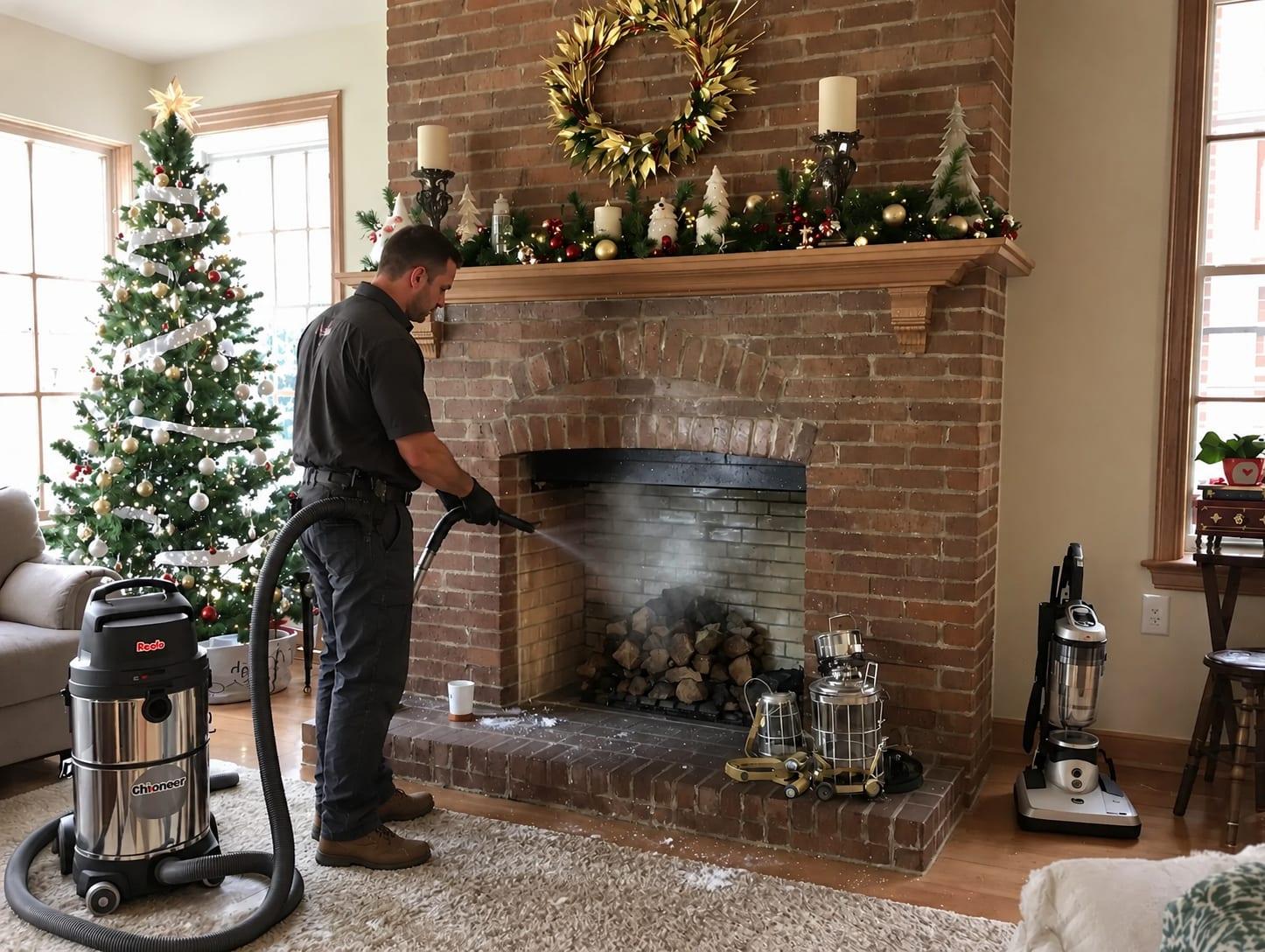
Fireplace cleaning focuses on the parts you can see and reach from the room. That includes the firebox walls and floor, the grate or andirons, the ash, the damper area, the smoke shelf just above it and the glass doors. We remove soot and the creosote that collects low in the fireplace, which is flammable and gives off much of the sooty smell.
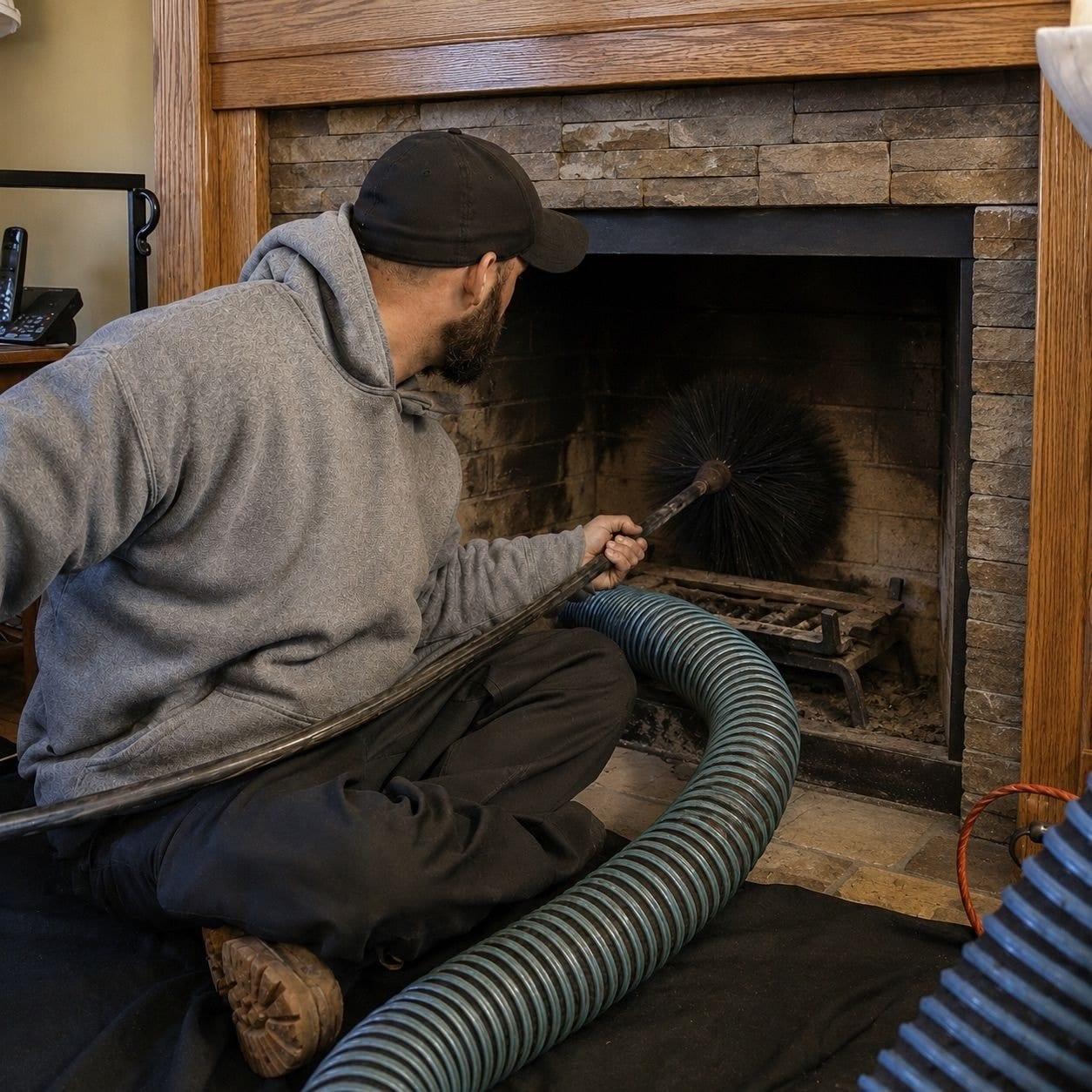
The flue above is cleaned during a full chimney sweep, and many homeowners book the two together. Closed units are handled differently: cleaning a fireplace insert and cleaning a freestanding wood stove each have their own process.
If smoke comes into the room
Stop adding fuel, open a window and don't relight the fire until the chimney has been checked. If the smoke is heavy, an alarm sounds or you suspect a chimney fire, get everyone outside and call 911.
How to prepare
- Move rugs, photos and anything fragile away from the work area.
- Let the fireplace or stove cool completely — ideally no fire for 24 hours before the visit.
- Write down what you've noticed and when it happens — smells, smoke, sounds or stains.
- Keep pets in another room while the work area is open.
When to book fireplace cleaning
- Black, flaky or shiny glazed deposits inside the firebox or flue
- A full burning season since the last cleaning
- A campfire or tar smell from the fireplace, especially on warm or damp days
- Smoke rolling into the room instead of drawing up
What we look at
- Signs of animals or nesting material
- Visible liner sections for cracks or gaps
- Smoke shelf and smoke chamber
- Damper opening, closing and seal
- Cap and screen condition, where it can be seen safely
- Draft — how readily smoke moves up the flue
- Creosote level and type in the flue
When a fireplace needs cleaning
- Ash has built up past the bottom of the grate
- The firebox walls are coated in black, flaky or shiny deposits
- Glass doors have gone dark or hazy
- A smoky or tar-like smell comes from the fireplace, especially in humid weather
- Fires are harder to light or smoke more than they used to
Smoke that keeps rolling into the room after cleaning often points to an airflow issue that fireplace draft repair can address.
What the visit involves, step by step
How a fireplace cleaning runs
Protect the room
We cover the hearth and nearby floor and set up containment for dust.
Clear ash and debris
We remove ash, charred wood and loose debris from the firebox and grate.
Clean the firebox and smoke shelf
We brush and scrape soot and creosote off the walls, the damper area and the shelf above.
Clean the glass
We clean doors or panels with methods suited to the type of glass.
Look things over
We point out cracked firebrick, damper trouble or other wear we notice along the way.
Cracked firebrick, damaged panels or broken doors need fireplace repair rather than another cleaning. If you are thinking about switching fuel types, fireplace conversion is the job to look at.
Cleaning fireplace glass
Glass on wood-burning fireplaces darkens with soot and creosote. Glass on gas fireplaces often gets a cloudy white film from combustion byproducts. Each needs its own cleaner. Clean glass only when it is completely cool, avoid abrasive pads that scratch it and use a cleaner made for fireplace glass. Household glass cleaners can leave residue that bakes on. Cracked or chipped glass should not be cleaned and reused. Fireplace glass replacement and door repair is a separate service we offer.
Safety and maintenance context
Ash can hold live embers for days after a fire. Scoop it into a metal container with a lid and keep that container outside, away from the house. Burning dry, seasoned wood produces less creosote, so the firebox stays cleaner between visits. Never burn trash, cardboard or treated wood.
Booking fireplace cleaning
Call or request an estimate. Our 24-hour service runs Sunday through Friday, and we accept emergency calls. Gas fireplace work is offered, as are commercial and property-manager jobs.