On this page
What fireplace draft repair actually fixes
Draft is the upward pull that carries smoke and combustion gases out through the chimney. Warm gases rise, and a clear, correctly shaped flue lets them escape quickly. Fresh air is drawn in at the firebox to replace them. When something interrupts that flow, smoke takes the easiest path out, and that path is often your living room.
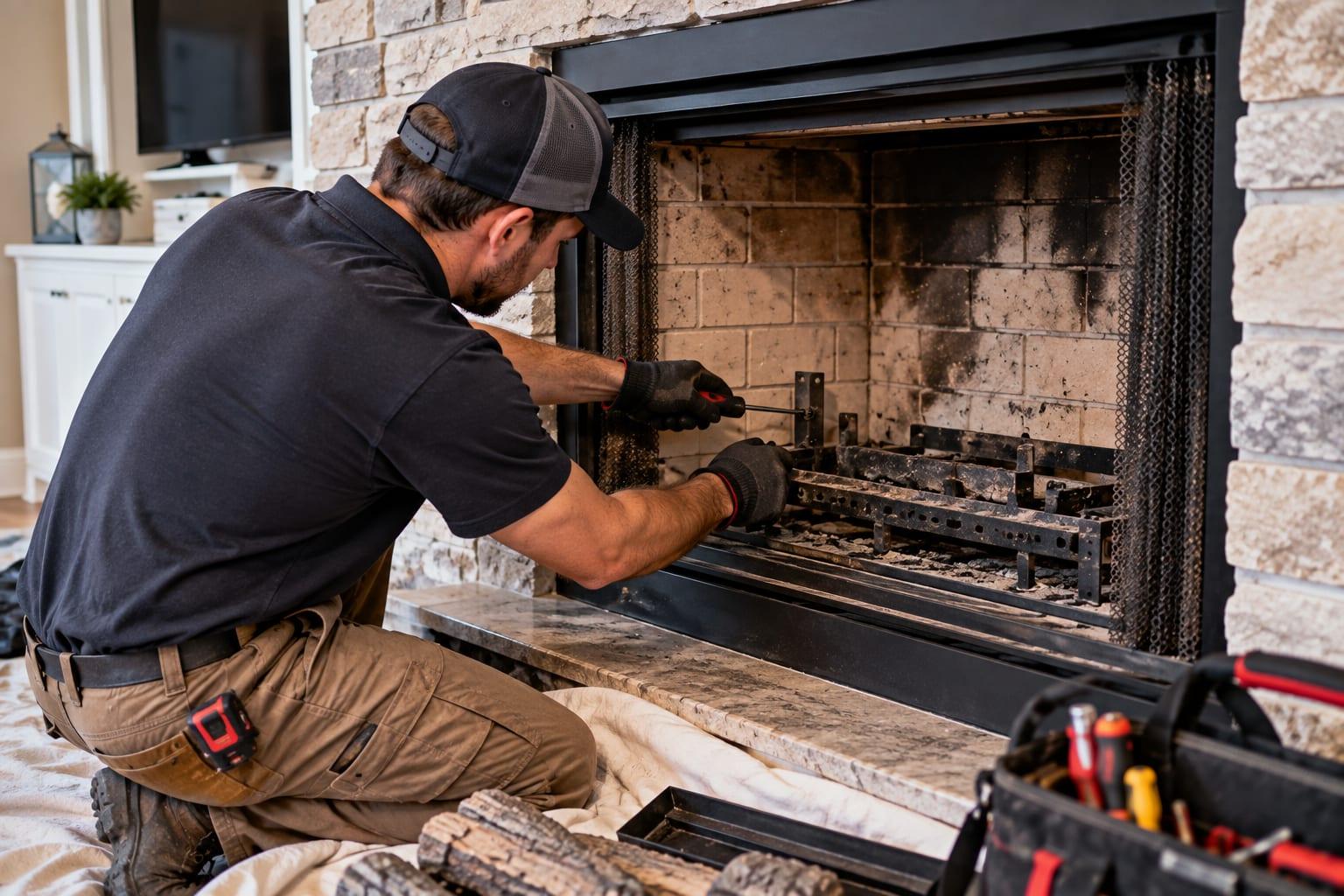
Fireplace draft repair is diagnostic work first and repair work second. The same symptom, smoke at the opening, can come from a nest in the flue, a damper that only opens halfway, a rough or damaged smoke chamber, a clogged cap screen or a house that pulls air down the chimney. Each one has a different fix. Guessing tends to waste money, so we confirm the cause before recommending anything.
The parts of the system that affect draft
- Damper: a plate that has warped, rusted or come off its track can restrict the opening even when the handle says open.
- Smoke chamber: the sloped area above the damper. Cracks, gaps or rough, stepped brickwork create turbulence that pushes smoke back down.
- Flue and liner: creosote buildup, debris, nesting material or a damaged liner narrows the passage that smoke has to travel through.
- Chimney cap: a screen packed with soot or leaves can choke the outlet at the top.
- Firebox opening vs. flue size: a flue that's too small for the fireplace opening can't move enough air, even when everything is clean.
- The house itself: exhaust fans, range hoods, clothes dryers and tightly sealed construction can create negative pressure that pulls air down the chimney.
Signs your fireplace has a draft problem
Some draft trouble is obvious, and some only shows up as a fire that never quite behaves. If you're dealing with smoke coming into the room, that's the clearest signal, but it isn't the only one.
Common signs that call for a draft check
- Smoke drifts out of the firebox when you light a fire, or puffs out when a door opens elsewhere in the house
- The fire is hard to start, smolders, or dies down unless you leave the screen or doors open
- Soot staining appears on the brick or mantel above the fireplace opening
- A cold draft or a smoky, sooty smell comes from the fireplace when it isn't in use
- Smoke behaves fine on some days and backs up on others, especially when the kitchen fan or dryer is running
- Gas fireplace flames look lazy or yellow, or the glass sooting up faster than it used to
| Feature | Inside the chimney | Inside the house |
|---|---|---|
| Typical cause | Blockage, creosote, damaged smoke chamber, faulty damper or clogged cap | Negative pressure from exhaust fans, dryers or a tightly sealed home |
| How it tends to show up | Smoke backs up consistently, every fire | Smoke backs up only when certain appliances run or doors are shut |
| Quick clue at home | Problem doesn't change when you crack a nearby window | Cracking a nearby window clears the smoke right away |
| Usual direction of the fix | Cleaning, blockage removal or repair of the damaged part | Changing how and when the fireplace is used alongside those appliances, plus fixing any chimney issues found |
Typical cause
- Inside the chimney
- Blockage, creosote, damaged smoke chamber, faulty damper or clogged cap
- Inside the house
- Negative pressure from exhaust fans, dryers or a tightly sealed home
How it tends to show up
- Inside the chimney
- Smoke backs up consistently, every fire
- Inside the house
- Smoke backs up only when certain appliances run or doors are shut
Quick clue at home
- Inside the chimney
- Problem doesn't change when you crack a nearby window
- Inside the house
- Cracking a nearby window clears the smoke right away
Usual direction of the fix
- Inside the chimney
- Cleaning, blockage removal or repair of the damaged part
- Inside the house
- Changing how and when the fireplace is used alongside those appliances, plus fixing any chimney issues found
What the visit involves, step by step
How we diagnose and repair a draft problem
Talk through what you're seeing
When the smoke shows up, which appliances are running, whether it's wood or gas, and how long it's been happening. These details narrow the list of causes before we touch anything.
Check the damper and firebox
We confirm the damper opens fully and seals properly, and look at the firebox for damage or anything blocking airflow.
Inspect the smoke chamber and flue
Using a light and, when needed, a camera, we look for creosote, debris, nesting material, liner damage and rough or cracked masonry in the smoke chamber.
Look at the top of the chimney
The cap, screen and crown are checked for clogging or damage that restricts the outlet.
Watch the draft under real conditions
Where it's safe to do so, we warm the flue and watch how smoke behaves, including with exhaust fans on and off, to separate chimney problems from house-pressure problems.
Explain the cause and the fix
You get a plain explanation of what's wrong and what we recommend, before any repair work starts.
Make the repair
That may mean cleaning, clearing a blockage, damper repair, smoke chamber repair, a new cap or liner work, depending on what we found.
If the cause turns out to be a worn or damaged firebox, panels or doors rather than draft alone, that falls under our broader fireplace repair service. When buildup is the main culprit, a thorough fireplace cleaning is often part of the solution.
Wood-burning and gas fireplaces
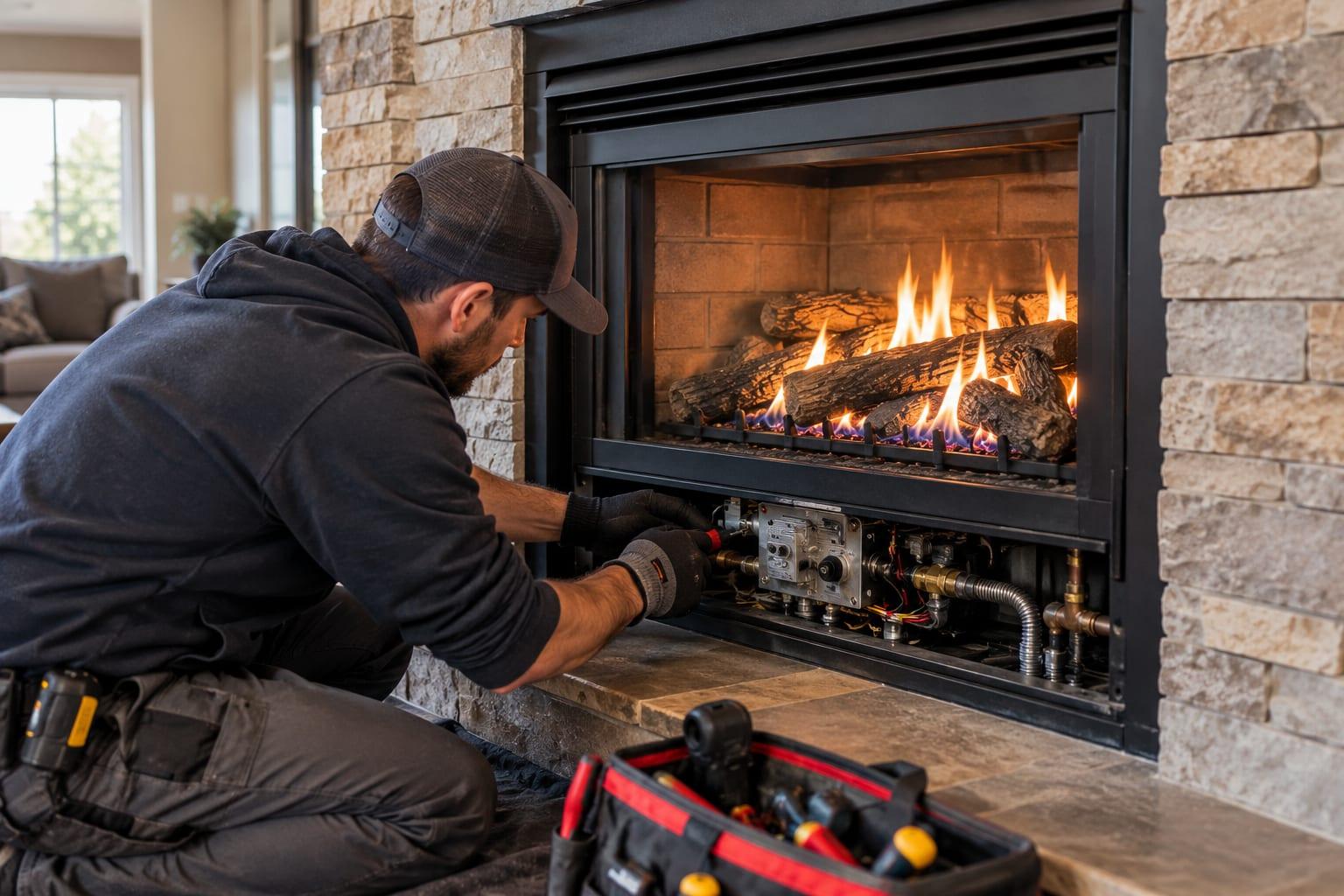
Draft problems look different depending on fuel. Wood fires produce heavy smoke and creosote, so restrictions in the flue show up fast and visibly. Gas fireplaces burn cleaner, but poor venting can still cause sooting, odd flame behavior or exhaust that doesn't clear properly. Gas fireplace and gas appliance work is offered. If you're weighing a switch between the two, our comparison of gas vs wood fireplaces covers the practical differences.
Occasionally a fireplace has a flue that was never sized right for its opening, and repairs only go so far. In that case we'll explain the options, which can include an insert or a different unit through our fireplace installation work.
Don't keep burning through a smoke problem
Smoke that enters the room carries more than soot. It can bring carbon monoxide with it. If a fire is backing up, let it burn down safely, open a window, keep the damper open until the fire is fully out, and make sure your carbon monoxide detectors are working. Hold off on the next fire until the cause is found.
Booking a draft repair visit
Call or request an estimate and tell us what the fireplace is doing. The more detail you can give about when the smoke appears, the faster the diagnosis goes.
Commercial and property-manager work is offered, so draft problems in rental units, offices and other buildings with fireplaces are handled the same way: diagnose first, then repair.