On this page
What a chimney rebuild is and what it involves
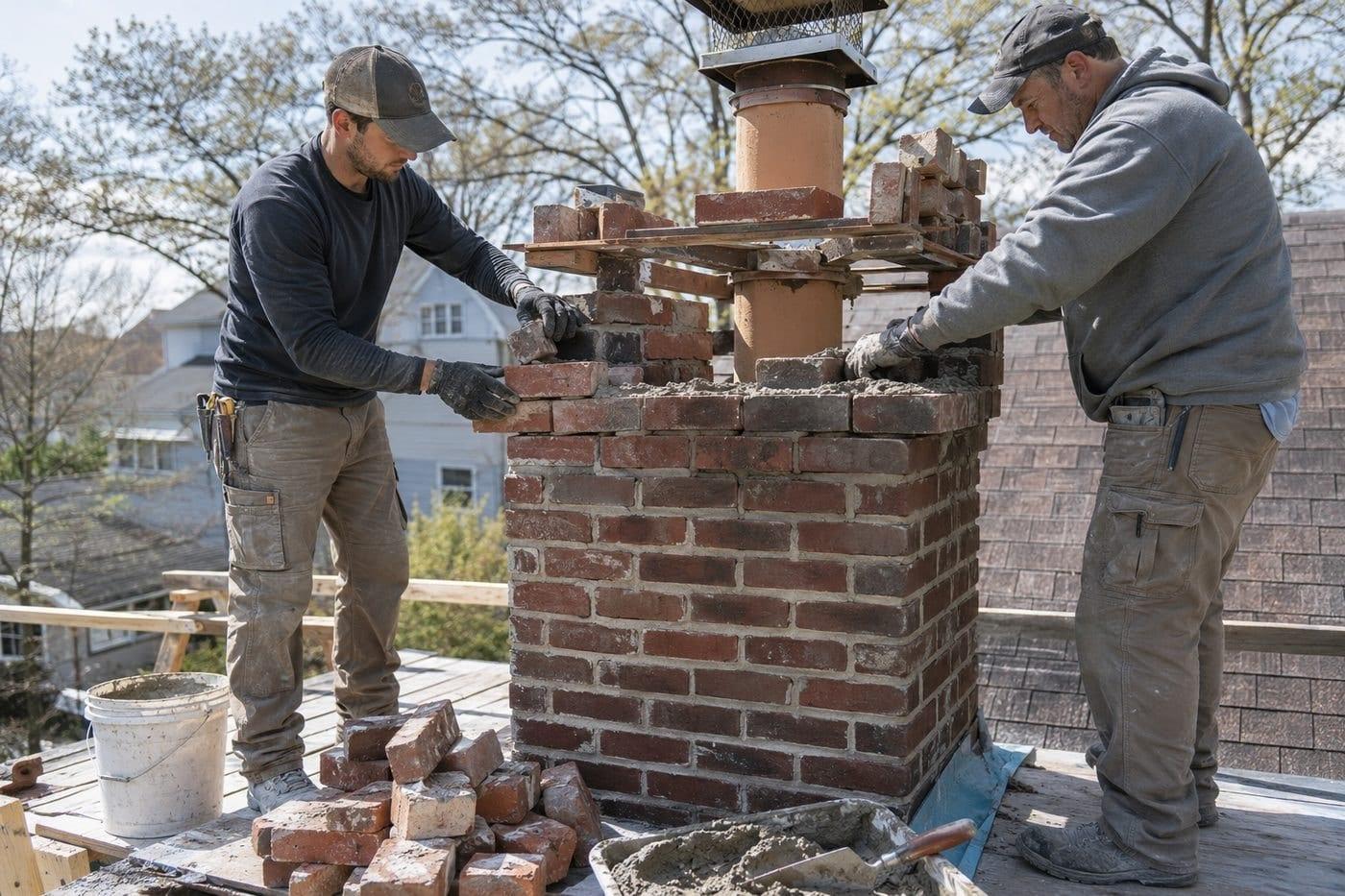
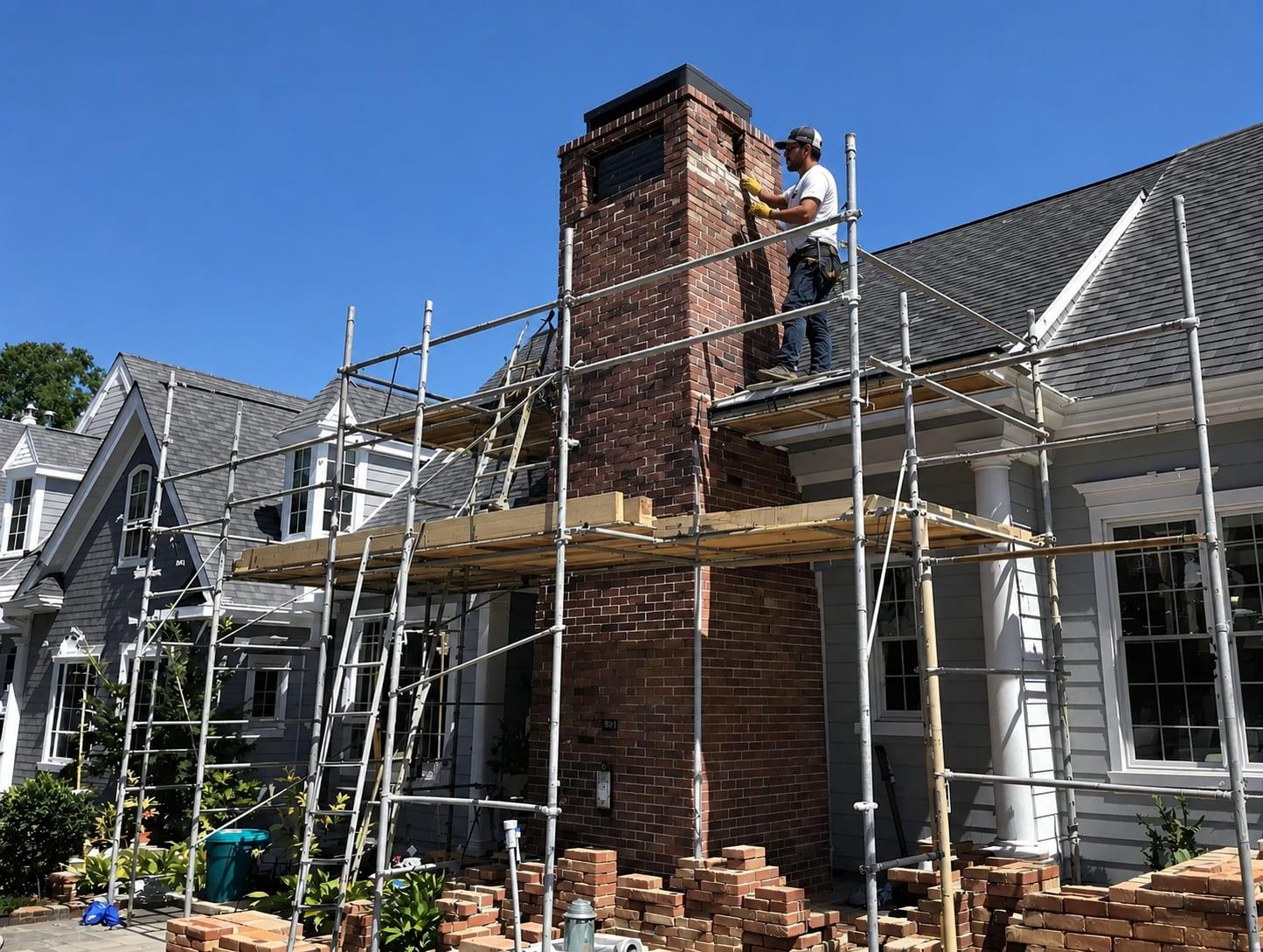
Most rebuilds are partial: the section above the roofline takes the most weather, so that is where bricks and mortar usually fail first. A full rebuild goes further down when the damage or movement reaches lower courses.
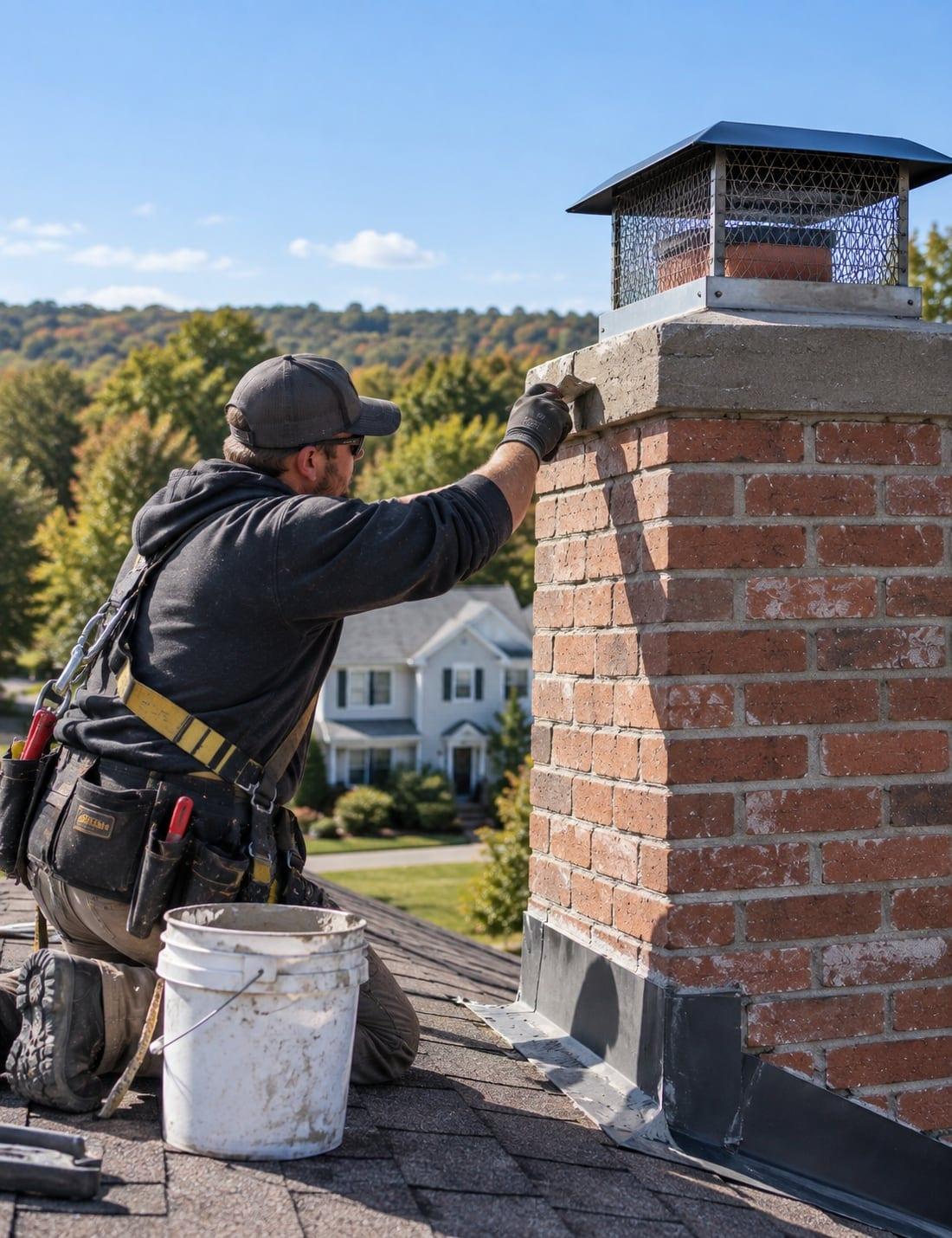
Rebuilding is the right call when the masonry itself has failed and can't be trusted to hold together. When the bricks are still sound and only the joints or surface are worn, smaller work like chimney tuckpointing or chimney masonry repair is usually the better fit, and it keeps more of the original chimney in place.
Signs your chimney may need rebuilding
Problems that often call for chimney rebuilding
- Bricks that are loose, missing or can be moved by hand
- Spalling, where brick faces flake or pop off, across a large area
- Visible lean, or a gap opening between the chimney and the house
- Cracks running through bricks rather than just along mortar lines
- Bits of brick or mortar collecting on the roof, in the gutters or in the firebox
- A crown so broken down that water has been soaking the masonry beneath it
One loose brick doesn't mean a rebuild. Several of these signs together, or any sign of the chimney moving, is when it's worth having the structure looked at closely.
Rebuilding a leaning chimney
A chimney that tilts away from the house or pulls away from the siding has a structural problem, not a cosmetic one. The cause might be a failing footing, water damage in the lower masonry, or mortar that has deteriorated until the stack can no longer hold its shape. Our page on what causes a leaning chimney walks through the usual reasons and the warning signs.
Leaning chimney rebuilding starts with finding where the movement begins. If only the upper section has shifted, that part is taken down and rebuilt plumb. If the lean starts lower, more of the chimney has to come down so the new masonry sits on something stable. Rebuilding on top of the same weak point would just let the lean come back.
If your chimney is leaning or shedding brick
Stop using the fireplace, keep people and vehicles away from the area below the chimney, and get in touch. A chimney that is moving can drop masonry onto the roof or the ground without warning.
Masonry chimney rebuilding: brick, mortar and flue
Masonry rebuilding is careful, course-by-course work.
| Component | What happens during a rebuild |
|---|---|
| Brick | Damaged brick is removed; sound brick is cleaned and reused where it makes sense, and replacement brick is matched as closely as practical |
| Flue tiles or liner | The flue is reset or replaced as the chimney goes back up so smoke and gases stay contained |
| Crown | A new crown is formed at the top to cap the masonry and shed water |
| Flashing | Flashing where the chimney meets the roof is reworked so the joint stays watertight |
| Cap | A cap goes on top to keep out rain, debris and animals |
If you're weighing cap styles for the finished chimney, a buyer's guide to chimney caps covers the common options and what each one is good for.
Chimney crown and chimney rebuild
The crown is the concrete or mortar slab that covers the top of the chimney around the flue. When it cracks or breaks apart, water gets straight into the brick below, and repeated soaking is one of the main reasons masonry breaks down to the point of needing a rebuild.
Every rebuild that reaches the top of the chimney ends with a new crown, shaped to slope water away from the flue and overhang the brick so runoff drips clear of the chimney's sides. If the crown is damaged but the masonry underneath is still solid, chimney crown repair can stop the water before a rebuild becomes necessary.
Firebox rebuild
The firebox is the brick-lined chamber where the fire burns, and it takes direct heat. Over time firebrick cracks, mortar joints burn out and panels can loosen. When the damage is widespread, the firebox is rebuilt with new firebrick and heat-rated mortar. Smaller cracks and open joints can usually be handled with our firebox repair service instead. While the fireplace is apart, it's also a good time to check that the damper opens and seals properly; chimney damper problems, signs and repair solutions explains what to look for.
What the visit involves, step by step
How a chimney rebuild comes together
Assess the chimney
We look at the masonry, crown, flashing, flue and firebox to find how far the damage goes and whether the job is a partial or full rebuild.
Protect the home
The roof, landscaping and the area around the fireplace are covered before any masonry comes down.
Take down damaged masonry
Brick worth reusing is set aside and cleaned.
Rebuild the chimney
The chimney is laid back up plumb with full mortar joints, and the flue is reset or replaced as the height goes back up.
Finish the top
A new crown is formed, flashing is reworked at the roofline and a cap is installed.
Clean up and walk through
Debris is hauled off, and we go over what was done and anything you should watch for.
Booking a chimney rebuild
Call or request an estimate and describe what you're seeing, such as loose brick, a lean or crumbling at the top. Photos from the ground help. Commercial and property-manager work is offered, so landlords and managers with masonry chimneys can book the same way.
Related work covered on this page
- Chimney Remodel