The short answer: what a failing chase cover looks like and what fixes it
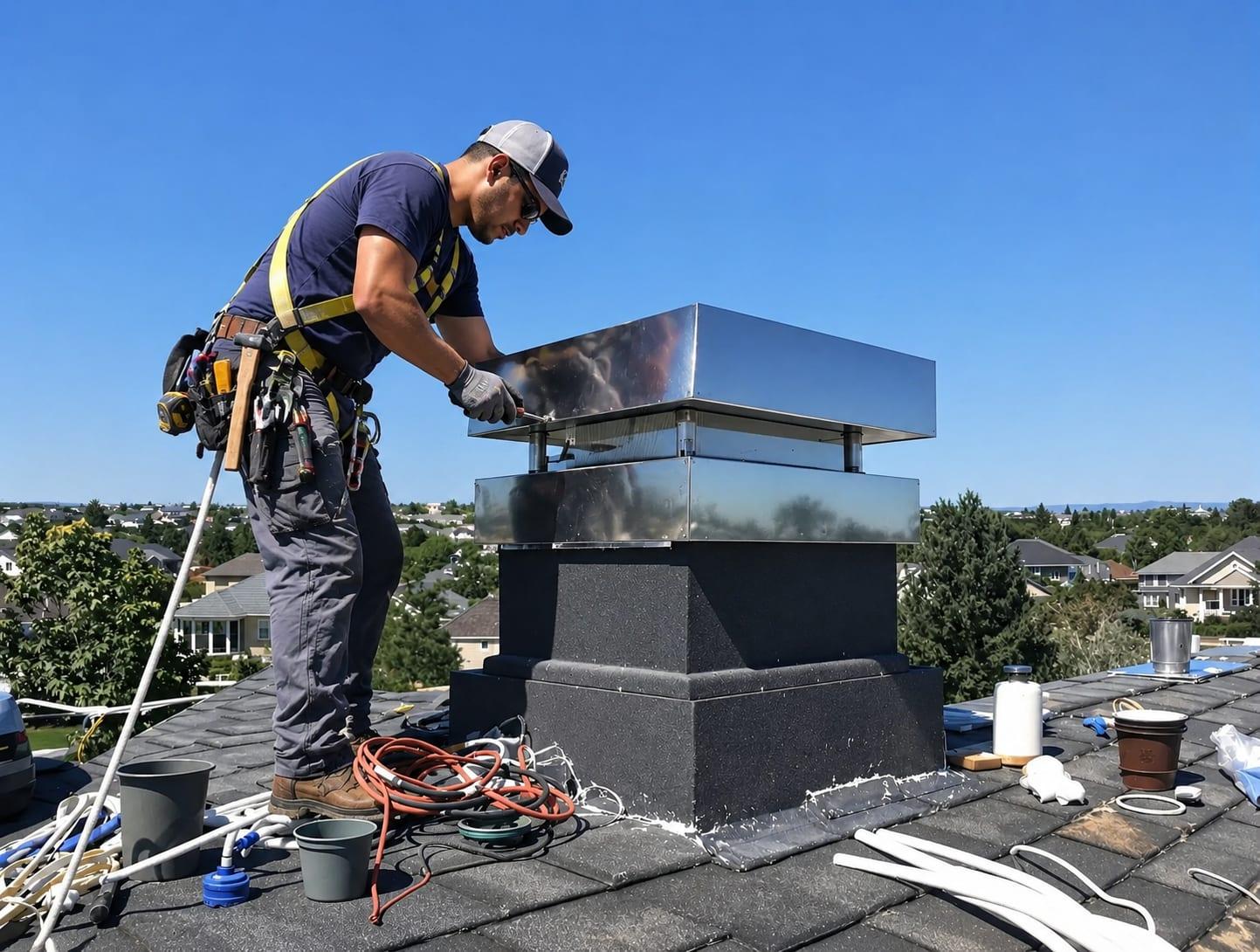
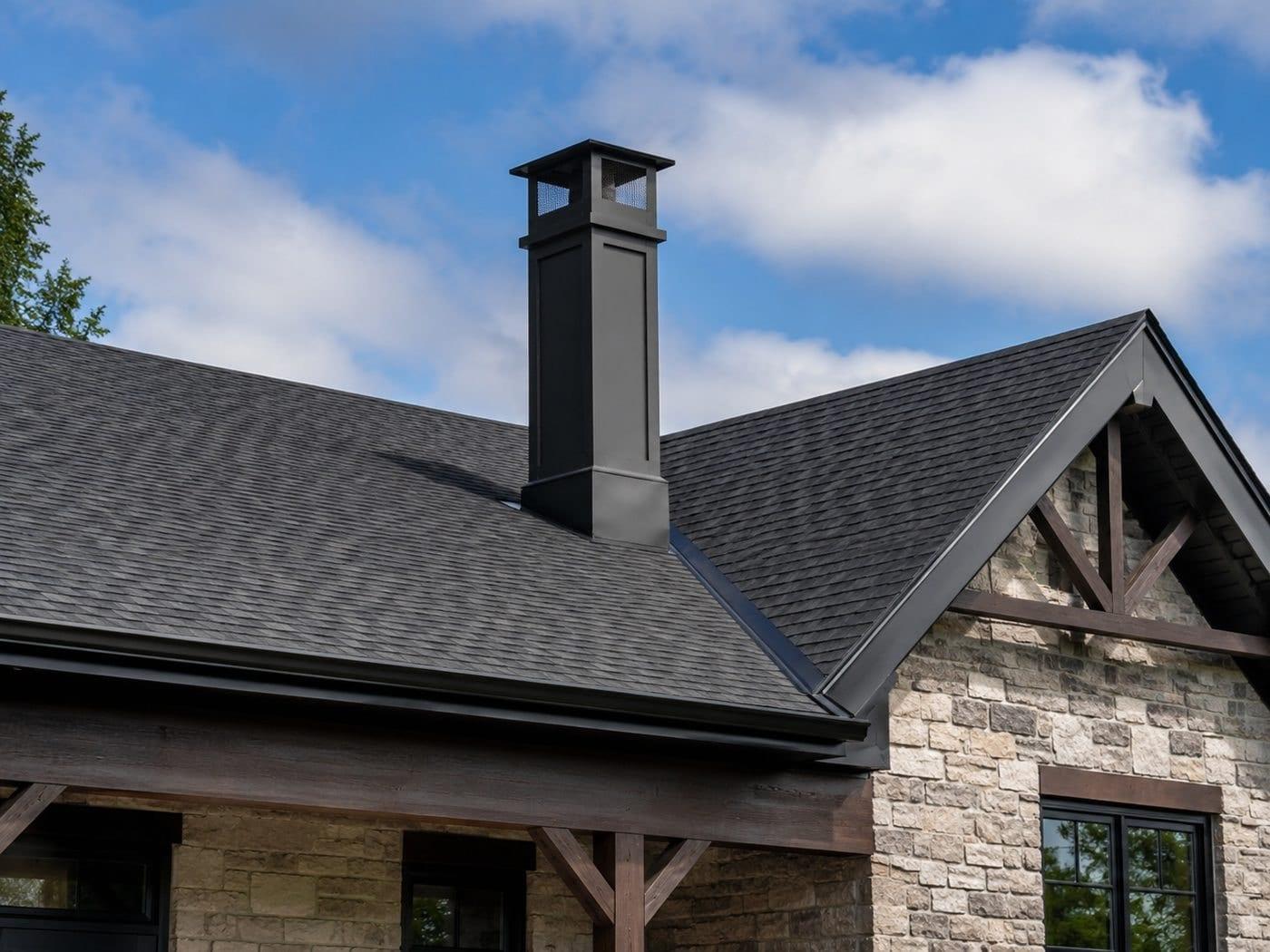
A chase cover is the metal panel that caps the framed box, or chase, built around a factory-built (prefab) chimney. The flue pipe passes through a hole in it, and a chimney cap usually sits on top. Its job is to keep rain out of the chase. When it fails, water runs into the framing, the insulation and sometimes the firebox. The most common signs are rust stains running down the siding, water pooling on a sagging cover, and leaks or rust inside the fireplace.
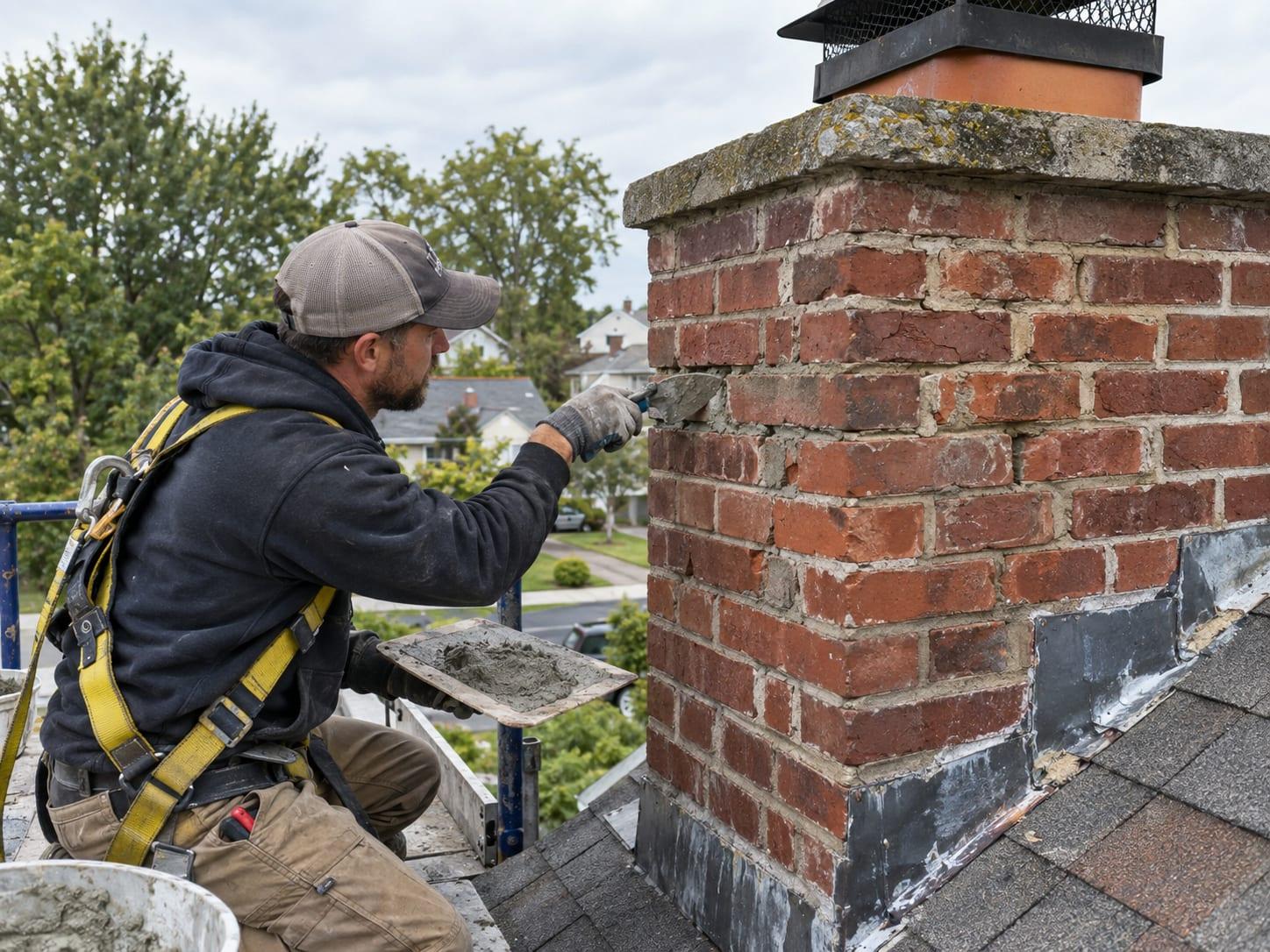
The fix depends on the cover's condition. A sound cover with a failed seal or a loose collar can often be repaired. A cover that is rusted through, dished in the middle or the wrong size usually needs replacing. A cover that has leaked for a long time may have caused damage under it, so plan to check the chase itself too.
Warning signs of a chase cover problem
Signs worth checking
- Orange or brown streaks on the siding below the top of the chase
- A cover that sags or holds standing water after rain
- Visible rust, pinholes or open seams on the cover, seen from the ground with binoculars
- Water stains on the ceiling or wall near the fireplace
- Rust on the firebox, damper or fireplace grate in a prefab unit
- Dripping or water in the firebox during or after storms
- A musty smell from the fireplace, especially in damp weather
- Loose, bent or missing pieces of the cover or its collar after high wind
Matching the symptom to the likely cause
01Water inside the fireplace or on nearby walls
- What you may notice
- Drips in the firebox, stained drywall, damp insulation smell
- How it’s confirmed
- The cover, collar, cap and chase siding are inspected from the roof, and the inside of the chase is checked for wet framing or insulation.
02Leak that returns after a patch
- What you may notice
- Caulk or sealant repairs that fail within a season or two
- How it’s confirmed
- The cover's shape, slope and collar fit are reviewed to see whether the design itself traps water.
Why chase covers fail
Most failures come from a few common causes. Many builder-grade covers are flat galvanized steel. Once the zinc coating wears off, the steel rusts. A flat panel also tends to sag over time, so water collects in the middle instead of running off, and standing water speeds up rust. Other causes include sealant around the flue collar that dries and cracks, fasteners that work loose, and covers cut slightly too small, which lets water run behind the edges.
Hidden damage is common
By the time rust shows on the siding, water may have been entering the chase for a while. Wet framing, rotted plywood and soaked insulation are not visible from the ground, so a new cover may not be the whole repair.
Repair or replace: the options
| Feature | Repair | Replace |
|---|---|---|
| Best fit | Sound metal with a failed seal, loose collar or minor fastener issue | Rust-through, holes, sagging or a cover that doesn't fit the chase |
| Typical work | Resealing the collar, re-fastening, fixing small seams | Removing the old cover and fitting a new one sized to the chase |
| Limits | Doesn't correct a flat or dished design that holds water | Doesn't fix water damage already inside the chase |
Best fit
- Repair
- Sound metal with a failed seal, loose collar or minor fastener issue
- Replace
- Rust-through, holes, sagging or a cover that doesn't fit the chase
Typical work
- Repair
- Resealing the collar, re-fastening, fixing small seams
- Replace
- Removing the old cover and fitting a new one sized to the chase
Limits
- Repair
- Doesn't correct a flat or dished design that holds water
- Replace
- Doesn't fix water damage already inside the chase
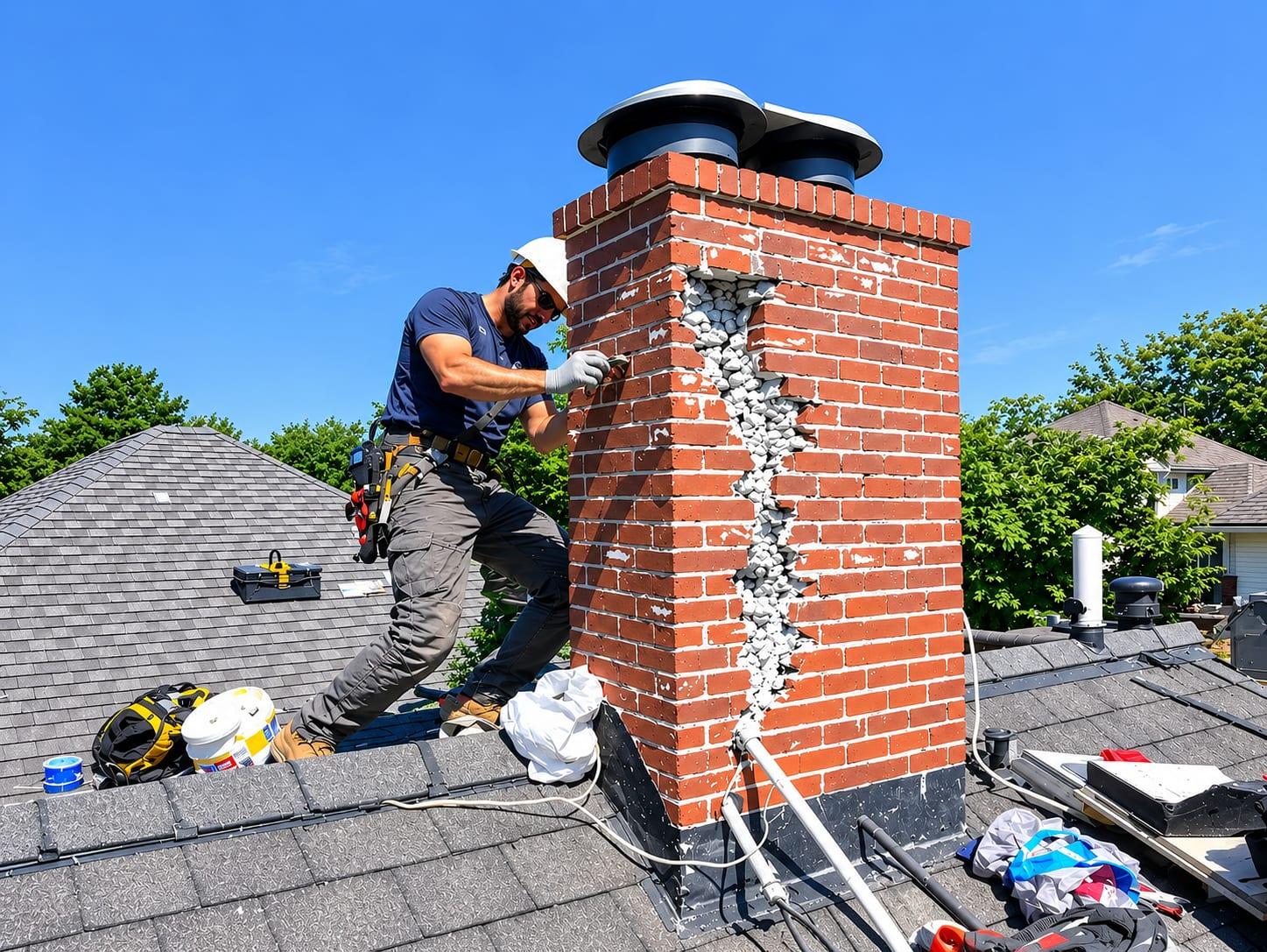
If the metal is still solid, repairing the existing chase cover can stop the leak without a full replacement. When rust has eaten through or the panel holds water, a new chase cover is usually the lasting fix. If the framing, siding or flue system under the cover has also been affected, that work falls under prefab chimney and chase repair.
Planning a chase cover replacement
What to settle before a new cover goes on
Check what's underneath
Have the chase top, framing and insulation looked at once the old cover is off. Fix soft or rotted wood first, or the new cover will sit on a failing base.
Measure the chase accurately
The new cover should fit the outside of the chase with a skirt that hangs over the siding, so water drips clear of the joint instead of running behind it.
Choose a shape that sheds water
Covers with a raised center, cross-break or sloped design move water to the edges. Flat panels are the ones most likely to pool and rust.
Pick the material
Material affects how the cover handles moisture over time. The table below compares the common choices.
Plan the collar and cap together
The flue hole needs a raised collar and a storm collar so water can't run down the pipe. Confirm the chimney cap fits the flue and works with the new cover.
| Material | Strengths | Things to know |
|---|---|---|
| Galvanized steel | Common and widely available | Rusts once the protective coating wears off; often the original builder-grade choice |
| Aluminum | Does not rust | Softer metal that can dent or flex more easily |
| Stainless steel | Strong and highly resistant to corrosion | A frequent choice for replacement covers |
| Copper | Durable and does not rust | Weathers to a patina; chosen as often for looks as for function |
Since the cap sits on the flue right above the cover, it makes sense to choose both at once. This buyer's guide to chimney caps covers cap styles and fit.
What helps a homeowner decide
- Is water getting in now? If so, act sooner, because every storm adds to hidden damage.
- Has the cover been patched before? Repeated patches on a flat or rusted cover usually mean replacement will last longer.
- Is the fireplace itself affected? Rust on the damper or firebox can point to a cover leak. Signs of chimney damper problems can help you tell the two apart.
- Are you selling or buying? A rusted cover is easy to spot in an inspection, and a clear record of what was found and fixed helps both sides.
If you'd like the cover, cap and chase checked, get in touch to request an estimate for chase cover repair, replacement or prefab chimney work.