On this page
What chimney chase cover repair involves
Many homes with a factory-built (prefab) fireplace don't have a brick chimney at all. The metal flue pipe runs up through a wood-framed box, called a chase, finished with siding to match the house. A flat metal sheet, the chase cover, caps the top of that box. It has a hole for the flue to pass through, a storm collar sealing the gap around the pipe, and edges that fold down over the siding.
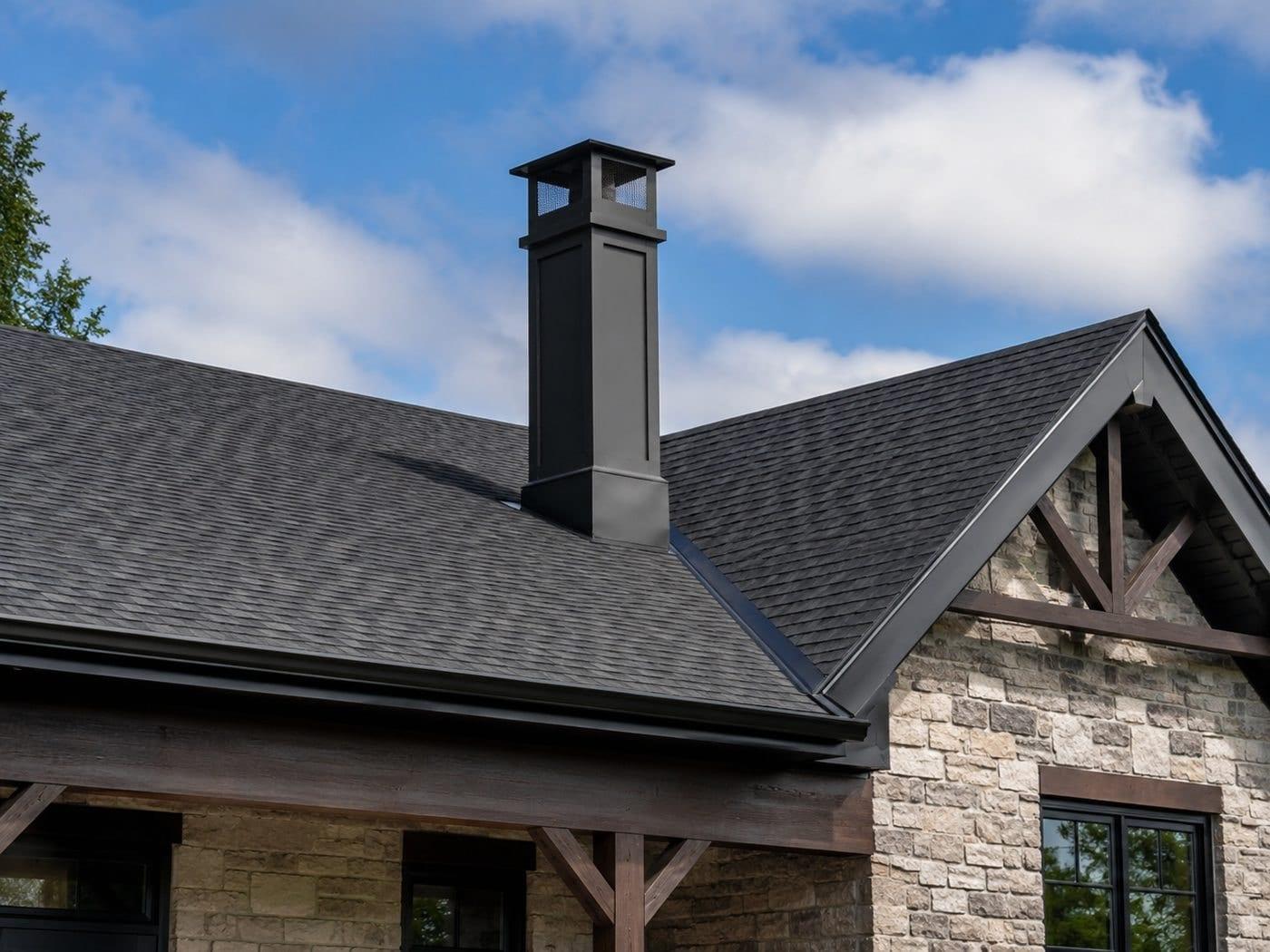
Repair means fixing that sheet where it sits instead of replacing it. Depending on its condition, that can include:
- Cleaning off surface rust and sealing the metal so it stops deteriorating
- Resealing the storm collar where it meets the flue pipe
- Sealing small holes, open seams or failed fastener points
- Re-securing a cover that has lifted, shifted or come loose at the edges
- Checking the chimney cap above it, since the cap and cover work together to shed water
If the metal has rusted through in several places or the center has sunk so water pools on it, patching won't hold for long. In that case the better fix is a new cover, and our chase cover replacement service handles that job.
Signs your chase cover needs attention
Chase cover problems usually show up as water somewhere it shouldn't be. Look for these signs:
Common warning signs
- Rust streaks running down the siding below the top of the chase
- Water dripping into the firebox or staining the fireplace surround
- Stains, soft spots or peeling paint on the ceiling or wall near the fireplace
- A cover that looks dished or bowed in the middle, holding standing water
- Visible rust holes or flaking metal when viewed from the roof or the ground with binoculars
- Rattling or banging from the top of the chimney in wind, which points to a loose cover
- A musty smell from the fireplace after rain
Rust streaks are an early warning
Orange stains on the siding usually mean the cover is already rusting. Catching it at this stage often means a repair instead of a replacement, and before water reaches the framing inside the chase.
What the visit involves, step by step
How a chase cover repair visit works
Look inside first
We check the firebox, the surround and nearby walls for water stains or damage, so we know how far any leak has traveled.
Inspect the cover from the roof
The cover, storm collar, seams, fasteners and edges are checked for rust, holes, sagging and gaps. The chimney cap is checked too.
Recommend repair or replacement
You get a plain answer on whether the existing cover can be repaired or whether a new one makes more sense, and why.
Make the repair
Rust is cleaned and treated, seams and the storm collar are resealed, and loose sections are re-secured.
Point out anything else we found
If the framing, siding or flue inside the chase shows damage, we explain what we saw so you can decide on next steps, such as prefab chimney and chase repair.
Chase cover materials and why they matter
Chase covers are commonly made from galvanized steel, stainless steel, aluminum or copper. Galvanized steel is the usual original on many prefab systems, and once its coating wears away it tends to rust. Stainless steel, aluminum and copper resist rust far better. A cover with a slight slope or raised center sheds water instead of letting it sit, which is one reason a flat, sagging cover often keeps failing.
The chimney cap sitting above the cover keeps rain, debris and animals out of the flue itself. If you're weighing cap styles at the same time, this buyer's guide to chimney caps explains the options.
Why it's worth fixing early
A chase is built from wood, so a slow leak at the top can rot framing, damage insulation and encourage mold before anyone sees it. Water can also run down the flue pipe into the fireplace. Fixing the cover is usually much simpler than repairing what a long-term leak leaves behind. If you're dealing with damage beyond the chase, our broader chimney repair work covers masonry, crowns, flashing and more.
Booking a chase cover repair
Call or request an estimate and tell us what you're seeing: rust streaks, a drip in the firebox, or a cover that looks sunken. Commercial and property-manager work is offered, so we can also handle chase covers on rental and managed properties.