On this page
- What gas fireplace service is and what it involves
- Signs your gas fireplace needs service
- Gas fireplace won't light
- What the visit involves, step by step
- Components and fuel types involved
- Gas fireplace inserts
- Fireplace gas valve replacement
- Gas logs, gas stoves and converting from wood
- Checked on every visit
- How to prepare
If you smell gas, leave first
Get everyone out of the building right away. Don't flip light switches, use phones, unplug anything or strike a flame inside. Once you're outside and at a safe distance, call your gas utility or 911. Don't try to find the leak or relight anything yourself.
What gas fireplace service is and what it involves
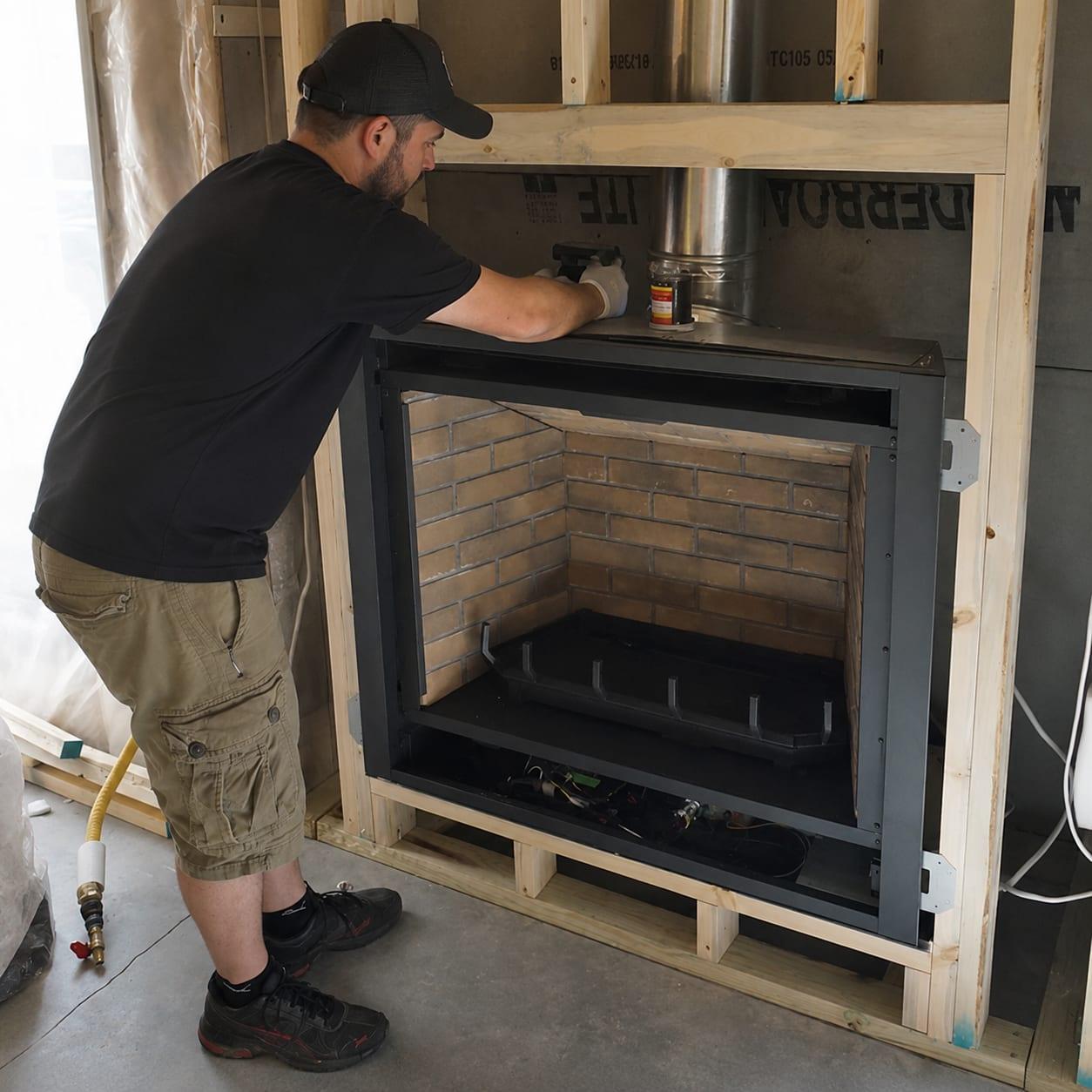
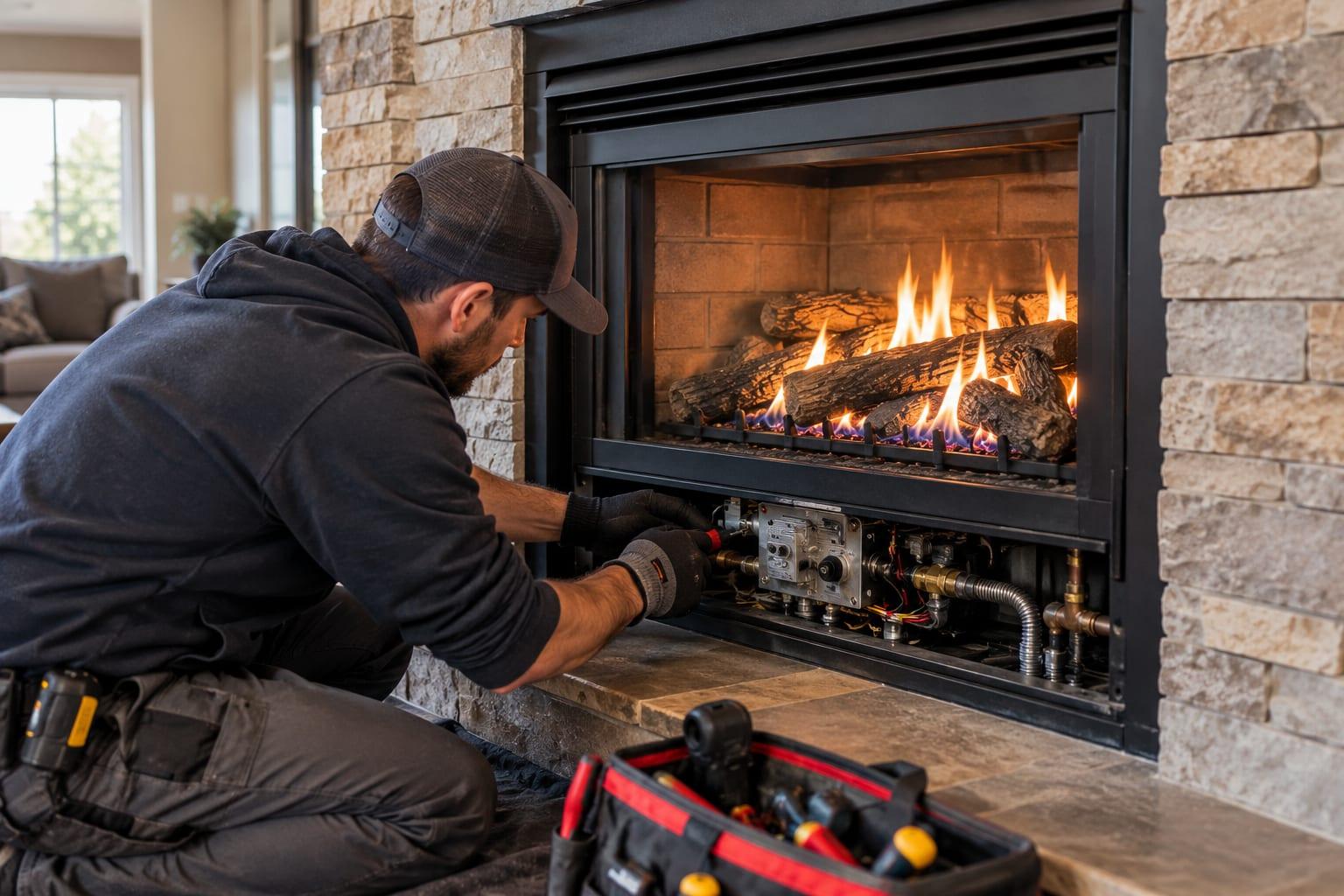
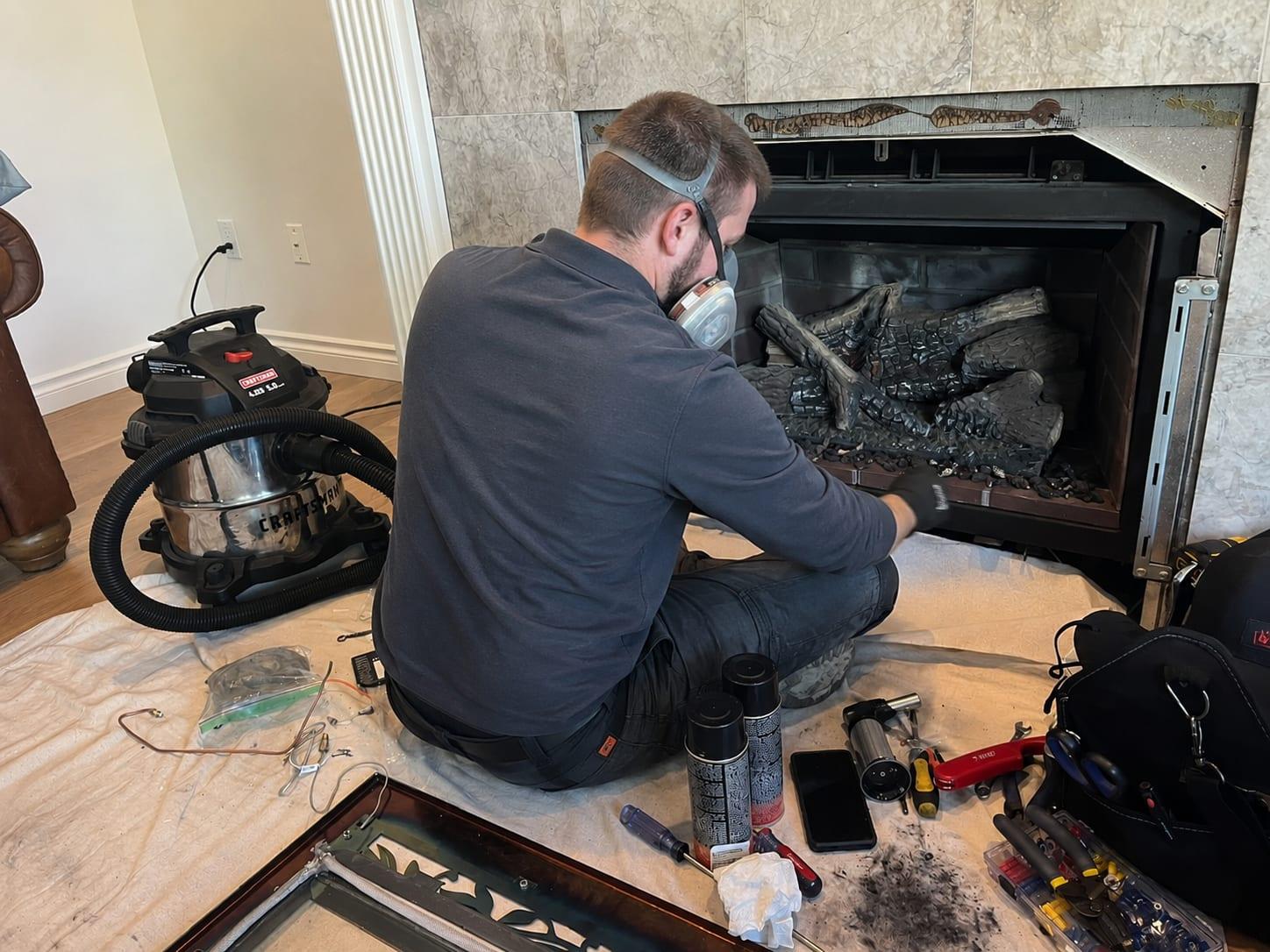
Gas fireplace service is the hands-on care a gas unit needs to keep lighting and burning cleanly: cleaning, adjusting, testing and fixing the parts that control the flame. It covers routine maintenance on a unit that works fine, and it covers repair when something has stopped working. Atlanta Chimney Flame does gas fireplace and gas appliance work directly, from the pilot assembly to the vent outside.
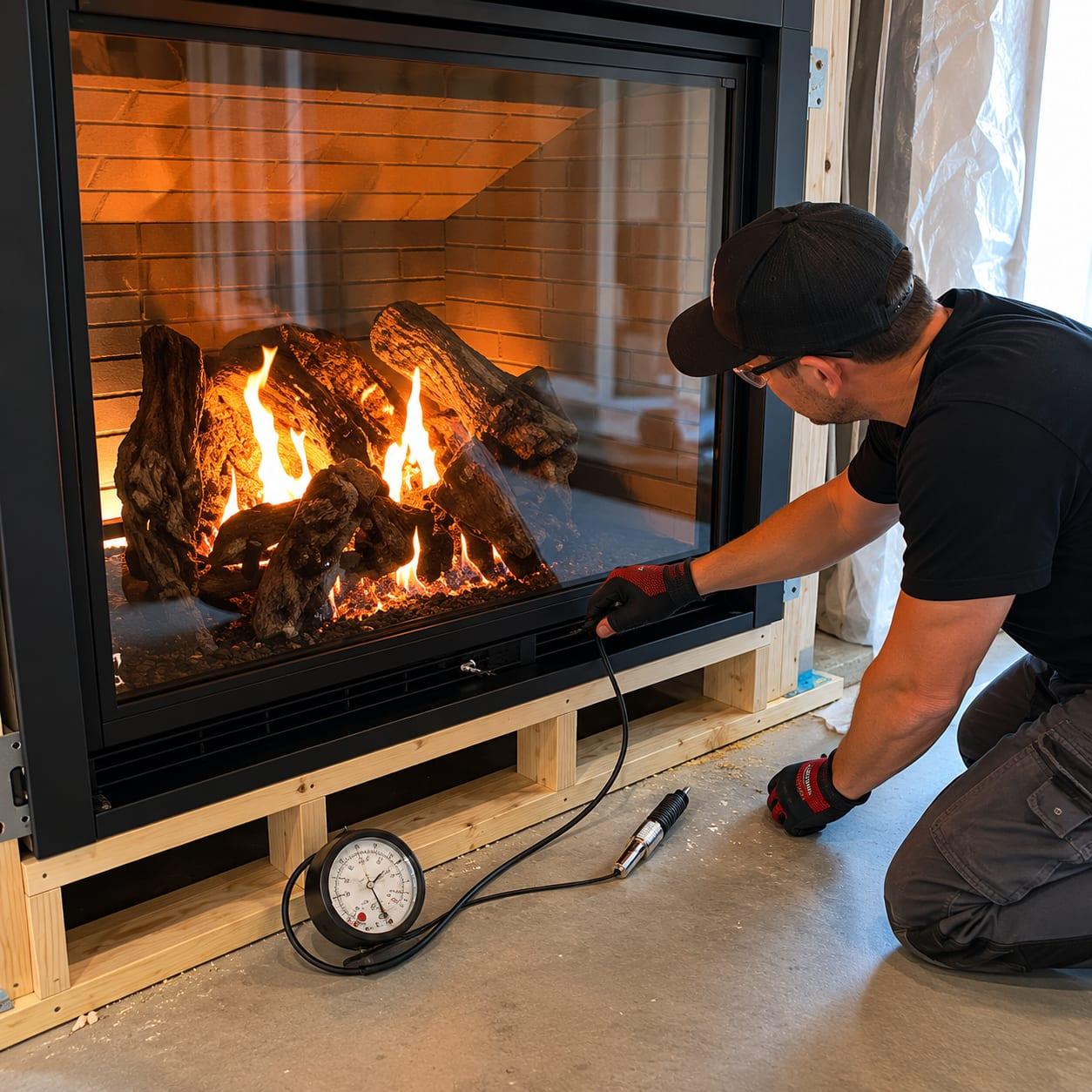
Service is different from a new unit or new piping. If the fireplace itself has reached the end of its life, installing a new gas fireplace is a separate job, and so is running a new gas line to a spot that has never had one.
Signs your gas fireplace needs service
Some problems are obvious, like a unit that won't turn on. Others creep up slowly. Call for service if you notice any of these:
- The igniter clicks but the burner never lights, or the pilot keeps going out.
- Flames are tall, yellow, orange or sooty instead of steady and mostly blue at the base.
- Black soot is building up on the glass, logs or the wall above the opening.
- Ceramic logs are cracked, crumbling or have shifted off their marked positions.
- The remote, wall switch or thermostat no longer controls the fire reliably.
- You hear a whistle, pop or delayed whoosh when the burner comes on.
- The control knob sticks, or the fire won't stay lit after you release it.
- The glass is cloudy, cracked or the door gasket is loose.
Gas fireplace won't light
Confirm there's no gas smell before doing anything. If there is, follow the steps at the top of this page and stop. If there's no odor, you can safely check a few simple things:
Safe checks before you call (no gas smell only)
- Replace the batteries in the remote and in the receiver or battery pack, if your unit has one.
- Make sure the wall switch is on and the thermostat, if any, is set above room temperature.
- Follow the lighting instructions printed on the unit's rating label, and only those.
If it still won't light, the usual causes are a dirty or misaligned pilot, a weak thermocouple or thermopile that no longer holds the valve open, a failed igniter or control module, or a gas valve that has worn out. Each needs to be tested, not guessed at, and that's where diagnosing and fixing a gas fireplace comes in.
What the visit involves, step by step
A typical gas fireplace service visit
Talk through the problem
The technician asks what you've noticed, such as when it started, how the flame looks and whether it lights at all.
Check for leaks and shut off gas
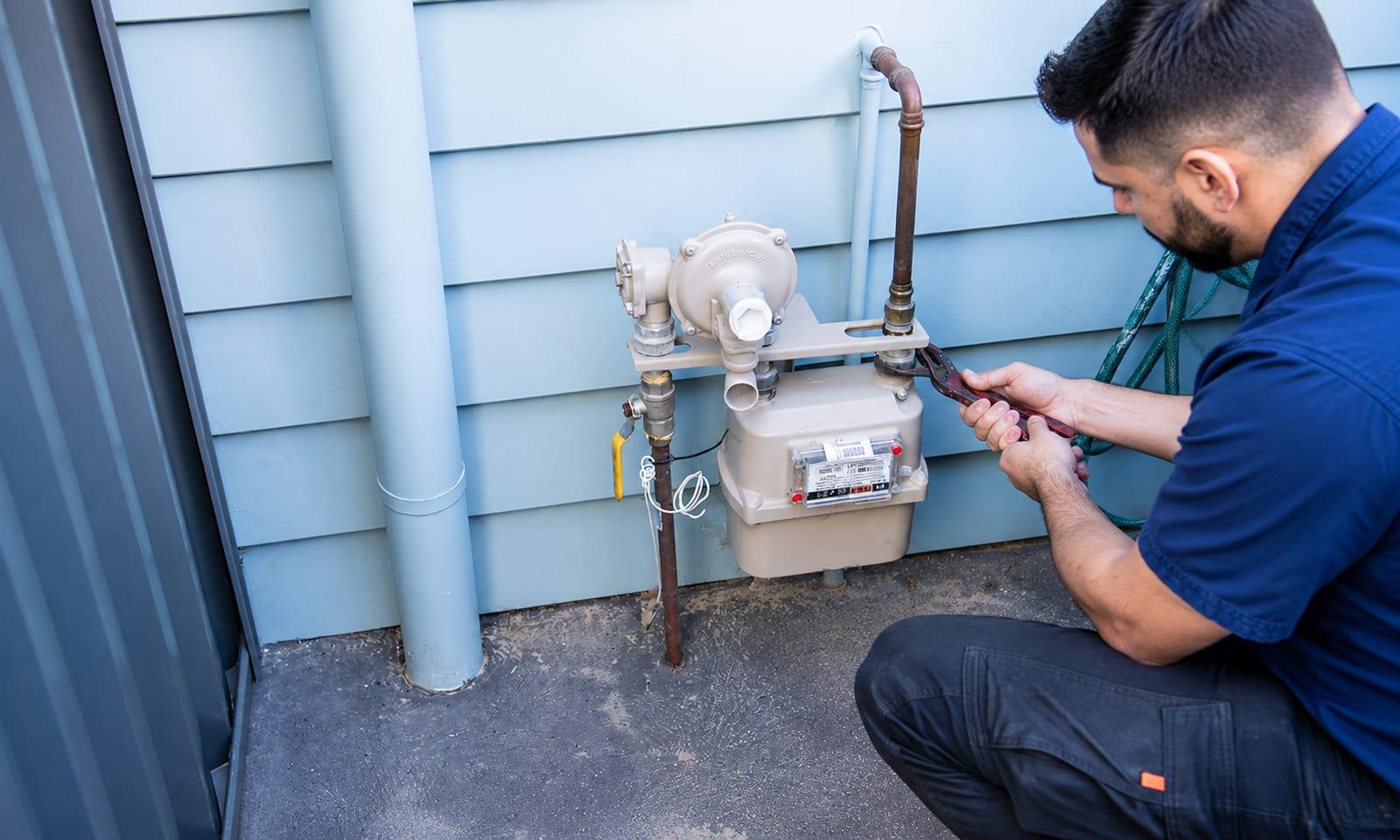
Before any parts are handled, the fireplace is checked for gas odor and the supply is turned off at the unit's shutoff.
Open up and clean
Glass, logs or media come out. The burner, pilot assembly and firebox are cleaned of dust, debris and soot.
Inspect the controls
The thermocouple or thermopile, igniter, valve, wiring and any remote receiver are inspected and tested.
Check the venting
On vented units, the vent path and outside termination are checked for blockage, damage or nests.
Reassemble and test
Logs are set back in their correct positions, the glass and gasket are checked, and the unit is lit and watched through a full burn.
Explain what was found
You hear what was cleaned, what was adjusted and whether any part needs repair or replacement.
Components and fuel types involved
Gas fireplaces run on either natural gas or propane, and the burner, orifice and valve are set up for one fuel or the other. They also differ in how they vent. Direct-vent units pull combustion air from outside and exhaust through a sealed pipe. B-vent units vent through a pipe but draw room air. Vent-free units have no flue at all. The parts serviced are largely the same across types:
| Component | What it does |
|---|---|
| Gas valve | Controls gas flow to the pilot and main burner |
| Pilot assembly | Keeps a small flame ready to light the burner |
| Thermocouple or thermopile | Senses the pilot flame and powers or holds open the valve |
| Igniter or control module | Sparks the pilot or burner on electronic-ignition units |
| Burner and logs or media | Shape and spread the visible flame |
| Glass and gasket | Seal the firebox on direct-vent units |
| Vent pipe and termination | Carry exhaust out of the home on vented units |
Gas fireplace inserts
A gas fireplace insert is a sealed firebox that slides into an existing masonry or prefab fireplace and vents through a liner running up the old chimney. Inserts need the same burner, pilot and valve care as any gas unit, plus attention to the liner connection and the seal around the surround. If an insert is cycling off, sooting its glass or struggling to light, the cause is often in the pilot assembly or the venting rather than the insert itself.
Fireplace gas valve replacement
The gas valve is the control center of the fireplace. It opens to feed the pilot, then the main burner, and closes the moment the pilot flame is lost. Over time valves can stick, leak internally, lose their magnetic hold or stop responding to the thermopile. When testing shows the valve itself has failed, it's replaced with a part matched to the unit and its fuel type, then leak-tested and run through a full ignition cycle. Valve replacement is not a homeowner project. It involves opening gas connections.
Gas logs, gas stoves and converting from wood
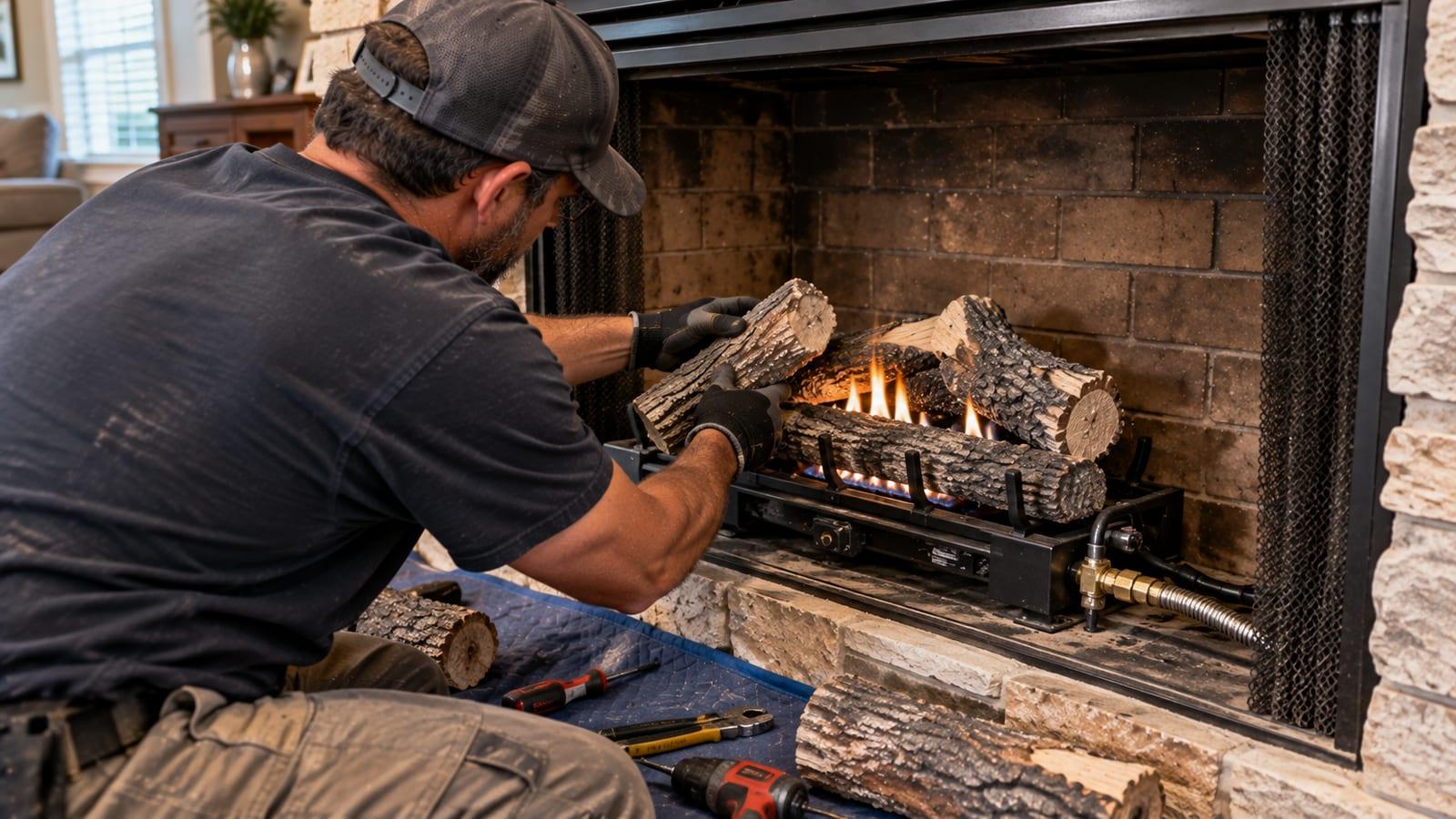
Gas log sets are serviced the same way as built-in units. The burner and pilot are cleaned, and the logs are inspected and placed back in their marked positions, because misplaced logs are a common cause of soot and odd flames. If a set is worn out, replacing gas logs may make more sense than repairing it. Freestanding gas stoves get the same valve, pilot and vent attention as fireplaces.
Converting a wood-burning fireplace to gas usually means one of two routes: a vented gas insert with a liner, or a gas log set in the existing firebox. Either way, the chimney is inspected first, a gas supply is brought to the firebox if one isn't there, and the unit is set up and tested. Fireplace conversion is part of the work offered.
Checked on every visit
- Pilot assembly and flame
- Vent and termination cap
- Thermocouple or thermopile output
- Log placement
- Burner ports
- Controls and remote
Carbon monoxide
A blocked or damaged flue can push carbon monoxide into the home. If an alarm sounds or anyone feels dizzy or sick near the fireplace, get everyone outside and call 911.
How to prepare
- Note what happens when you try to light it.
- Have the remote or wall switch working.
- Turn the unit off and let it cool.
- Find the model number, usually on a plate under the lower grille.