On this page
If you smell gas
Leave the building right away. Don't flip light switches, use a phone or light any flame inside. Once you're outside, call your gas utility or 911.
What gas log installation involves
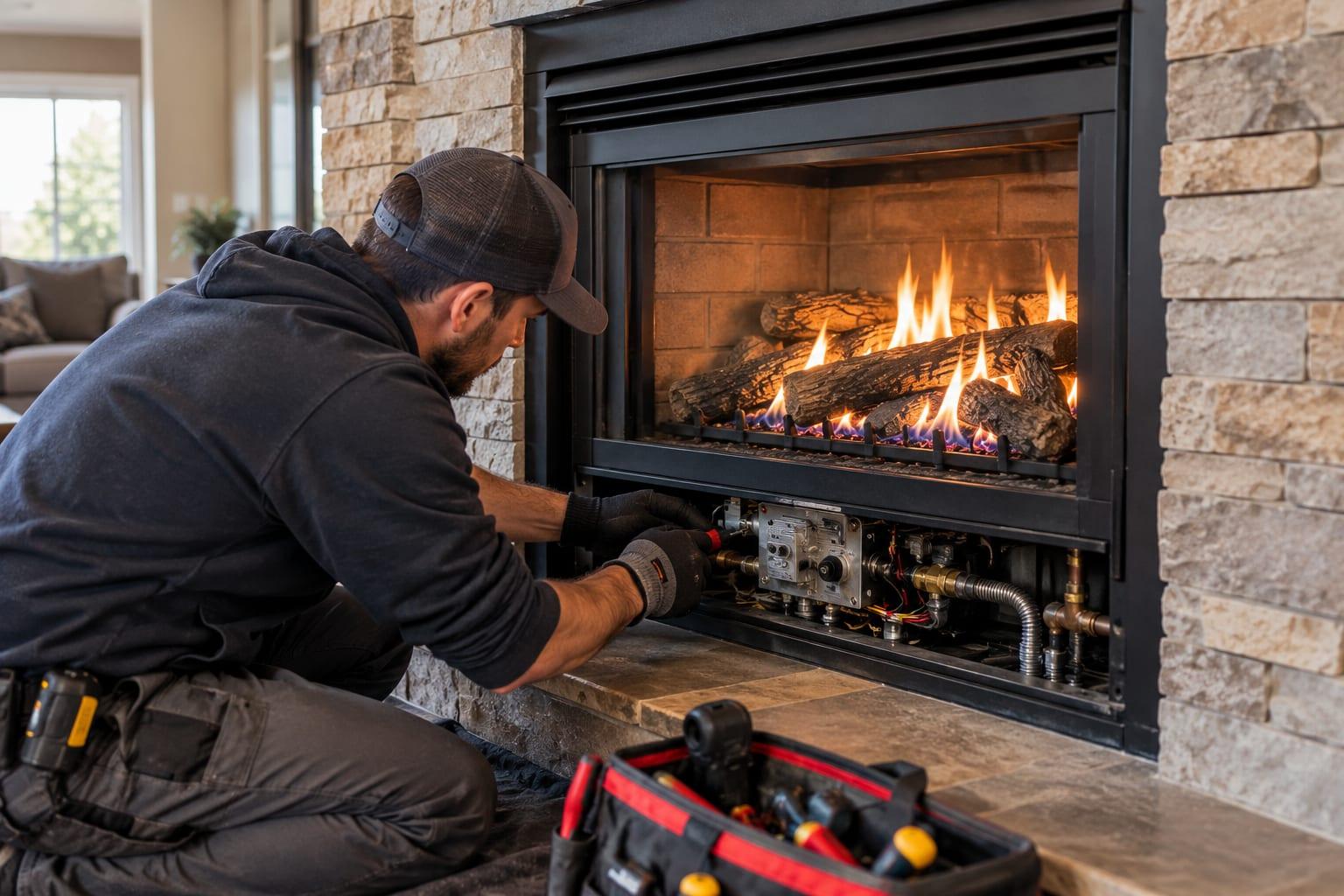
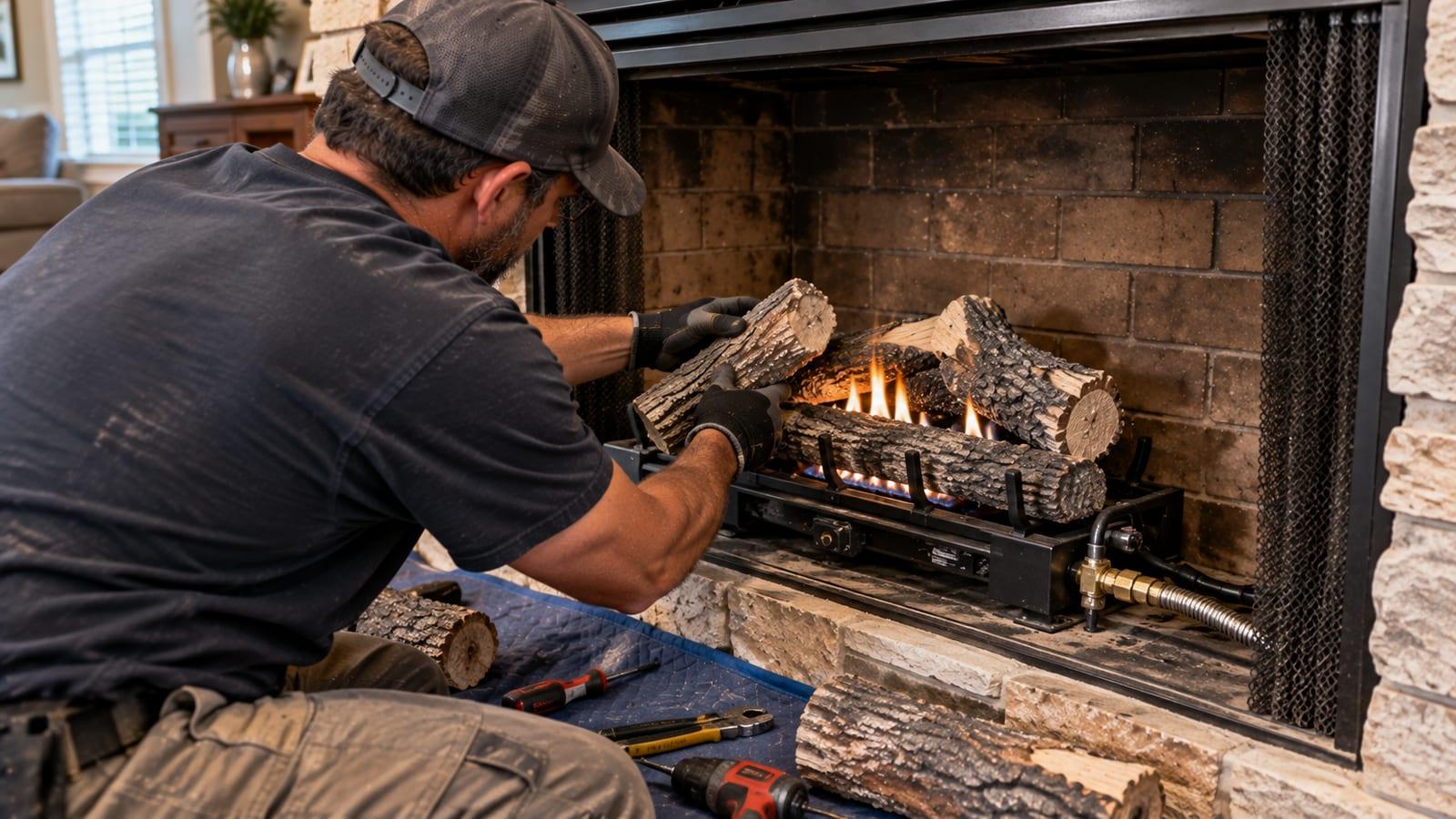
A gas log set is a burner assembly that sits inside a masonry or factory-built firebox, topped with ceramic or refractory logs shaped to spread the flame. Installing one means more than setting logs on a grate. The burner has to match the firebox size and venting, the gas supply has to reach it with the right valve or controls, and the logs have to go in the exact positions the manufacturer specifies. If logs are placed wrong, the flame can strike them and produce soot and carbon monoxide.
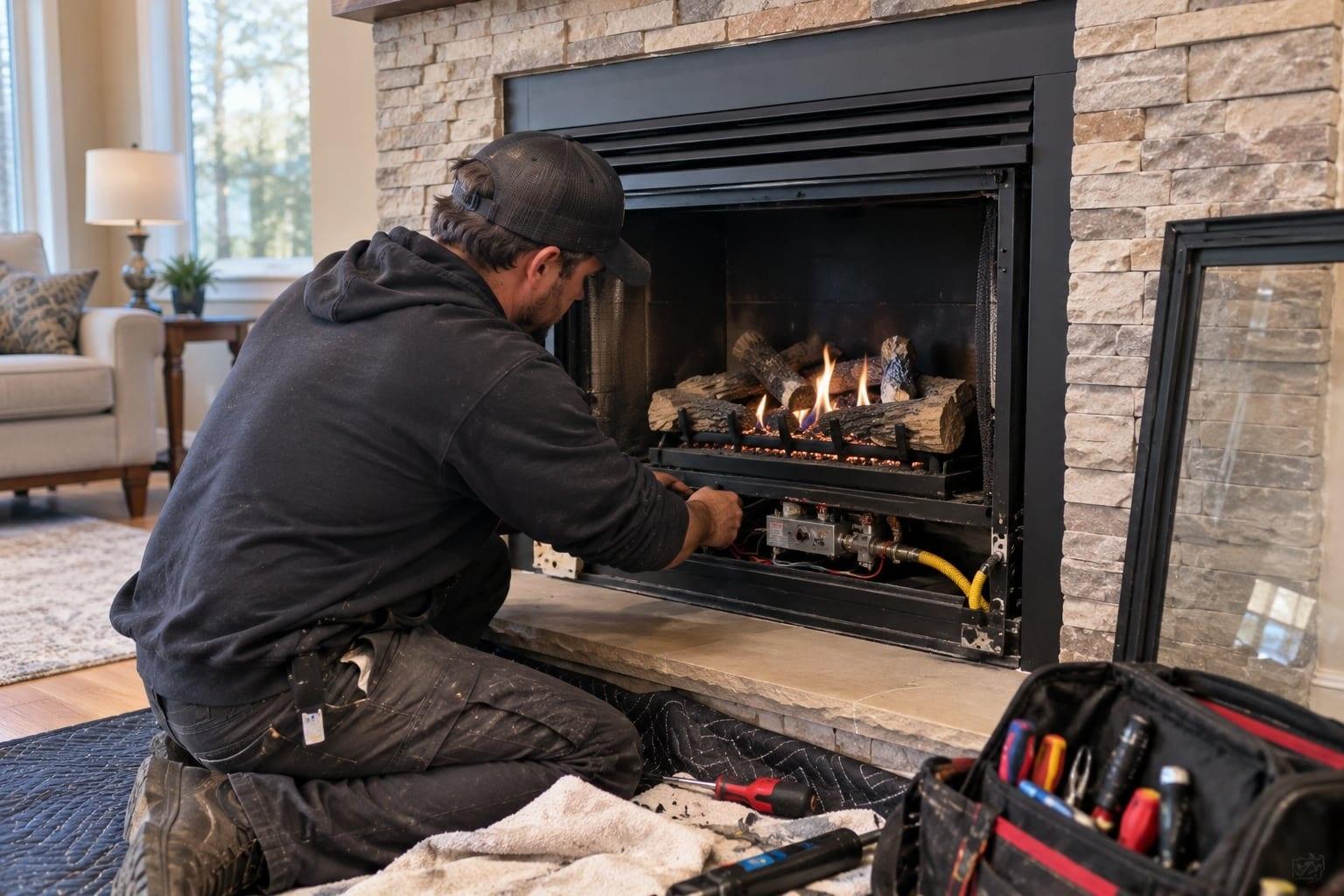
Log sets are different from a sealed unit. If you want a closed, glass-front appliance instead of an open flame, gas fireplace installation is the better match. If you're still weighing the two fuels, start with our guide to gas vs wood fireplace.
Vented and vent-free sets
| Feature | Vented | Vent-free |
|---|---|---|
| How it vents | Through the chimney, with the damper held open | Burns in the room with no chimney draft needed |
| Flame look | Taller, more yellow, closer to a wood fire | Smaller, bluer flame |
| Heat to the room | Mostly decorative; much of the heat goes up the flue | More heat stays in the room |
| What it needs | A working chimney and damper | Room size and air supply that fit the manufacturer's limits, plus an oxygen depletion sensor |
How it vents
- Vented
- Through the chimney, with the damper held open
- Vent-free
- Burns in the room with no chimney draft needed
Flame look
- Vented
- Taller, more yellow, closer to a wood fire
- Vent-free
- Smaller, bluer flame
Heat to the room
- Vented
- Mostly decorative; much of the heat goes up the flue
- Vent-free
- More heat stays in the room
What it needs
- Vented
- A working chimney and damper
- Vent-free
- Room size and air supply that fit the manufacturer's limits, plus an oxygen depletion sensor
Signs a gas log set is the right move
- You have a wood-burning fireplace you rarely use because of the wood, smoke and cleanup.
- Your current logs are cracked, crumbling or caked with black soot.
- The burner pan is rusted through or the ports are clogged.
- The flame is uneven, lazy or much taller and yellower than it used to be.
- The pilot or ignition keeps failing on an older set that's no longer worth fixing.
Some of these point to a repair rather than a new set. Heavy sooting or a weak flame can come from a misadjusted burner or a venting problem, and our gas fireplace service can sort that out before you replace anything.
How the installation visit works
Step by step
Check the firebox and chimney
We measure the firebox, look for cracks or damage and confirm the damper works and the flue is clear for a vented set.
Confirm the gas supply
We check for an existing gas stub and valve. If the fireplace has no gas yet, we handle gas line installation as part of the job.
Fit the burner and controls
The burner pan, valve and any remote or ignition parts go in and get connected to the supply.
Leak-test every connection
We test each fitting for leaks before the burner is ever lit.
Place the logs
Logs, embers and any lava rock or sand go in following the manufacturer's diagram, not by eye.
Light it and check the flame
We run the set, watch flame height and color, and check that the draft pulls correctly on vented sets.
Show you how it runs
You'll see how to light, adjust and shut off the set, and where the shutoff valve is.
Safety and upkeep after installation
Keeping a gas log set safe
- Keep a working carbon monoxide alarm near the fireplace and on each sleeping floor.
- On a vented set, leave the damper clamp in place so the flue can't close while the burner runs.
- Don't move or add logs. A shifted log can block the flame and cause soot.
- Never burn wood, paper or trash on a gas log set.
- Turn the set off and call if you notice heavy soot, a smell while it burns or a flame that suddenly changes.
- Have the set checked and cleaned once a year, before the first cool night you plan to use it.
Booking your gas log installation
Get in touch to request an estimate and tell us what kind of fireplace you have now.