On this page
What gas fireplace installation involves
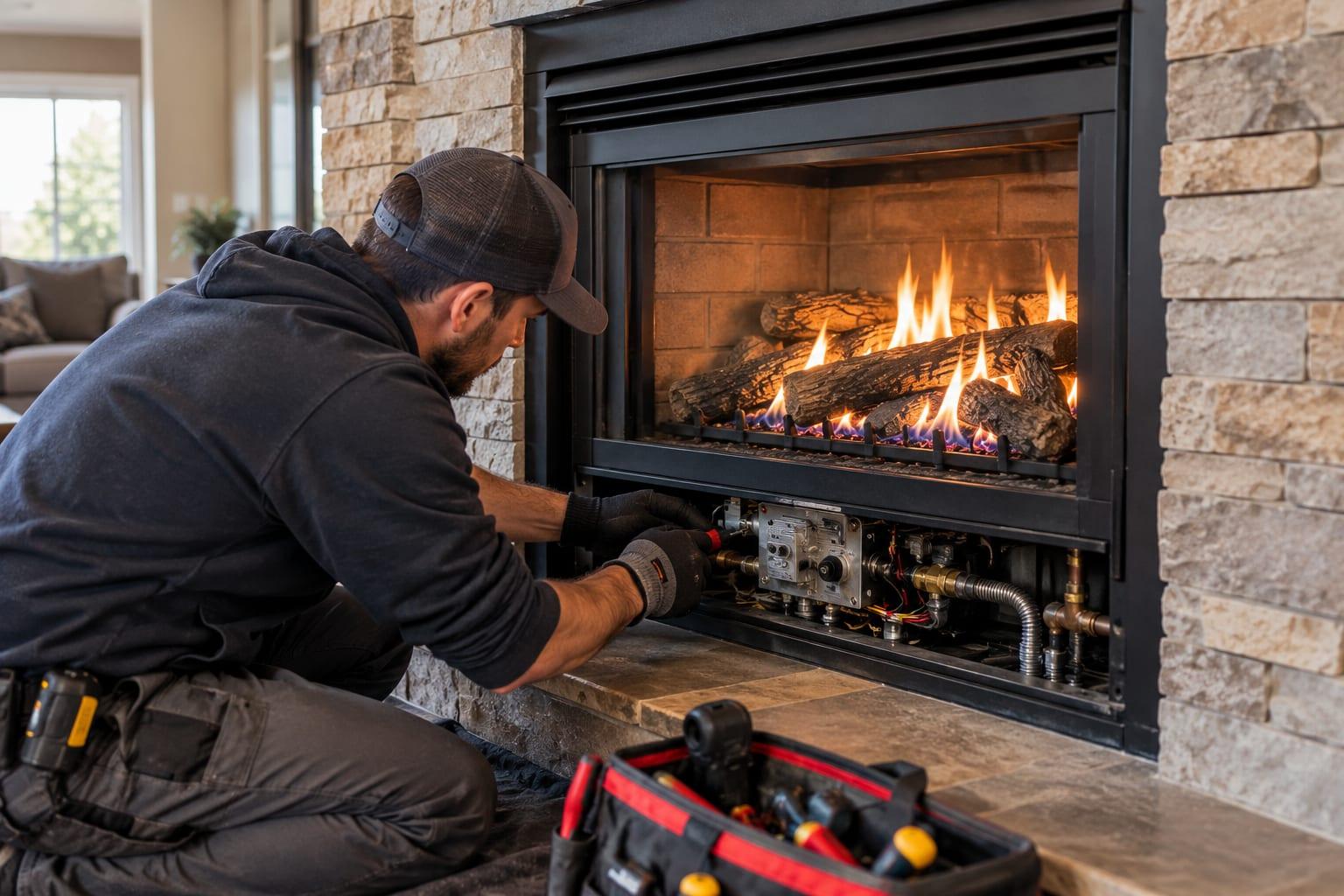
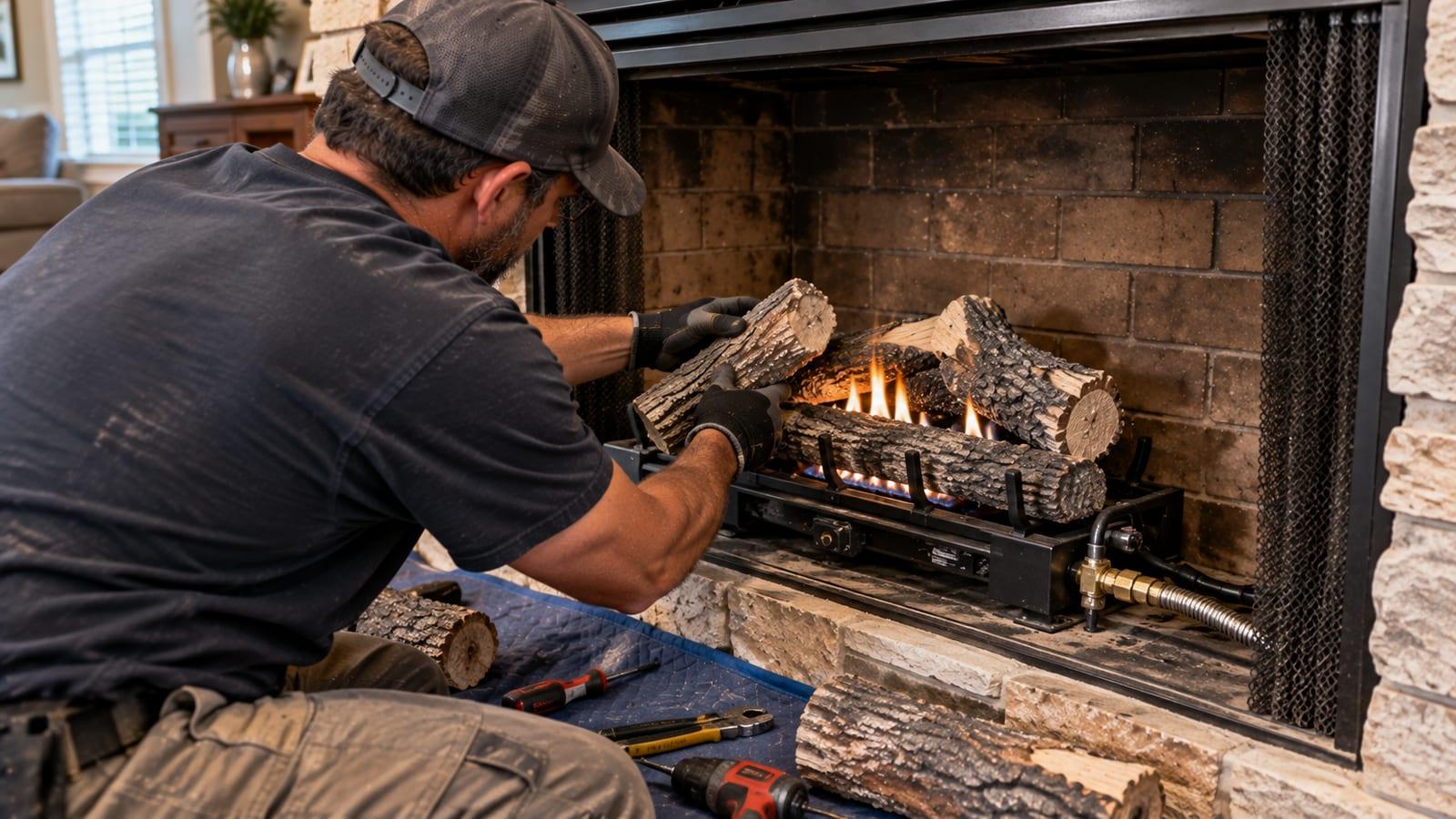
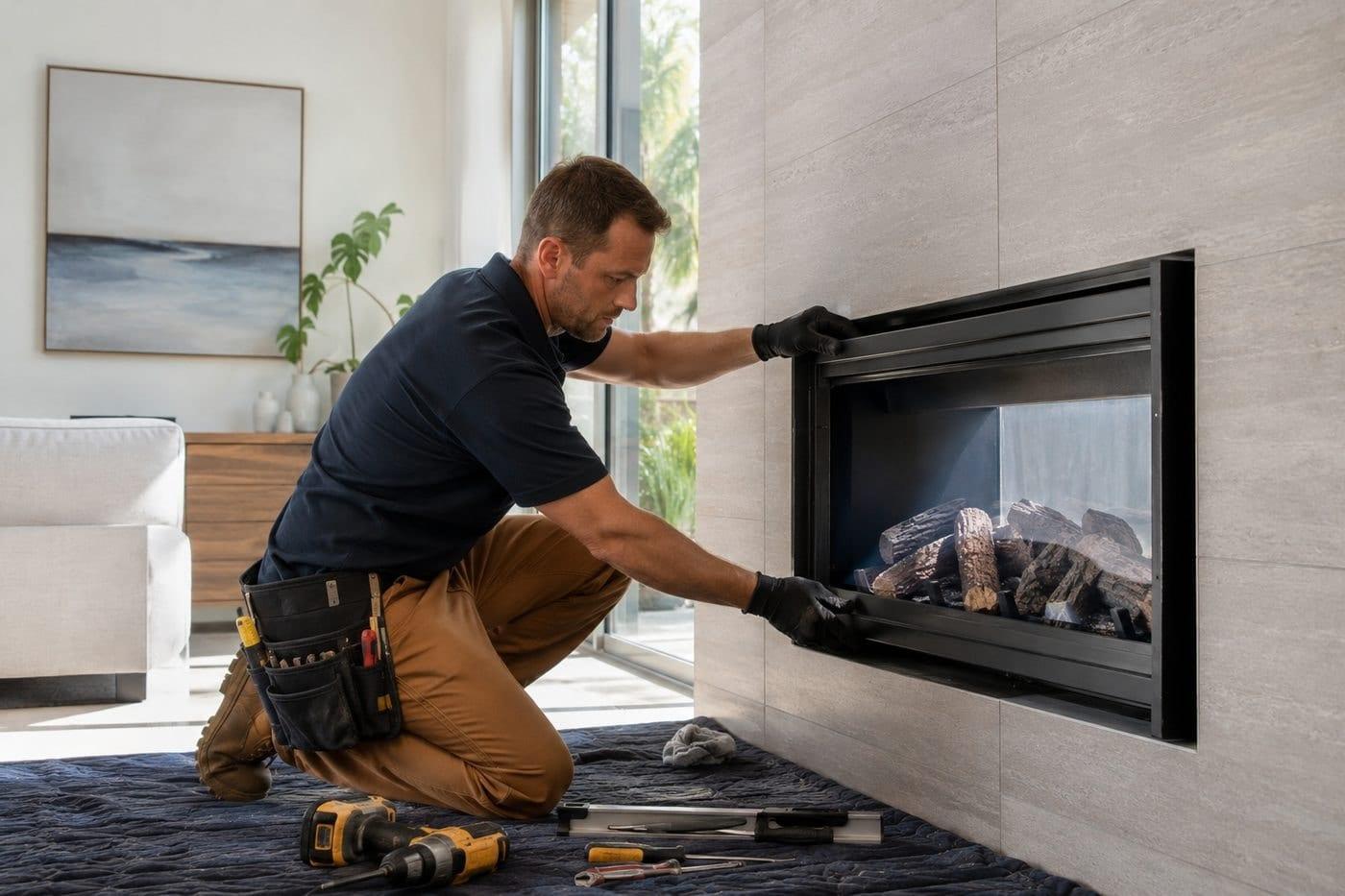
Gas fireplace installation means fitting a gas-burning unit and connecting it safely to a gas supply, a vent path and its controls. Depending on the home, that can mean a new built-in gas fireplace, a sealed gas insert set into an existing masonry opening, or a gas log set placed in a working wood-burning firebox. If you are still weighing fuels, our guide to gas vs wood fireplace options covers the trade-offs in heat, upkeep and feel.
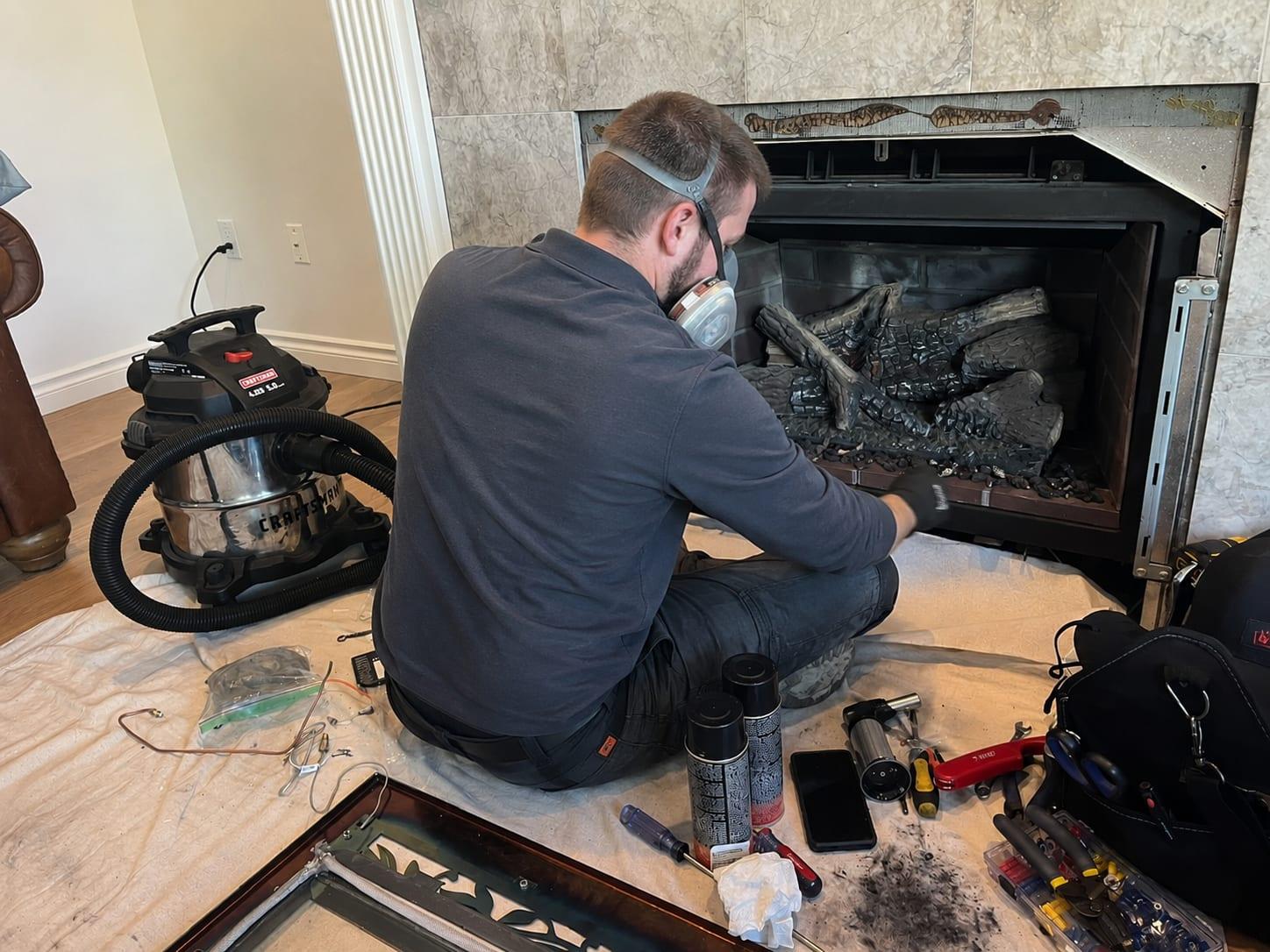
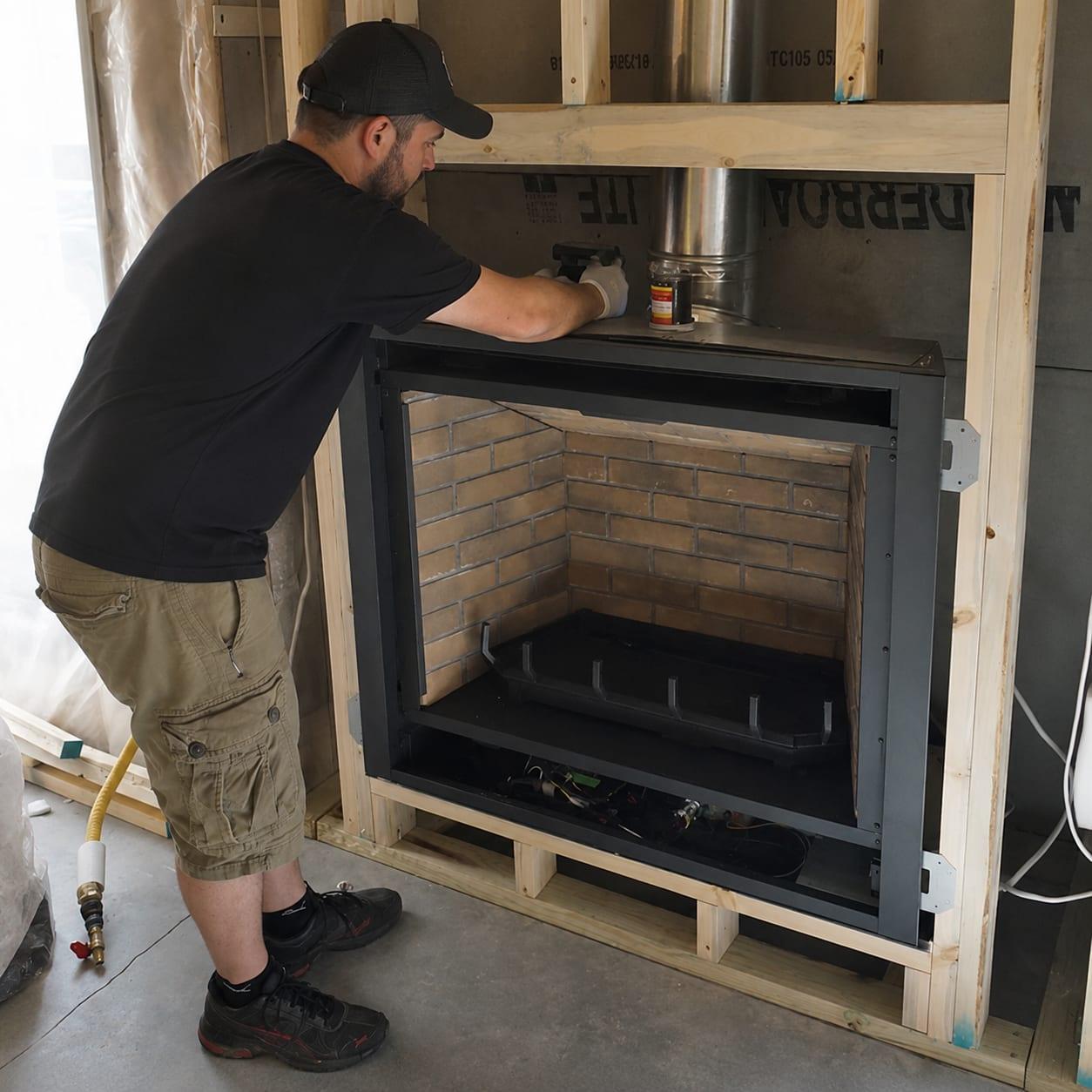
The job is more than setting a box in a wall. It covers the gas connection and shutoff valve, the venting or chimney the unit relies on, clearances to framing and trim, and the ignition and controls. When the gas supply doesn't reach the fireplace yet, running a new line is part of the work. If you only want a flame in an existing firebox, installing a gas log set may be the simpler route. If you want a wood-burning unit instead, that is a wood or general fireplace installation.
If you smell gas
Leave the building right away. Don't flip light switches, use phones or light any flame inside. Once you are outside, call the gas utility or 911.
When a gas fireplace installation makes sense
- You have a wood-burning fireplace you rarely use because of the smoke, ash and wood hauling.
- Your open masonry fireplace pulls warm air up the chimney and feels drafty instead of heating the room.
- You want a fireplace in a room that doesn't have one, and gas is available or can be run there.
- An older prefab gas unit is worn out and you would rather replace it than keep patching it.
- You want a flame you can control with a switch, remote or thermostat.
If you already have a gas fireplace that won't light or keeps shutting off, the job is usually gas fireplace repair, not a new installation.
What the visit involves, step by step
Look at the space
We check where the fireplace will go, the condition of any existing firebox and chimney, and how the unit can be vented.
Confirm the gas supply
We check whether a gas line reaches the location and whether the home runs on natural gas or propane, then plan any new line and shutoff valve.
Choose the unit type
We go over insert, built-in or gas log options for your space, along with vented or vent-free designs and control options.
Install and connect
We set the unit, run and connect the gas line, install the venting or liner, and wire the controls.
Test and walk you through it
We check the connections for leaks, light the unit, confirm the flame and draft, and show you how to start it, shut it off and use the valve.
Unit types and fuel
| Feature | Vented (direct-vent or B-vent) | Vent-free |
|---|---|---|
| Where exhaust goes | Outside, through a vent pipe or chimney liner | Into the room |
| Flame look | Usually a fuller, more natural flame | Usually a smaller, bluer flame |
| Heat kept in the room | Some heat leaves with the exhaust | Nearly all heat stays in the room |
| Main consideration | Needs a vent route or a usable chimney | Room size, air quality and moisture limit where it fits |
Where exhaust goes
- Vented (direct-vent or B-vent)
- Outside, through a vent pipe or chimney liner
- Vent-free
- Into the room
Flame look
- Vented (direct-vent or B-vent)
- Usually a fuller, more natural flame
- Vent-free
- Usually a smaller, bluer flame
Heat kept in the room
- Vented (direct-vent or B-vent)
- Some heat leaves with the exhaust
- Vent-free
- Nearly all heat stays in the room
Main consideration
- Vented (direct-vent or B-vent)
- Needs a vent route or a usable chimney
- Vent-free
- Room size, air quality and moisture limit where it fits
Most units are built for either natural gas or propane, and the burner and valve must match the fuel your home uses. We confirm the fuel before choosing equipment.
Safety and upkeep after installation
Good habits with a new gas fireplace
- Keep working carbon monoxide detectors on each level of the home and near sleeping areas.
- Know where the fireplace shutoff valve is and how to close it.
- Keep furniture, curtains and decorations clear of the glass and the front of the unit.
- Keep children and pets away from hot glass, which stays hot for a while after the flame is off.
- Have the unit checked once a year so the burner, pilot, venting and seals stay in good shape.
Yearly checks are part of routine gas fireplace service and maintenance, which keeps the flame clean and the venting clear.
Getting your installation started
Call or request an estimate, and tell us where you want the fireplace and whether you have gas in the home now. Gas fireplace and gas appliance work is offered. Commercial and property-manager work is offered too.