On this page
What chimney cap installation involves
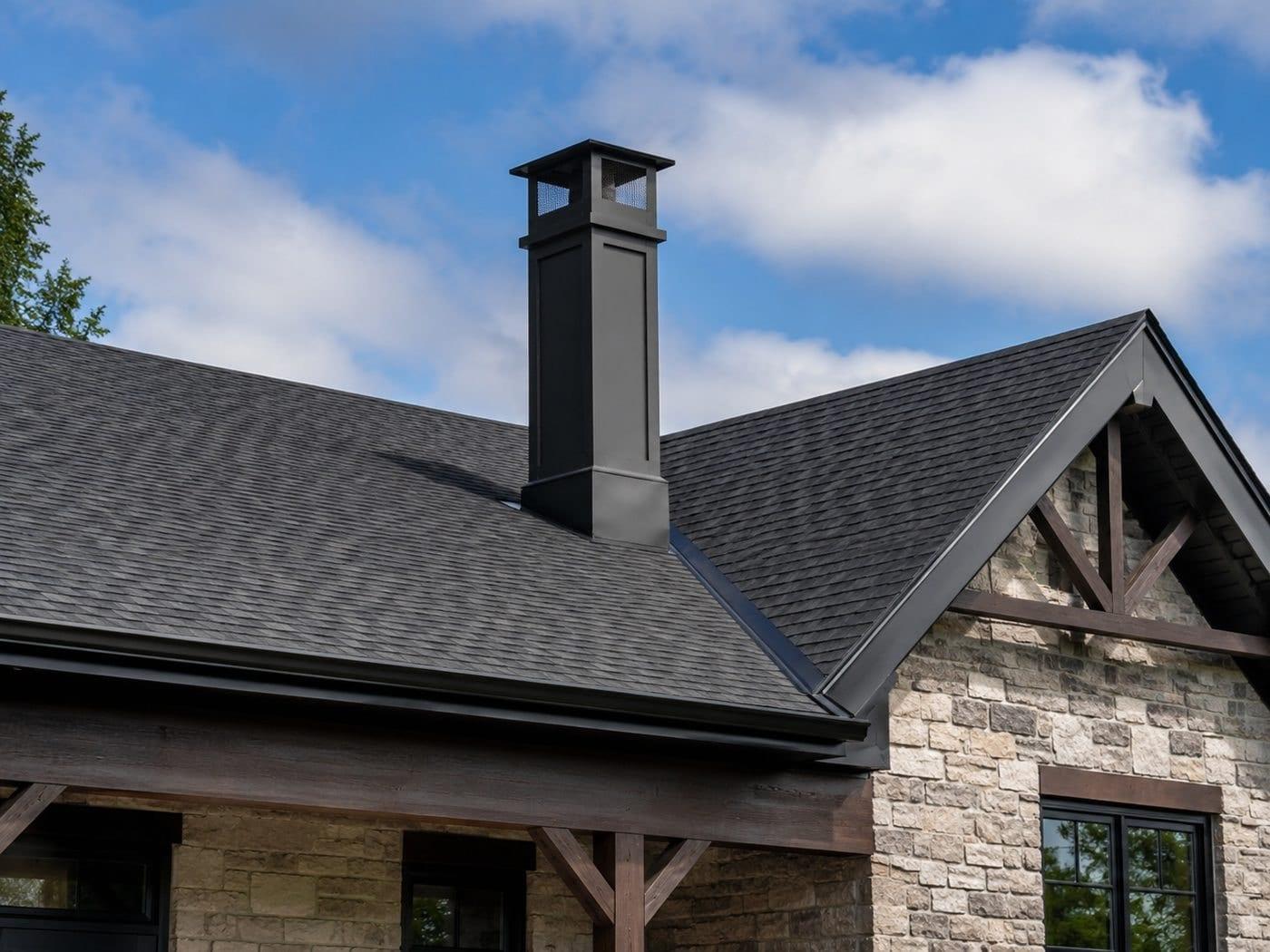
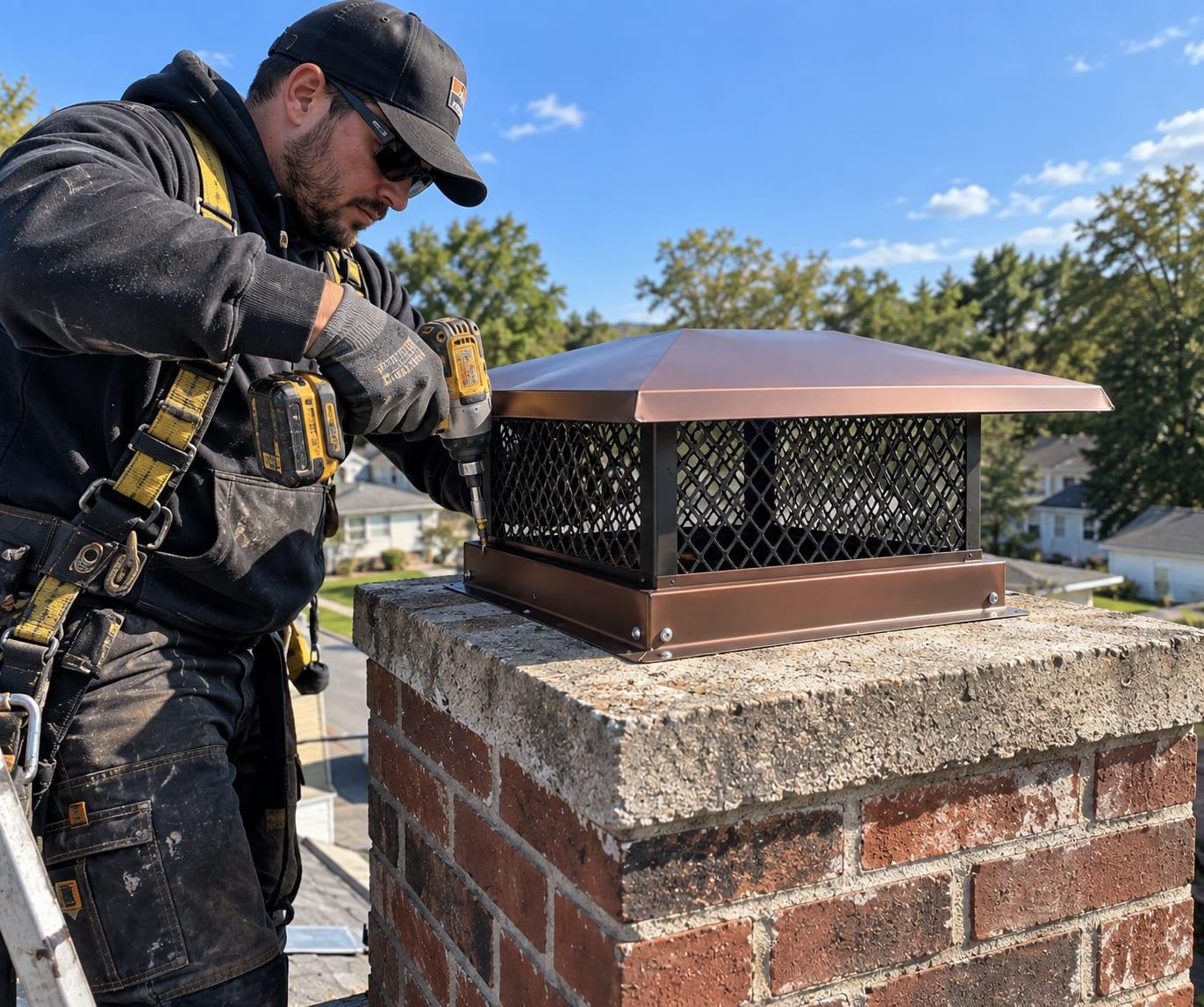
A chimney cap is a metal hood with mesh sides that sits over the top of the flue. The solid top sheds rain and snow. The mesh keeps out birds, squirrels, raccoons and blowing leaves, and it holds back stray embers. Installation means fitting a cap to a chimney that doesn't have one. The cap has to be sized to the flue, attached so wind can't lift it off, and set high enough above the flue that it doesn't choke the draft.
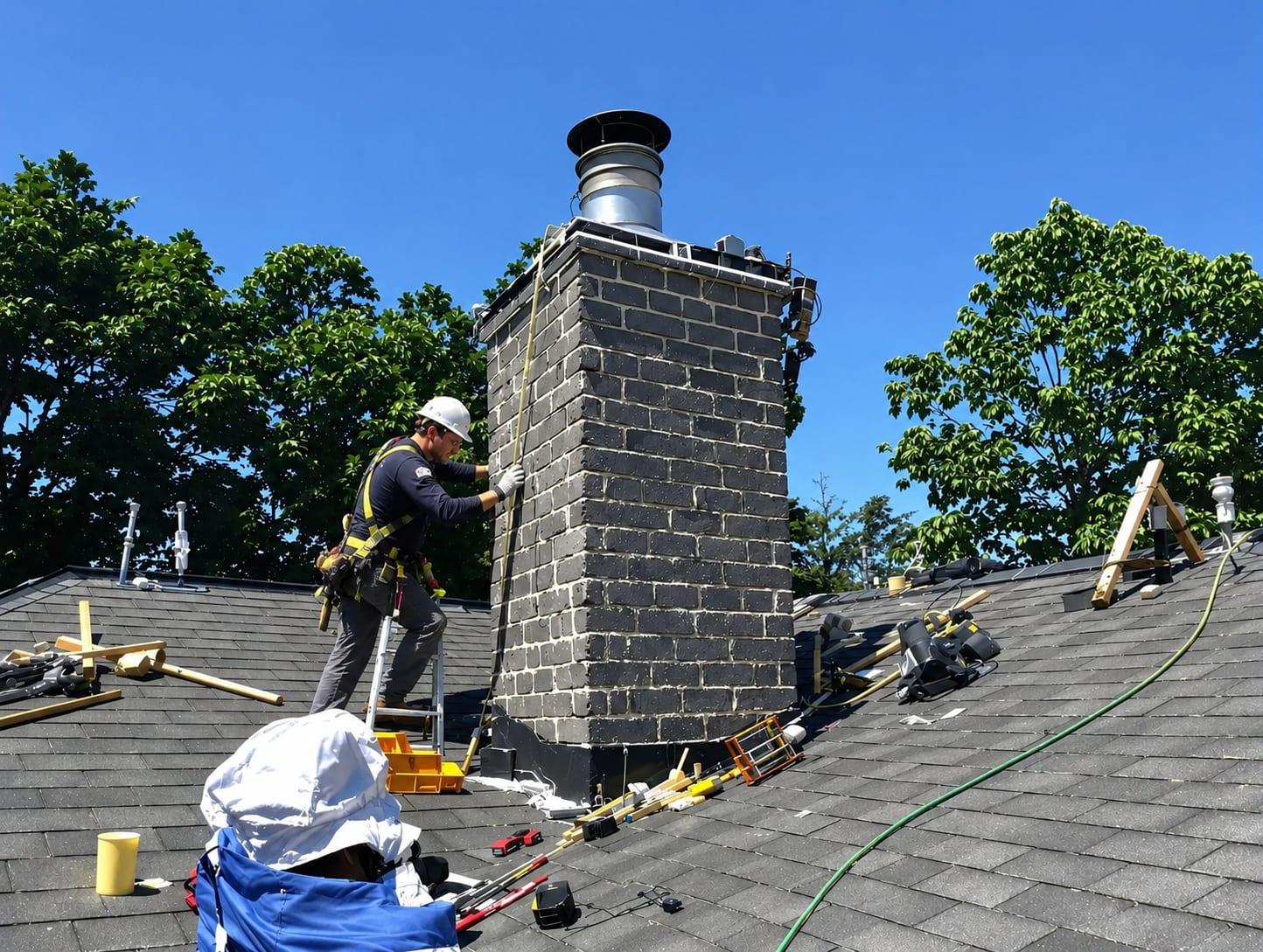
If your chimney already has a cap that's damaged, rusted through or blown loose, the job is different. A dented or loose cap that's otherwise sound usually calls for chimney cap repair, and a cap that's beyond saving calls for a full chimney cap replacement.
Signs your chimney needs a cap
Common reasons homeowners call for a new cap
- You can see straight down the flue from the roof or yard, with no hood or mesh on top
- Water drips into the firebox or the damper rusts after rain
- You hear scratching, chirping or fluttering inside the chimney
- Twigs, leaves or nesting material fall onto the smoke shelf or grate
- A smoky, musty or animal odor comes from the fireplace, especially in damp weather
- Downdrafts push smoke back into the room on windy days
Chimney birds and nests
An uncapped flue looks like a hollow tree to a bird. Birds build nests on the smoke shelf or damper, and the nest blocks the flue, smells and falls apart into the firebox. Some chimney-nesting birds are protected species. An active nest may have to wait until the birds leave before it can be removed, and then the cap goes on so they can't return.
Unused chimneys attract animals
A chimney that's rarely or never used is quiet, dry and warm, so animals move in. Raccoons, squirrels and birds use unused chimneys for shelter and for raising young. Without fires or smoke to drive them out, a nest can sit undisturbed for a long time before anyone notices. Capping a chimney you don't use is one of the simplest ways to keep animals out of the house. If animals are your main concern, installing a chimney animal screen is a related option.
Chimney nest removal before the cap goes on
A cap should never trap debris or an animal inside the flue, so we check the chimney before fitting anything. If there's a nest, droppings, leaves or other blockage, we remove it and clean the area first. Capping over a nest leaves the flue blocked and the smell in place. It can also trap an animal that then has no way out except into your house.
What the visit involves, step by step
How we install a chimney cap
Look at the chimney top
We check the crown, the flue tile or flue pipe, and the surrounding masonry or chase. A cracked crown or loose flue tile should be addressed before a cap is attached to it.
Check inside the flue
We look for nests, animals, debris and heavy buildup that need clearing before the flue is closed off with mesh.
Measure
We measure the flue's outside dimensions and height above the crown, or the full crown if the chimney has more than one flue. This tells us which type of cap will fit.
Clear any blockage
Nests and debris come out first, so nothing is sealed inside.
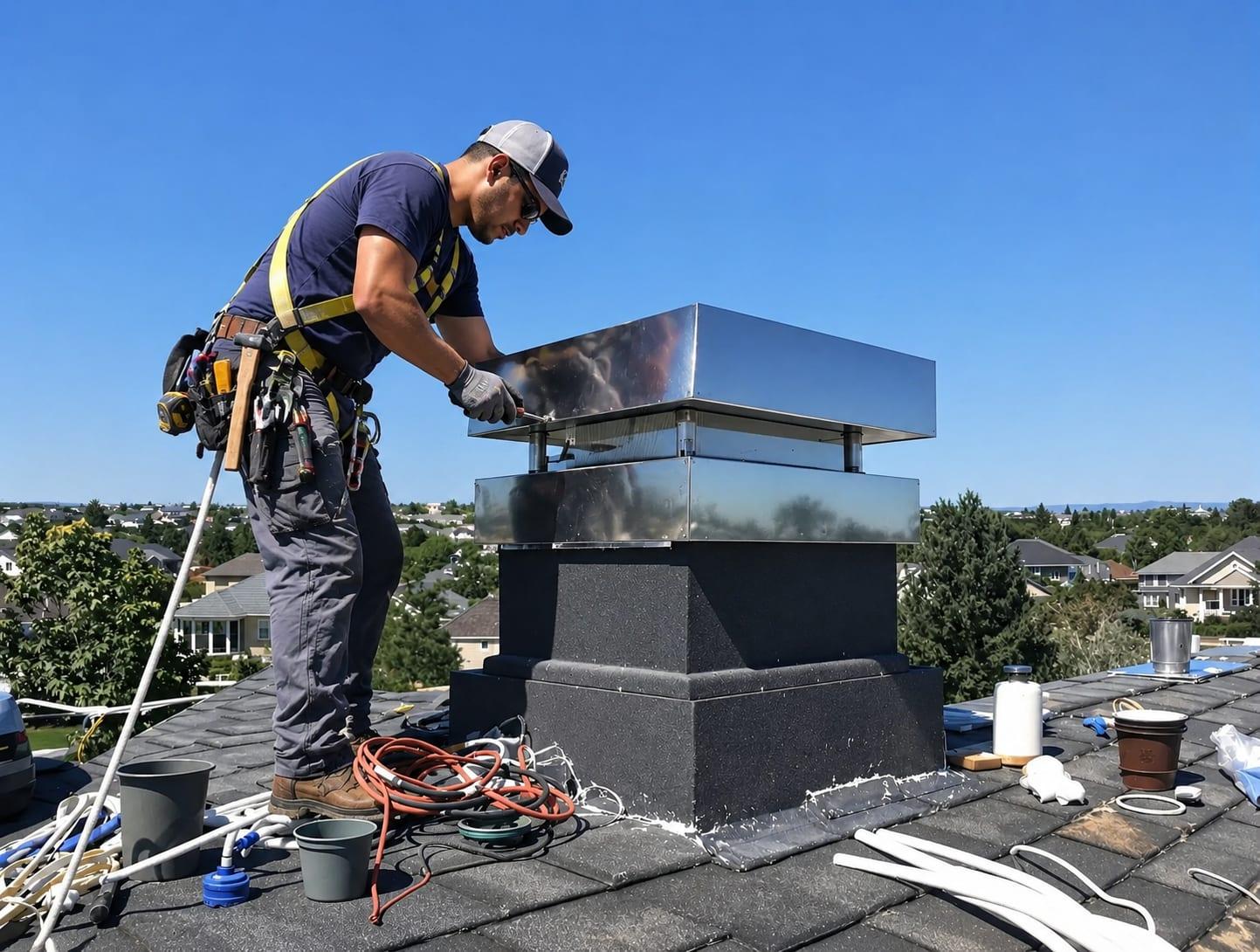
Fit and fasten the cap
A single-flue cap clamps or screws to the flue tile. A multi-flue cap is anchored to the crown. Either way, it's secured so wind and animals can't work it loose.
Final check
We confirm the cap sits square, leaves clearance above the flue opening and doesn't obstruct the draft.
Cap types and materials
The right cap depends on how many flues the chimney has, what it's built from and what burns in the fireplace. For a deeper comparison of styles, our chimney cap buyer's guide covers the options in more detail.
| Feature | Single-flue cap | Multi-flue (crown-mount) cap |
|---|---|---|
| Where it attaches | Over one flue tile, fastened to the tile | Over the whole crown, anchored into the masonry |
| Best for | Chimneys with one flue sticking above the crown | Chimneys with several flues or short flue tiles |
| What it covers | Just that flue | Every flue under it, plus much of the crown surface |
Where it attaches
- Single-flue cap
- Over one flue tile, fastened to the tile
- Multi-flue (crown-mount) cap
- Over the whole crown, anchored into the masonry
Best for
- Single-flue cap
- Chimneys with one flue sticking above the crown
- Multi-flue (crown-mount) cap
- Chimneys with several flues or short flue tiles
What it covers
- Single-flue cap
- Just that flue
- Multi-flue (crown-mount) cap
- Every flue under it, plus much of the crown surface
- Stainless steel resists rust and is a common choice for wood-burning and gas chimneys.
- Copper weathers to a darker color, doesn't rust and is often chosen for appearance.
- Galvanized steel has a lower initial cost but tends to rust sooner than stainless or copper.
- Mesh size matters. The screen has to be small enough to stop birds and embers but not so fine that soot clogs it quickly.
Masonry chimney caps
On brick and stone chimneys, the cap attaches to the flue tile or crown, so the condition of that masonry matters. A crown with cracks or crumbling edges won't hold anchors well and lets water into the chimney even with a cap on. In that case, repairing the chimney crown comes first.
Cap and chase cover installation on prefab chimneys
Factory-built fireplaces usually vent through a metal pipe inside a framed chase, with a sheet-metal chase cover over the top. On these chimneys, the cap mounts on the flue pipe that comes up through the chase cover, and it has to be made for that pipe size. If the chase cover is rusted, sagging or pooling water, it should be dealt with before or at the same time as the cap. Our guide to chase cover warning signs and solutions explains what to look for.
Caps for fireplaces with spark concerns
A standard cap's mesh catches a lot of embers. If you burn wood often or have trees and roofing close to the chimney, a cap built to arrest sparks is worth considering. Learn more about adding a spark arrestor to your chimney.
Safety and maintenance
A cap keeps water off the damper and out of the flue, keeps nesting material out of the smoke path and catches many embers before they reach the roof. It isn't a substitute for regular sweeping and inspection, though. The mesh can clog with soot and creosote, especially on wood-burning fireplaces, and a clogged screen restricts the draft and can push smoke back into the room.
Chimney cap maintenance
- Look at the cap from the ground after big storms to make sure it's still seated and straight
- Have the mesh checked during your regular chimney sweeping
- Watch for rust streaks running down the crown or chimney face
- Call if smoke starts lingering in the room on fires that used to draft well
Leave rooftop work to the crew
Chimney tops are high, often steep and hard to reach safely. If you notice a cap missing or knocked loose, don't use the fireplace until the flue has been checked, and stay off the roof.
Booking a chimney cap installation
Request an estimate or call to set up a visit. 24-hour service runs Sunday–Friday, and emergency calls are accepted, including animals trapped in the flue. Commercial and property-manager work is offered, so landlords and building managers can schedule caps for more than one chimney. Gas fireplace and gas appliance work is offered as well.