On this page
What a chimney spark arrestor does
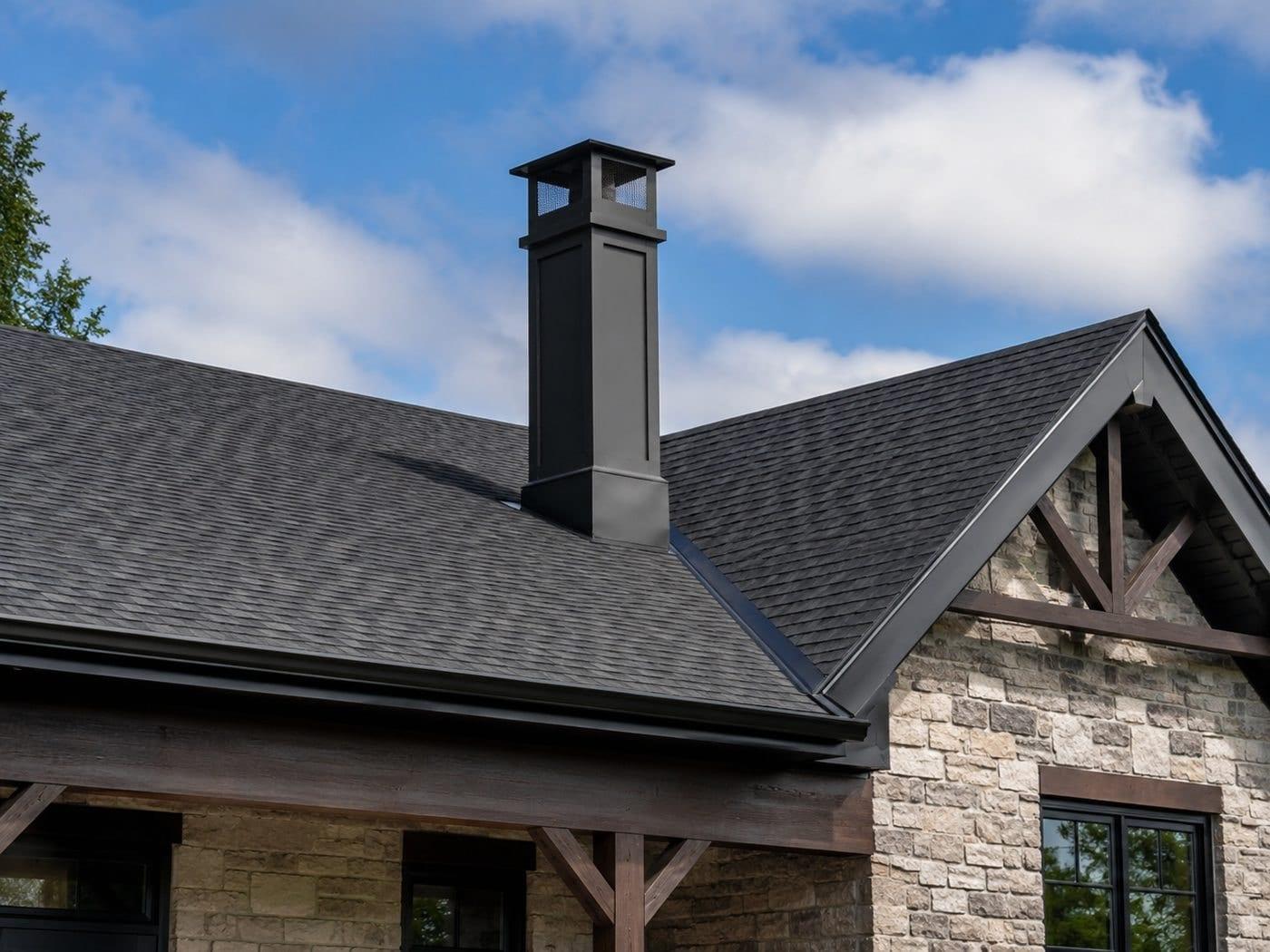
A spark arrestor is a metal mesh enclosure fitted over the top of a flue. Smoke and hot gases pass through the openings, but burning embers and bits of glowing paper are held back long enough to burn out or cool down. On most homes the arrestor is part of a chimney cap: the mesh forms the sides and a solid lid sits above it to keep rain out.
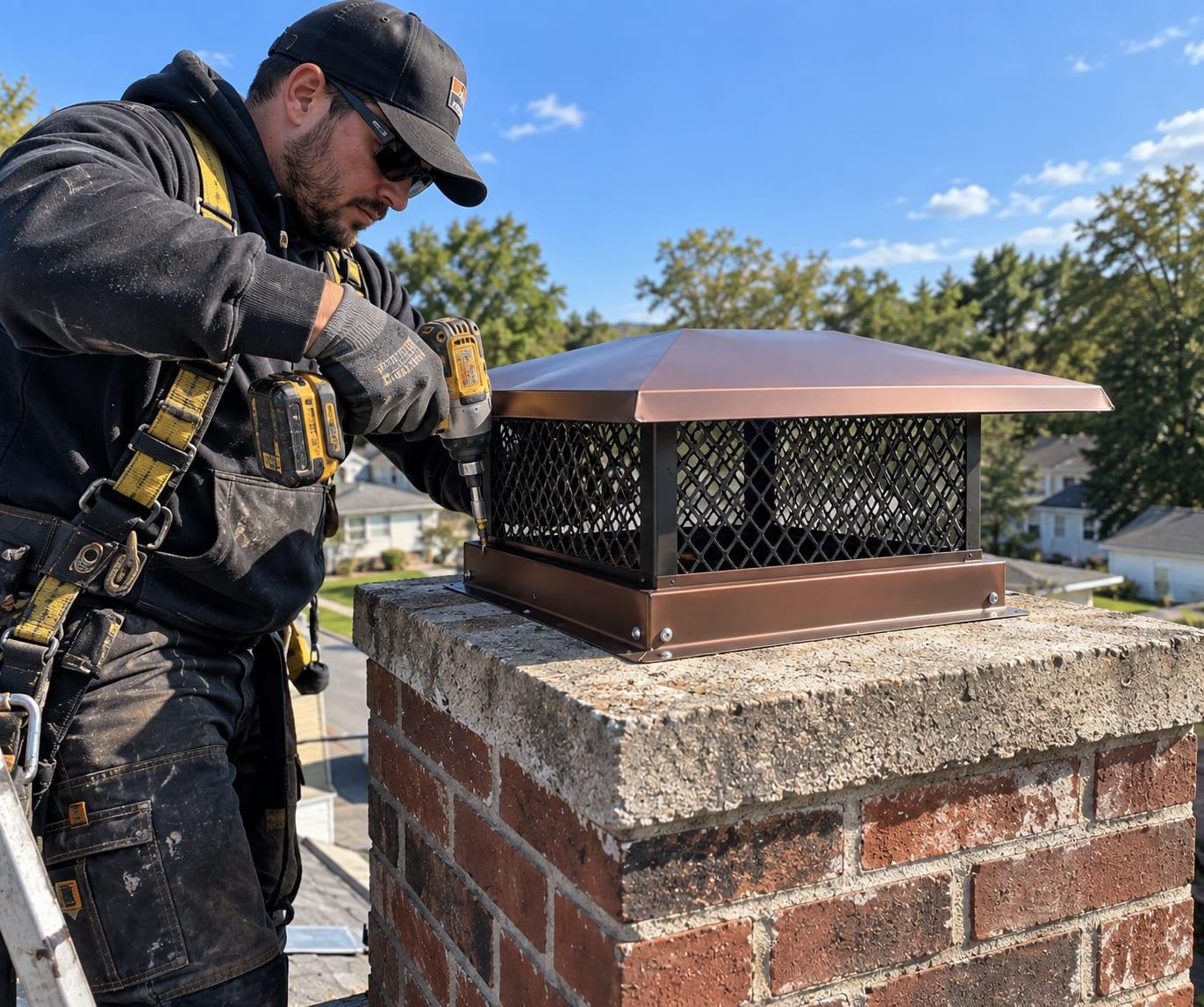
Installation means fitting that mesh to your specific flue, sized and fastened so it stays put in wind and leaves enough open area for the fire to draw. If you also want a lid against rain and debris, our chimney cap installation service covers the full cap, and the background in a buyer's guide to chimney caps explains the styles and materials before you decide.
Signs your chimney needs a spark arrestor
It is worth booking an installation when:
- The chimney has no cap or screen at all and you burn wood in the fireplace or stove.
- You have seen sparks or glowing embers leaving the chimney top during a fire.
- The existing mesh is rusted through, torn, bent away from the flue or missing sections.
- There are small burn marks on shingles, gutters or decking near the chimney.
- Branches, leaves or other flammable material sit close to the chimney top.
- Birds, squirrels or other animals have been getting into the flue.
The last point overlaps with animal protection. The same mesh that stops embers also keeps wildlife out, and if animals are the main concern, the chimney animal screen installation page covers that job on its own.
What the installation visit involves
Step by step
Look at the chimney top
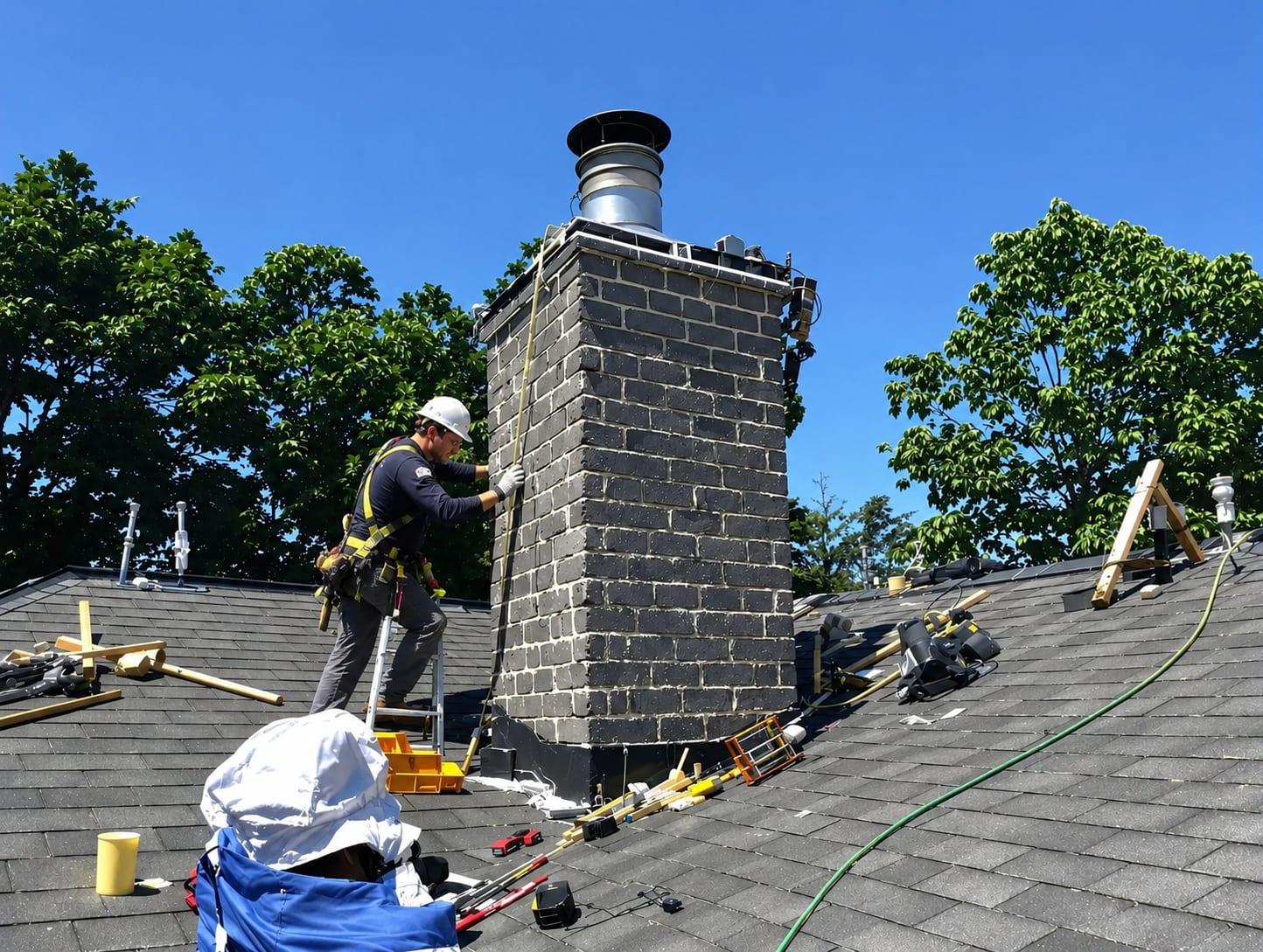
We check the crown, the flue tile or liner and any old cap, and note anything loose or damaged that would affect how a new arrestor sits.
Measure the flue
Each flue is measured so the arrestor fits snugly. Chimneys with more than one flue may need a single unit that covers them all.
Talk through the options
We explain whether a flue-mounted arrestor, a full cap with mesh sides or a multi-flue unit suits your chimney, and what each one means for upkeep.
Fit and secure it
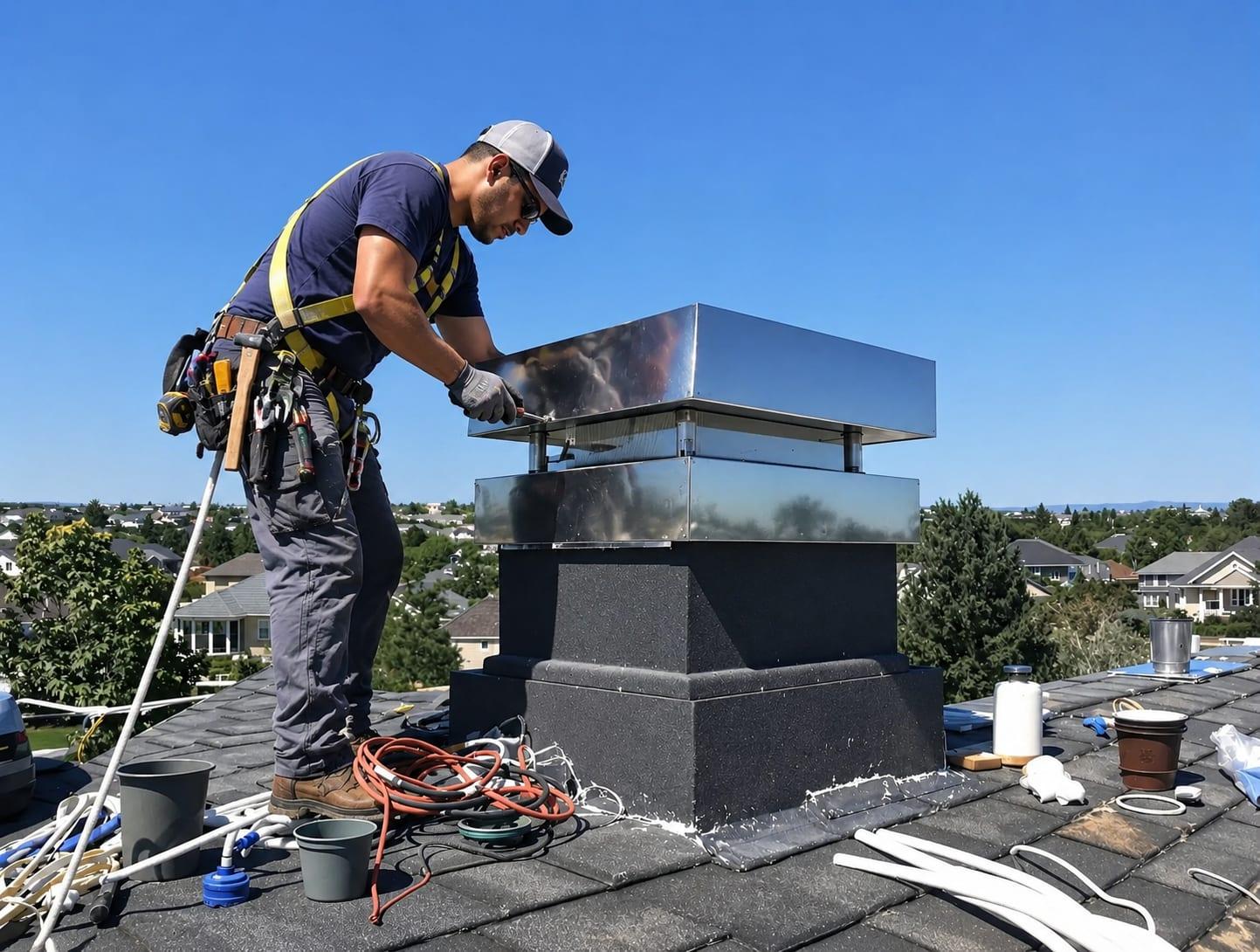
The arrestor is fastened to the flue or crown so wind cannot shift it and the mesh sits evenly on all sides.
Check the draft
We confirm smoke can leave freely and show you what clogged mesh looks like so you know when it needs cleaning.
Materials and fuel types
Arrestors are usually made of stainless steel or copper mesh, which hold up to heat and weather better than painted or galvanized steel. The mesh has to be fine enough to stop embers but open enough to let smoke out, and that balance matters most on wood-burning fireplaces and stoves, where embers are common.
Gas fireplaces and gas appliances are a different case. Their vents usually have a termination designed by the manufacturer, and an aftermarket screen can interfere with how they exhaust. We do gas fireplace and gas appliance work, so we check what is on the vent before recommending anything. When a new appliance is going in, how fireplace installation works explains how the venting is planned from the start.
Safety and upkeep
Clogged mesh can push smoke indoors
Creosote and soot can build up on fine mesh, especially with damp or unseasoned wood. If smoke starts rolling into the room or the fire struggles to draw, stop using the fireplace and have the arrestor and flue checked.
An arrestor protects the outside of the chimney. It does nothing for a cracked or missing flue liner, which can let heat reach the framing around the chimney. If the liner is in poor shape, chimney liner installation is the repair to consider, and chimney liner hazards and how to avoid them explains the warning signs.
Booking a spark arrestor installation
Call or request an estimate and tell us what you burn, how many flues the chimney has and whether there is a cap now. Commercial and property-manager work is offered too, so rental and multi-unit buildings can be scheduled the same way.