When the fireplace smells bad even with no fire going
You walk into the room and smell something like an old campfire, a damp basement or something rotting, and it is coming from the fireplace. It may be faint most days and strong on others. It may get worse when the air conditioning runs, after rain, or when a bathroom or kitchen fan is on. A fireplace that smells bad is telling you something is sitting in the chimney or getting into it. It is rarely a problem that clears up by itself.
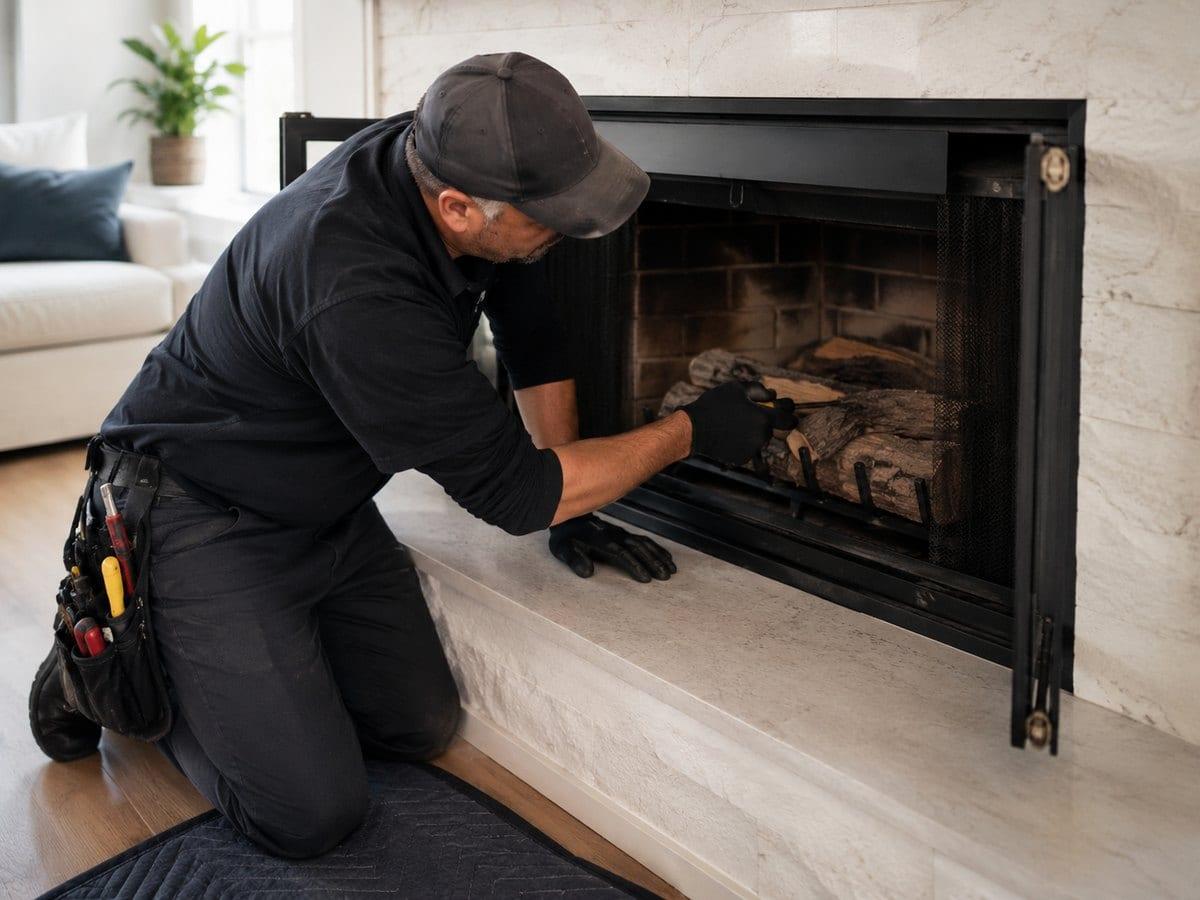
Common signs that come with the smell
What homeowners usually notice
- A stale chimney smoke smell in the room when the fireplace hasn't been used for days or weeks
- The odor gets stronger in warm, humid weather or after rain
- A musty, wet-basement smell around the firebox or hearth
- A sharp, sour or rotten smell that came on suddenly
- Black, flaky or tar-like deposits on the firebox walls or the damper
- Scratching, chirping or rustling sounds from the chimney
- Water stains, damp spots or white crusty deposits on the fireplace brick
- Leaves, twigs or nesting material falling onto the grate
- A cold draft coming down the chimney into the room
Possible causes of a fireplace that smells bad
Several problems produce a similar smell, and more than one can happen at once. These are possibilities. A visual or camera inspection of the flue is what confirms which one is actually behind the odor in your home.
Likely sources of fireplace odor
01Creosote buildup in the flue
- What you may notice
- A strong, smoky, asphalt-like smell that gets worse in humid or warm weather; black or glossy deposits on the damper and flue walls.
- How it’s confirmed
- The flue is inspected from the firebox and the top, often with a camera, to see how much creosote is there and what form it has taken.
02Moisture getting into the chimney
- What you may notice
- A musty, damp odor; stains or white deposits on the brick; rust on the damper; the smell is worse after rain.
- How it’s confirmed
- The crown, cap, flashing and masonry are checked for gaps and cracks, and the inside of the chimney is checked for signs of water.
03An animal, nest or dead animal
- What you may notice
- A sudden foul or rotten smell, sounds in the chimney, nesting material or droppings in the firebox.
- How it’s confirmed
- The flue and smoke shelf are inspected for nests, debris or remains, and the top of the chimney is checked for a missing or damaged cap.
04Leaves and debris trapped on the smoke shelf
- What you may notice
- An earthy, rotting smell; bits of leaves or twigs falling onto the grate.
- How it’s confirmed
- The smoke shelf and damper area are inspected and cleared of debris.
05Air being pulled down the chimney
- What you may notice
- The smell is strongest when exhaust fans, the dryer or the HVAC system are running; you feel a cold draft at the fireplace.
- How it’s confirmed
- The damper seal and draft are checked to see whether outside air is being drawn into the house through the flue.
A down-draft that carries odor into the room is closely related to fireplace smoke in the house. The same pressure and draft problems often sit behind both.
How urgent is it, and when to stop using the fireplace
A gas smell is an emergency
If you have a gas fireplace and smell rotten eggs or sulfur, don't light anything, don't flip switches, and leave the house. Call your gas utility or 911 from outside. Once the gas supply has been made safe, the fireplace should be inspected before it is used again.
For wood-burning fireplaces, stop using the fireplace until it has been inspected if the smell comes with heavy black deposits in the flue, smoke coming back into the room, or signs of an animal. Creosote is flammable, and a blocked flue can push smoke and combustion gases into the house. A mild, musty smell with no other signs is less urgent, but it should still be looked at before the next fire. Moisture and debris tend to cause more damage the longer they stay.
Emergency calls are accepted, and 24-hour service runs Sunday–Friday.
What normally fixes a smelly fireplace
The fix depends on what the inspection finds. In most homes it is a combination of cleaning out the source of the odor and stopping it from coming back.
How the problem is usually handled
Inspect the chimney and fireplace
The flue, smoke shelf, damper, cap and crown are checked, often with a camera, to find where the smell is coming from.
Remove the source
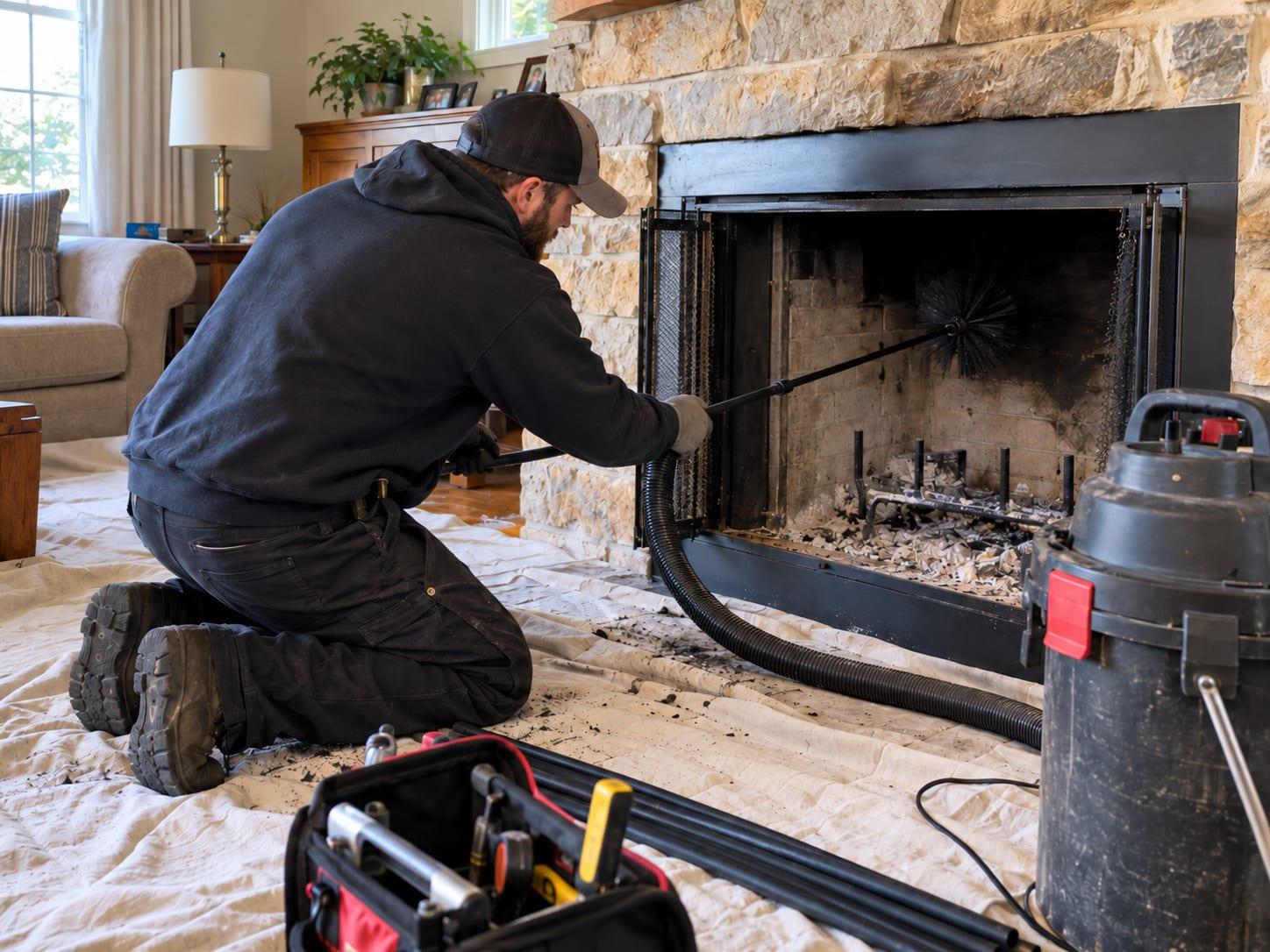
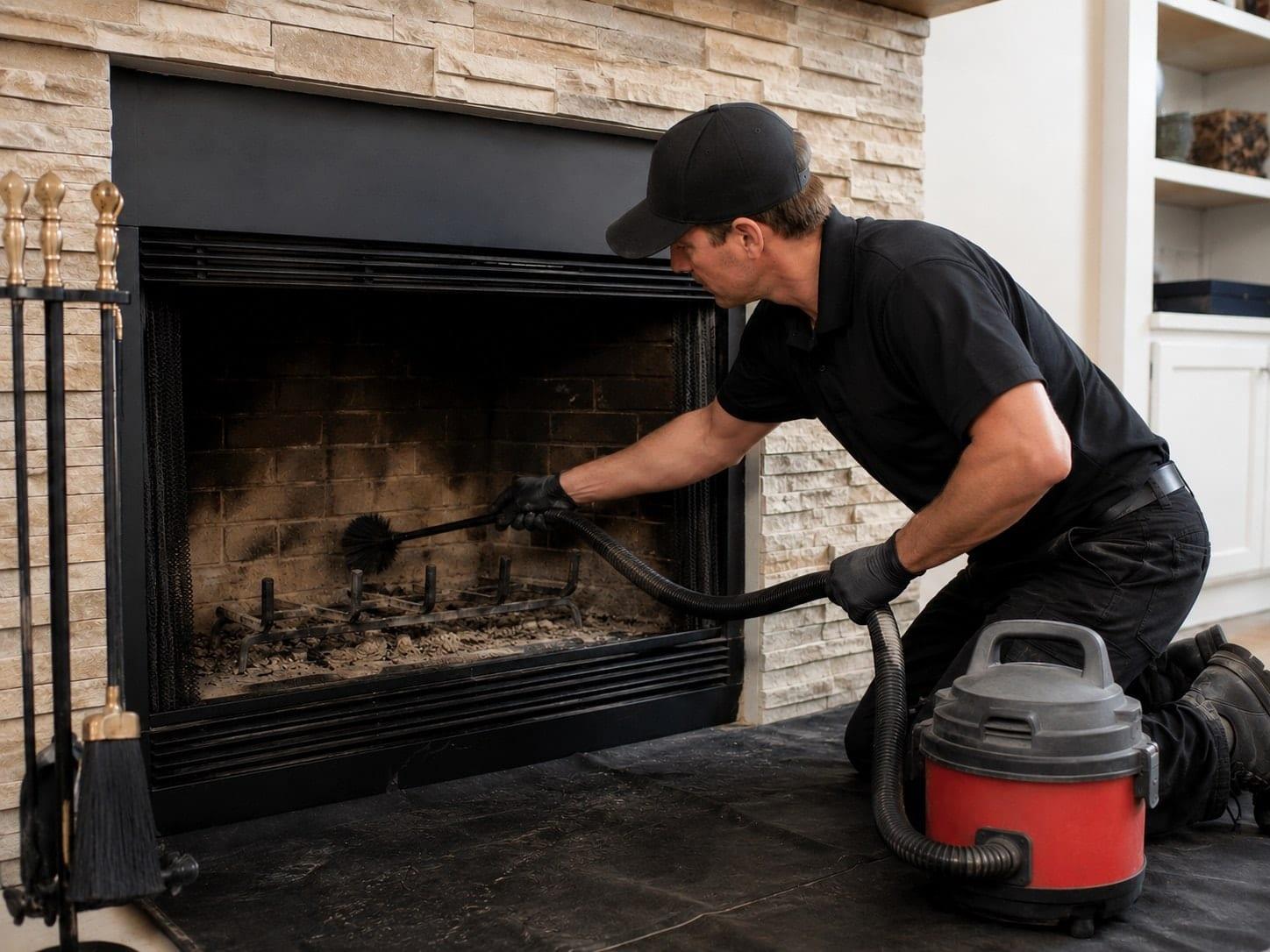
Creosote, debris, nests or animal remains are cleaned out. A full chimney sweep service clears the flue and smoke shelf, and creosote removal handles heavier deposits.
Treat lingering odor
If the smell has soaked into the masonry, chimney odor removal goes after what cleaning alone leaves behind.
Stop it from coming back
Depending on the cause, this can mean chimney cap installation or replacement, an animal screen, chimney waterproofing, crown or flashing repair, or damper repair to seal the flue when the fireplace isn't in use.
When the smell comes from a damaged damper, a cracked firebox or a draft problem, fireplace repair addresses the part that is letting air and odor into the room. Gas fireplace and gas appliance work is offered too, so a gas unit with an odor can be serviced as well.
What not to do
- Don't light a hot fire to "burn off" the smell. With creosote in the flue, that raises the risk of a chimney fire.
- Don't spray air fresheners or cleaning chemicals up the flue. They cover the smell for a short time and can leave residue behind.
- Don't reach into the chimney or smoke shelf to pull out an animal or nest.
- Don't seal off the fireplace opening permanently without finding the cause first. Moisture and odor can keep building behind it.
- Don't ignore a gas smell, even a faint one.
Related fireplace problems
Moisture and incomplete burning in a gas unit can show up as cloudy glass as well as odor. If that sounds familiar, read what causes foggy fireplace glass. If you are thinking about replacing an older unit that keeps causing smells, our guide to electric vs gas fireplace explains how the two compare.