When you can't see the flames anymore
You light the fireplace and the glass shows a milky white haze, a gray smear or a dark film instead of a clear view of the flames. Sometimes it wipes off. Sometimes it comes back after a few fires, or it won't come off at all. Foggy fireplace glass is often just a cosmetic nuisance. The film can also point to how the fire is burning, so look at it closely before you reach for a rag.
Common signs of foggy fireplace glass
- A white or milky film on gas fireplace glass that builds up over weeks of use
- Fog or moisture beads that appear when the unit starts and fade as it warms
- A brown or black film on the glass of a wood stove or wood-burning insert
- Dark streaks that start at the edges or corners of the door
- A haze that stays after cleaning, or a rainbow-like sheen in the glass
- Soot on the glass along with a sooty odor, or with fireplace smoke in the house
What can cause the haze
The film is a clue, not a diagnosis. Any of the causes below can produce it, and an inspection confirms which one is behind it in your fireplace.
Possible causes and how each is checked
01Mineral film from gas combustion
- What you may notice
- A white or gray haze on the glass of a gas unit that builds up gradually
- How it’s confirmed
- The cooled glass is examined, and the burner and log setup are checked to rule out a combustion problem
02Startup condensation
- What you may notice
- Fog that appears at ignition and clears within minutes
- How it’s confirmed
- The unit is watched through a startup cycle; moisture that lingers prompts a look at the venting
03Soot from incomplete combustion in a gas unit
- What you may notice
- Black film on the glass, sooty logs, lazy yellow flames
- How it’s confirmed
- Log placement, burner ports, air settings and venting are checked
04Creosote and soot in a wood-burning unit
- What you may notice
- A brown or black film, often with damp wood, smoldering low fires or the air control turned far down
- How it’s confirmed
- Burning habits are discussed, and the air wash, draft and flue condition are checked
05A leaking door gasket or seal
- What you may notice
- Streaks that start at the edges of the glass or around the latch
- How it’s confirmed
- The gasket, door fit and latch are checked for gaps
06Etched, scratched or cracked glass
- What you may notice
- A haze that stays after a proper cleaning, a rainbow sheen, visible scratches or chips
- How it’s confirmed
- The glass is inspected up close after cleaning
How urgent is it?
A light white film on its own is usually cosmetic. If it's left for a long time, though, it can bake into the glass and etch it permanently, so it's easier to clean sooner than later. A dark film, or any film that comes with smoke or odor, deserves a closer look before you keep using the fireplace.
Stop using the fireplace if…
Stop using it and have it checked if the glass is cracked or chipped, if a gas fireplace suddenly starts coating its glass with black soot, or if you notice smoke or odor in the room. If you smell gas or a carbon monoxide alarm sounds, get everyone outside first. Then call your gas utility or emergency services from there.
Emergency calls are accepted. 24-hour service runs Sunday–Friday, and same-day visits are available where the schedule allows.
What normally fixes it
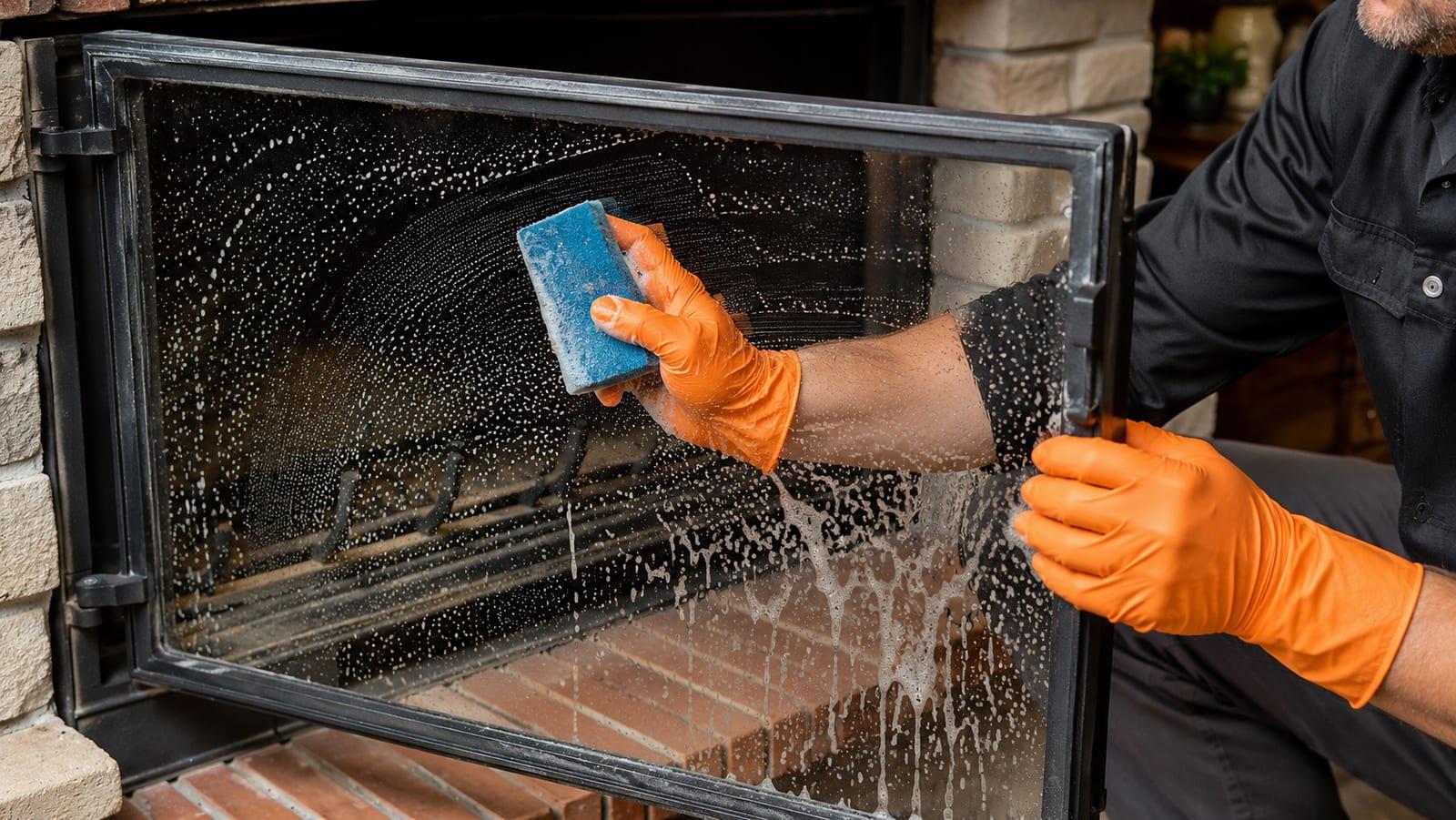
For most cloudy glass, the fix is a careful professional cleaning. The glass is cleaned once it's cool, using products suited to fireplace glass, and the door and gasket are looked over while the glass is accessible. Our fireplace glass cleaning service also checks why the haze formed, such as log placement, air settings, venting or a worn gasket, so the film doesn't come straight back.
Some glass can't be cleaned back to clear: the haze is etched in, the glass is cracked, or the door no longer seals. In those cases, fireplace glass replacement and door repair is the next step. If the soot points to a burner or venting problem, gas fireplace service or a fireplace inspection may be recommended as well.
What not to do
- Don't clean the glass while it's hot or warm. Let it cool completely first.
- Don't use steel wool, scouring pads, razor blades or gritty powders, which can scratch the glass.
- Don't assume a household window cleaner is suitable. Use a product made for fireplace glass and follow your owner's manual.
- Don't run a gas fireplace with its glass removed or cracked.
- Don't keep burning damp wood with the air turned down to stretch a fire, since that's a common way to blacken wood stove glass.
If you're thinking about a different unit
Different units treat their glass differently. Wood-burning units are prone to soot and creosote film. Gas units tend toward a white mineral haze. Electric units have no combustion at all. If a stubborn glass problem has you considering a change, read about fireplace insert vs freestanding wood stove and our guide to electric vs gas fireplace options.