On this page
What dryer vent cleaning involves
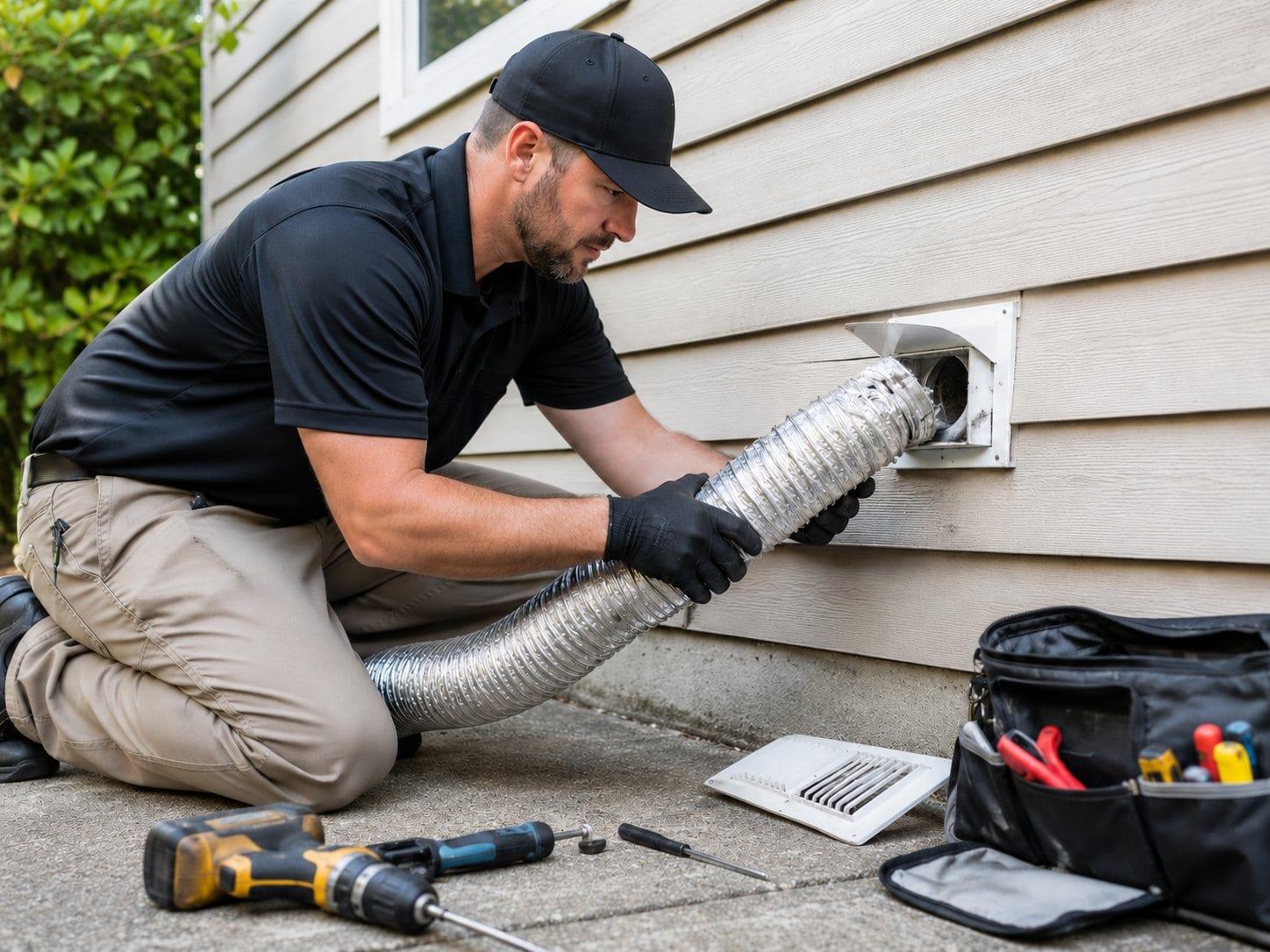
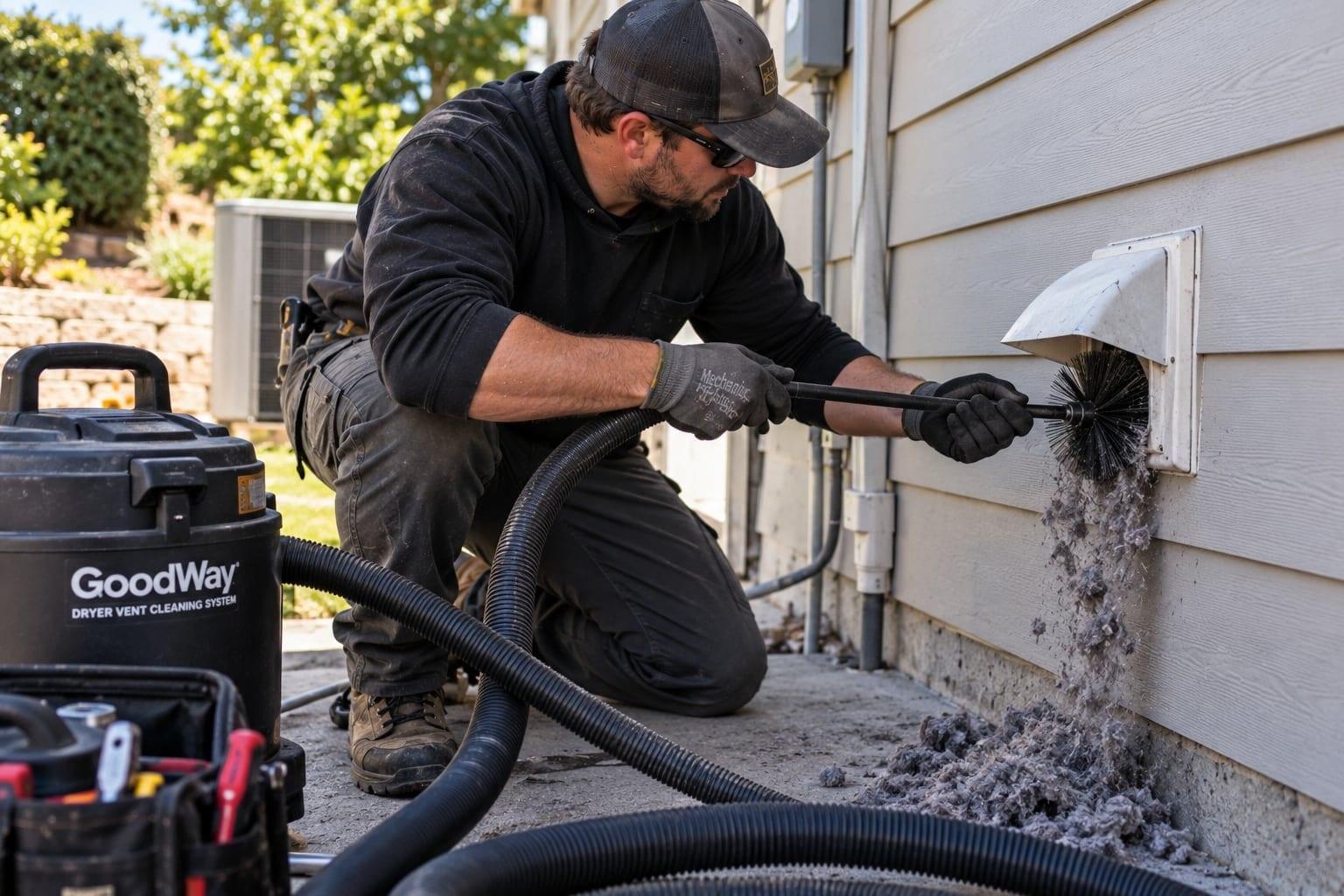
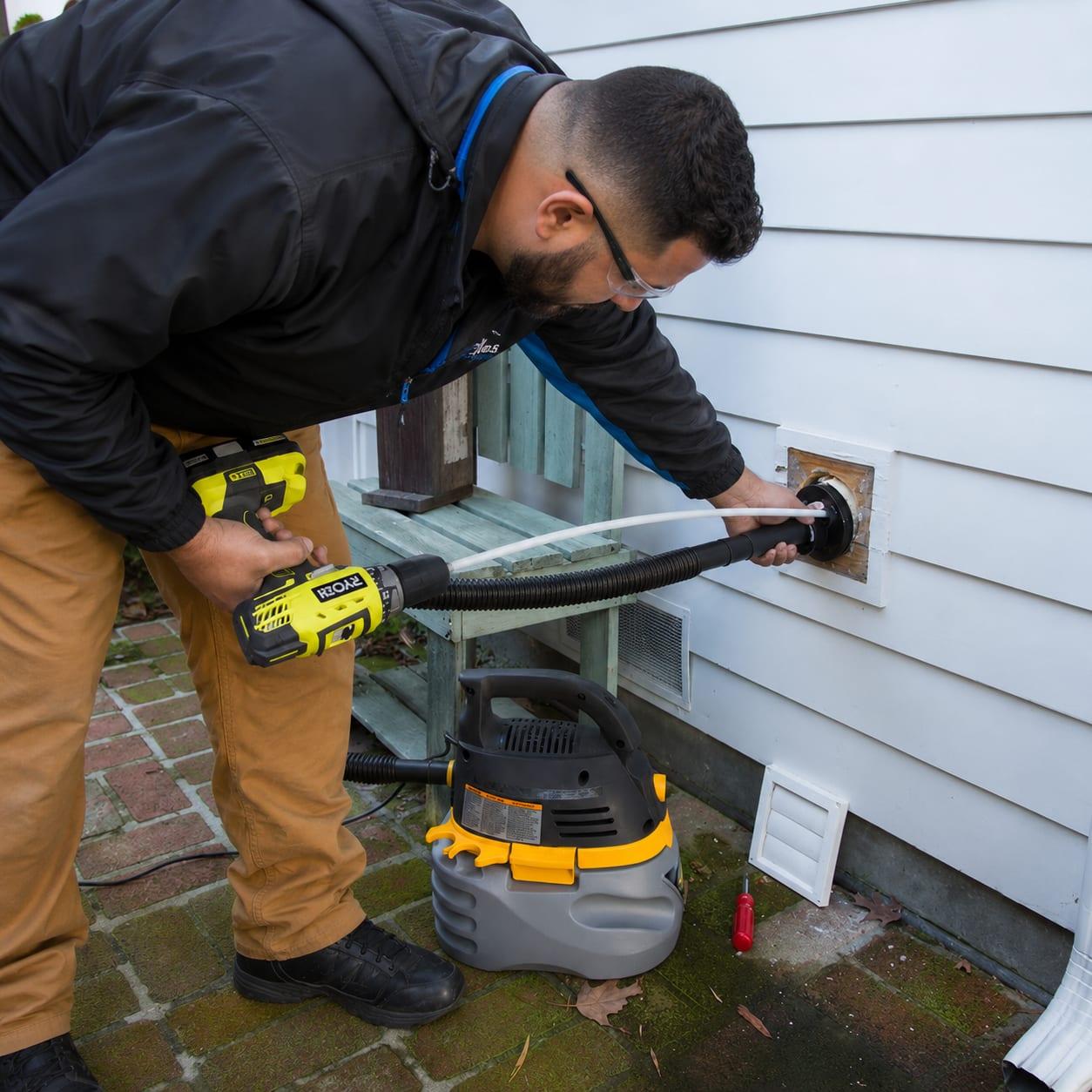
Every dryer load pushes warm, moist air and fine lint through a duct to the outside. The lint screen catches most of it, but not all. The rest coats the duct walls, collects at elbows and builds up at the exterior opening. Dryer vent cleaning removes that buildup along the entire run, from the connection behind the dryer to the hood or cap outside. Unplug the dryer first, and on a gas dryer turn off its gas valve.
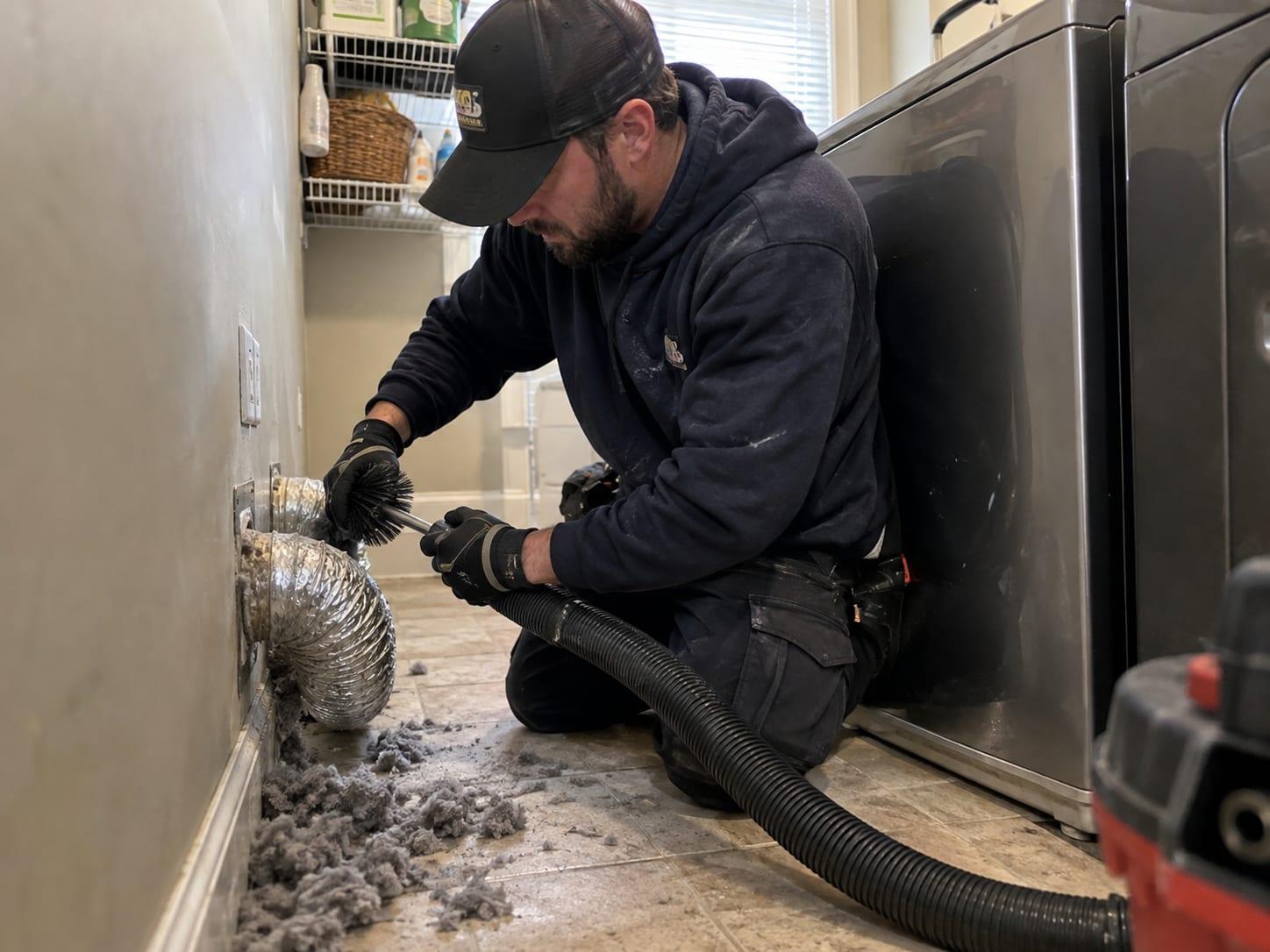
Cleaning the vent is a different job from emptying the lint trap. The trap only catches what reaches the screen. A vent cleaning reaches the parts of the line hidden inside walls, ceilings and attics.
Dryer vents and air ducts are separate systems
A dryer vent is its own exhaust line and isn't connected to your heating and cooling ductwork. Cleaning one has no effect on the other, so if the problem is slow drying or a hot laundry room, the dryer vent is where to look.
Signs your dryer vent needs cleaning
- Clothes need a second or third cycle to dry. This is the most common reason people look into a dryer not drying clothes.
- The dryer cabinet or the clothes feel unusually hot at the end of a cycle.
- The laundry room turns warm and humid while the dryer runs.
- You notice a burning or musty smell when the dryer is on.
- Very little air comes out of the outside hood, or its flap barely opens.
- Lint collects around the exterior hood or on the floor behind the dryer.
- The dryer shuts off partway through a cycle. Some models do this when they overheat.
Several of these signs can also mean the vent was put together badly, with a run that's too long, too many turns or crushed flexible duct. Our guide to the signs of an incorrect dryer vent installation explains what to look for.
Dryer vent debris clog removal
Most vents need routine lint removal. Some are fully clogged: lint packed solid at a bend, a bird or rodent nest inside the exterior hood, or a crushed section behind the dryer that traps everything passing through. Brushing and vacuuming clears normal buildup and many small clogs during a standard cleaning.
Sometimes the line is packed tight or blocked by something other than lint. In that case the work becomes dryer vent blockage removal, which focuses on locating the obstruction and getting it out without damaging the duct.
Roof dryer vent cleaning
Some homes vent the dryer up through the attic to a cap on the roof instead of out a side wall. These runs are usually longer and climb vertically, so the dryer has to push lint upward. Some of that lint falls back and settles at low points and at the base of the run.
Roof caps cause trouble of their own. Many have screens or tight louvers that catch lint and clog quickly, and a cap that sticks shut can let lint back up into the whole line. Roof dryer vent cleaning means working the line from both the laundry room and the roof, and clearing the cap itself. If the cap is damaged or poorly suited to dryer exhaust, replacing the dryer vent cover is the fix.
What the visit involves, step by step
A typical dryer vent cleaning visit
Talk through what you've noticed
We ask about symptoms, whether the dryer is gas or electric, and where the vent exits: wall, roof or somewhere else.
Move the dryer and disconnect it
The dryer comes out from the wall and the connector duct comes off. With a gas dryer, we move it carefully so the gas connection isn't strained.
Check the transition duct
The short connector behind the dryer is often flimsy foil or vinyl that has been crushed or kinked. We check whether it's still fit to reuse.
Clean the full run
Rotary brushes and vacuum work through the length of the duct, including bends, to pull out lint and debris.
Clear the exterior termination
We clean the wall hood or roof cap and check that its flap or damper opens freely.
Reconnect and test
With everything reconnected, we run the dryer and confirm that air is moving out at the exterior opening.
Tell you what we found
You hear about anything that needs attention beyond cleaning, such as damaged sections, a poor cap or a run that will clog again quickly.
If sections are damaged, separated or disconnected inside the wall, the right job is dryer vent repair. If you want the vent checked and its airflow measured before deciding what to do, for example when buying a home or chasing an unexplained symptom, start with a dryer vent inspection and airflow test. If the run is simply too long or has too many turns to stay clear, rerouting or relocating the dryer vent solves the underlying problem.
The parts of the vent we clean
| Part | What goes wrong | What cleaning does |
|---|---|---|
| Lint trap housing | Lint gets past the screen and builds up in the cavity below it | Clears the cavity the screen sits in |
| Transition duct | Crushed or kinked connector traps lint behind the dryer | Clears it and flags it if it should be replaced |
| Wall or ceiling duct | Lint coats the walls and packs into elbows | Brushes and vacuums the full length |
| Exterior wall hood | Flap sticks shut, lint or nests block the opening | Clears the hood and checks the flap |
| Roof cap | Screens and louvers clog with lint | Clears the cap from the roof side |
Safety and maintenance between cleanings
Lint is flammable, and a restricted vent makes the dryer run hotter and longer to do the same job. That combination is the reason to keep the line clear. Gas dryers also send combustion byproducts, including carbon monoxide, out through the same vent, so a blocked line affects the air in the house as well as the heat.
Habits that keep a dryer vent clear longer
- Clean the lint screen before or after every load.
- Wash the lint screen now and then. If water beads on it instead of passing through, dryer sheet residue is clogging the mesh.
- Leave room behind the dryer so the connector duct isn't crushed against the wall.
- Check the outside hood a few times a year. The flap should open while the dryer runs and close when it stops.
- Avoid running the dryer when no one is home or everyone is asleep.
- If you have a gas dryer, keep a working carbon monoxide alarm in the home.
If you smell burning
Stop the dryer and turn it off at the controls or unplug it if you can reach the plug safely. Don't restart it until the vent has been checked. If you see smoke or flames, leave the house and call the fire department. Emergency calls are accepted for vent problems that can't wait.
Booking dryer vent cleaning
Call or request an estimate, and tell us whether the dryer is gas or electric, where the vent exits and what you've noticed. That helps us arrive ready for the right kind of run, including roof terminations.
We work on all major brands, and gas appliance work is offered, so gas dryers are covered. Landlords and managers with more than one unit can book dryer vent cleaning for rentals and property managers, and commercial work is offered too. If a chimney sweep or fireplace check is also on your list, mention it when you get in touch. We handle chimney and fireplace work as well.
Related work covered on this page
- Dryer Vent Lint Removal
- Roof Dryer Vent Cleaning