On this page
What a dryer vent inspection covers
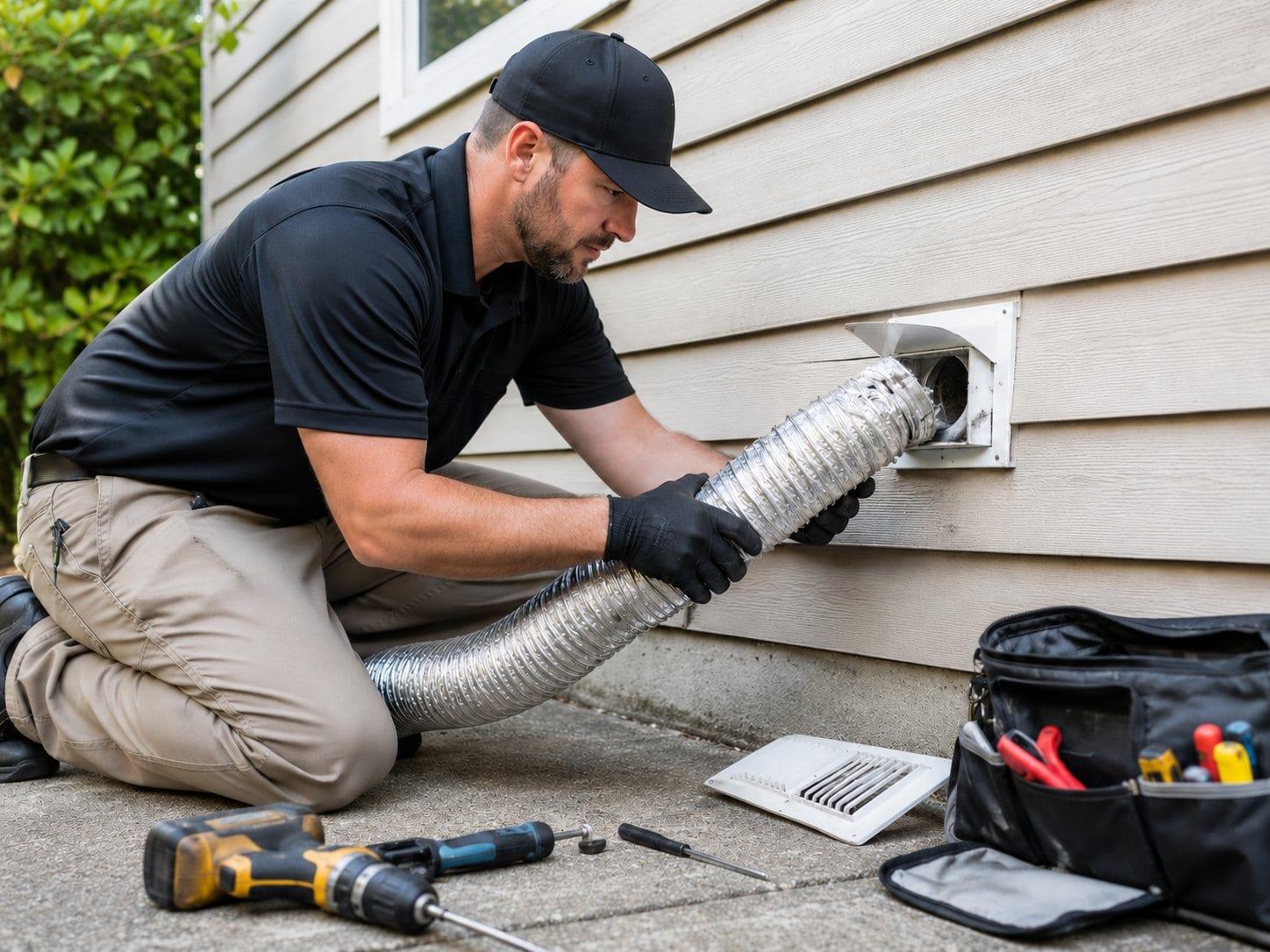
A dryer pushes hot, moist, lint-laden air through a duct to the outside. A dryer vent inspection checks that whole route: the connection at the back of the dryer, the transition hose, the hidden run through walls, floors or attic, and the cover where it exits. The airflow test is the part that turns a guess into an answer. It shows whether air leaves the exhaust with real force or only trickles out.
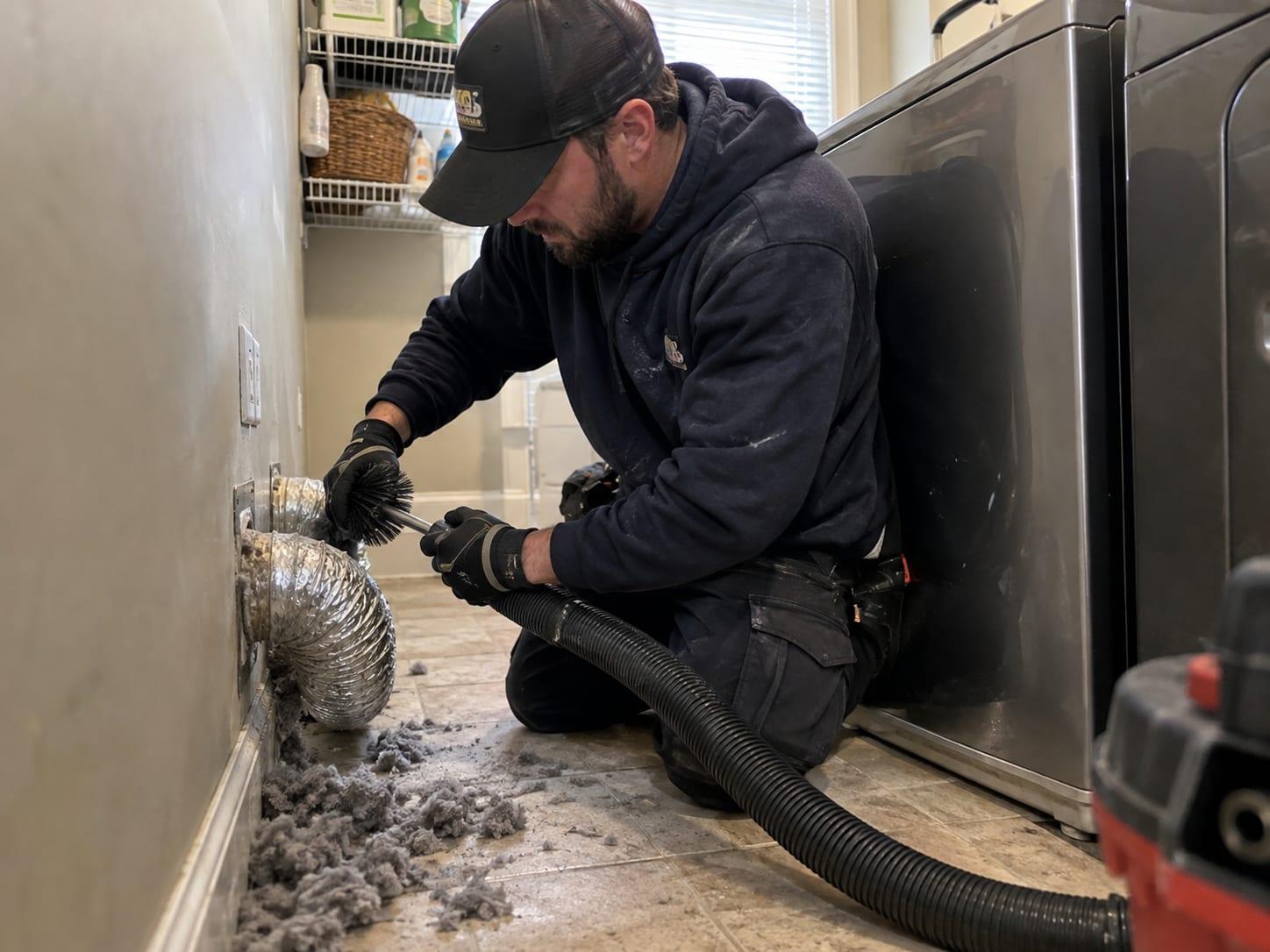
The goal is a clear diagnosis. You find out whether the vent is simply dirty, partly or fully blocked, crushed, disconnected, or built in a way that holds lint no matter how often it is cleaned.
Signs your dryer vent needs an inspection
Common reasons homeowners call
- Loads of towels or jeans need more than one cycle to dry
- The outside of the dryer or the clothes feel unusually hot at the end of a cycle
- A burning or scorched smell when the dryer runs
- Lint building up around the dryer door, behind the machine or at the outside cover
- The exterior flap barely opens, or doesn't move at all, while the dryer runs
- High humidity, condensation or a musty smell in the laundry room
- The dryer shuts off partway through a cycle
- You've moved into a home and don't know when the vent was last looked at
- A new dryer was installed, or the laundry area was remodeled
Some of these point to more than one cause. A dryer that runs long can have a clogged vent, a crushed hose behind the machine or a problem with the appliance itself. Testing the vent first settles which one you're dealing with.
What happens during the visit
How the inspection goes
Talk through what you've noticed
We ask about drying times, smells, the age of the setup and anything that changed recently. That points us to the likeliest trouble spots.
Check the dryer connection
We pull the dryer out and look at the transition duct for kinks, crushing, loose clamps and lint packed at the connection.
Follow the vent run
We trace the duct as far as it can be reached and look inside for lint buildup, nests, debris, sagging sections and disconnected joints.
Test the airflow
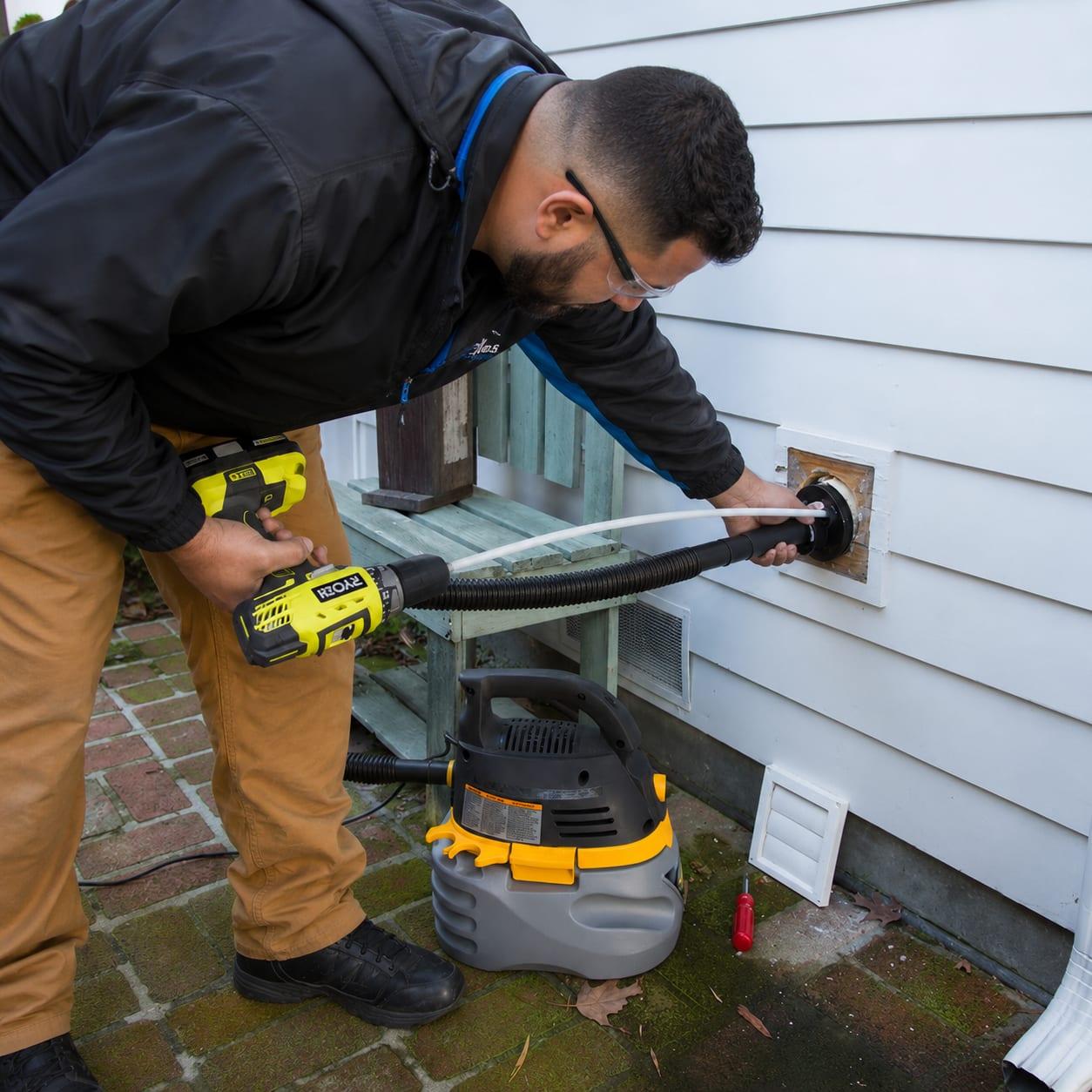
With the dryer running, we check how much air reaches the exterior cover. Weak flow tells us the restriction is real, and where we find it tells us where it sits.
Inspect the exit point
We check the wall or roof cover for a stuck flap, a lint-clogged screen or damage that lets pests or water in.
Explain what we found
You get a plain account of the condition of the vent and the work it needs, if any, so you can decide what to do next.
What the inspection can lead to
If the run is sound but coated with lint, a thorough dryer vent cleaning is usually the right next step. If something is lodged in the duct, such as a lint plug or a bird nest, clearing the obstruction with blockage removal comes first. When the duct is crushed, torn, disconnected or made of the wrong material, repairing or replacing the damaged vent solves the problem more lastingly than another cleaning would.
Duct materials we look for
- Rigid metal duct is smooth inside and holds the least lint. It is the type generally preferred for the hidden part of the run.
- Semi-rigid metal hose is common as the short connector behind the dryer. It needs to be checked for crushing when the machine is pushed back.
- Plastic or foil accordion hose traps lint in its ridges and can sag or tear. If we find it, we'll point it out.
- Joints held together with screws that poke into the duct catch lint, so we look at how each section is fastened.
Safety and upkeep between inspections
Lint is a fire hazard
Dryer lint is fine and flammable. When it collects in a vent that can't exhaust properly, the dryer runs hotter and longer. If you smell burning, stop the dryer, unplug it and keep it off until the vent has been checked.
- Clean the lint screen before every load, and wash it now and then if fabric softener leaves a film on it.
- Keep the area behind and around the dryer clear of stored items and loose lint.
- Leave enough space behind the dryer so the connector isn't flattened against the wall.
- Glance at the outside cover while the dryer runs. The flap should open and you should feel air.
- With a gas dryer, a blocked vent can push exhaust back toward the house, so a restricted vent should never be left alone. Gas fireplace and gas appliance work is offered.
Booking a dryer vent inspection
Call or request an estimate and tell us what you've noticed with the dryer. If you look after rentals or a building with several units, commercial and property-manager work is offered.