On this page
What dryer vent repair involves
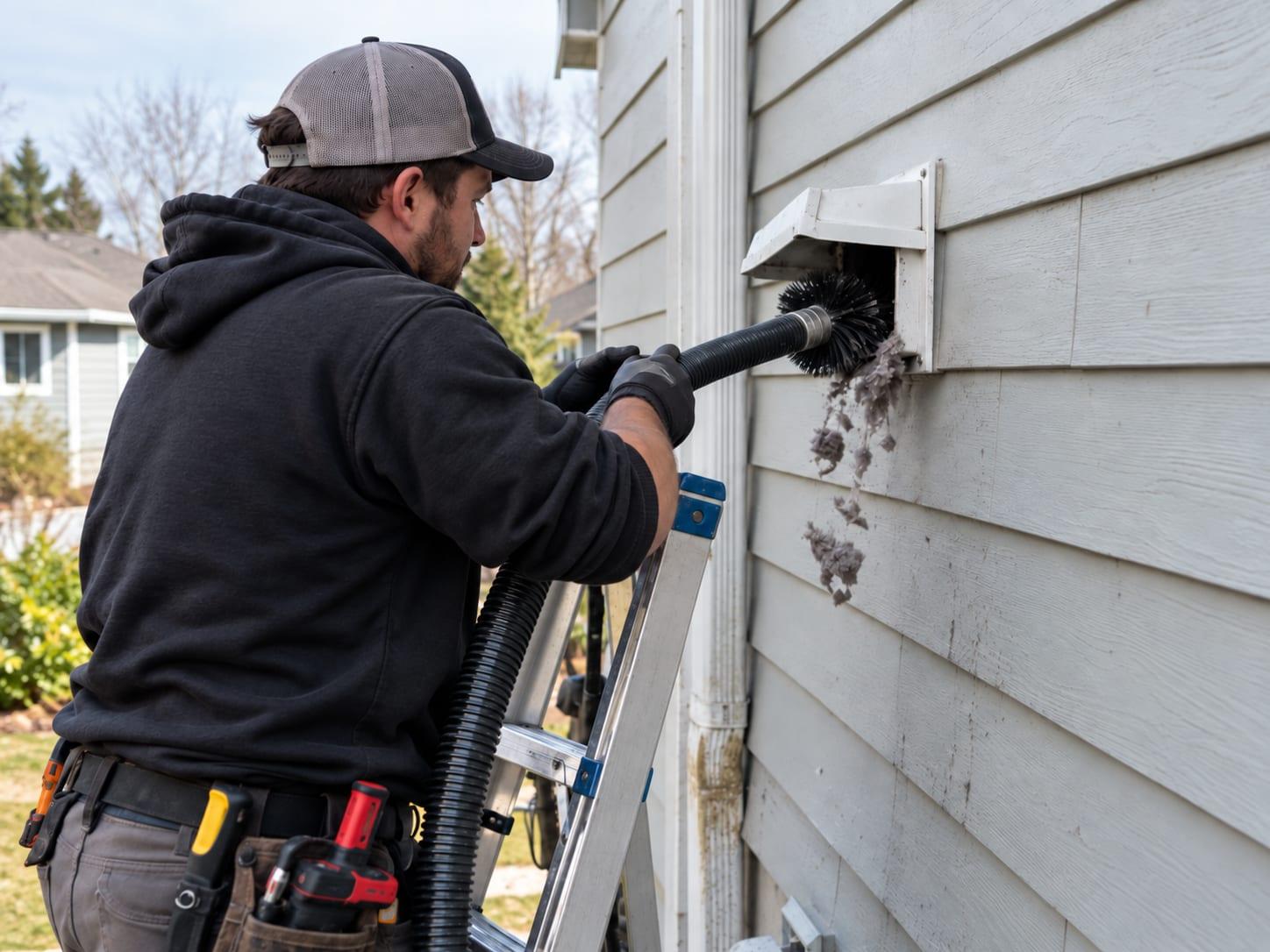
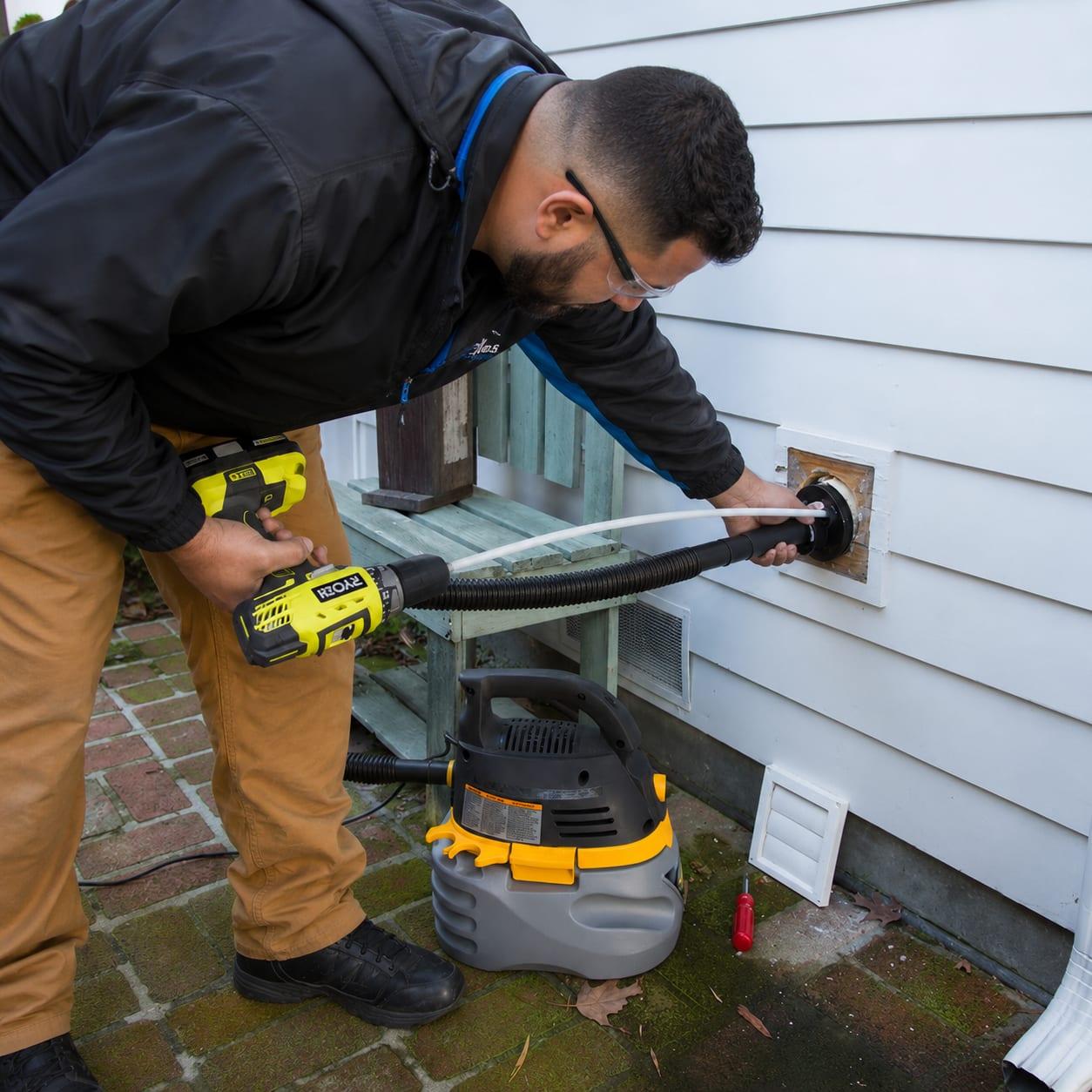
A dryer vent is the duct that carries hot, moist, lint-laden air from the back of the dryer to an outside termination. Dryer vent repair deals with the duct itself when it is damaged: sections that are crushed, kinked, torn or disconnected, joints that have separated, and duct material that isn't suited to the job. Dryer vent replacement goes further and swaps out the whole run when patching individual pieces wouldn't leave a sound system.
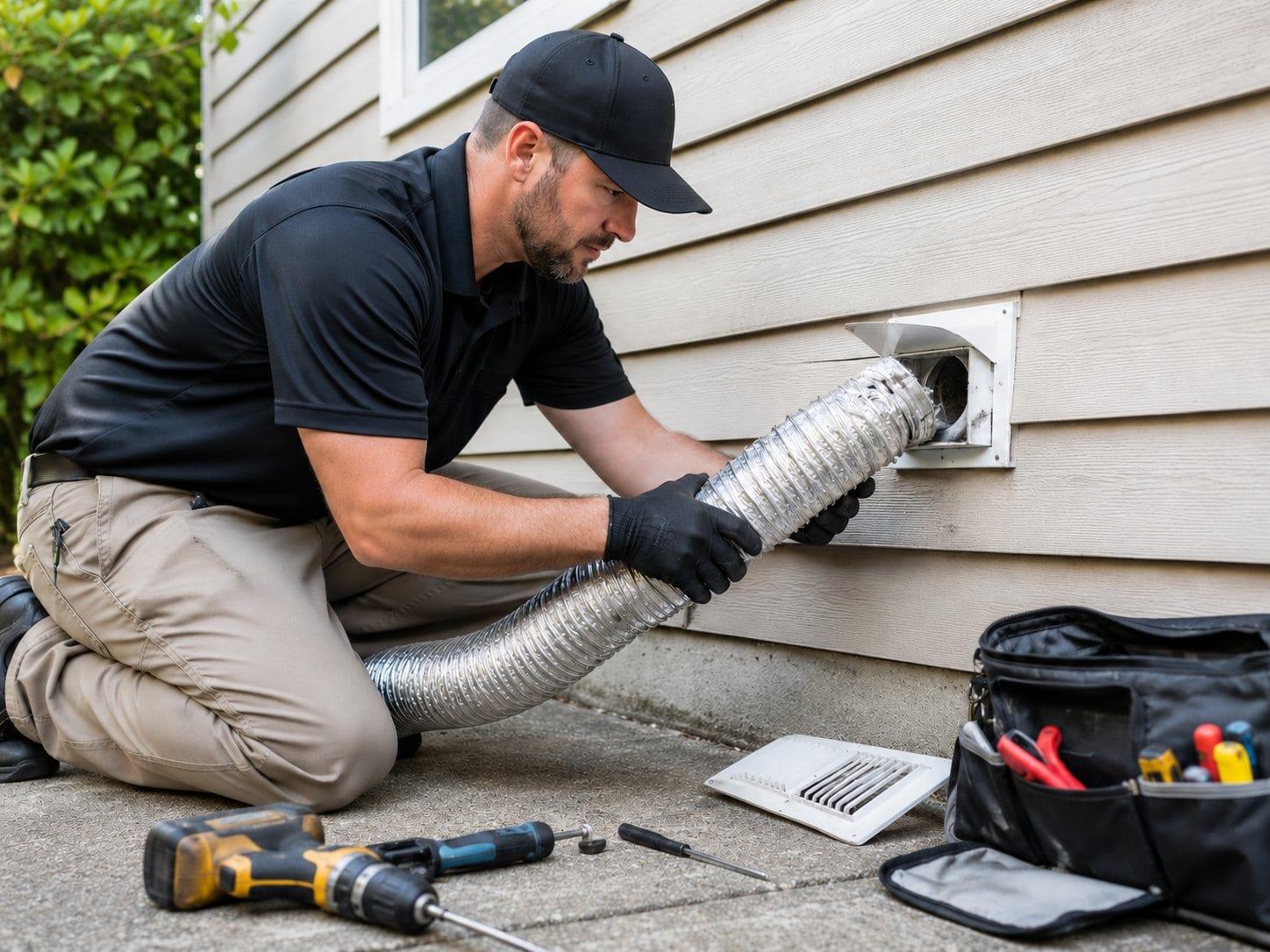
The goal is simple: a continuous, sealed duct with as few bends as practical, so air moves out freely and lint and moisture don't end up inside walls, floors or the laundry area.
Signs your dryer vent needs repair
Common reasons homeowners call
- Clothes take two or more cycles to dry, even on normal loads
- The laundry room gets unusually hot or humid while the dryer runs
- Lint is collecting behind or around the dryer instead of going outside
- The flexible hose behind the dryer is flattened, kinked or torn
- You can feel little or no airflow at the outside vent opening while the dryer runs
- A burning or musty smell when the dryer is in use
- The duct is white plastic or thin foil accordion hose
Not every slow-drying dryer has a damaged duct. If the run is intact but packed with lint, routine dryer vent cleaning is usually the right job; if something is lodged inside, such as a nest or a wad of lint at a bend, clearing a blocked dryer vent comes first. When you can't tell what's wrong, a dryer vent inspection with airflow testing narrows it down.
What happens during a repair visit
Step by step
Pull out and look
The dryer is moved away from the wall and disconnected so the transition duct and the start of the run can be checked.
Trace the run
The duct is followed as far as it can be reached to find crushed sections, separated joints, sagging runs or unsuitable material.
Clear what's inside
Lint and debris are removed from the sections being kept so a repaired duct isn't left partly blocked.
Repair or replace sections
Damaged pieces are replaced with metal duct, joints are reconnected and sealed with foil tape rather than screws that catch lint, and sagging runs are supported.
Check the outside end
The exterior termination is checked to make sure the flap opens and closes and nothing is blocking it.
Reconnect and test
The dryer is reconnected without kinking the transition duct, pushed back into place and run to confirm air is moving out at the exterior vent.
If the existing route is simply too long or has too many turns to work well, the fix may be moving the dryer vent to a better route rather than repairing it in place. A broken, stuck or screened-over exterior flap is handled through dryer vent cover replacement.
Duct materials and parts
| Feature | Typical use | Concerns |
|---|---|---|
| Rigid metal duct | Main runs through walls, floors and attics | Needs proper support and sealed joints |
| Semi-rigid metal duct | Short connection between dryer and wall | Can be crushed if the dryer is pushed back too far |
| Foil accordion hose | Often found as the dryer connection | Tears and crushes easily; ridges trap lint |
| Plastic or vinyl hose | Older installations | Not suited to dryer exhaust heat; most dryer manufacturers call for metal duct |
Rigid metal duct
- Typical use
- Main runs through walls, floors and attics
- Concerns
- Needs proper support and sealed joints
Semi-rigid metal duct
- Typical use
- Short connection between dryer and wall
- Concerns
- Can be crushed if the dryer is pushed back too far
Foil accordion hose
- Typical use
- Often found as the dryer connection
- Concerns
- Tears and crushes easily; ridges trap lint
Plastic or vinyl hose
- Typical use
- Older installations
- Concerns
- Not suited to dryer exhaust heat; most dryer manufacturers call for metal duct
Safety and upkeep after a repair
Lint is flammable
Lint that collects in a damaged or disconnected duct sits close to a hot appliance. If you smell burning while the dryer runs, stop it and leave it off until the vent is checked. With a gas dryer, a damaged duct can also let combustion exhaust into the house.
- Clean the lint screen before every load
- Leave room behind the dryer so the connecting duct isn't flattened against the wall
- Check the outside flap now and then to make sure it opens while the dryer runs
- Have the duct cleaned periodically so lint doesn't build up again in the repaired run
Booking dryer vent repair
Call or request an estimate and describe what you're noticing: slow drying, heat in the laundry room, a crushed hose or lint where it shouldn't be.
Commercial and property-manager work is offered, including dryer vent cleaning for rentals and property managers across multiple units.