The short answer: how a badly installed dryer vent shows itself
An incorrectly installed dryer vent can't move hot, damp, lint-filled air outside fast enough. The dryer works harder, loads take longer, and lint settles inside the duct instead of leaving the house. The most reliable signs are clothes that need more than one cycle, a dryer or laundry room that gets unusually hot, lint collecting behind the machine or around the outside hood, and an exterior flap that hardly opens while the dryer runs.
Quick signs you can check yourself
- Normal loads regularly need a second cycle to dry
- The top and sides of the dryer feel much hotter than usual
- The laundry room gets warm, humid or musty while the dryer runs
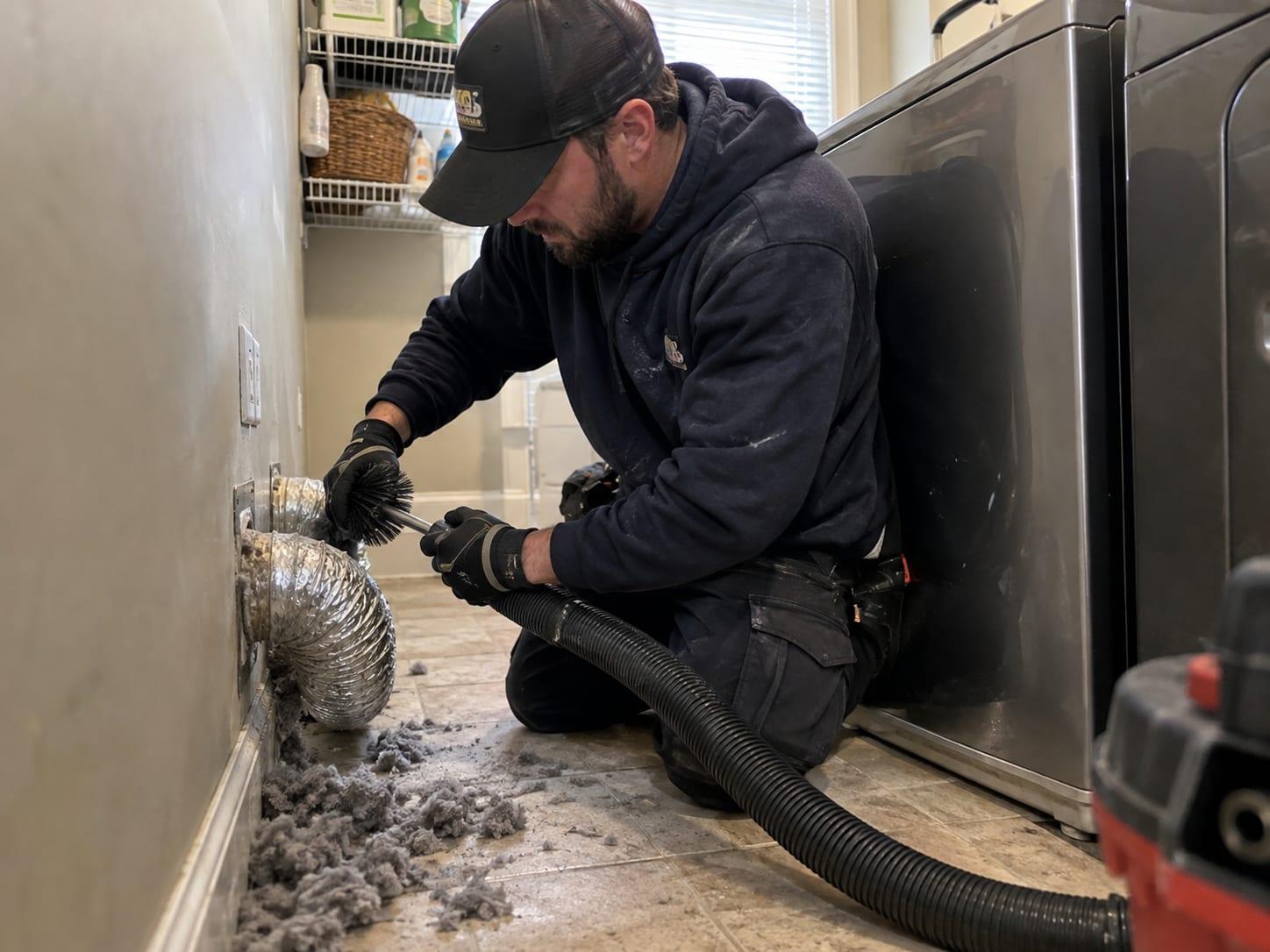
- Lint builds up on the floor behind the dryer or around the outside vent hood
- The flexible hose behind the dryer is kinked, flattened or pushed against the wall
- The duct is white vinyl or thin, crinkly foil
- The outside flap barely moves, or you can't find where the vent exits the house
- There's a hot or burning smell during a cycle
Signs inside the house
What you notice and what it usually points to
01Long drying times
- What you may notice
- Towels and jeans still damp after a full cycle; you've started running loads twice.
- How it’s confirmed
- Pull the dryer out and check whether the transition hose is crushed, then compare drying time with the hose disconnected for a short test while you stay with the machine. A big difference points to the vent, not the dryer.
02Heat and humidity in the laundry room
- What you may notice
- The room feels steamy, windows fog, or walls near the dryer feel damp.
- How it’s confirmed
- Look for a loose or separated connection behind the dryer and at any joints you can reach. Air leaking indoors often means the duct came apart or was never sealed.
03Lint where it shouldn't be
- What you may notice
- Lint on the floor behind the dryer, around the duct joints, or caked inside the hose.
- How it’s confirmed
- Inspect the joints. Lint escaping at a seam means a poor connection; lint packed inside means the run is too long, has too many bends, or has screws catching it.
04Burning smell or the dryer shutting off
- What you may notice
- A hot, scorched smell or the dryer stopping mid-cycle on its own.
- How it’s confirmed
- Stop using the dryer. These signs often mean airflow is badly restricted and lint is overheating, which needs a professional look before the next load.
Slow drying has other causes too, such as a worn heating element or a sensor problem, so it helps to rule out the vent first. Our guide to a dryer not drying clothes walks through how to tell a venting problem from a machine problem.
Installation mistakes behind the signs
Most of the symptoms above come from a short list of installation errors. Some are visible behind the dryer; others are hidden in a wall, ceiling or crawl space and only show up during an inspection.
| Mistake | Why it causes trouble | What usually fixes it |
|---|---|---|
| Vinyl or thin foil accordion duct used for the main run | It sags, crushes easily and traps lint in its ridges; it isn't made for runs inside walls or ceilings | Replacing the run with rigid or semi-rigid metal duct |
| Transition hose that is too long or crushed behind the dryer | Kinks and flattened sections choke airflow right at the machine | A shorter metal connector and enough space to push the dryer back without crushing it |
| Run that is too long or has too many elbows | Every foot and every bend adds resistance; lint drops out before it reaches the outside | Shortening or rerouting the run so it fits the dryer manufacturer's length limits |
| Duct joints fastened with screws that poke inside | Screw tips catch lint and start clogs | Joints fastened with foil tape or clamps instead |
| Sagging or low spots in the run | Lint and condensation collect in the dip | Supporting the duct so it runs with a steady slope and no dips |
| Vent ending in the attic, crawl space, garage or under the house | Hot, moist, lint-laden air is dumped inside the building | Extending the vent so it exits fully outdoors through a proper hood |
| Exterior hood with a mesh screen or a stuck flap | The screen clogs with lint; a stuck flap blocks airflow or lets pests in | Replacing the hood with a dryer exhaust hood that opens freely |
Signs outside at the vent hood
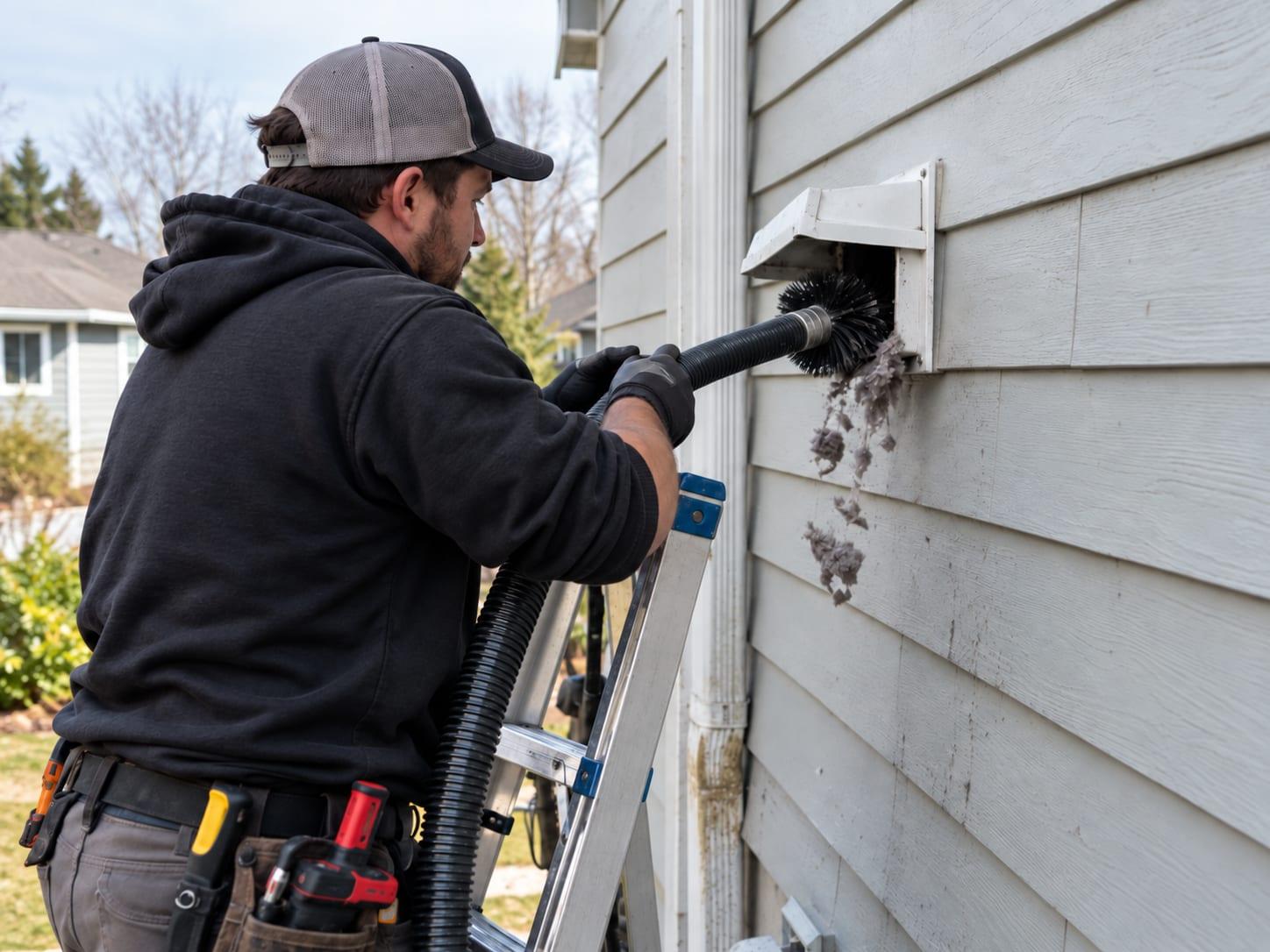
With the dryer running on heat, go outside and find the vent hood. The flap or louvers should open and you should feel a strong, warm flow of air. Weak airflow, lint packed around the opening, or a flap that stays shut points to a restriction somewhere in the run. A hood that is cracked, missing its flap or fitted with a screen is an installation problem in itself.
A damaged or poorly chosen hood is also how animals get in. Chirping, scratching or nesting material at the opening usually means the termination needs attention, and our guide to birds in dryer vent covers what to do and why the nest has to come out completely.
Don't fix it with a screen
It's tempting to cover a dryer vent opening with wire mesh to keep birds out, but mesh collects lint and can block the vent within weeks. The safer answer is a hood designed for dryer exhaust.
Is it a bad installation or just a dirty vent?
The symptoms overlap, so the difference matters for what you do next. A clogged vent on a sound installation is cleaned and goes back to working. A badly installed vent clogs again quickly after cleaning because the cause is still there.
| Feature | Clogged but properly installed | Installed incorrectly |
|---|---|---|
| Drying problems | Came on gradually over months or years | Started soon after a move, remodel or new dryer |
| After cleaning | Drying times return to normal and stay that way | Improvement is short-lived; lint returns fast |
| What you see | Lint in an otherwise intact metal duct | Vinyl or foil duct, crushed hose, sags, loose joints or a vent ending indoors |
| Usual fix | Cleaning and lint removal | Repair, replacement or rerouting of the duct |
Drying problems
- Clogged but properly installed
- Came on gradually over months or years
- Installed incorrectly
- Started soon after a move, remodel or new dryer
After cleaning
- Clogged but properly installed
- Drying times return to normal and stay that way
- Installed incorrectly
- Improvement is short-lived; lint returns fast
What you see
- Clogged but properly installed
- Lint in an otherwise intact metal duct
- Installed incorrectly
- Vinyl or foil duct, crushed hose, sags, loose joints or a vent ending indoors
Usual fix
- Clogged but properly installed
- Cleaning and lint removal
- Installed incorrectly
- Repair, replacement or rerouting of the duct
If the run is sound but packed with lint, a full dryer vent cleaning is usually enough. If a nest, a crushed section or a heavy lint plug is stopping airflow, the job starts with clearing the blockage from the duct.
What helps you decide what to do next
A sensible order of checks
Clean the lint screen and check the hose
Rule out the easy things first: a clogged lint filter or a flattened hose behind the dryer.
Check airflow outside
Run the dryer and feel the hood. Skip this if the dryer smells of burning or gets very hot — turn it off instead. Strong, warm airflow is a good sign; weak or no airflow means a restriction.
Look at the duct material and route
Note whether it's metal, vinyl or foil, how far it runs and how many turns it makes, and whether it actually exits outdoors.
Think about the history
Problems that began after a move, renovation or new dryer point to installation. Slow buildup over time points to lint.
Stop if you smell burning
A scorched smell or a dryer that shuts itself off is a reason to stop using it and get the vent inspected before the next load.
When the signs point to the installation itself, the lasting fix is correcting the duct: replacing the wrong material, shortening or rerouting the run, sealing the joints and fitting a proper exterior hood. That's what dryer vent repair and replacement involves.
If you'd like a professional look, we handle dryer vent inspection, cleaning, blockage removal, repair and rerouting, and emergency calls are accepted.