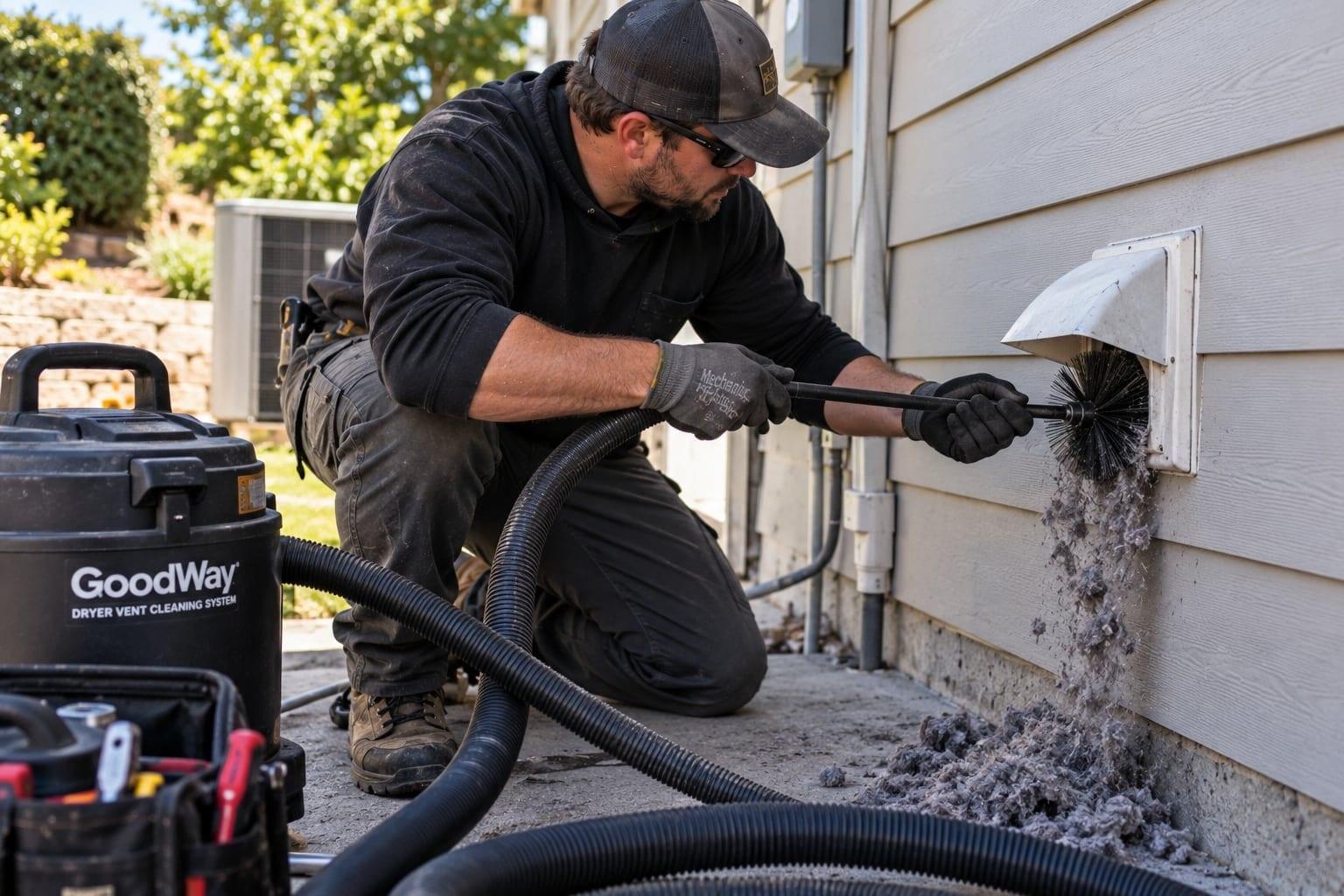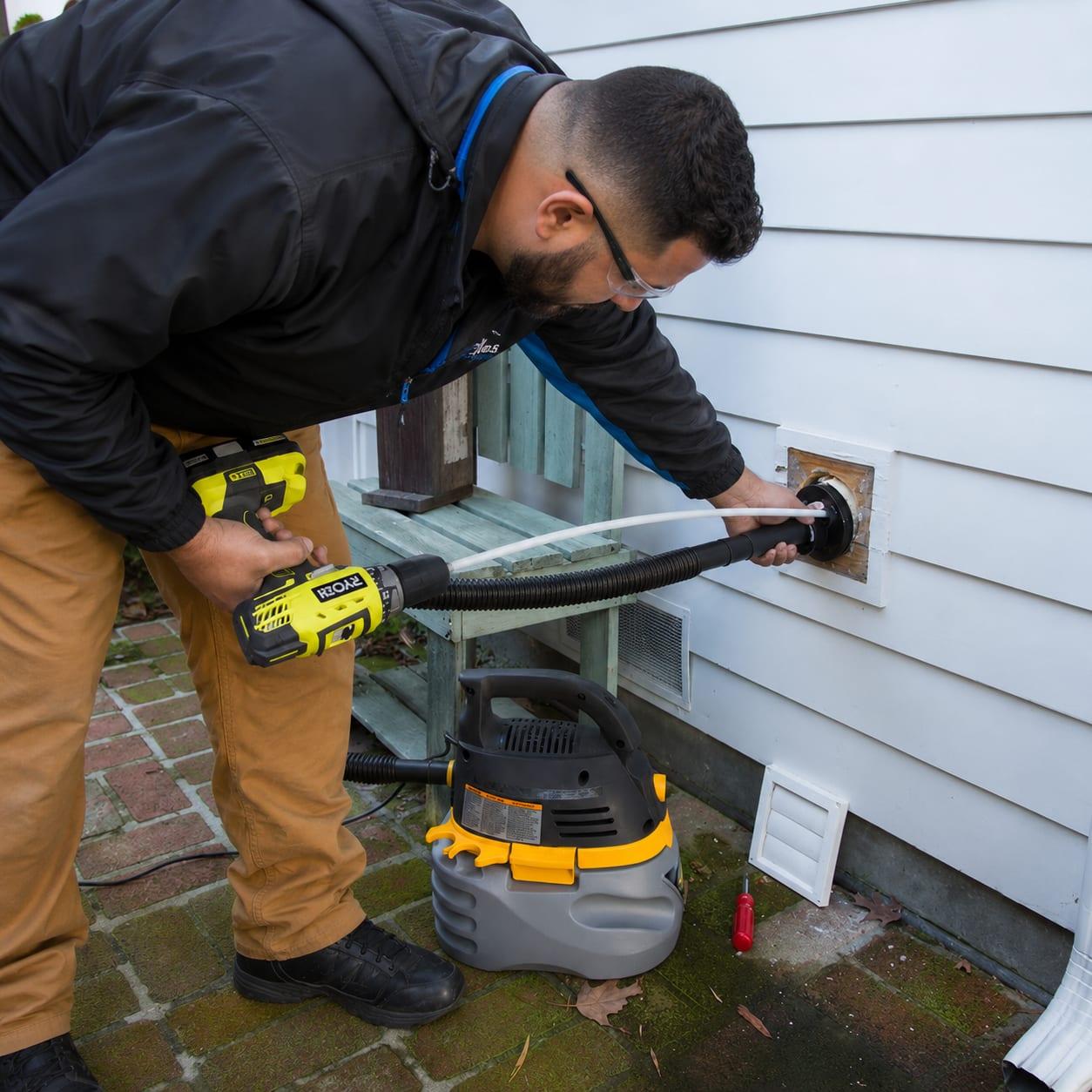
A dryer works by pushing hot, moist air out of the drum and through a duct to the outside. When that air can't leave freely, the moisture stays in the drum with your clothes. The dryer keeps heating, the cycle ends, and the load is still damp. Many people blame the dryer first, but a partly blocked vent produces exactly this symptom, and it also lets heat and lint build up where they shouldn't.
Common signs of a dryer that isn't drying properly
Signs worth noticing
- Normal loads need two or more cycles to dry
- The dryer's top or sides feel hotter than usual
- Clothes come out very hot but still damp
- The laundry room feels warm, humid or stuffy while the dryer runs
- A burning or scorched smell during a cycle
- Lint collecting around the dryer door, behind the machine or around the outside vent hood
- The outside vent flap barely moves, or doesn't open at all, when the dryer is running
Vent or appliance? Telling the two apart
Not every slow dryer has a vent problem, and vent cleaning doesn't fix every slow dryer. The pattern of the symptoms gives a useful first clue, and an airflow test at the vent settles the question.
| Feature | Usually the vent | Usually the dryer or its installation |
|---|---|---|
| Heat | The dryer heats, sometimes more than it should | No heat at all, or the drum stays cool |
| When it started | Drying got slower gradually over months | Drying has been slow since the dryer was installed |
| Airflow at the outside hood | Weak or barely noticeable | Strong, yet clothes still don't dry |
| What helps | Cleaning or clearing the vent run | Attention to the appliance itself, or correcting how the vent was put in |
Heat
- Usually the vent
- The dryer heats, sometimes more than it should
- Usually the dryer or its installation
- No heat at all, or the drum stays cool
When it started
- Usually the vent
- Drying got slower gradually over months
- Usually the dryer or its installation
- Drying has been slow since the dryer was installed
Airflow at the outside hood
- Usually the vent
- Weak or barely noticeable
- Usually the dryer or its installation
- Strong, yet clothes still don't dry
What helps
- Usually the vent
- Cleaning or clearing the vent run
- Usually the dryer or its installation
- Attention to the appliance itself, or correcting how the vent was put in
A problem that dates back to installation often comes down to the vent run: too long, too many bends, or the wrong duct material. Our guide to the signs of incorrect dryer vent installation explains what to look for. A dryer that produces no heat at all is a problem with the appliance, and cleaning the vent won't change that.
If the dryer is overheating, stop using it
A dryer, laundry room or load of clothes that gets unusually hot is a sign that heat isn't escaping. Turn the dryer off and don't run it again until the vent has been checked.
Possible causes of a dryer not drying clothes
These are the usual suspects on the vent side. Any one of them can cause slow drying, and more than one is often involved. Only an inspection of the full vent run confirms which it is.
Possible vent-related causes
01Lint buildup inside the duct
- What you may notice
- Drying slows gradually; weak airflow outside; lint around the hood
- How it’s confirmed
- Airflow testing at the outside termination and a look inside the duct run
02A crushed, kinked or disconnected hose
- What you may notice
- Sudden change after the dryer was moved; lint or humidity behind the machine
- How it’s confirmed
- Pulling the dryer out carefully and checking the transition duct and its connections
03A blocked or stuck exterior vent hood
- What you may notice
- Flap doesn't open while the dryer runs; lint packed at the opening
- How it’s confirmed
- Checking the hood and the last section of duct from outside
04A nest or debris in the vent
- What you may notice
- Chirping, scratching or nesting material at the outside opening
- How it’s confirmed
- Inspecting the termination and the duct beyond it
05A vent run that was installed poorly
- What you may notice
- Slow drying since day one; very long run; many turns; plastic or foil duct
- How it’s confirmed
- Tracing the full route and measuring airflow
How urgent is it?
A dryer that takes an extra cycle isn't an emergency on its own, but it shouldn't be ignored. Lint is highly flammable, and a restricted vent traps both lint and heat in the duct. The longer the dryer runs against a blockage, the more lint builds up and the harder the machine works.
Schedule a vent check soon if drying has slowed. Stop using the dryer right away if you notice a burning smell, the dryer or its surroundings feel much hotter than normal, or you see scorch marks. With a gas dryer, also stop using it if you smell gas, leave the house, and call the gas utility from outside. Emergency calls are accepted, and 24-hour service runs Sunday–Friday.
What normally fixes it
When the vent is the cause, the fix is to clear it and restore airflow. Most cases are handled with professional dryer vent cleaning, which removes lint from the whole run, not just the part you can reach. A clog that has packed solid, a stuck hood or a nest calls for dryer vent blockage removal.
How a vent visit usually goes
Check the airflow
Airflow at the outside termination is tested with the dryer running, which helps show whether the vent is the problem at all.
Inspect the run
The transition hose, the duct route and the exterior hood are checked for lint, damage, crushing and obstructions.
Clean or clear
Lint and debris are removed from the full length of the vent, including roof terminations where the vent exits through the roof.
Fix what's damaged
Crushed or unsuitable duct can be repaired or replaced, a vent can be rerouted when the run is poorly laid out, and a broken exterior cover can be replaced.
Re-test
Airflow is checked again so you know whether the vent is now moving air as it should.
If airflow is good after cleaning and the clothes still won't dry, the vent has been ruled out and the dryer itself needs looking at. Landlords and property managers with several units can arrange vent work across their properties as well.
What not to do
- Don't keep running extra cycles on a dryer that's overheating or smells of burning.
- Don't push a vent brush or rod hard into a duct you can't see; it can tear a flexible duct or pack a clog tighter.
- Don't swap in plastic or foil accordion hose; it crushes easily and traps lint.
- Don't disconnect or move the gas line on a gas dryer yourself.
- Don't let anyone reach into a vent where an animal may be nesting; read about what causes birds in a dryer vent before you do anything.