When a bird moves into the vent
A dryer vent runs from the back of the dryer to a hood on an outside wall or the roof. The opening is small, sheltered and warm, which makes it an attractive nesting spot. Once a bird gets past the flap, it can pack grass, twigs, feathers and lint into the duct. That material sits right where hot, damp air and lint are supposed to leave the house.
Most homeowners notice it by sound first, or when someone spots a bird flying in and out of the vent outside. Sometimes the first sign is simply that clothes take longer to dry.
Common signs of birds in a dryer vent
Signs to look and listen for
- Chirping, fluttering or scratching near the dryer, behind the laundry room wall or in the ceiling along the vent's path
- Birds flying into or out of the outside vent hood
- Twigs, grass, feathers or droppings at the vent opening or on the ground below it
- A vent flap that stays propped open or no longer closes
- Loads that need a second cycle, or a dryer that feels very hot on the outside
- Little or no air coming out of the outside hood while the dryer runs
- A musty or burning smell in the laundry room
Weak airflow and long drying times can also come from lint buildup or a crushed duct, so these signs overlap with a dryer not drying clothes for other reasons.
Possible reasons birds got in
An inspection of the hood and the duct confirms how a bird got in. These are the usual possibilities:
- A missing or broken vent cover. If the flap or louvers are cracked, bent or gone, the opening is unguarded.
- Flaps stuck open with lint. Lint can build up on the louvers so they no longer close between loads.
- A cover not suited to the location. Some hood styles are easier for birds to enter or perch in than others.
- A loose or disconnected duct. A gap where the duct meets the hood or the wall can give birds a way in.
- A vent that rarely runs. A dryer that sits unused for stretches gives a bird quiet time to build.
If the vent was routed or fitted poorly to begin with, that can make it easier for pests and lint to collect. Our guide to signs of incorrect dryer vent installation explains what to look for.
How urgent is it?
Treat it as urgent and stop using the dryer. A nest can block most or all of the exhaust. When hot air can't leave, heat and lint build up inside the duct and the dryer. Nesting material is dry and burns easily, which raises the fire risk.
Gas dryers: don't run it
A gas dryer sends combustion exhaust out through the same vent. A blocked vent can push that exhaust back into the home. If you have a gas dryer and smell gas, or anyone in the house feels dizzy, headachy or nauseated, leave the house and call your gas utility or emergency services from outside. If anyone has a headache, dizziness or nausea while an appliance runs, turn it off if you can, get everyone outside and call 911.
What not to do
- Don't run the dryer to try to blow the nest out. It rarely works and adds heat to a blocked duct.
- Don't reach into the vent by hand. Nests can hold droppings, mites and sharp material.
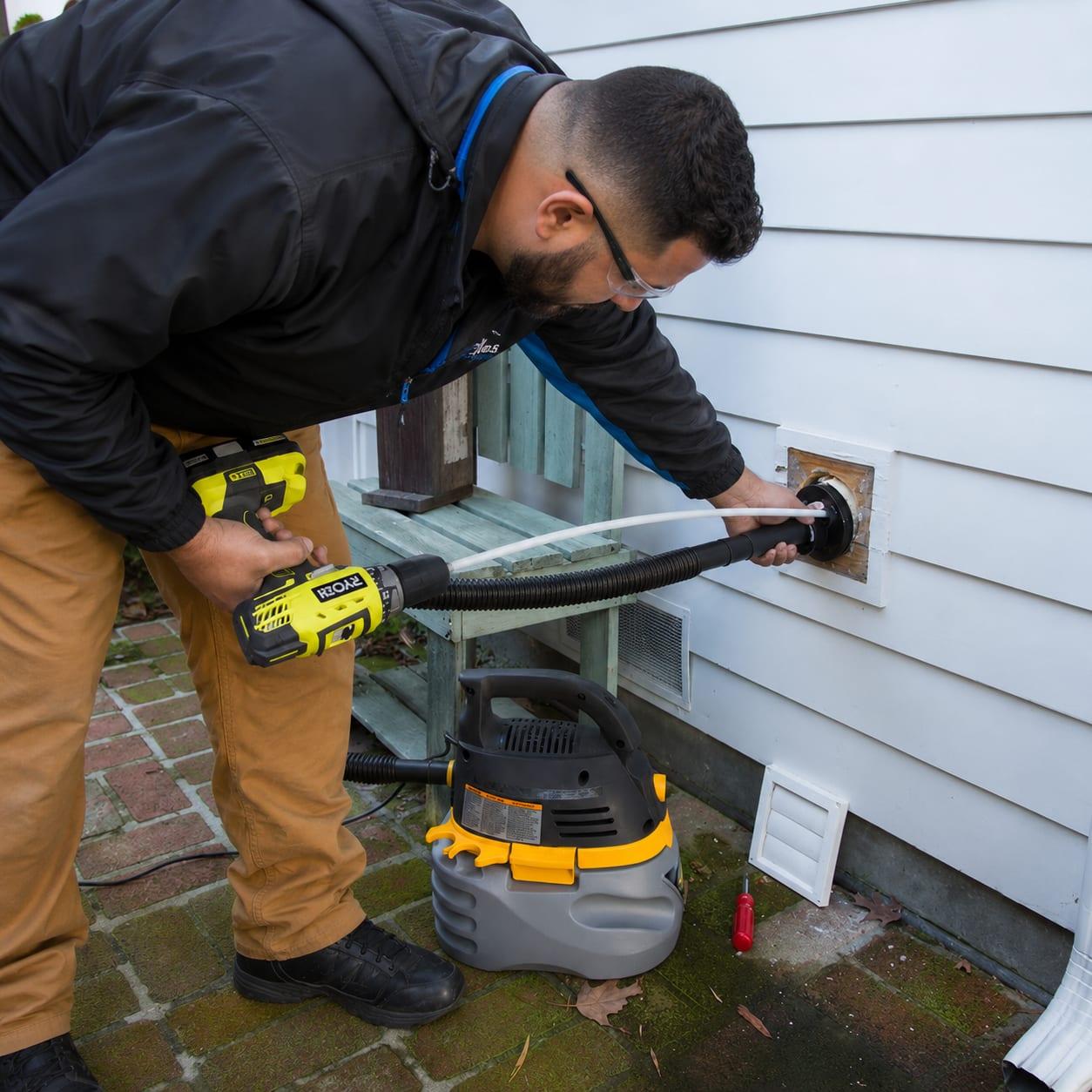
- Don't push a rod, brush or shop vacuum hose in blind. It can pack the nest deeper or pull the duct apart behind the wall.
- Don't seal the opening while a bird or nest is still inside.
- Don't put window screen or fine mesh over the hood. It catches lint and can block the vent on its own.
What fixes it
How the vent is cleared and closed off
Check the hood and the duct
The outside hood and the duct run are inspected to find the nest, any damage and how the bird got in.
Remove the nest and debris
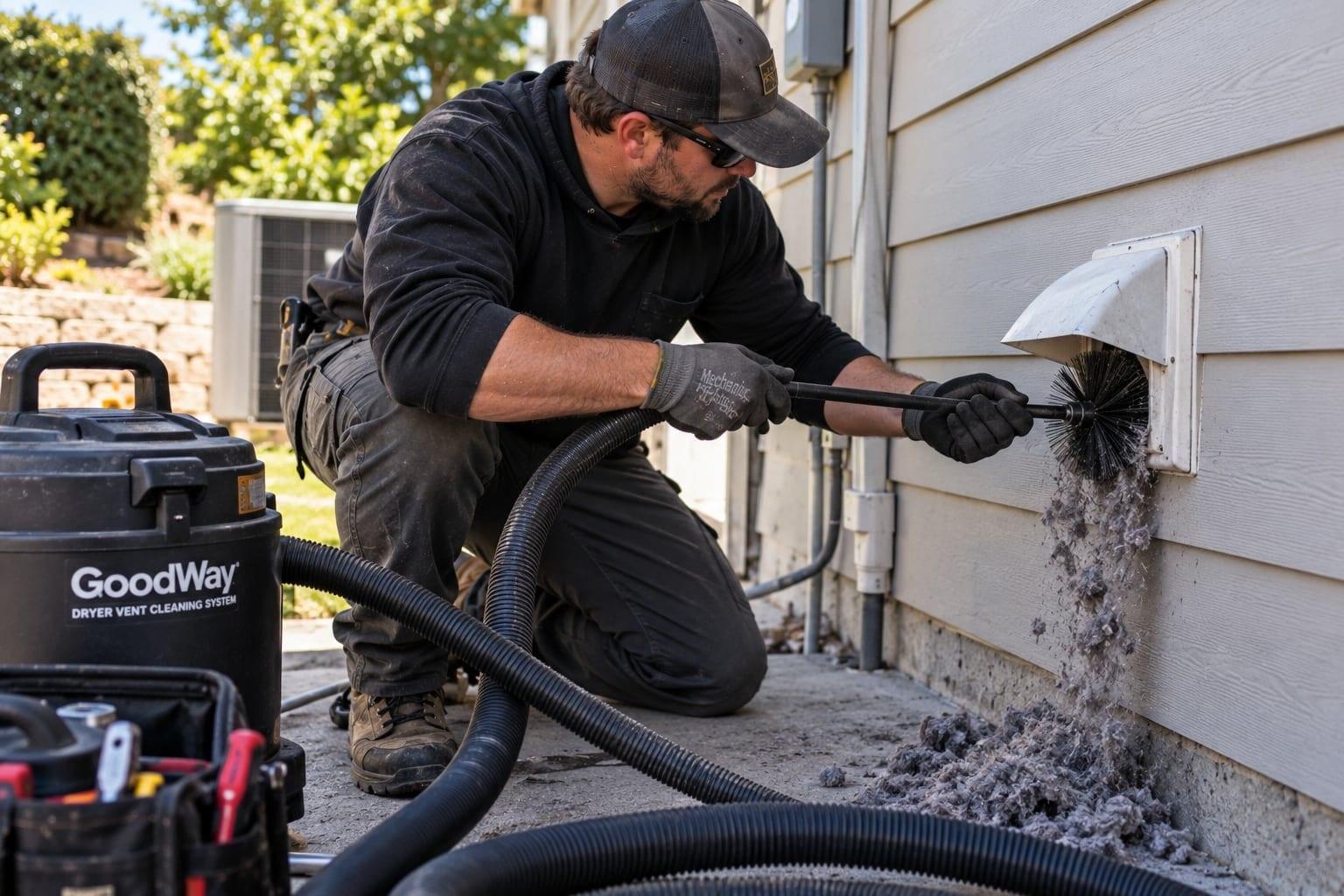
Nest material, feathers and packed lint are removed from the hood and along the duct, not just at the opening.
Clean the rest of the run
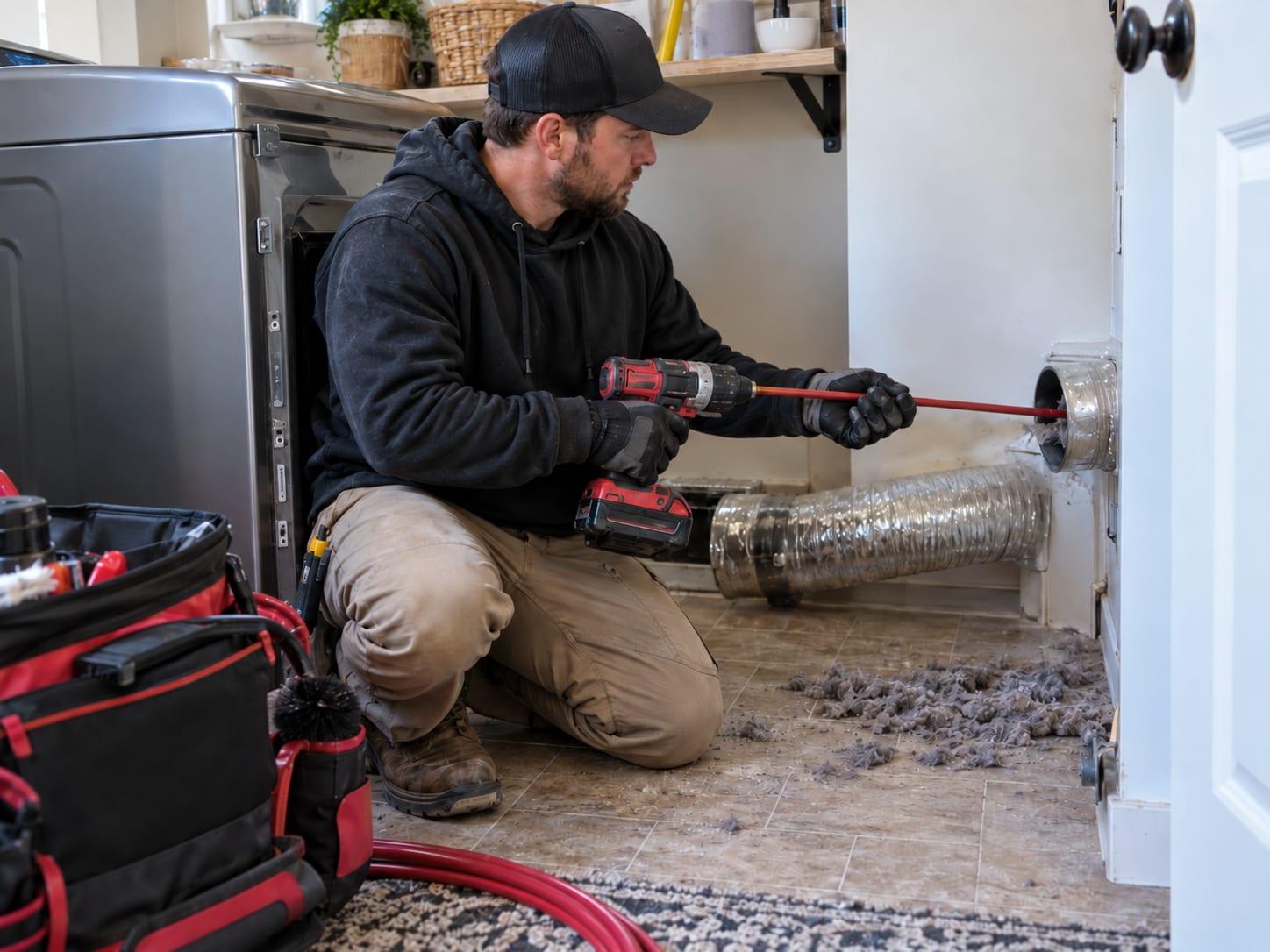
Lint left behind the nest is cleaned out so air can move freely from the dryer to the outside.
Check airflow
Airflow at the hood is checked with the dryer running to confirm the run is clear.
Close the entry point
A damaged or missing cover is replaced, and loose or damaged duct sections are repaired, so birds can't get back in.
Clearing the nest is the core of dryer vent blockage removal. If the vent was also packed with lint, a full dryer vent cleaning clears the whole run. When the cover is broken or missing, dryer vent cover replacement keeps the opening closed between loads. You can read how dryer vent blockage removal works before you request an estimate.
Property managers can get in touch about vents in rentals and multi-unit buildings.