On this page
What dryer vent cover replacement involves
The cover is the hood or louvered cap on the outside wall where your dryer exhaust leaves the house. It has one job: let hot, damp, lint-filled air out while keeping rain, wind, birds and rodents from getting in. Most covers use a single gravity flap or a set of thin louvers that lift when the dryer pushes air through and fall shut when it stops.
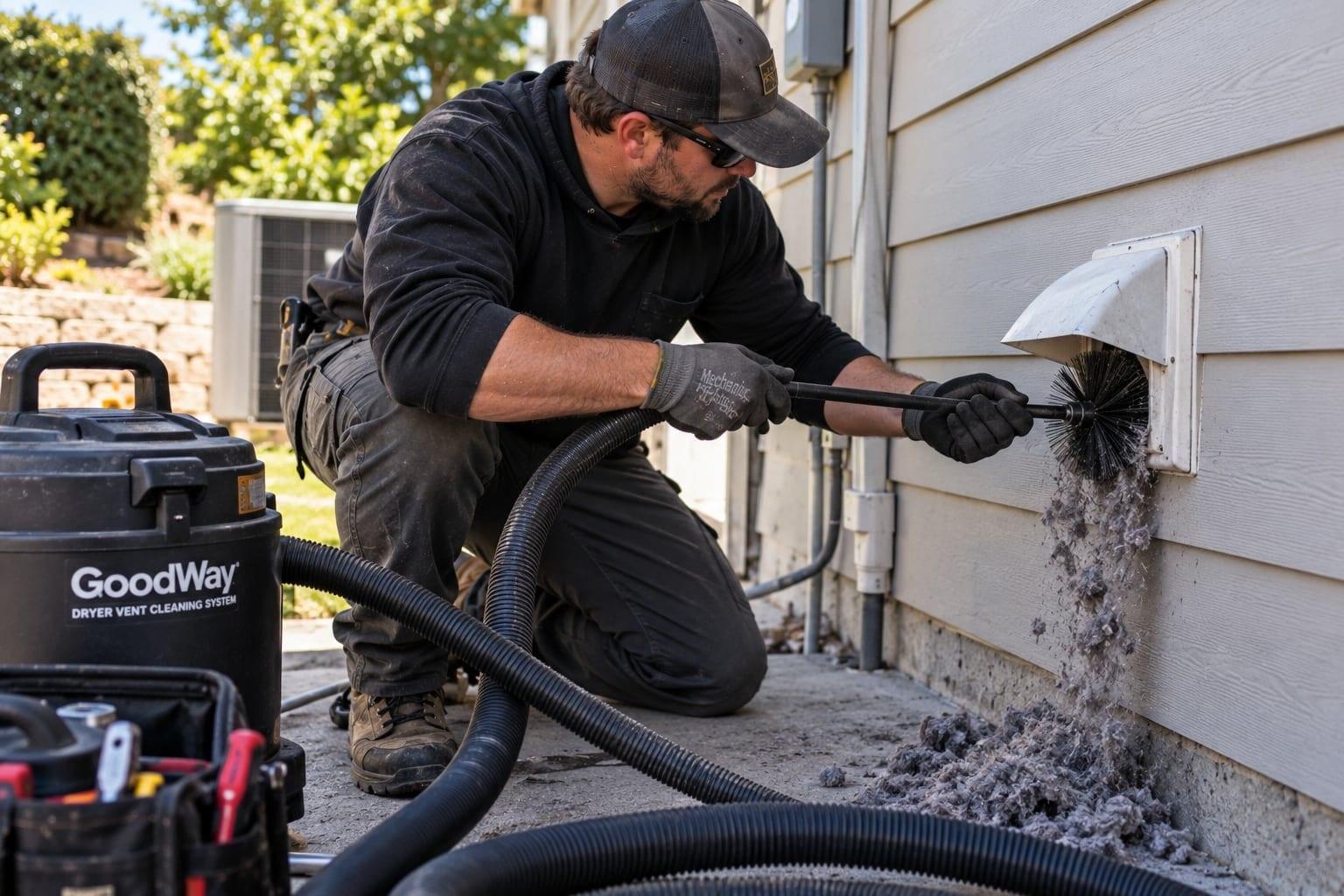
Dryer vent cover replacement means taking off the old cover, looking at the end of the duct it was attached to, and installing a new cover that fits the duct and seals properly to the wall. It is a small job, but the cover is the last thing the exhaust passes through, so a bad one affects the whole vent.
Signs your dryer vent cover needs replacing
Look at the outside cover with the dryer off, then again while it runs
- The flap or louvers stay open when the dryer is off, or don't lift when it's running
- Plastic louvers are cracked, warped, brittle or missing pieces
- The hood is loose, pulled away from the siding or hanging by one screw
- Lint is packed around the opening or stuck to the outside of the cover
- You see nesting material, feathers or droppings at the opening
- A screen or mesh guard on the cover is matted with lint
- The cover is gone entirely and the bare duct end is exposed
If clothes are also taking longer to dry, or the laundry room feels hot and humid, the problem may run deeper than the cover. Lint or a nest further inside the duct calls for clearing the blockage inside the vent, and we check for that while we're there.
What the visit involves, step by step
How we replace a dryer vent cover
Check the cover and the dryer side
We look at the outside cover, run the dryer to see how the flap or louvers respond, and note whether air is coming out with normal force.
Remove the old cover
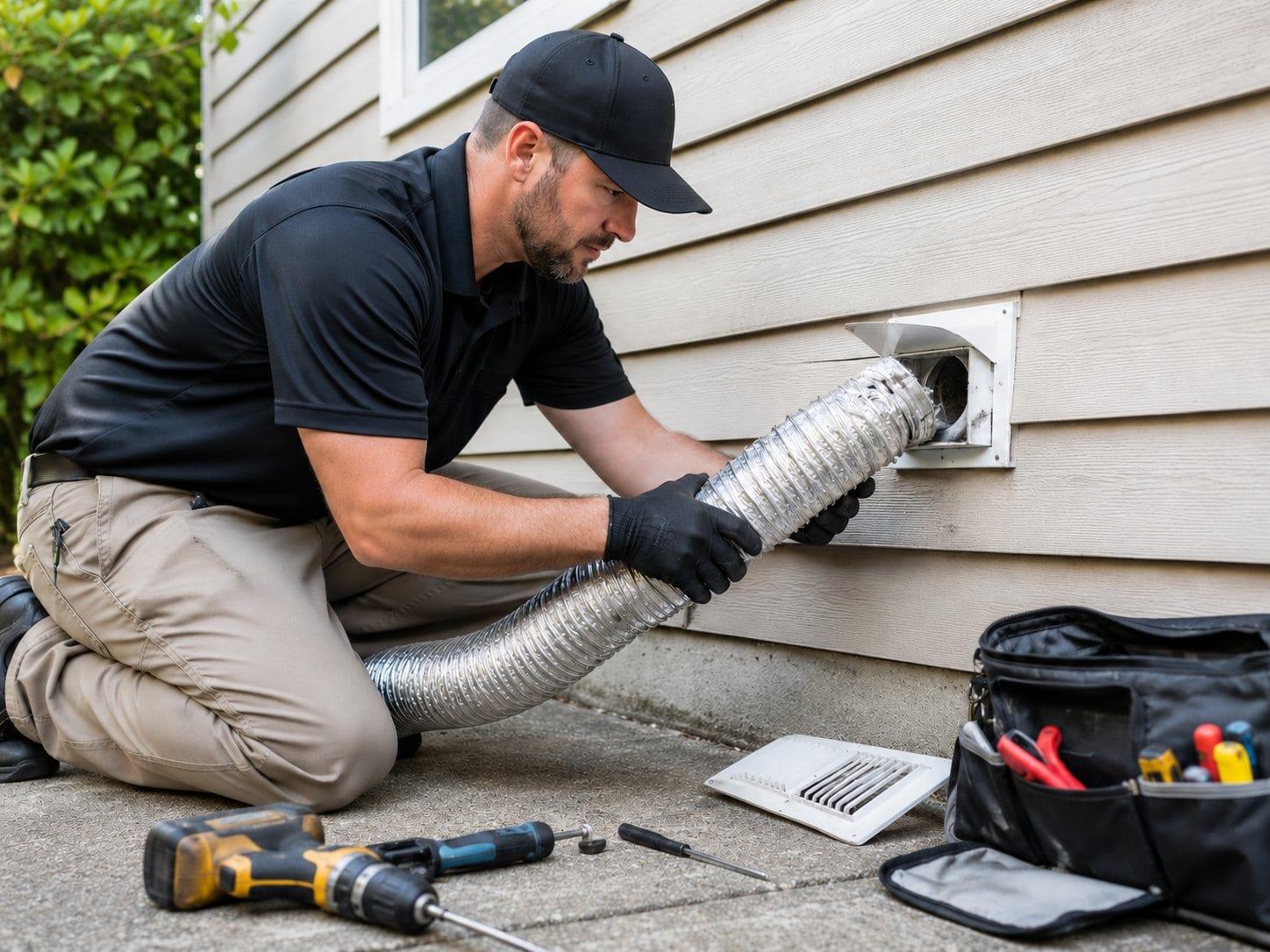
We take out the screws, cut any old caulk and pull the cover away, then clear lint or debris sitting at the duct opening.
Inspect the duct end
With the cover off, we can see whether the duct is still attached, crushed or disconnected right behind the wall. Damage beyond the opening is handled as dryer vent repair rather than covered over.
Fit and seal the new cover
The new cover is sized to the duct, connected so exhaust can't leak into the wall, fastened and sealed against the siding to keep water out.
Test it running
We run the dryer again and confirm the flap opens fully, air leaves freely, and the flap closes when the dryer shuts off.
Cover styles and materials
| Feature | Louvered | Single-flap hood |
|---|---|---|
| How it works | Several thin slats lift with airflow | One larger flap swings open under a hood |
| Typical weak point | Slats crack, warp or stick with lint | Hinge wears or flap gets stuck open |
| Common materials | Plastic or metal | Plastic or metal |
How it works
- Louvered
- Several thin slats lift with airflow
- Single-flap hood
- One larger flap swings open under a hood
Typical weak point
- Louvered
- Slats crack, warp or stick with lint
- Single-flap hood
- Hinge wears or flap gets stuck open
Common materials
- Louvered
- Plastic or metal
- Single-flap hood
- Plastic or metal
Some covers are built with a pest guard that blocks animals without the fine mesh that collects lint. Fine screens over a dryer outlet are generally a poor idea because lint builds up on them quickly and restricts airflow. We'll go over which style suits your wall and duct before installing.
Safety and upkeep
A bad cover can restrict the whole vent
When a flap sticks shut or a screen clogs, lint stays in the duct and the dryer runs hotter. Built-up lint is flammable, and on a gas dryer the same vent carries combustion exhaust, so it needs to flow freely.
- Glance at the outside cover every so often while the dryer runs; the flap should lift.
- Wipe away lint collecting around the opening.
- A flap that stays open is an open door for birds and rodents, so don't let it go.
- A new cover only helps if the duct behind it is clear, which is why it pairs well with regular cleaning the full dryer vent run.
Booking a dryer vent cover replacement
Get in touch to request a visit. Commercial and property-manager work is offered, so landlords with several units can book covers across a property. If the duct behind the cover turns out to be damaged or blocked, we can fix the vent duct itself as part of the same job.