The short answer
Both are closed wood-burning appliances with sealed doors and controlled air, and both heat far better than an open fireplace. The difference is where they live. An insert goes inside an existing fireplace opening, while a freestanding stove sits out in the room on a protective hearth pad. Choose an insert if you want to keep the look and footprint of your current fireplace. Choose a freestanding stove if heat output and placement matter more, or if you have no fireplace to work with.
How each one works
Fireplace insert
An insert is a steel or cast-iron firebox that slides into the masonry fireplace you already have. A surround panel covers the gap around the opening, and the insert typically vents through a stainless steel liner that runs up inside the existing chimney. Because most of the unit is tucked into the wall, it loses some of the radiant heat a stove would give off, so many inserts use a blower to push warm air into the room. Our fireplace insert installation work starts by confirming the fireplace and chimney can take one safely.
Freestanding wood stove
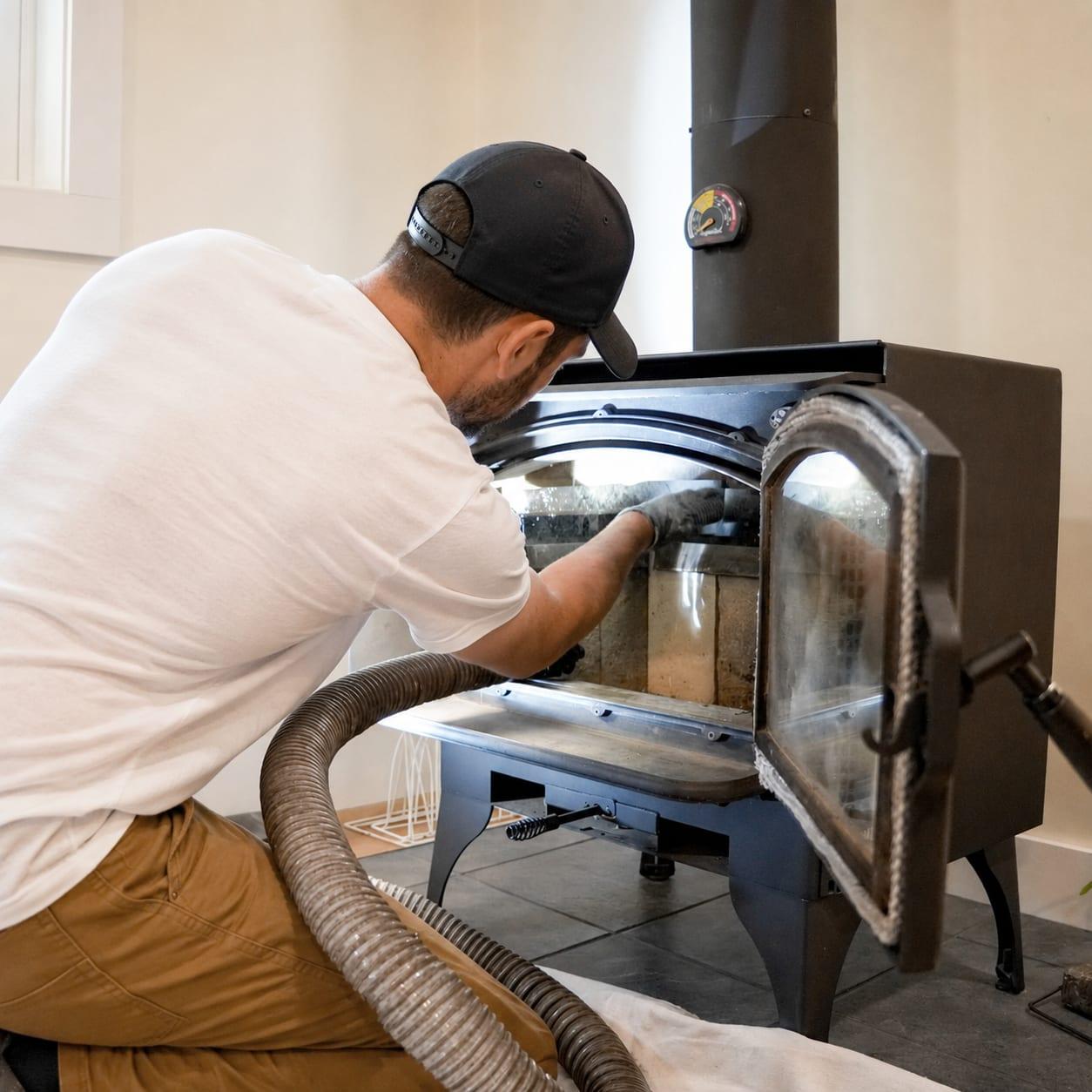
A freestanding stove stands on its own legs or pedestal, exposed on every side, so it radiates heat in all directions without depending on a fan. It needs a noncombustible floor protector beneath it and specific clearances to walls and furniture, which the stove's manufacturer sets. It can vent through a new chimney system, or sit on or in front of an existing fireplace hearth and connect to a liner in that chimney.
| Feature | Fireplace insert | Freestanding wood stove |
|---|---|---|
| Where it goes | Inside an existing fireplace opening | Anywhere with proper floor protection, clearances and a venting route |
| Needs an existing fireplace | Yes, and it must be in sound condition | No |
| How heat reaches the room | Mostly from the front, often helped by a blower | Radiant heat from all sides, no fan required |
| Floor space | Uses the space the fireplace already occupies | Takes up room in front of or away from the wall |
| Venting | Usually a liner run up the existing chimney | New chimney system, or a liner in an existing chimney |
| Look | Keeps the fireplace surround and mantel as the focal point | The stove itself becomes the focal point |
| Access for sweeping | May need to be pulled forward for a thorough cleaning, depending on how it connects | Stovepipe and chimney are generally easier to reach |
Where it goes
- Fireplace insert
- Inside an existing fireplace opening
- Freestanding wood stove
- Anywhere with proper floor protection, clearances and a venting route
Needs an existing fireplace
- Fireplace insert
- Yes, and it must be in sound condition
- Freestanding wood stove
- No
How heat reaches the room
- Fireplace insert
- Mostly from the front, often helped by a blower
- Freestanding wood stove
- Radiant heat from all sides, no fan required
Floor space
- Fireplace insert
- Uses the space the fireplace already occupies
- Freestanding wood stove
- Takes up room in front of or away from the wall
Venting
- Fireplace insert
- Usually a liner run up the existing chimney
- Freestanding wood stove
- New chimney system, or a liner in an existing chimney
Look
- Fireplace insert
- Keeps the fireplace surround and mantel as the focal point
- Freestanding wood stove
- The stove itself becomes the focal point
Access for sweeping
- Fireplace insert
- May need to be pulled forward for a thorough cleaning, depending on how it connects
- Freestanding wood stove
- Stovepipe and chimney are generally easier to reach
What should decide it for your home
Questions to answer before you choose
- Do you have a masonry fireplace, and is it in good repair? An insert depends on it; a stove doesn't.
- Is the chimney sound inside? Cracked flue tiles, a damaged smoke chamber or heavy creosote need attention before either appliance connects to it.
- How much space can you give up? A stove needs clearances that an insert does not.
- Do you want heat that keeps working in a power outage? A stove radiates without a fan; an insert's blower needs electricity, though the insert still gives off some heat without it.
- Is this the main heat source for a room, or occasional comfort? Larger, open living areas often favor a stove's all-around heat.
- Is the existing fireplace a factory-built (prefab) unit? Inserts can only go into prefab fireplaces that are listed for that use.
Have the chimney checked before either one goes in
Both appliances burn hotter and more steadily than an open fireplace, which puts real demands on the flue they connect to. A full inspection of the firebox, smoke chamber and flue should come before any insert or stove is installed, so problems are found while they are still easy to reach.
Living with each one
Closed wood appliances burn efficiently, but they still leave creosote in the liner and stovepipe, especially when the wood is damp or the fire is kept low and smoky overnight. Both need regular sweeping. With an insert, the job can involve working around or removing the unit to reach the smoke chamber, which is part of how fireplace insert cleaning works. A freestanding stove's pipe and chimney are usually more accessible, and our wood stove cleaning service covers the stove, pipe and flue together.
Signs either one needs attention
Smoke drifting into the room when you open the door, a fire that's hard to keep going, or a sour, smoky odor on humid days usually point to a draft or deposit problem rather than the appliance itself. If you notice fireplace smoke in the house or a lingering odor, read about what causes fireplace smells bad before your next fire.
If wood isn't the right fuel
Some homeowners start this comparison and realize they don't want to haul, split and store firewood. A pellet stove is a freestanding option with a hopper and automatic feed, and it needs its own venting setup, explained in how pellet stove chimney installation works. If you'd rather skip solid fuel altogether, our guide to electric vs gas fireplace compares those two.
When you're ready, we handle the inspection, insert or stove installation, liner work and the ongoing cleaning that keeps either one burning safely.