On this page
What fireplace insert cleaning covers
A fireplace insert is a closed, stove-like box set into an existing masonry or prefab fireplace opening, with a door, usually a glass panel, and a liner or vent that runs up through the old chimney. Cleaning one is a different job from sweeping an open hearth. Smoke leaves the insert through a smaller opening and a narrower passage, so buildup concentrates in a few critical spots instead of spreading across a wide flue.
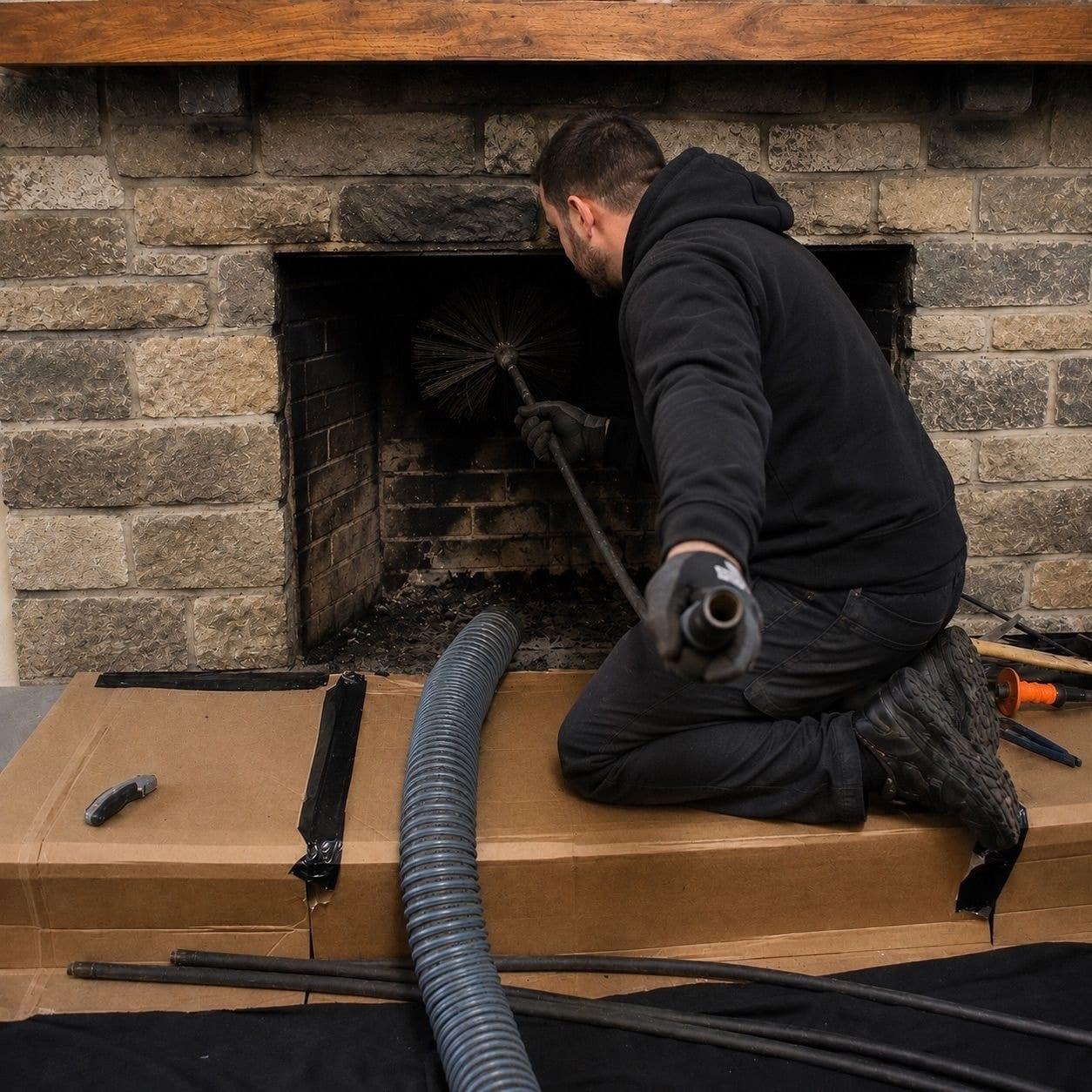
The work focuses on the parts that make an insert different: the baffle or smoke shelf above the firebox, the liner and its connection to the unit, the door glass and gaskets, and the air passages that feed the fire. If you have an open fireplace without an insert, our standard fireplace cleaning service is the better fit. A freestanding stove on legs is covered by wood stove cleaning.
Wood inserts and gas inserts
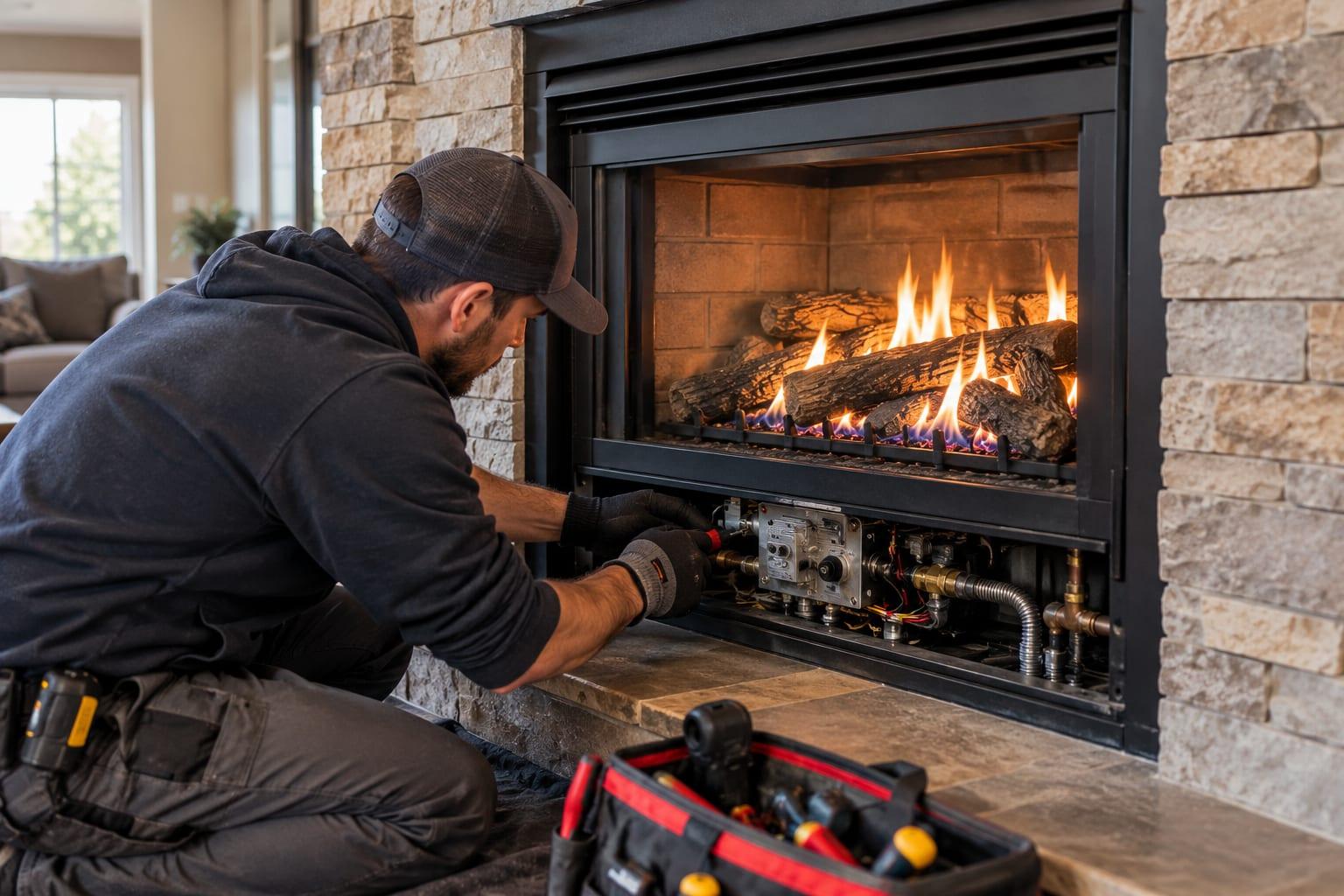
Wood-burning inserts produce ash, soot and creosote, and they need the most attention in the liner and above the baffle. Gas inserts don't make creosote, but they still collect dust, spider webs, debris in the burner area and film on the glass, and their vents can be blocked by nests or fallen material. Gas fireplace and gas appliance work is offered, so both types are handled on the same visit if you have one of each. If you're still deciding between fuel types, our guide to gas vs wood fireplaces walks through the trade-offs.
Signs your insert needs cleaning
Common reasons homeowners book
- Smoke rolls into the room when you open the door, or the fire is slow to draw
- The glass turns black or brown within a fire or two, even with dry wood
- A strong, smoky or tar-like smell comes from the insert, especially on warm or humid days
- Flaky black deposits fall onto the firebox floor or behind the baffle
- The fire burns weakly or won't stay lit with the air control open
- It's been a full burning season or longer since the last cleaning
- You've moved into a home with an insert and don't know its history
- A gas insert shows a lazy, yellow or uneven flame, or the pilot keeps going out
What the symptom usually points to
01Smoke spilling into the room
- What you may notice
- Smoke escapes when the door opens; the fire struggles to start
- How it’s confirmed
- The baffle, liner and cap are checked for buildup or blockage that restricts draft
02Glass that blackens quickly
- What you may notice
- Dark film on the door glass after short burns
- How it’s confirmed
- Air wash passages and door gaskets are checked, and burning habits and wood moisture are discussed
03Wood stove-style unit on its own
- What you may notice
- Your heater sits on the hearth rather than inside the fireplace opening
- How it’s confirmed
- This is a freestanding stove, cleaned through its own flue connector
What happens during the visit
Step by step
Protect the room
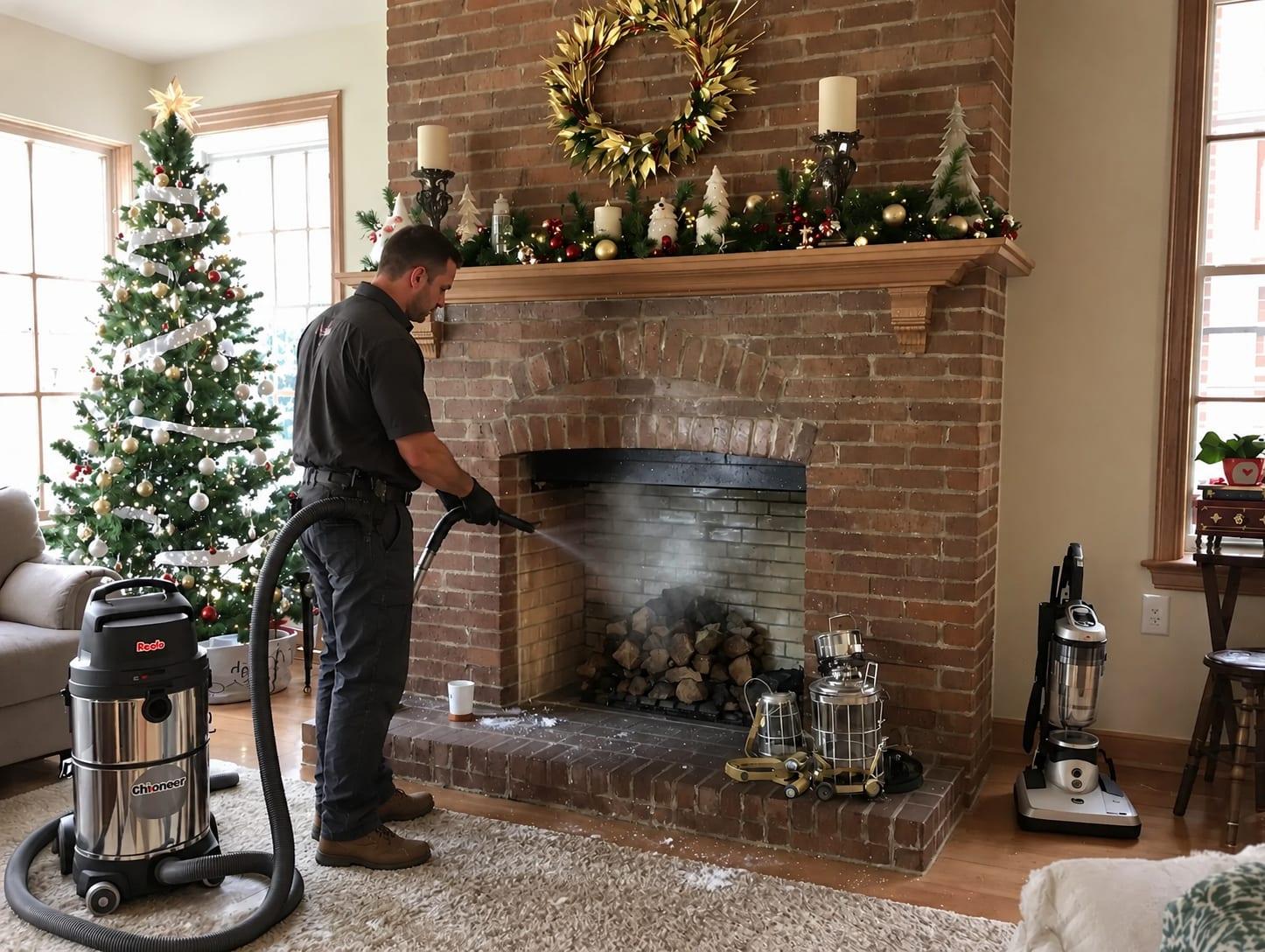
Drop cloths go down around the hearth, and the work area is sealed off so soot stays contained.
Look before cleaning
The tech looks over the insert, the door, the glass and the visible liner connection to see how much buildup there is and where it sits.
Clear the firebox and baffle
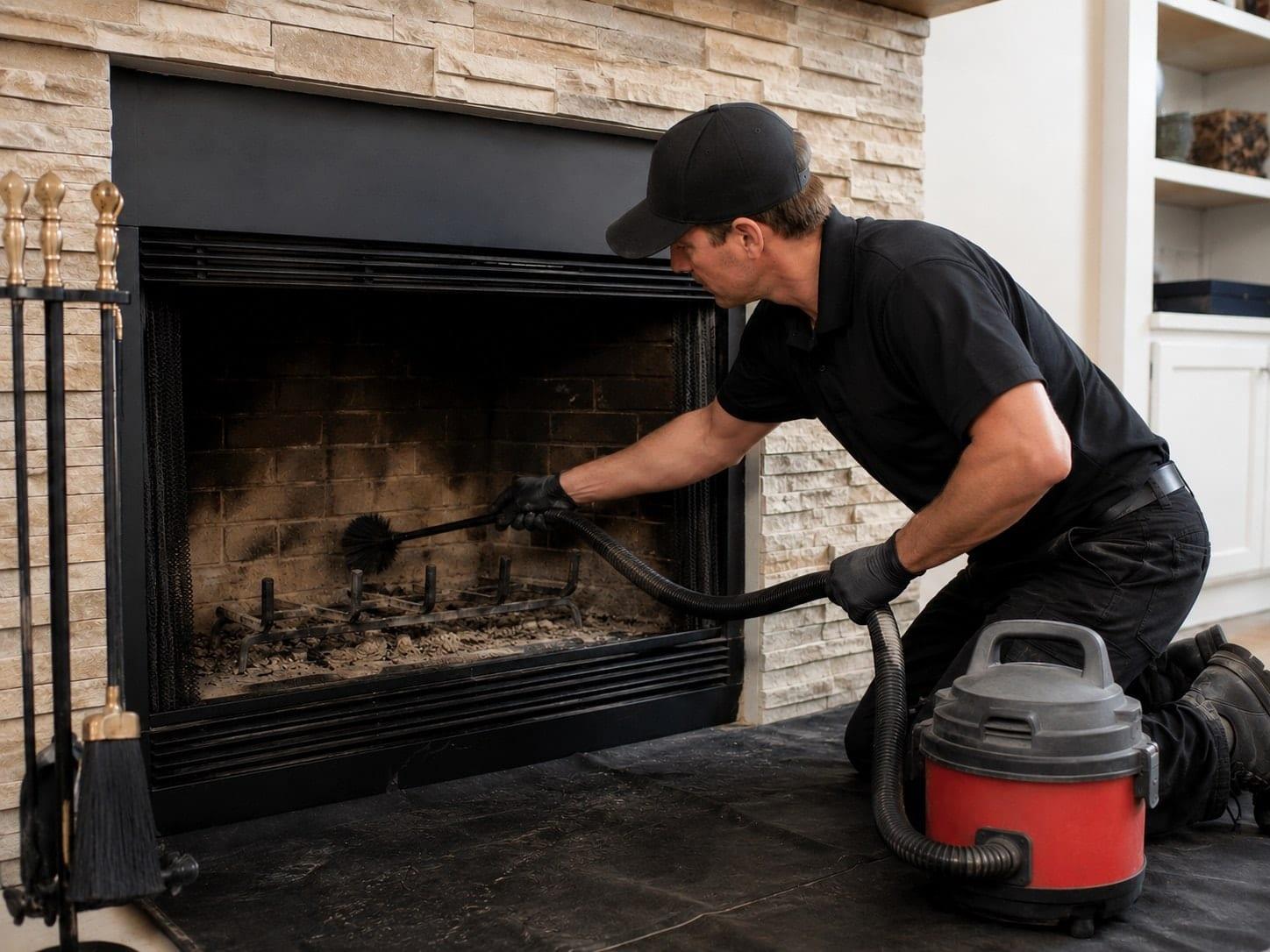
Ash and loose debris come out, and the baffle or smoke shelf is removed or lowered where the design allows so deposits above it can be reached.
Clean the liner
The liner or vent that carries smoke up the chimney is brushed to remove soot and creosote. On some installations, the insert has to be pulled forward to get full access.
Clean the glass and check the seals
The door glass is cleaned and the gaskets are checked, since a worn seal lets in extra air and makes the fire harder to control.
Reassemble and walk you through it
Parts go back in place, and you get a plain explanation of what was found, including anything that needs repair.
Gas inserts follow a different routine
For a gas unit, the visit covers the burner area, the logs or media, the glass, the pilot assembly and the vent rather than creosote removal.
Safety and upkeep between cleanings
Creosote is flammable, and an insert's tight liner gives it less room to build up before it becomes a problem. A common general guideline is to have a wood-burning system checked once a year and cleaned when buildup warrants it. How fast yours dirties depends on how often you burn, the wood you use and how you run the air control.
- Burn split, seasoned hardwood; wet wood makes far more creosote
- Avoid long, smoldering burns with the air control shut down
- Never burn trash, cardboard or painted lumber
- Keep the door closed while burning and replace gaskets that no longer seal
- Have the top of the chimney checked for nests or debris before the first fire of the season
If the liner itself is damaged, or the insert is worn out and you're thinking about a new one, that's a separate job: fireplace insert installation is the right service when the unit is being replaced rather than cleaned.
Booking your insert cleaning
Get in touch to request a visit and tell us whether the insert is wood or gas and roughly when it was last cleaned. Commercial and property-manager work is offered as well, for buildings with more than one unit to service.