On this page
What wood stove cleaning covers
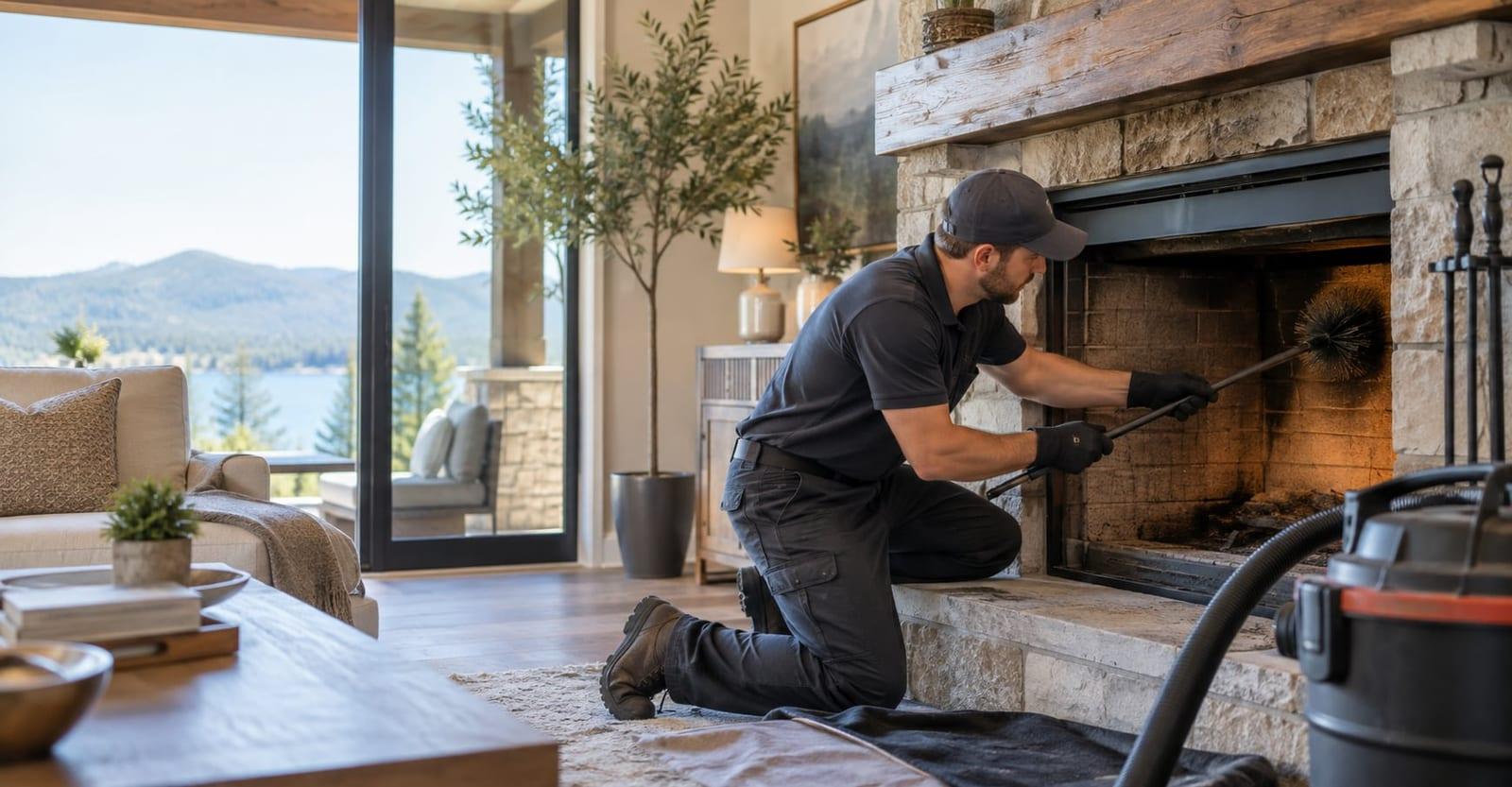
A wood stove is a closed system. Smoke leaves the firebox, passes over a baffle plate, exits through the flue collar and travels up the stovepipe into the chimney. Every one of those surfaces collects soot and creosote, and the tight passages inside a stove clog faster than an open masonry flue. Wood stove cleaning is the job of clearing that whole path, not just shoveling out the ash.
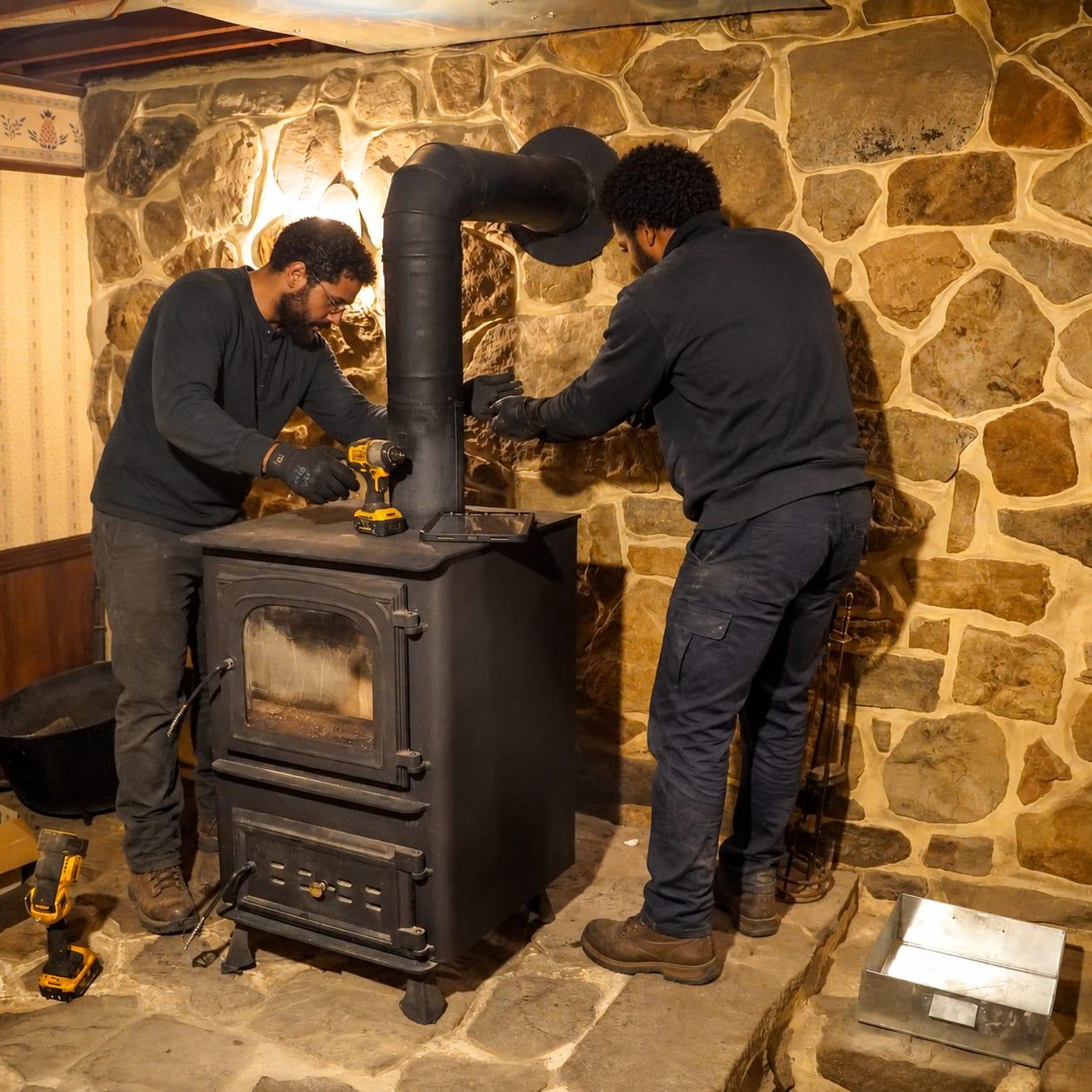
The stove itself is only half of it. The pipe and chimney above it carry the same deposits, so we clean the venting as part of the visit. If your home also has an open hearth or a separate chimney, our chimney sweep service handles that flue on the same trip.
Parts of the stove we work on
- Firebox: ash, unburned wood and loose soot on the floor and walls.
- Baffle or smoke shelf: the plate above the fire where soot and flaky creosote pile up and block airflow.
- Catalytic combustor, if your stove has one: checked for clogging and cleaned of surface ash where it can be done safely.
- Flue collar and stovepipe: the connector between stove and chimney, where creosote often collects at joints and elbows.
- Chimney flue: brushed from top to bottom so the stove has a clear exit for smoke.
- Door glass and gasket: glass cleaned of haze, and the gasket looked at so you know whether the door still seals.
Signs your wood stove needs cleaning
Book a cleaning if you notice any of these
- Smoke rolls into the room when you open the door to add wood.
- The fire is hard to start or dies down even with dry wood and the air control open.
- The glass turns black within one or two fires.
- You see shiny, tar-like or crusty black deposits inside the stovepipe or at the flue collar.
- There's a strong, sour smoke smell in the room when the stove is cold, especially in humid weather.
- You hear crackling or a rushing sound from the pipe, or the pipe gets far hotter than usual. If you hear roaring or see flames or sparks from the top of the chimney, get everyone out and call 911.
- You've bought a home with a wood stove and don't know when it was last cleaned.
- It's been a full burning season since the last cleaning.
If you hear roaring in the pipe or see sparks from the chimney top
That can be a chimney fire. Close the stove's door and air intake, get everyone out of the house and call 911. Don't relight the stove until the stove, pipe and chimney have been checked.
How the visit works, step by step
A typical wood stove cleaning
Protect the room
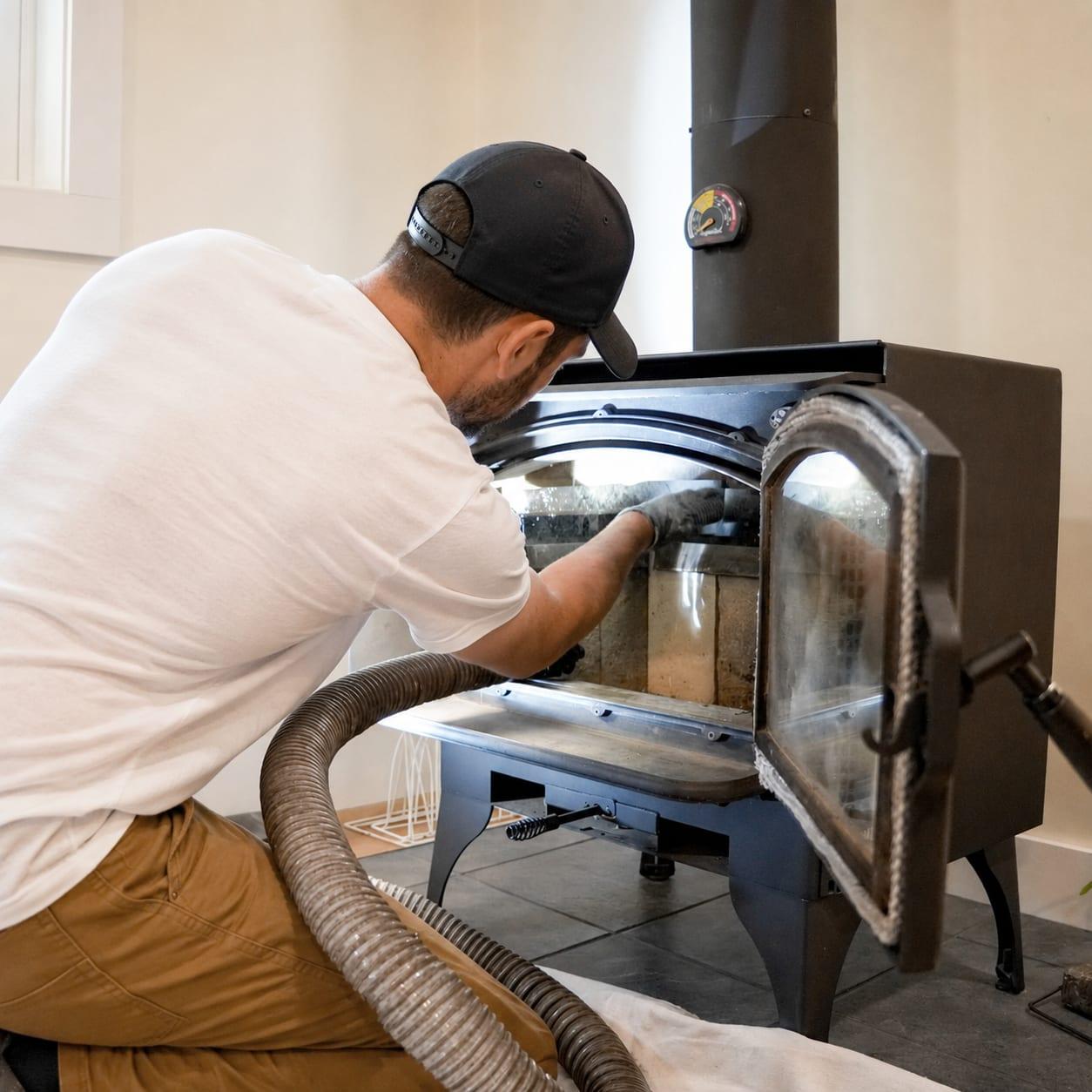
We lay drop cloths around the hearth and set up a vacuum made to catch fine soot, so the dust stays in the stove and not on your floor.
Look before we clean
We check the firebox, baffle, door, pipe and the visible parts of the chimney to see how heavy the buildup is and whether anything looks damaged.
Clear the firebox and baffle
Ash comes out, and we remove or reach around the baffle to scrape off the soot and creosote sitting above the fire.
Clean the stovepipe and flue
We brush the connector pipe and the chimney flue, then pull the loosened deposits down and vacuum them out of the stove.
Reassemble and check the draft
The baffle and any pipe sections go back in place, the door glass is cleaned, and we make sure smoke has a clear path out.
Walk you through what we found
You get a plain description of the stove's condition, including any wear on the gasket, baffle or pipe that should be dealt with before the next fire.
Safety and upkeep between cleanings
Creosote forms when smoke cools before it leaves the chimney. The usual causes are wet wood, fires starved of air and long, low overnight burns. A few habits slow it down a lot:
- Burn seasoned hardwood that has been split and dried. Wood that hisses or bubbles at the ends is still wet.
- Give each new load a hot start with the air control open before you turn it down.
- Don't burn trash, cardboard, painted lumber or treated wood in the stove.
- Empty ash once it gets close to the bottom of the door opening, and store it in a metal can with a lid, away from the house.
- Look at the stovepipe now and then. Flaking or glazed deposits mean it's time for a cleaning.
- Keep working smoke and carbon monoxide alarms on every level of the home.
The general guidance is to have a wood-burning appliance and its chimney checked at least once a year, and cleaned when buildup is found. Homes with both a stove and an open hearth can pair this visit with fireplace cleaning. A wood insert set inside a masonry fireplace is cleaned a little differently; how fireplace insert cleaning works explains that job.
If you're starting to wonder whether hauling wood is still worth it, our guide to gas vs wood fireplace lays out the trade-offs. Gas fireplace and gas appliance work is offered.
Booking a wood stove cleaning
Call or request an estimate and tell us the stove's make if you know it, how often you burn and anything you've noticed, such as smoke spillage or a dark window. Commercial and property-manager work is offered, so landlords and managers with wood stoves in their units can get in touch too.