On this page
What pellet stove cleaning covers
Emptying the ash pan is only the start. A pellet stove depends on a steady flow of air: a combustion blower pulls air through the burn pot and pushes exhaust out through the vent pipe, and a convection fan moves heat into the room. If a carbon monoxide alarm sounds or anyone feels unwell, get everyone outside and call 911. Fine fly ash and soot settle along that whole path. A professional cleaning reaches the parts that daily upkeep can't, from the burn pot to the end of the vent.
| Part | What builds up | Why it matters |
|---|---|---|
| Burn pot | Ash and hard clinkers that block the air holes | Blocked holes starve the fire, causing poor ignition and a lazy flame |
| Firebox and heat exchanger | Ash and soot coating the tubes and walls | A coated exchanger passes less heat into the room |
| Combustion blower and exhaust passages | Fine ash packed into the fan housing and channels | Restricted exhaust flow can trigger shutdowns or let smoke into the room |
| Exhaust vent pipe | Fly ash, soot and sometimes creosote | The vent is the only route for exhaust to leave the home |
| Convection fan | Dust and ash on the blades | A dirty fan moves less warm air and can get noisy |
| Glass and door gasket | Soot film; worn or compressed gasket | A poor seal lets in extra air and upsets the burn |
Burning cordwood instead? A wood-burner builds up much heavier creosote and needs a different routine, covered under our wood stove cleaning service.
Signs your pellet stove needs cleaning
Book a cleaning if you notice any of these
- The stove is slow to light or fails to ignite
- The flame looks dark, lazy or orange and sooty instead of bright and lively
- Ash or unburned pellets spill over the edge of the burn pot
- The glass blackens within a day or two of cleaning
- Less heat reaches the room even on a high setting
- The stove shuts itself down or shows exhaust, vacuum or airflow faults
- You smell smoke or exhaust in the room
- Fans sound louder or rougher than usual
- A full heating season has passed since the last professional cleaning
Some of these, especially repeated shutdowns, can also point to a vent that is damaged, too long or poorly routed for the stove. When cleaning doesn't fix the problem, the vent itself may need attention through our pellet stove chimney installation work.
How a pellet stove cleaning visit works
Step by step
Confirm the stove is cold and protect the room
Pellet ash can hold live embers for hours, so we work only on a stove that has fully cooled. Floors and nearby furniture are covered before anything is opened.
Empty the ash and clear the burn pot
The ash pan is emptied, and the burn pot is scraped clean with its air holes cleared of clinkers and packed ash.
Clean the firebox and heat exchanger
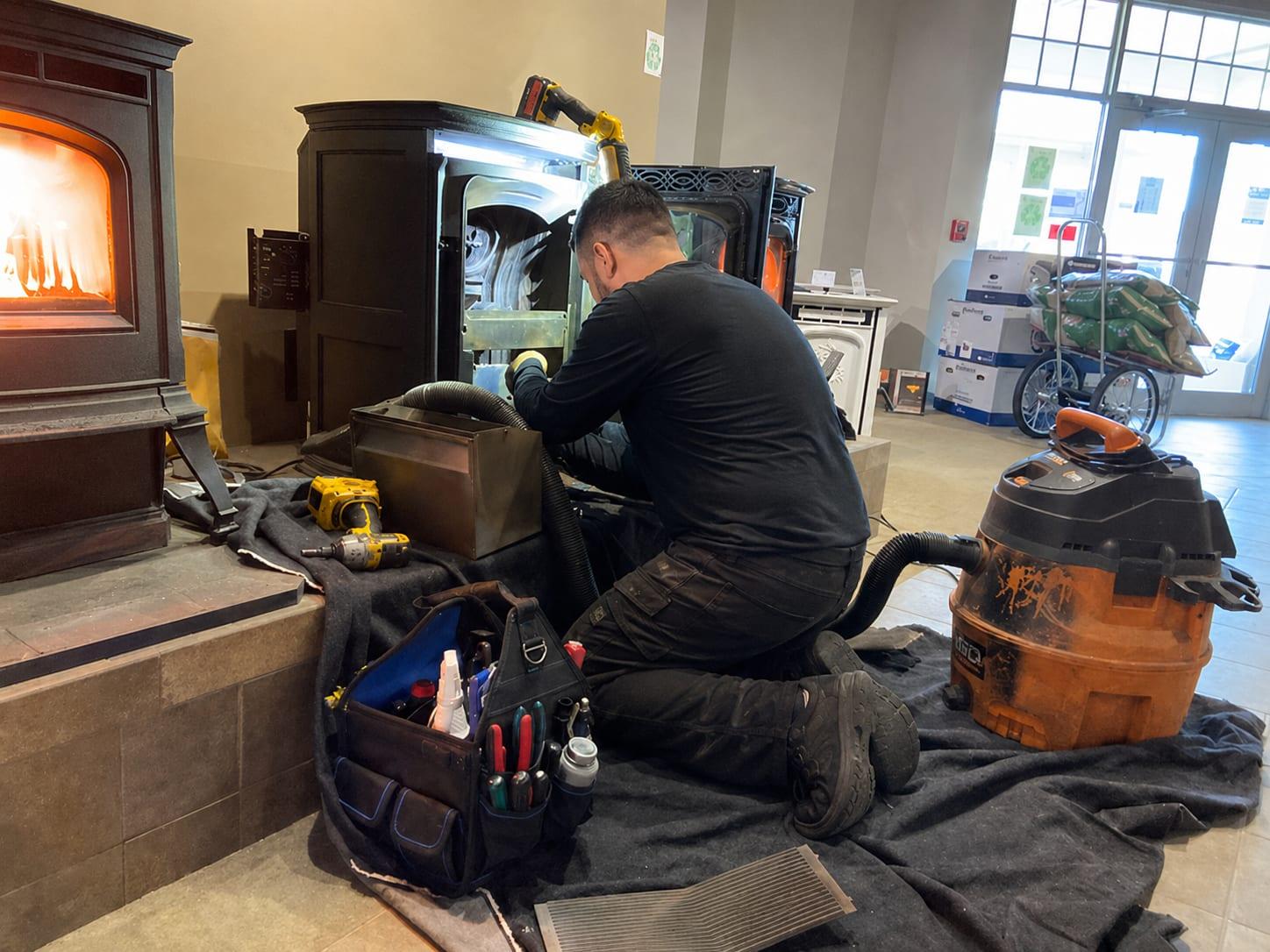
Heat exchanger tubes are scraped, and the firebox walls and baffles are brushed and vacuumed with equipment built to capture fine ash.
Clean the blowers and exhaust passages
The combustion blower housing and the internal exhaust channels are opened and cleared, and the convection fan blades are cleaned of dust and ash.
Brush the vent pipe
The exhaust vent is brushed from the stove to where it ends outside, removing fly ash, soot and any creosote, and the termination is checked for blockages.
Glass, gasket and test run
The glass is cleaned, the door gasket is checked for a tight seal, and the stove is reassembled and run so we can watch it light and burn. We walk you through anything that looks worn or damaged.
Safety and upkeep between cleanings
Smoke or exhaust in the room
If you smell exhaust, see smoke coming from the stove or a carbon monoxide alarm sounds, shut the stove down, ventilate and get everyone out if the alarm continues. Don't relight it until the cause is found. Emergency calls are accepted, so get in touch right away.
Good habits keep buildup slower and the stove more dependable between professional visits:
- Empty or scrape the burn pot as often as the owner's manual calls for, often daily during steady use.
- Let ash cool completely before removing it, and store it in a metal container with a lid away from the house.
- Never use an ordinary household vacuum on pellet ash; fine ash can pass through the filter and warm ash can start a fire. Do this only with the stove off, cold and unplugged.
- Keep pellets dry and choose lower-ash pellets; damp or high-ash fuel leaves more residue in the burn pot and vent.
- Keep a working carbon monoxide alarm near the stove and on each sleeping level.
- Keep the area around the stove clear of furniture, curtains and stored items.
If the house also has an open fireplace, our fireplace cleaning service handles that firebox and flue. Still weighing what kind of heater to add? Read our guide to fireplace insert vs freestanding wood stove before you decide.
Booking your pellet stove cleaning
Call or request an estimate and tell us the stove's make and model if you have it, how much you've burned this season and any symptoms you've noticed. We work on all major brands of pellet stoves. Commercial and property-manager work is offered as well, so rental units and business properties with pellet stoves can be scheduled too.