On this page
What chimney liner installation involves
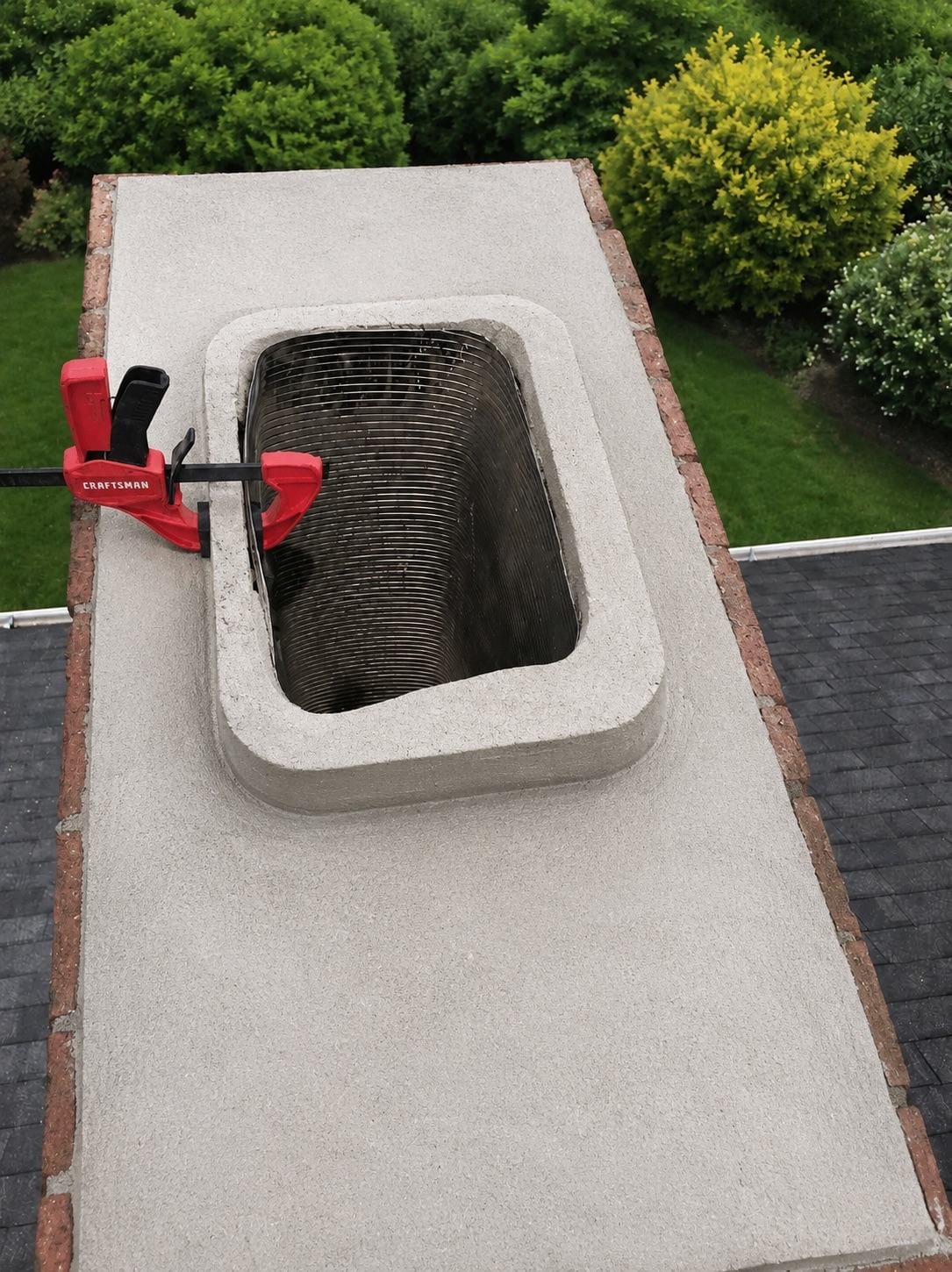
A chimney flue liner is the channel inside the chimney that carries smoke and exhaust from the firebox or appliance up and out. In many masonry chimneys it is a stack of clay tiles set during construction. Chimney liner installation means fitting a new liner into that flue, usually a stainless steel liner run down from the top, sized to the appliance it serves and connected at both ends.
The job is different from patching an existing liner. If the original tiles are mostly sound and only have small gaps or a single cracked section, our chimney liner repair service may be the better fit. Installation is for flues that need a complete new liner.
Signs a home needs a new chimney liner
Most homeowners find out about liner problems during an inspection rather than by seeing them, because the liner sits inside the chimney. These are the situations that usually lead to chimney liner installation:
When a new liner is usually the answer
- An inspection or camera scan shows cracked, shifted, spalling or missing clay tiles along the flue
- The chimney was built without a liner at all
- A chimney fire has damaged the tile liner
- Pieces of tile or flaky masonry are turning up in the firebox or on the smoke shelf
- A wood stove or fireplace insert is going in and needs a liner sized to its outlet
- A gas appliance will vent through the chimney and the existing flue is the wrong size or material for it
- Draft is poor, or smoke and odors come back into the room, and the flue size doesn't match the appliance
- Moisture stains or deteriorating mortar inside the chimney suggest exhaust is reaching the masonry
For a closer look at what goes wrong with liners and why it matters, read our guide to chimney liner hazards and how to avoid them.
What the visit involves, step by step
How we install a chimney liner
Inspect the flue
We look at the chimney from the firebox and the roof, and use a camera to check the full length of the flue, the existing liner and the smoke chamber.
Size the liner to the appliance
The liner's diameter and type are matched to what will vent through it: an open wood-burning fireplace, an insert, a stove or a gas appliance. A liner that is too large or too small can cause draft and condensation problems.
Prepare the chimney
The flue is swept and cleared of creosote, debris and any nesting material. Loose or broken tile that would block the new liner is removed.
Run the liner
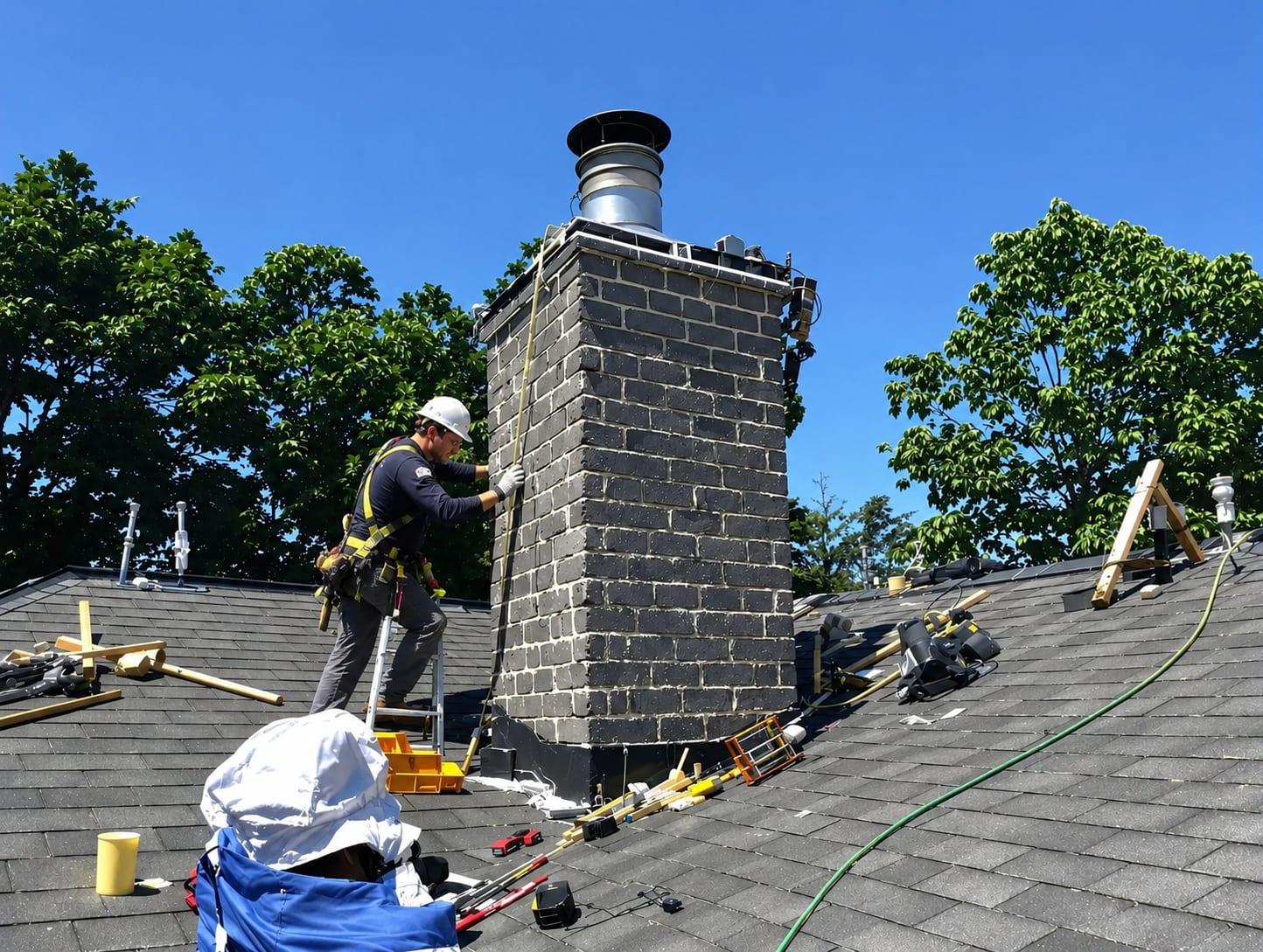
The new liner is lowered from the top of the chimney and guided down to the firebox, damper area or appliance connection.
Connect and seal both ends
At the bottom, the liner is attached to the appliance or fitted through the damper area. At the top, it is secured with a top plate that closes off the gap around the liner.
Cap and check
A cap goes on to keep out rain, debris and animals, and we check that the system drafts properly before we leave.
If the chimney top needs more than a basic cap, we can also handle chimney cap installation or add a spark arrestor for the chimney top at the same visit.
Liner materials and fuel types
The right liner depends mostly on the fuel and the appliance. Here is how the common options compare:
| Liner type | What it is | Where it fits |
|---|---|---|
| liner | Fired clay sections stacked and mortared inside a masonry chimney | Common original liner in masonry chimneys; hard to replace in an existing chimney without major work |
| Flexible stainless steel chimney liner | A continuous steel tube that bends to follow offsets in the flue | Most retrofits in existing chimneys, especially with inserts, stoves and gas appliances |
| Rigid stainless steel chimney liner | Straight steel sections joined together | Straight flues where a rigid run fits cleanly |
Stainless steel chimney liners
Stainless steel chimney liners are the usual choice for chimney liner replacement in an existing home. A steel chimney liner can be installed from the top without tearing into the masonry, sized exactly to the appliance, and joined in one continuous run so there are no mortar joints for exhaust to leak through. Some installations also call for insulation around the liner, depending on the chimney and the appliance.
Lining a flue for a gas appliance
Gas appliances produce cooler, wetter exhaust than a wood fire, and that moisture can eat away at an unlined or oversized masonry flue. When a gas fireplace or other gas appliance vents into the chimney, the flue needs a liner rated and sized for it. Gas fireplace and gas appliance work is offered, so we can line the flue as part of a gas installation or conversion.
Safety and maintenance after the liner goes in
Why a damaged liner is a safety issue
A cracked or missing liner lets heat reach wood framing that sits near the chimney, gives sparks a path out of the flue, and can let carbon monoxide and other combustion gases seep into the house. Stop using the fireplace or appliance if a liner is known to be damaged, and keep working carbon monoxide alarms in the home.
- Have the chimney swept and inspected once a year, and after any chimney fire
- Burn dry, seasoned wood to cut down on creosote buildup inside the liner
- Keep the cap in place so rain, leaves and animals stay out of the flue; an animal screen for the chimney helps where birds or raccoons have been a problem
- Watch for draft trouble or a damper that won't open and close properly; our guide to chimney damper problems, their signs and causes explains what to look for
Booking chimney liner installation
Get in touch to request an inspection and estimate for a new liner. 24-hour service runs Sunday–Friday, and emergency calls are accepted. Commercial and property-manager work is offered, so landlords and building owners can book liner work as well.
If the liner is part of a larger project, such as a new wood-burning unit, we can plan the flue together with fireplace installation so the liner is sized for the appliance from the start.