On this page
What chimney liner repair involves
The liner is the inner tube of the chimney. It carries smoke, heat and gases from your fireplace, stove or gas appliance up and out of the house. It also shields the surrounding brick and the wood framing near the chimney from heat. Chimney liner repair fixes specific damage in that tube, such as cracked clay tiles, eroded mortar joints, small gaps or a damaged section of a metal liner. It does not replace the whole liner.
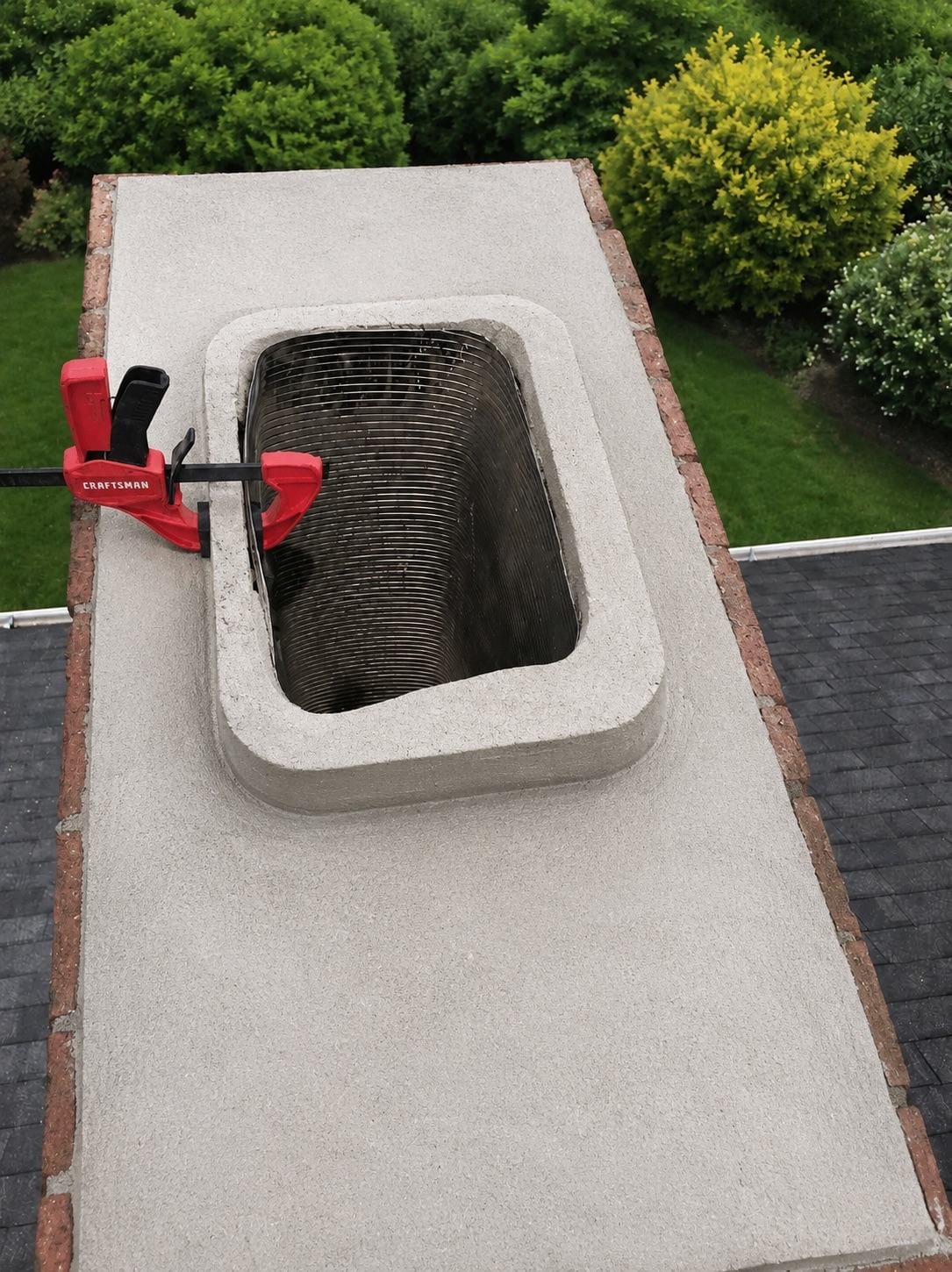
The goal is a continuous, sealed flue that is the right size for the appliance using it. When the damage is limited, a flue liner repair restores that without rebuilding the full length of the chimney.
Signs your flue liner needs attention
Liner damage is usually hidden, so homeowners often find out through side effects. Watch for any of these:
- Thin flakes or shards of clay tile collecting in the firebox or on the smoke shelf
- Smoke spilling into the room when the fire draws normally otherwise
- A strong smoky or musty smell from the fireplace, especially in damp weather
- Water stains or dampness around the chimney inside the house
- A past chimney fire, even a brief one, or a loud roaring sound from the flue during a fire. If you hear roaring or see flames or sparks from the top of the chimney, get everyone out and call 911.
- Rust, dents or separated joints in a metal liner you can see from the firebox or the top
- An inspection report that mentions cracked tiles, open joints or gaps in the flue
Problems with the liner often show up alongside damage to the crown, bricks or flashing. When the outside of the chimney needs work too, our chimney repair service handles that part of the job.
How a liner repair visit works
From first call to a usable flue
Tell us what you've noticed
Debris in the firebox, smoke, smells, water or a past chimney fire all point the inspection in the right direction.
Inspect the full flue
We look at the liner from top to bottom, often with a chimney camera, because most cracks and gaps can't be seen from the firebox.
Explain the findings
You see what we see and hear whether a repair will restore the liner or whether the damage is too widespread to patch.
Protect the room and clean the flue
Creosote and soot have to come off before any repair material can bond, so the flue is cleaned first and the work area is covered.
Repair the damaged sections
The method depends on the liner. It may mean resealing joints, resurfacing damaged clay tile with a heat-resistant coating, or replacing a damaged section of a metal liner.
Check the result
We re-check the repaired areas and walk you through what was done before the fireplace or appliance goes back into use.
Liner materials and the fuels they serve
| Liner type | Where it's common | Typical repair approach |
|---|---|---|
| Clay tile | Masonry chimneys serving wood-burning fireplaces | Resealing open mortar joints; resurfacing cracked or flaking tiles |
| Stainless steel | Wood stoves, inserts and relined masonry chimneys | Replacing a damaged section or connection; refitting a loose or separated joint |
| Cast-in-place (cementitious) | Older masonry chimneys that were relined | Patching or resurfacing localized cracks and erosion |
Fuel matters too. Wood produces creosote, which builds up in cracks and can feed a chimney fire. Gas appliances produce moisture and acidic condensation that can wear down clay tile and mortar from the inside, even though the flue looks clean. Gas fireplace and gas appliance work is offered, so we can look at flues serving gas units as well as wood-burning ones.
Safety and upkeep after the repair
Hold off on fires until the liner is checked
A damaged liner can let heat reach nearby framing and let carbon monoxide escape into the walls or living space. If you suspect liner damage, stop using the fireplace or appliance until it has been inspected. Working carbon monoxide detectors are worth having on every level of the home.
For a closer look at what goes wrong inside a flue and why, read our guide to chimney liner hazards and how to avoid them. After a repair, regular sweeping keeps creosote from collecting in the repaired areas. Keeping water out matters too, because rain coming down an open flue is a common cause of liner wear. A cap is a simple way to do that. A buyer's guide to chimney caps covers the options, and we offer chimney cap installation if your chimney doesn't have one.
When a repair isn't enough
If the liner is damaged along most of its length, is missing entirely, or is the wrong size for a new stove or insert, a full chimney liner installation is the right job instead of a repair.
Booking a chimney liner repair
Call or request an estimate and tell us what you've noticed and what burns in the fireplace or appliance. Same-day visits are available where the schedule allows, though they depend on that day's bookings. Commercial and property-manager work is offered, so landlords and managers with several units can arrange liner repairs as well.