On this page
What chimney cap replacement is
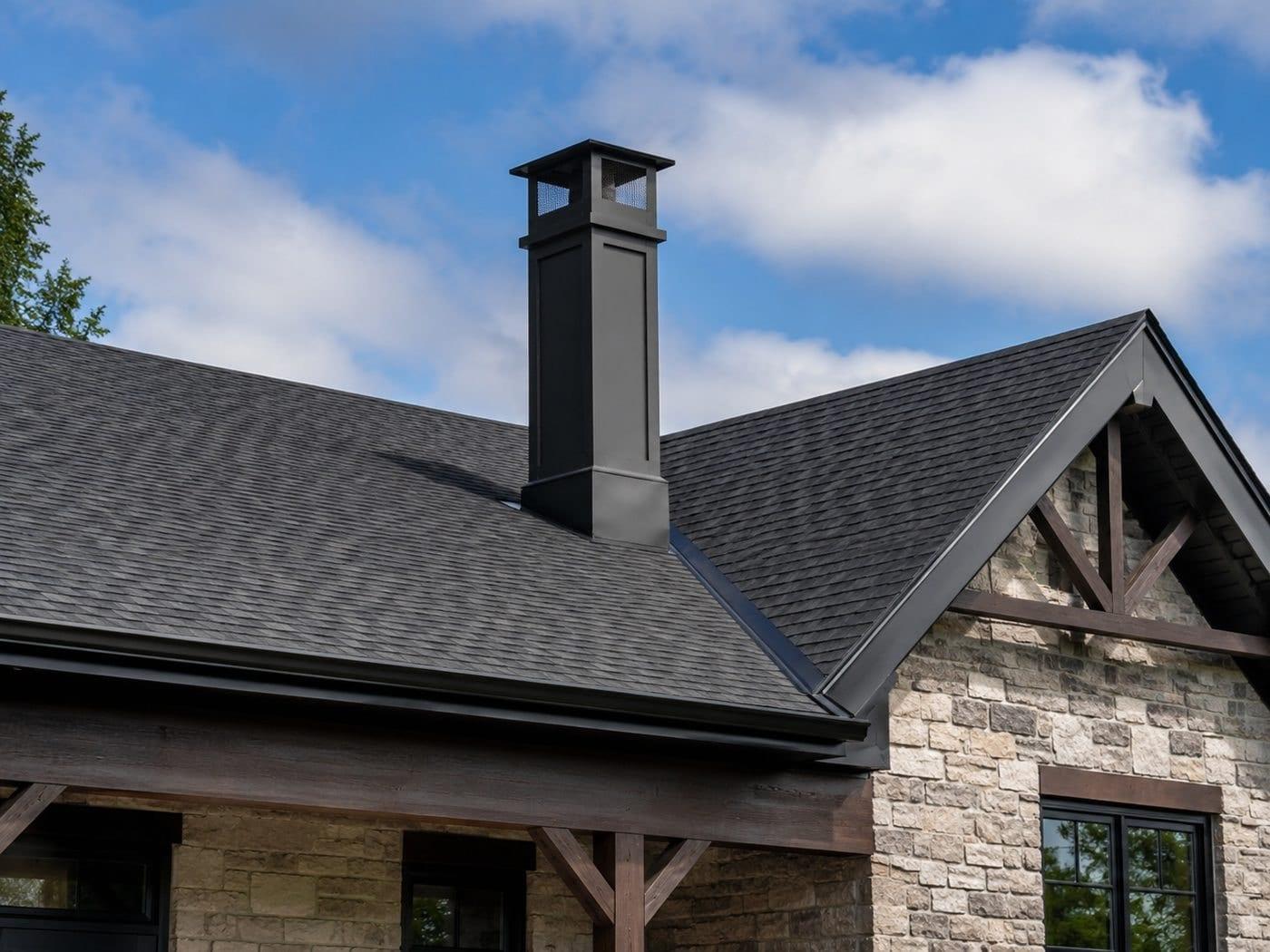
A chimney cap is the metal hood at the top of the chimney. It has a solid top that sheds rain and mesh sides that keep out debris and animals while letting smoke escape. Chimney cap replacement means removing the old cap and its fasteners, checking the surface underneath and installing a new cap that fits the flue or crown correctly.
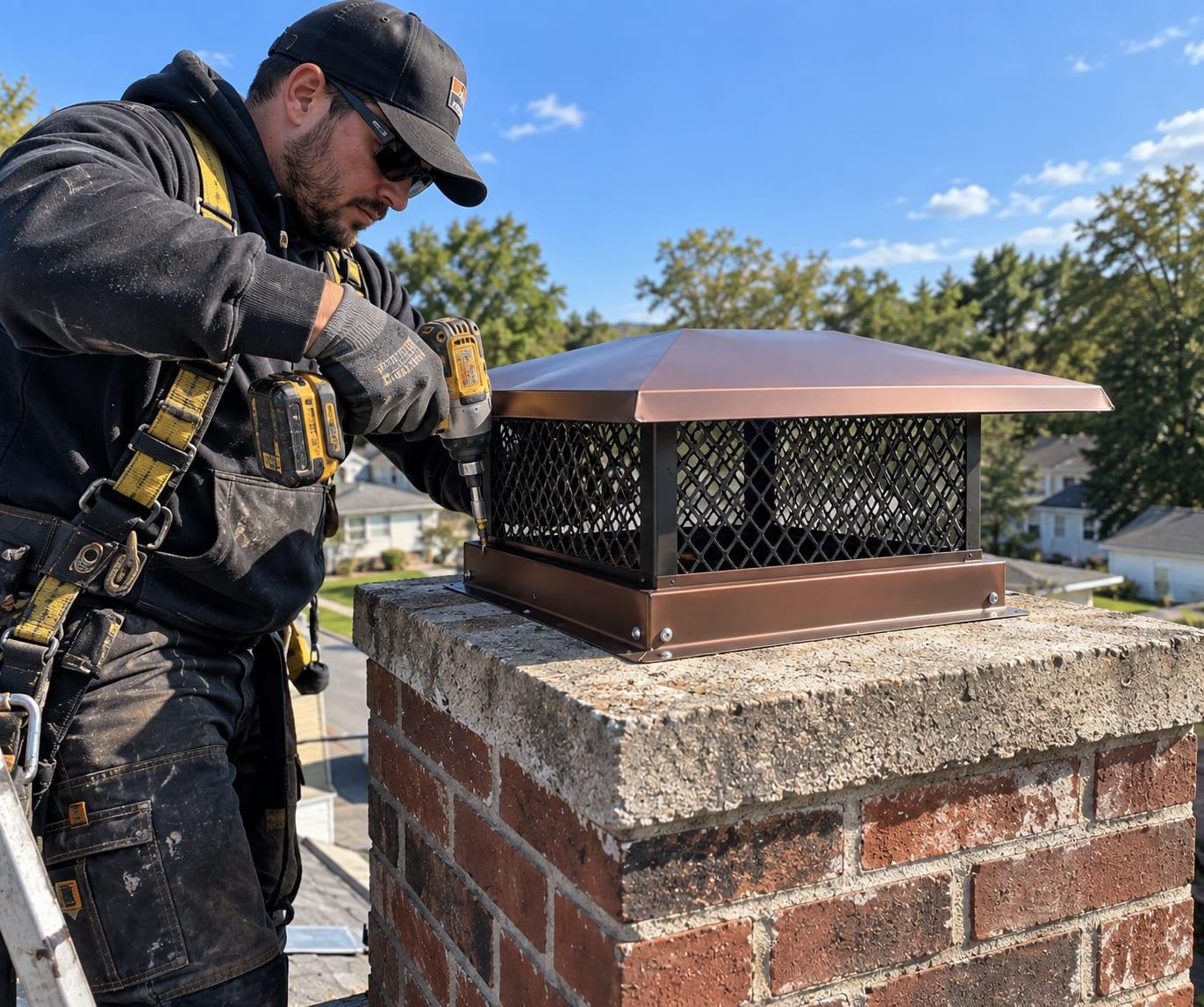
A few nearby jobs are easy to confuse with replacement. If the cap is still solid and only a mesh panel or fastener has worked loose, repairing the existing cap may be enough. If the chimney has never had a cap, the job is a new chimney cap installation rather than a replacement.
Cap styles and materials
Some caps fit over a single flue tile, and others cover the whole top of a chimney that has several flues. Common materials are galvanized steel, stainless steel and copper, and they differ in how long they resist rust. A buyer's guide to chimney caps compares the styles if you want to read up before the visit.
Getting ready for the visit
- Make sure the roof can be reached from the driveway or yard.
- Note any animal sounds or debris in the firebox.
- Keep the fireplace unused the day of the visit.
Animals in the flue
Don't light a fire to drive an animal out. Keep the fireplace cold and closed off and have the animal removed first.
Checked on every visit
- Crown under the cap
- Rust or corrosion
- Flue size and tile condition
- Fasteners and mounting
- Clearance between the hood and the flue
Signs your chimney cap needs replacing
- Rust streaks running down the crown or the side of the chimney
- Mesh that is torn, bent or clogged solid with soot
- A cap that leans, rattles in the wind or came off in a storm
- Water dripping into the firebox or pooling on the damper after rain
- Birds, squirrels or other animals getting into the flue
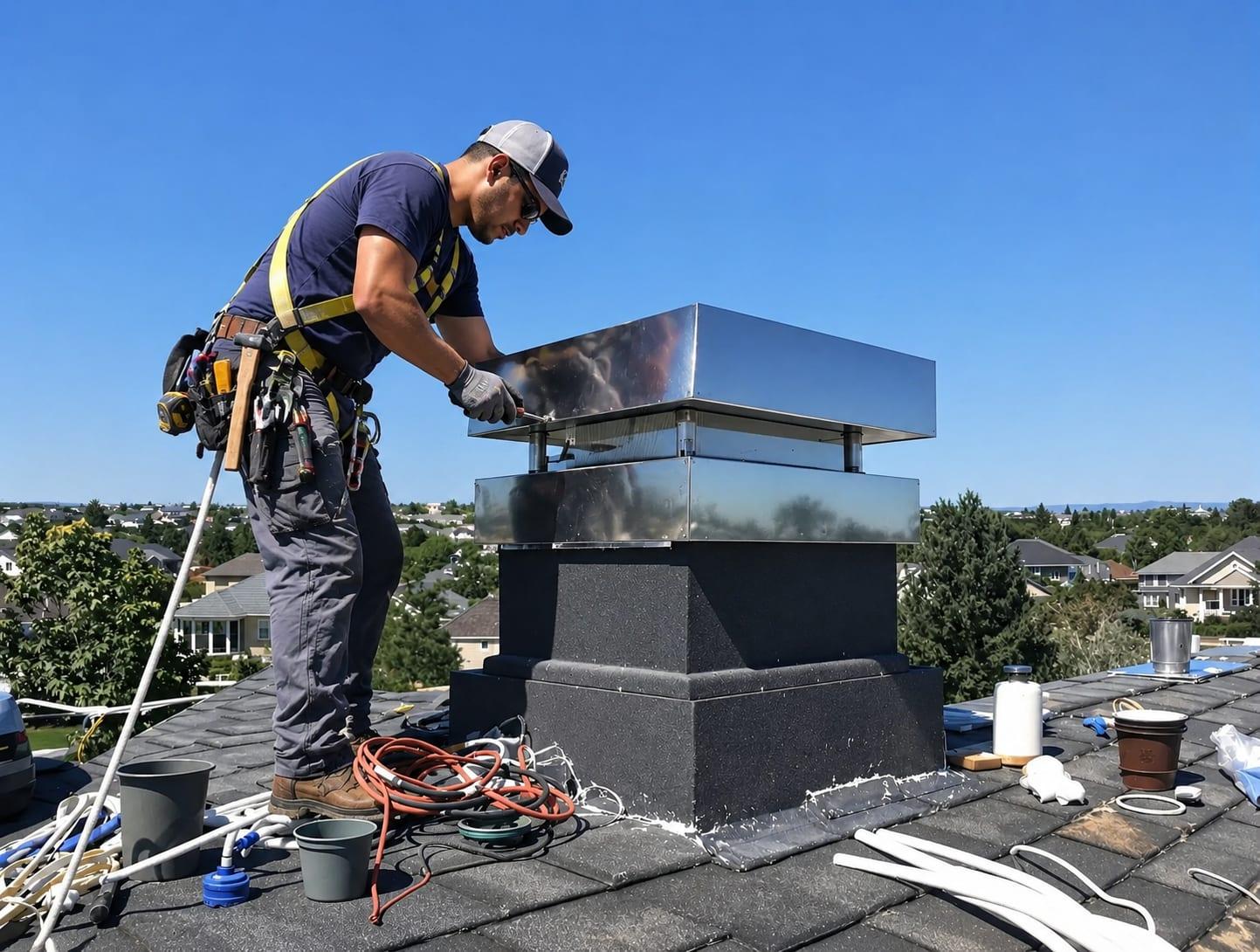
On factory-built chimneys, the cap usually mounts to a metal chase cover. If that cover has rusted through or holds standing water, replacing the chase cover may have to happen at the same visit. The guide to chase cover signs and planning explains what to look for.
What the visit involves, step by step
How a cap replacement visit runs
Measure and assess
We measure the flue tiles or crown and note how the old cap is attached.
Remove the old cap
We take off the failed cap along with its screws, clamps or adhesive.
Check what's underneath
With the cap off, we look at the crown, the top of the flue and, on prefab chimneys, the chase cover.
Fit the new cap
We secure the replacement in the way its design calls for, so it stays put in high wind.
Confirm it vents
We check from below that the flue is clear and the damper operates normally.
Safety and maintenance context
Cap work happens on the roof, so leave it to someone with the right footing and equipment. Don't climb up to check a loose cap yourself. Until the cap is replaced, keep the damper closed to slow down rain and animals. Only close it once the fireplace is completely cold and no stove, furnace or water heater vents into that flue. Water that gets past a missing cap can rust a metal damper, and the guide to chimney damper problems covers what that damage looks like. If you burn wood often, ask about a cap with spark-arrestor mesh. Spark arrestor installation is one of our services.
Chimney exterior wood replacement
Many prefab chimneys are boxed in a wood-framed chase finished with siding. When a cap or chase cover fails, water can run into that framing and rot it. Replacing rotted chase wood falls under our prefab chimney and chase repair work.
Booking a chimney cap replacement
Call or request an estimate. Our 24-hour service runs Sunday through Friday, and we accept emergency calls, which helps when a storm has torn a cap off and rain is getting in. We also take commercial and property-manager work.