On this page
What a gas fireplace inspection covers
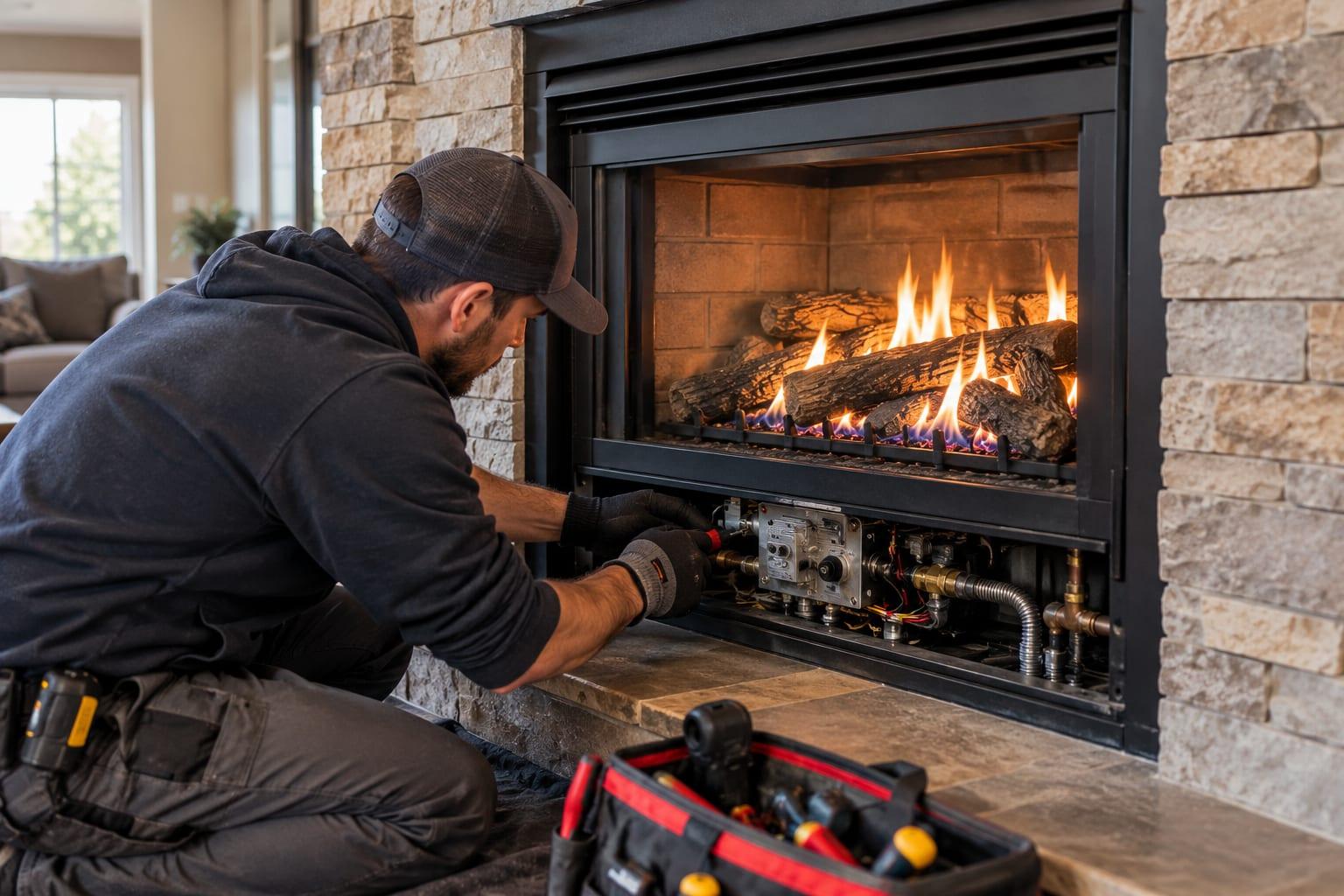
A gas fireplace inspection looks at the parts that keep the flame in the firebox and the exhaust heading outdoors. That means the gas connections and control valve, the burner and pilot assembly, the logs or decorative media, the glass front and its gasket, and the vent path from the firebox to where it ends outside. It is a diagnostic visit. The goal is to learn what condition the unit is in and whether it is safe to run, not to tune it up.
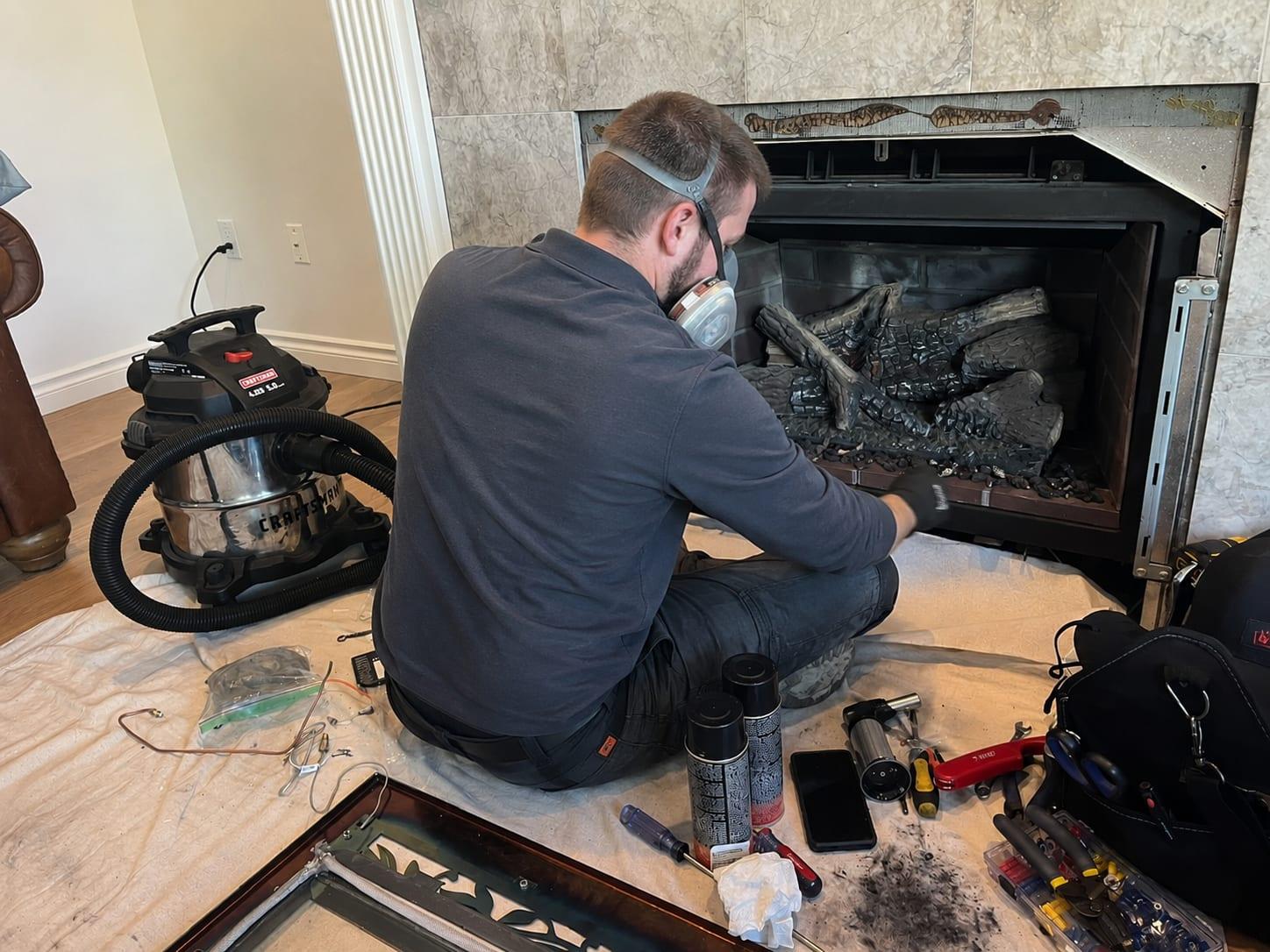
How the type of gas unit changes the check
- Direct-vent fireplaces and inserts have a sealed glass front and a pipe that draws in outside air and sends exhaust back out. The glass, the gasket and the outside termination cap get the most attention.
- Vented gas logs sit in a wood-burning fireplace and use its chimney. The flue has to be clear and sound, and the damper must stay fixed open whenever the logs are installed.
- Ventless (vent-free) logs and fireplaces release their combustion products into the room. Burner condition, log placement and the oxygen depletion sensor matter most here. Our guide to vented vs ventless gas logs explains the trade-offs.
If you smell gas
Leave first, then call from outside
If you smell gas, get everyone out of the building now. Don't flip light switches, use phones or light anything while you are inside. Once you are outside and well away from the house, call your gas utility or 911, and stay out until they tell you it is safe to go back in.
Signs your gas fireplace needs an inspection
Book an inspection if you notice any of these
- Flames that burn tall and yellow or orange, or that lick at the glass, instead of staying steady with blue at the base
- Black soot on the logs, the glass or the wall above the opening
- A pilot light that won't stay lit, or a burner that shuts off by itself
- A delayed light-off followed by a whoosh or pop
- An odor that lasts well past the first few minutes of the season
- Glass that fogs up or turns white quickly after it has been cleaned
- A fireplace that has sat unused for a season or longer, or one that came with a home you just bought
- Damage, debris or a nest at the vent cap outside, especially after a storm
When the fault is already obvious, such as cracked glass or an igniter that is dead, the job you likely need is gas fireplace repair. An inspection is the better first step when you aren't sure what is wrong or whether the unit is safe to use.
What happens during the visit
A gas fireplace inspection, step by step
Talk through how it behaves
We start by asking what you've noticed, such as odors, sooting, ignition trouble or how long the unit has been sitting unused. That tells us where to look hardest.
Check the gas supply side
We inspect the visible gas connections, the shutoff and the control valve, and test the fittings for leaks.
Look over the burner, pilot and ignition
We check the burner ports, the pilot assembly and the flame sensor for corrosion, debris and wear, and we confirm the ignition lights the burner cleanly.
Examine the logs, media and glass
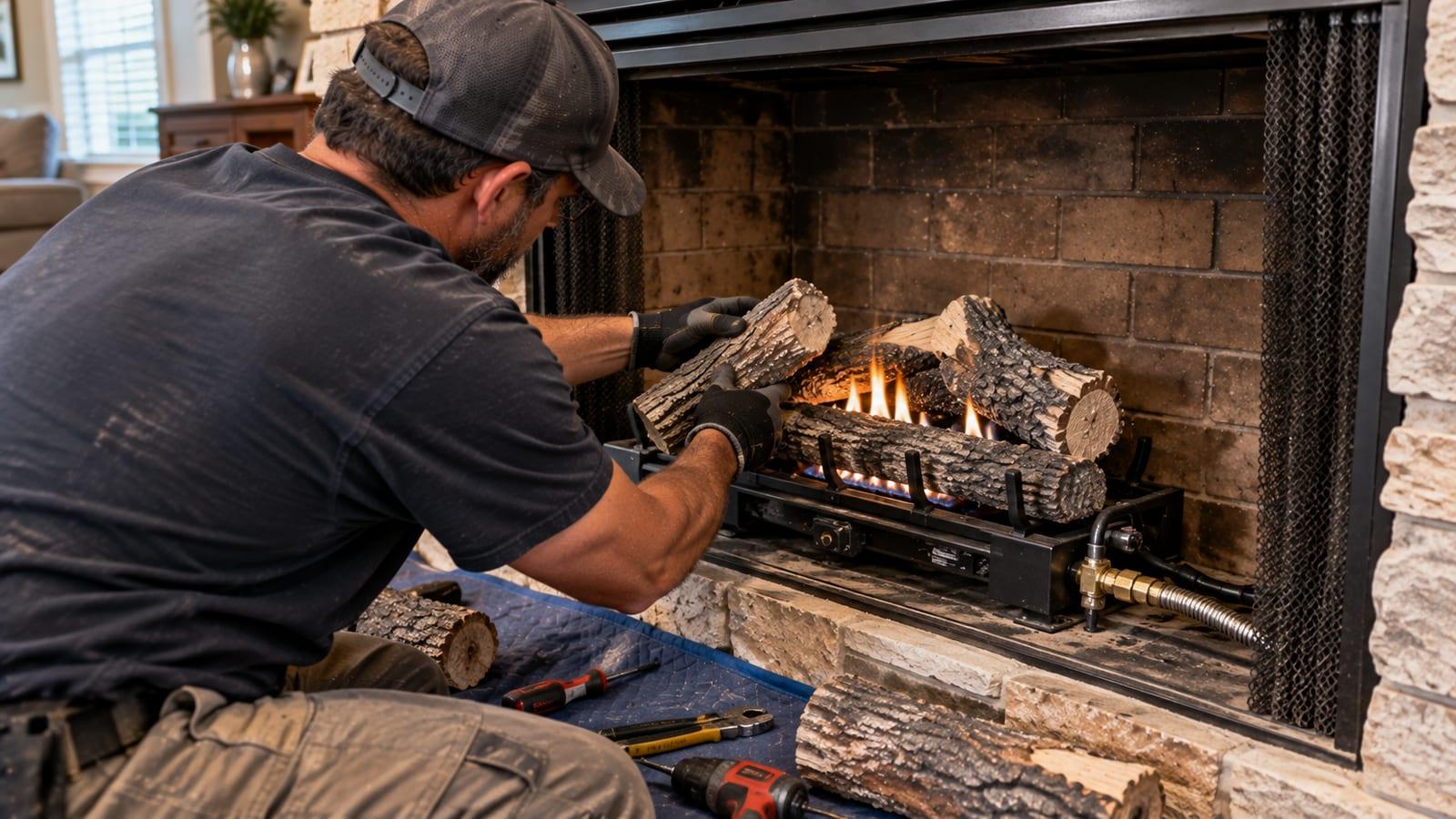
We check that the logs or media are placed so they don't block the flame, look for sooting, and inspect the glass and gasket for cracks, gaps and heat damage.
Follow the venting
We trace the vent or flue as far as it can be reached and check the outside termination for blockages, nests and damage. A vented log setup also gets a look at the chimney flue and the damper. If a flue needs a closer look, a camera inspection can show what's inside.
Test-fire and explain the findings
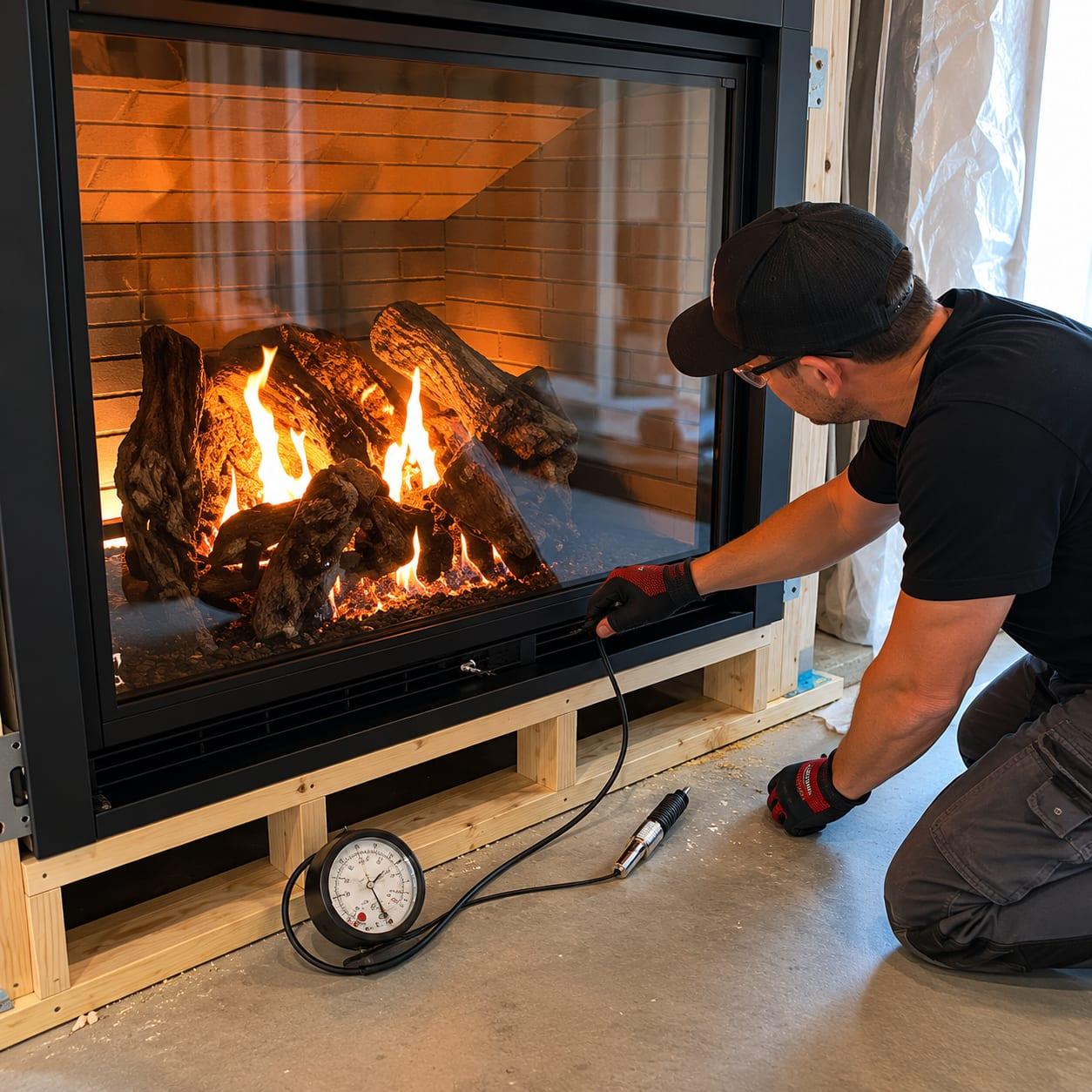
With the unit running, we watch the flame pattern, the ignition and the draft. Then we walk you through what we found and what, if anything, needs attention.
Safety and maintenance between inspections
- Keep working carbon monoxide alarms on every level of the home and near the bedrooms. If one sounds, get everyone outside and call 911.
- Plan on an inspection once a year. NFPA 211, the national standard for chimneys, fireplaces and vents, recommends annual inspections, and many manufacturers recommend yearly service too.
- Leave the logs where they were set. Rearranged logs can push the flame into them and cause sooting.
- Keep plants, leaves and stored items clear of the vent cap outside.
- Treat the glass front as a burn hazard. It stays hot well after the flame goes out, so a safety screen helps in homes with small children.
- Burn nothing in a gas unit except the gas it was built for.
- For ventless units, follow the manufacturer's run-time and room-size limits.
If you are still deciding how you want to heat the room, our guide to electric vs gas fireplace options covers upkeep and safety differences.
Booking a gas fireplace inspection
Gas fireplace and gas appliance work is offered, and we work on all major brands of gas fireplaces, inserts and log sets.
Commercial and property-manager work is offered, so rentals and multi-unit buildings can be scheduled too. To book, call or request an estimate. If you want an overview of everything else we do for these units, start with our gas fireplace service.