On this page
What propane fireplace repair covers
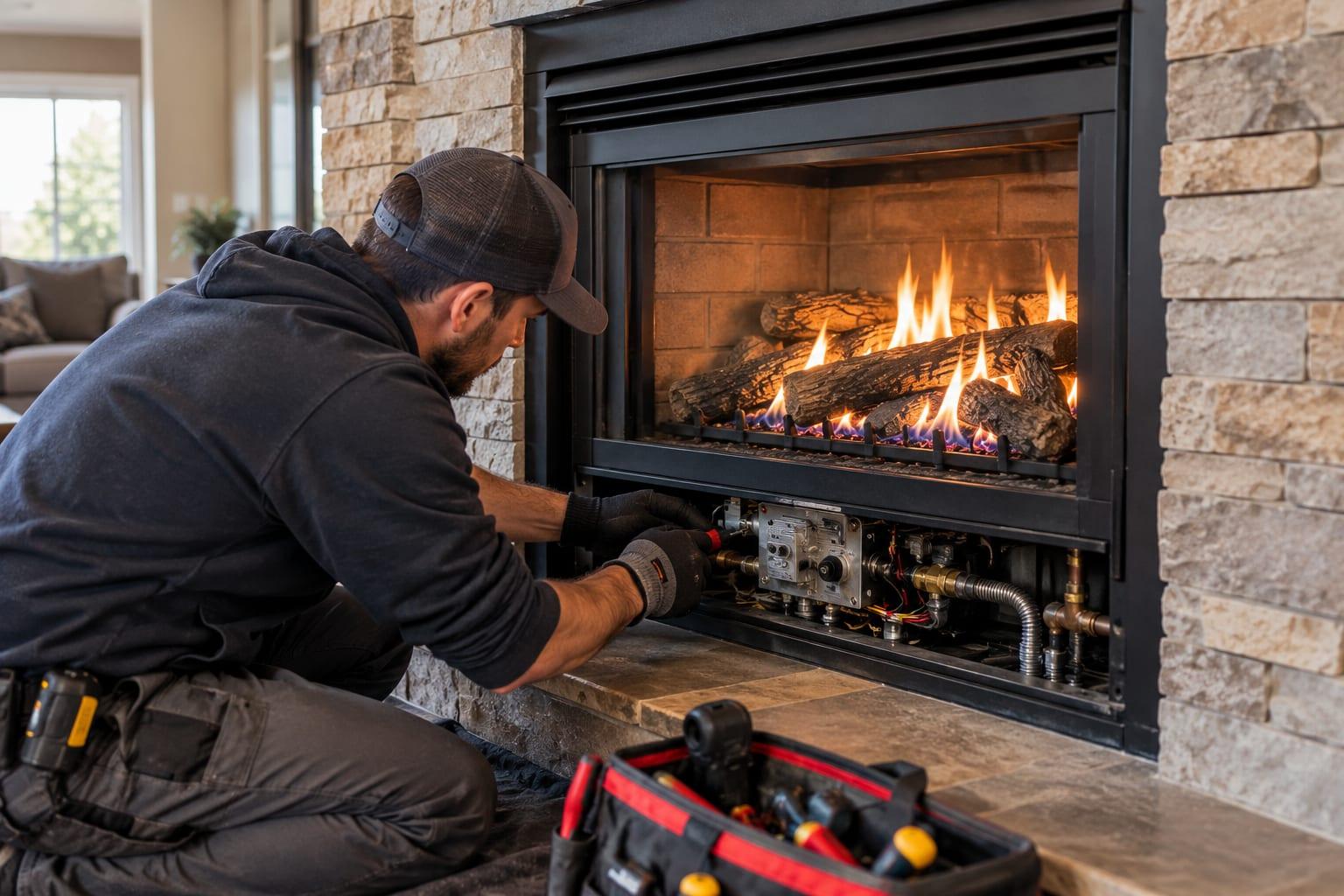
A propane fireplace works much like a natural gas unit. It has a pilot or electronic igniter, a flame sensor, a gas valve, a burner and a vent. The difference is the fuel. Propane runs at a different pressure than natural gas, so the orifices, pilot and valve setting have to match it. Many problems that look like a broken part turn out to be a supply or setup issue, so we check the fuel side as well as the fireplace itself.
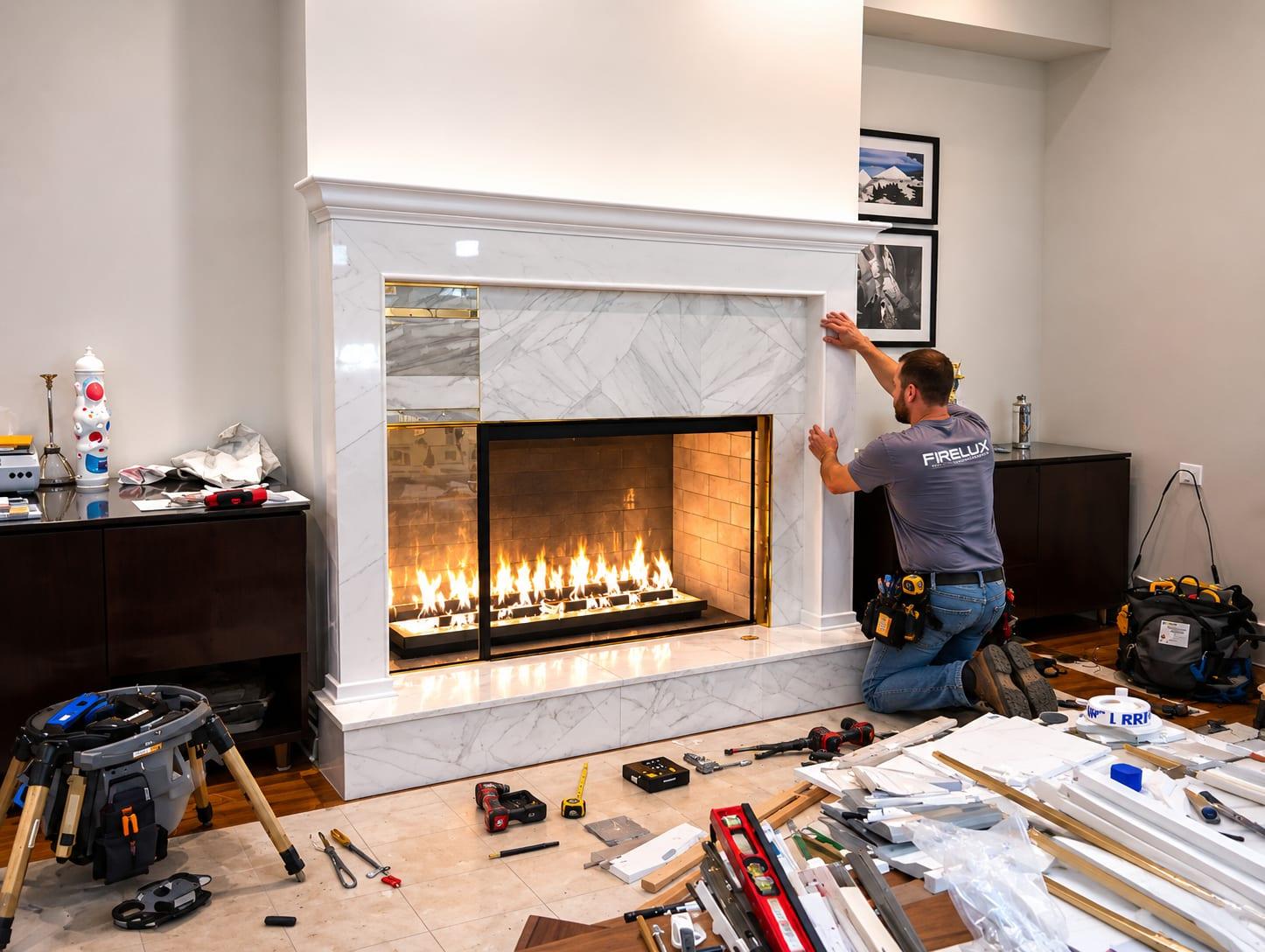
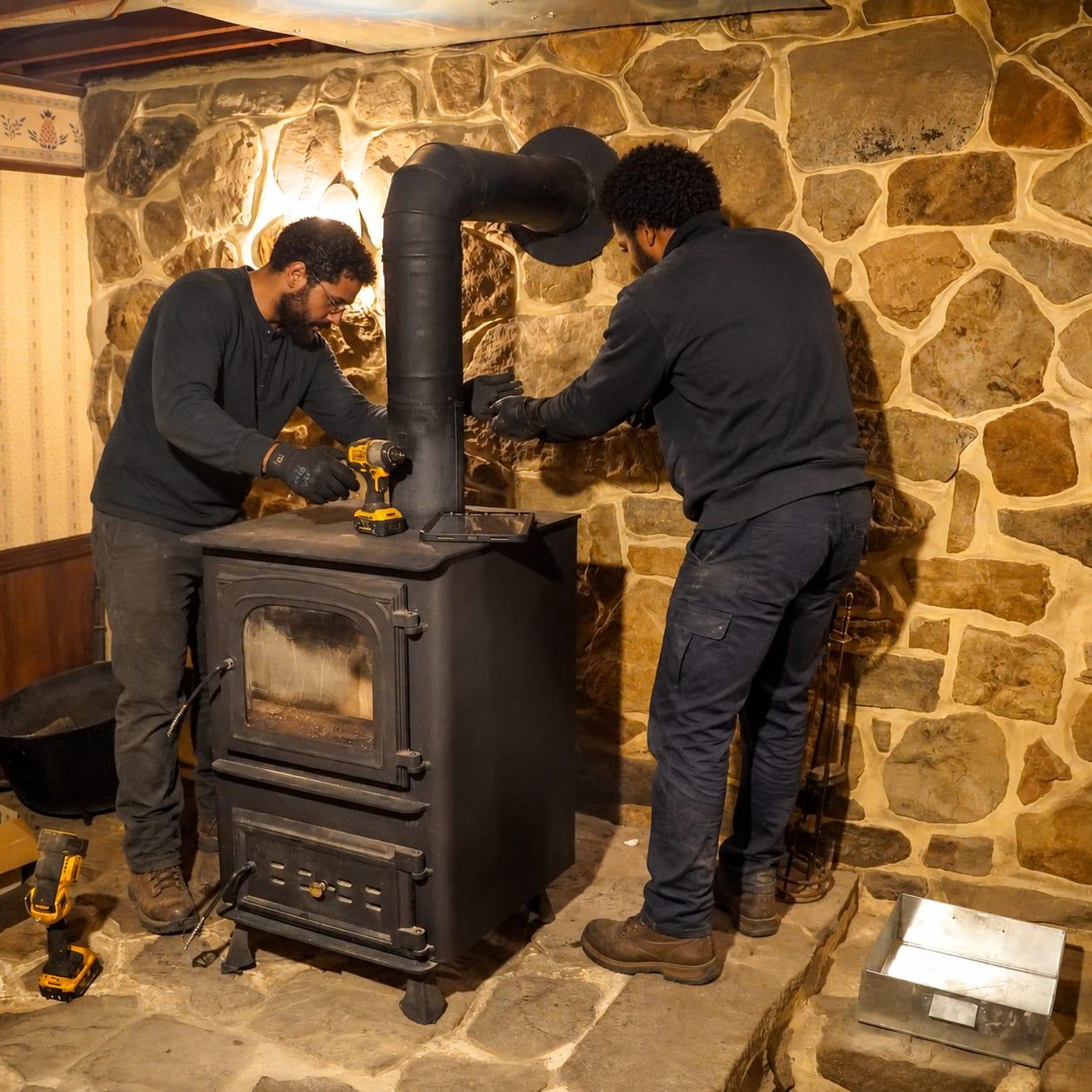
Repair covers cleaning or replacing pilot assemblies, thermocouples and thermopiles, igniters, valves, burners and controls. It also covers resetting log placement and checking the venting. We work on all major brands. If you're starting from scratch, the work becomes a new installation. That can be a propane fireplace, an insert or a log set, and the steps are much the same as installing a gas fireplace, with the unit set up for propane.
Signs your propane fireplace needs a repair visit
- The pilot won't light, or it lights and goes out once you let go of the knob.
- The igniter clicks but no flame appears.
- The fireplace lights, then shuts off on its own after a few minutes.
- The flame is lower, weaker or more uneven than it used to be.
- New soot is building up on the logs or the glass.
- The remote, wall switch or control panel no longer gets a response.
- The unit was moved from natural gas to propane and nobody is sure it was converted properly.
- You notice a gas odor near the fireplace. Treat this as a safety issue first. The callout below covers what to do.
If you smell gas
Don't light anything or flip switches, and don't try to find the leak yourself. Get everyone out of the house. Once you're outside, call your propane supplier or 911. Propane is heavier than air, so leaked gas can settle low in a room or in a basement. Once the supply is shut off and the area is safe, call us to repair the fireplace.
What a repair visit involves, step by step
How we work through a propane fireplace problem
Start with what you've noticed
When you call, tell us what the fireplace is doing, when it started and the brand if you know it. That helps us come prepared.
Confirm the unit and the fuel
We read the rating plate to confirm the model and check that it's set up for propane (LP) rather than natural gas.
Check the gas supply
We make sure gas is reaching the appliance. That means checking that the shutoff is open and the supply pressure at the unit is where it should be. A low or empty tank can look like a fireplace fault.
Inspect the fireplace
We look at the pilot assembly, flame sensor, igniter, valve, burner ports, log placement, glass gasket and venting.
Repair and test
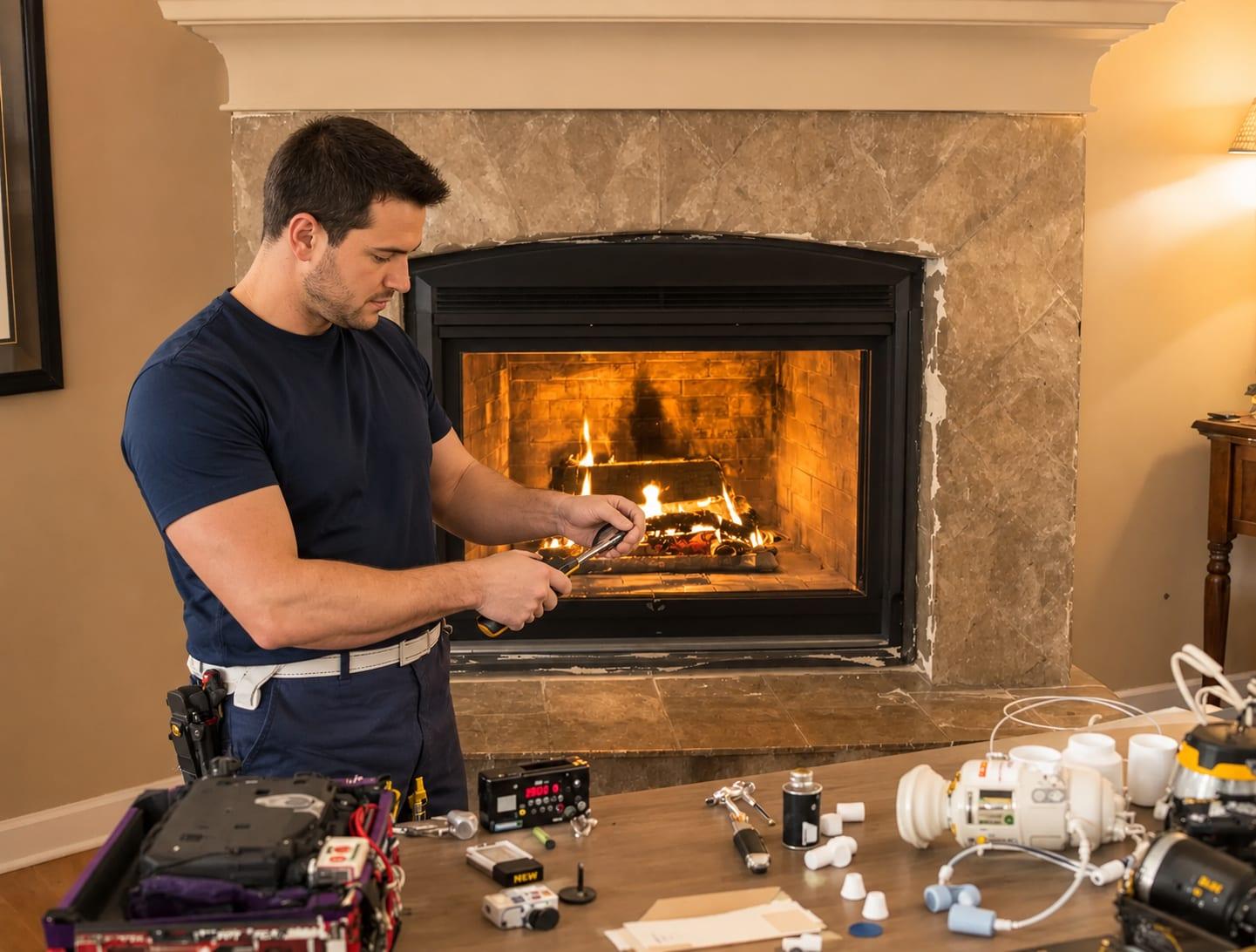
We clean, adjust or replace the faulty parts and check the connections we worked on for leaks. Then we run the fireplace through a full burn to confirm it lights, stays lit and burns properly.
Walk you through it
We explain what we found and what we did, and point out anything else worth keeping an eye on.
Propane versus natural gas: what changes
| Feature | Propane (LP) | Natural gas |
|---|---|---|
| Where the gas comes from | A tank on the property | A utility gas line |
| Orifices and valve setting | Sized and set for propane | Sized and set for natural gas |
| Where leaked gas goes | Heavier than air, settles low | Lighter than air, tends to rise |
| Switching to the other fuel | Needs the manufacturer's conversion parts, if they exist for the model | Same: needs a conversion, not just a hookup |
Where the gas comes from
- Propane (LP)
- A tank on the property
- Natural gas
- A utility gas line
Orifices and valve setting
- Propane (LP)
- Sized and set for propane
- Natural gas
- Sized and set for natural gas
Where leaked gas goes
- Propane (LP)
- Heavier than air, settles low
- Natural gas
- Lighter than air, tends to rise
Switching to the other fuel
- Propane (LP)
- Needs the manufacturer's conversion parts, if they exist for the model
- Natural gas
- Same: needs a conversion, not just a hookup
Your propane supplier looks after the tank and its fills. We handle the fireplace and the line that runs to it. If you're weighing log styles for a new or existing firebox, it helps to read up on vented vs ventless gas logs before choosing.
Installing a new propane fireplace
A new installation means choosing a unit, planning the vent route, running a gas line to the fireplace location and setting the unit up for propane. Venting and clearances follow the manufacturer's installation instructions. If you haven't settled on the fuel yet, our guide to electric vs gas fireplace sets out the trade-offs. If the project involves framing or building a new firebox, it's closer to a full fireplace installation.
Keeping a propane fireplace running well
Simple habits between visits
- Keep an eye on the tank gauge, especially before cold spells when the fireplace gets more use.
- Keep the area around the fireplace and its vent clear.
- Don't rearrange the logs. Their position is set to keep the flame from sooting.
- Make sure your home has working carbon monoxide alarms.
- Schedule a yearly check-up through our gas fireplace service so small problems get caught early.
Booking a propane fireplace visit
Call or request a visit and tell us what the fireplace is doing. We also take on commercial and property-manager work, along with other gas appliance jobs.