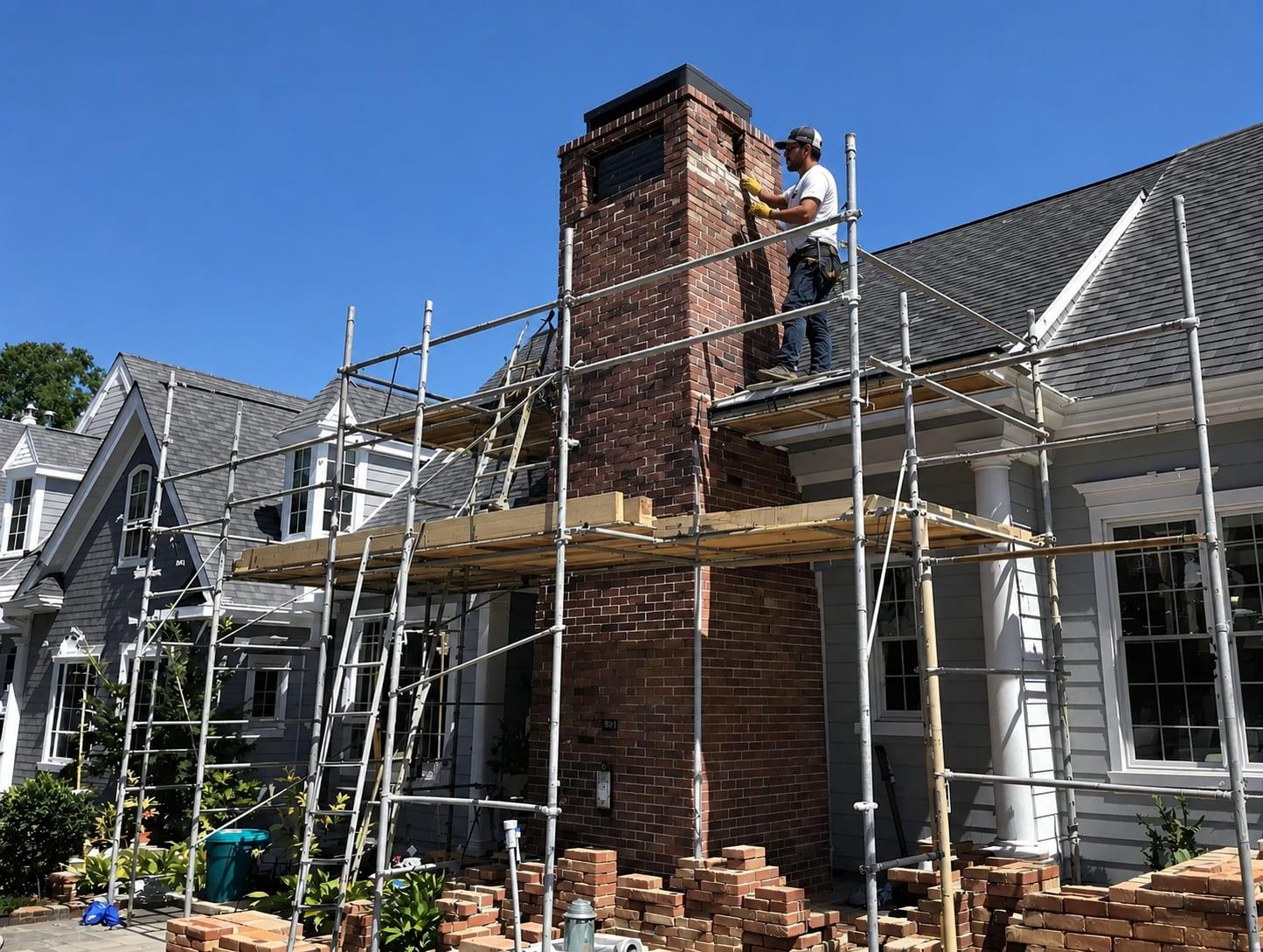
We rebuild chimneys for homes in Dunwoody, from a few loose top courses under a failed crown to a stone stack that has shifted. Two parts of the chimney shape most rebuild decisions: the crown on top and, on stone chimneys, the stonework itself. Request an estimate and we'll check both before recommending how much needs to come down.
When the crown decides how far the rebuild goes
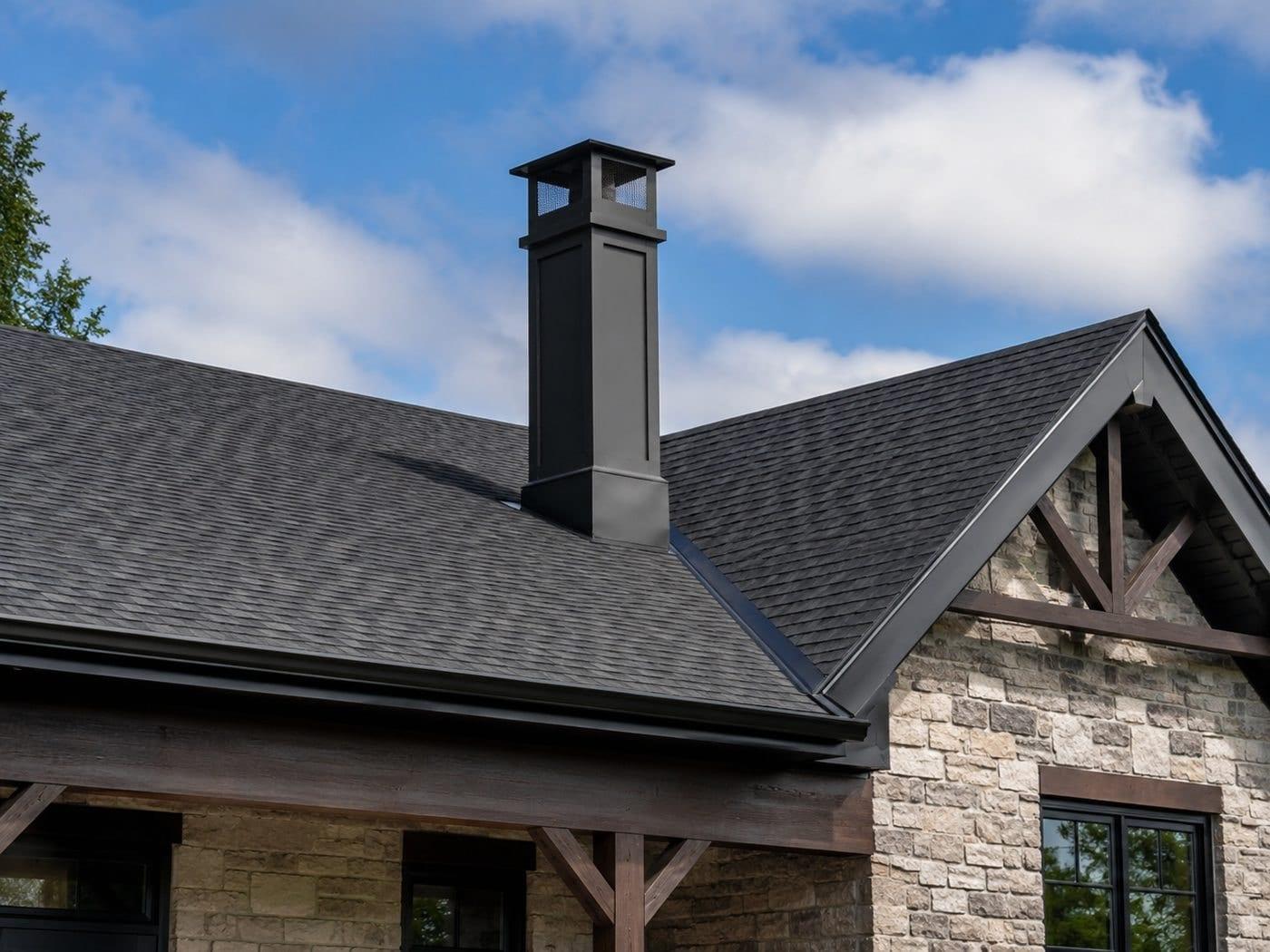
At the crown, we check three things. First, whether the cracks stay in the crown or run down into the brick or stone below it. Second, whether the crown has pulled away from the flue tile. Third, whether it sheds water clear of the chimney face or lets water run down the sides.
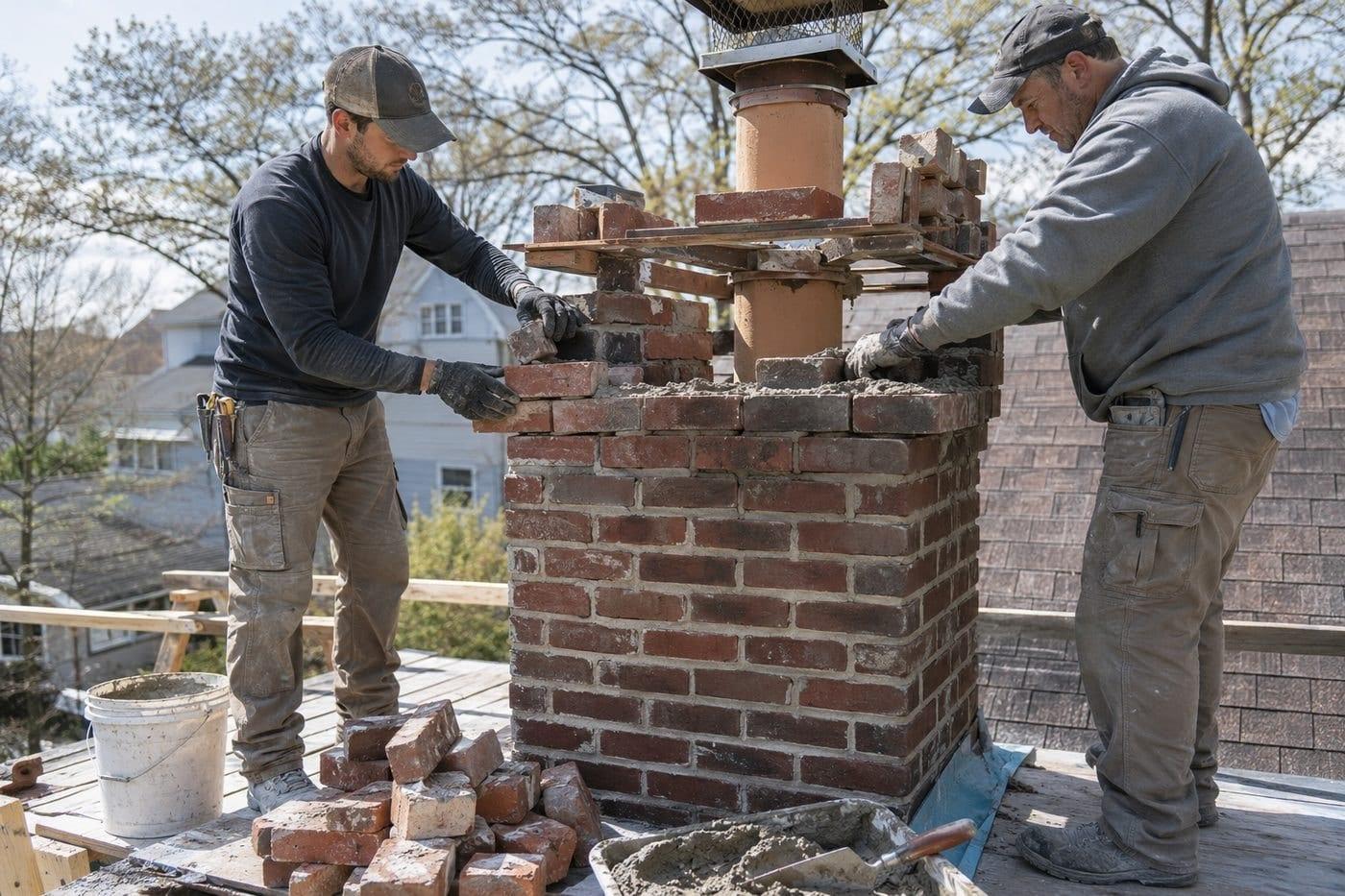
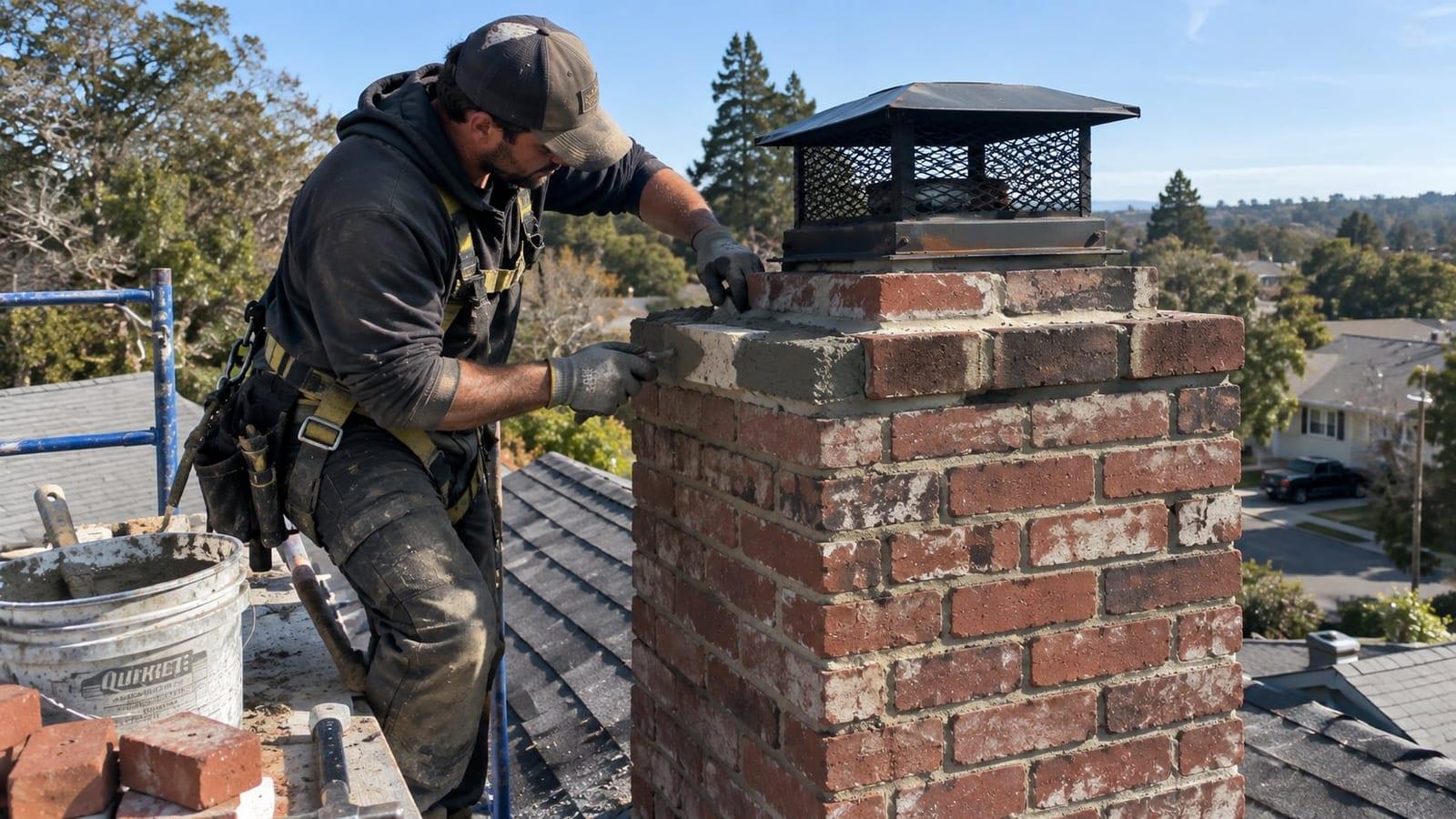
A crown that is cracked but sitting on solid masonry can often be fixed or replaced on its own. When water coming through a failed crown has loosened the top courses, those courses come down and are rebuilt before a new crown goes on. This part of the visit gives you a clear line: how many courses are sound and where the rebuild stops.
Rebuilding a stone chimney
On a stone chimney we look for loose or shifted stones, open or crumbling joints, bulges in the face and any tilt in the stack. We also check whether the stone is solid masonry or a facing over a block or brick core. Movement in the facing and movement in the structure behind it call for different amounts of work.
Where the stones are sound and only the joints have failed, resetting a few stones and repointing may be enough. If the face is bulging or the stack has moved, the affected section is taken down, the sound stones are set aside for reuse, and the section is rebuilt to match. If the chimney is tilting, read about what causes a chimney to lean before deciding on the scope.
What the Census data says about Dunwoody homes
About 2% of the housing units in Dunwoody were built before 1960, according to the U.S. Census Bureau's American Community Survey 2019–2023 5-year estimates (table B25034, Year Structure Built). That figure describes how old the homes are, not the condition of their chimneys. Whether a rebuild is needed depends on the crown, the masonry and the joints we find at the visit.
Water stains on or near the chimney
Water getting into the masonry can show up as stains on a ceiling or wall beside the chimney, white powdery deposits on the brick or stone, or dark streaks down the outside. When that is the problem, a rebuild can involve:
- taking down the courses that water has softened or loosened and rebuilding them with fresh mortar
- resetting the flashing where the chimney meets the roof
- topping the stack with a sound crown
Stains can also come from the roof or the flashing alone, so we trace the source before anything is torn down. Once the new mortar has cured, a breathable water repellent on the masonry is a separate choice you can decide on with us at the estimate.
When a smaller job fits better
- Chimney tuckpointing is the right job when the bricks or stones are solid and only the mortar joints are worn or open.
- Replacing a damaged or missing cap fits when rain and debris are getting in through the top but the masonry below is still sound.
Also served nearby
We also rebuild chimneys for homes in Brookhaven and Johns Creek.
The full overview
For the types of rebuilds, how the work runs and the parts involved, go to our chimney rebuild service. For everything else we do locally, visit our Dunwoody area page.
Booking a rebuild
Call or request an estimate to book a chimney rebuild for your Dunwoody home. We also take on commercial and property-manager work.
Sources (1)
The sources of the Dunwoody facts on this page.
- 1U.S. Census Bureau, American Community Survey 2019–2023 5-year estimates, table B25034 (Year Structure Built)